The number on the box, and the one that misleads
Food processors are sized by the capacity of the work bowl, measured in cups. But that headline figure — 7-cup, 11-cup, 14-cup — is a dry rating: the volume of solid food the bowl holds. It is not how much liquid you can safely process.
Every bowl has a separate, lower maximum liquid line, usually well under half the dry rating, because liquid rises above the central drive shaft and leaks past the seal once the blade is spinning. A 14-cup machine may only take 5-6 cups of liquid before it weeps onto the counter. This is the single most common source of “my food processor leaks” complaints — the machine is working as designed; the bowl was filled past its liquid limit. If you make soups, batters, or nut butters, the liquid line matters more than the cup rating.
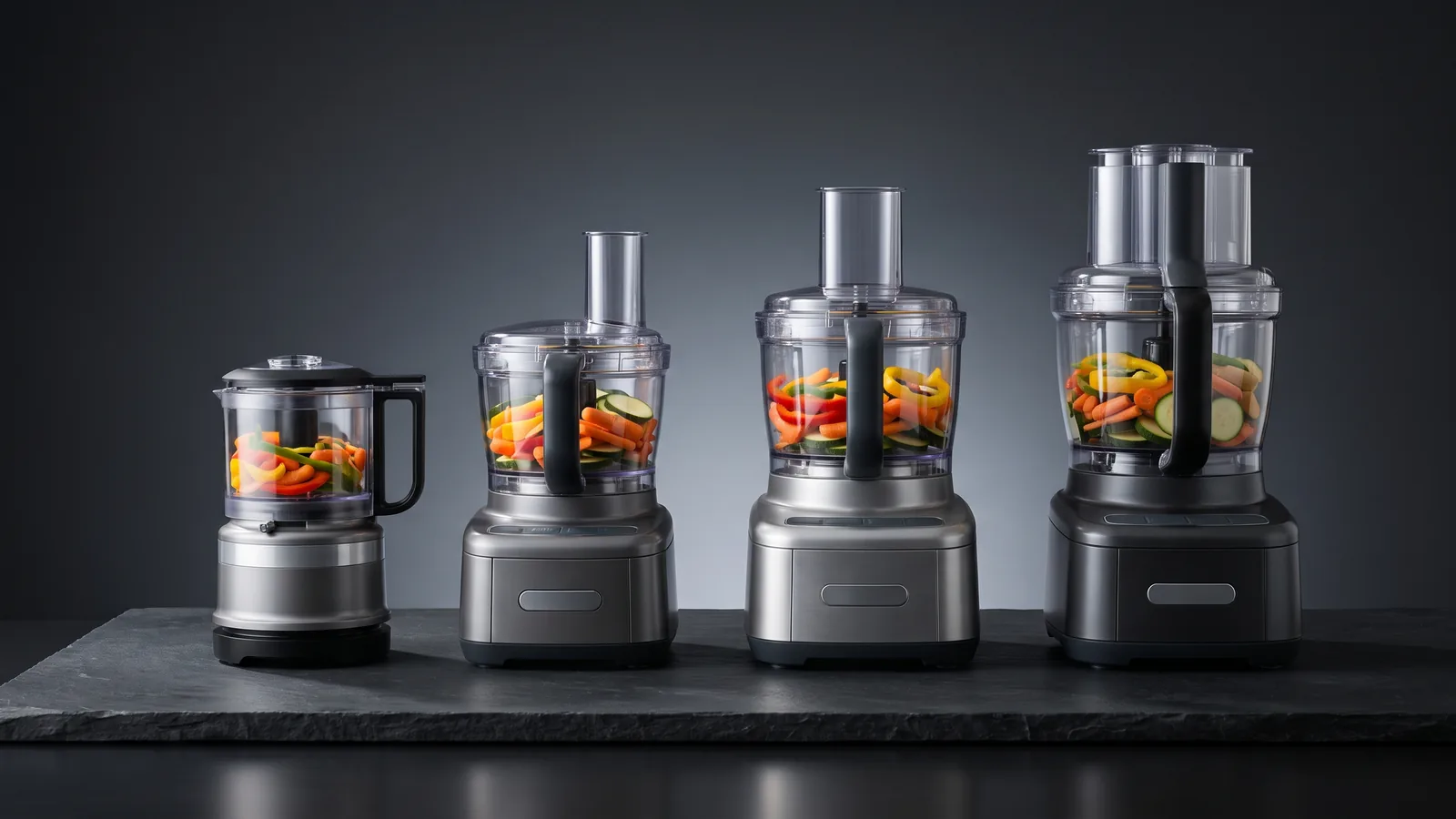
The three size tiers
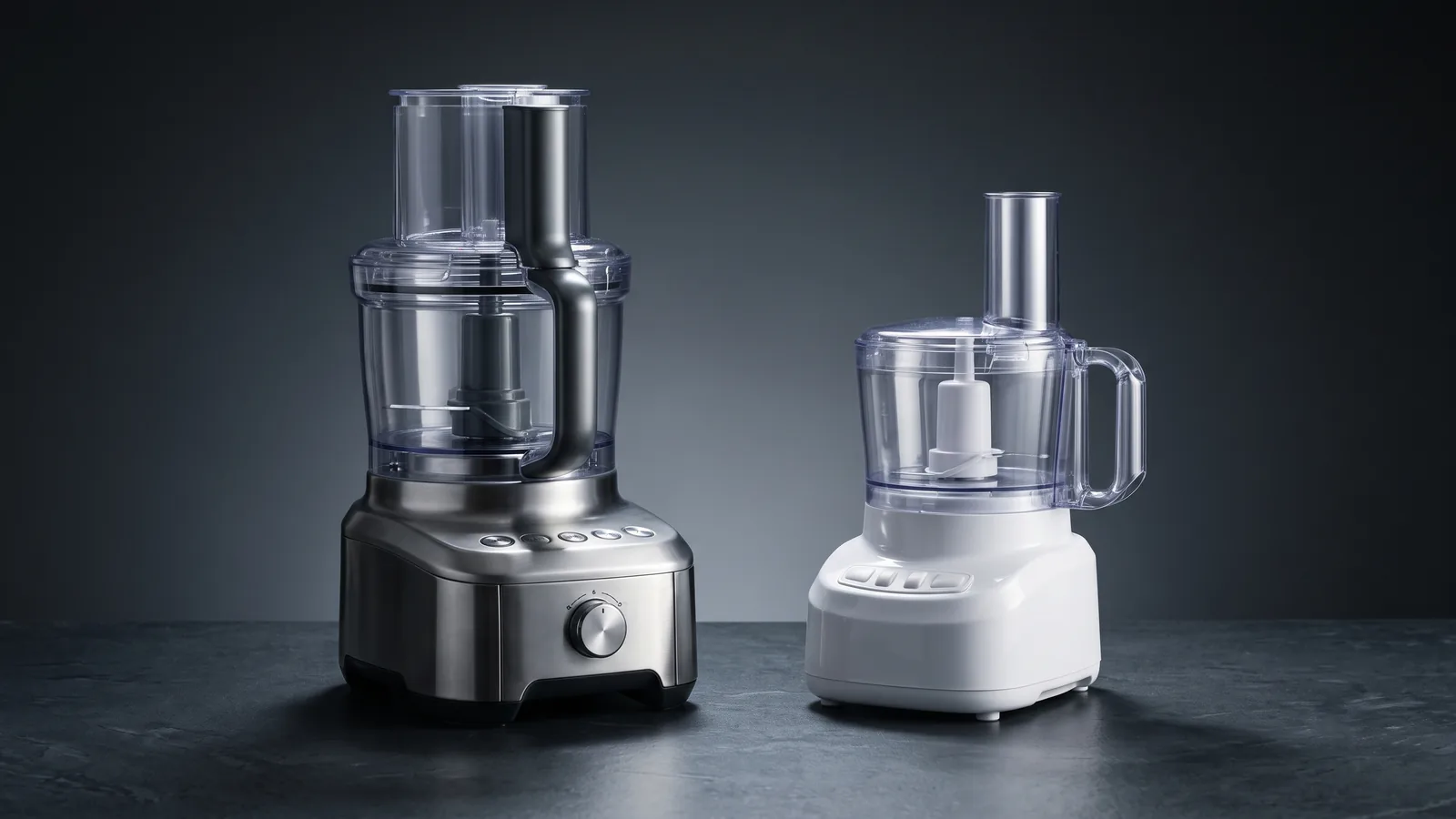
Mini / chopper — roughly 1.5 to 4 cups. Built for small, frequent jobs: herbs, garlic, dressings and vinaigrettes, salsa, a single avocado’s worth of guacamole, chopping nuts. Fast to set up, fast to wash, and small enough to leave in a cupboard. The trade-off is obvious — it cannot handle a large batch, dough, or a slicing disc.
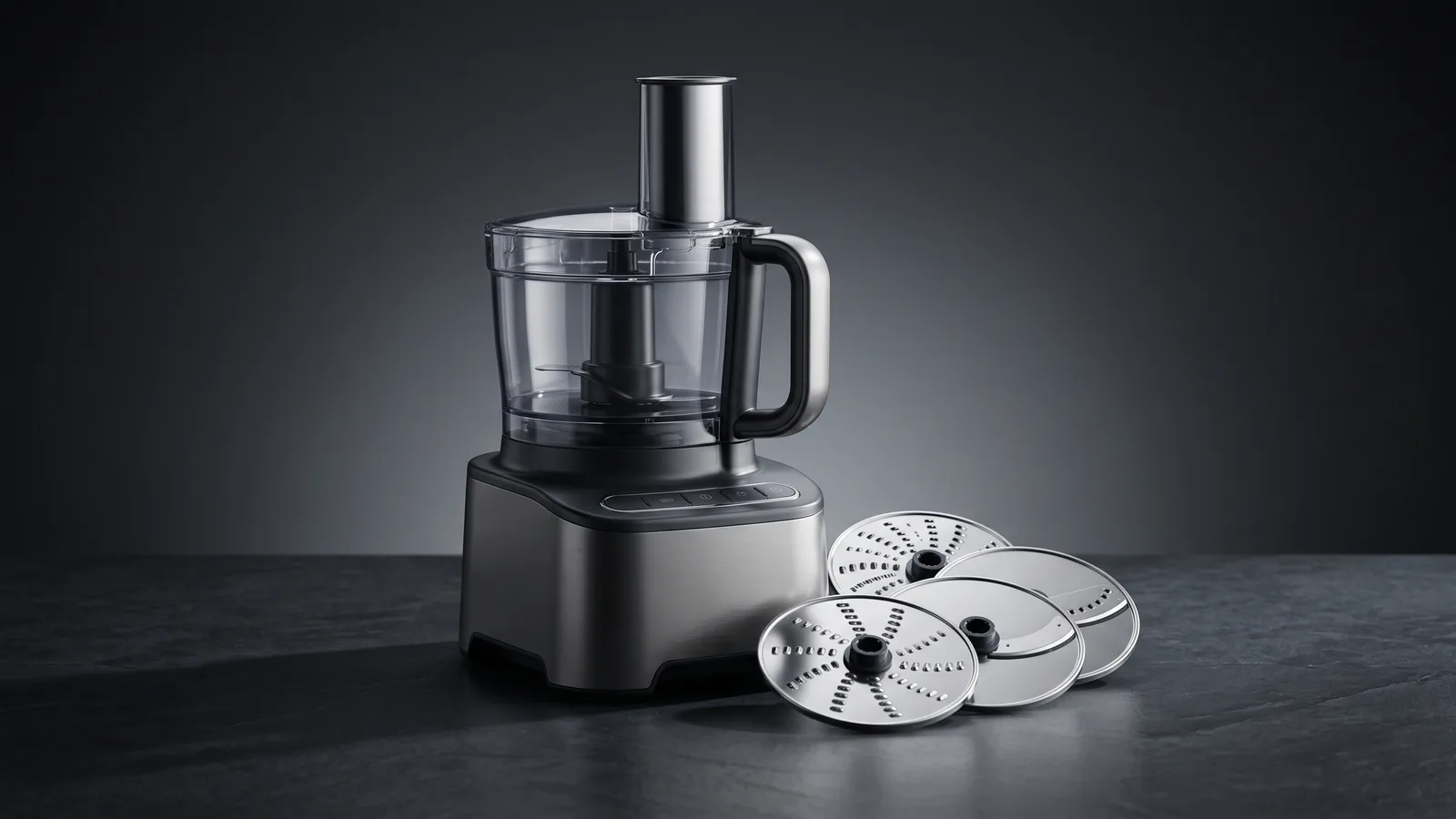
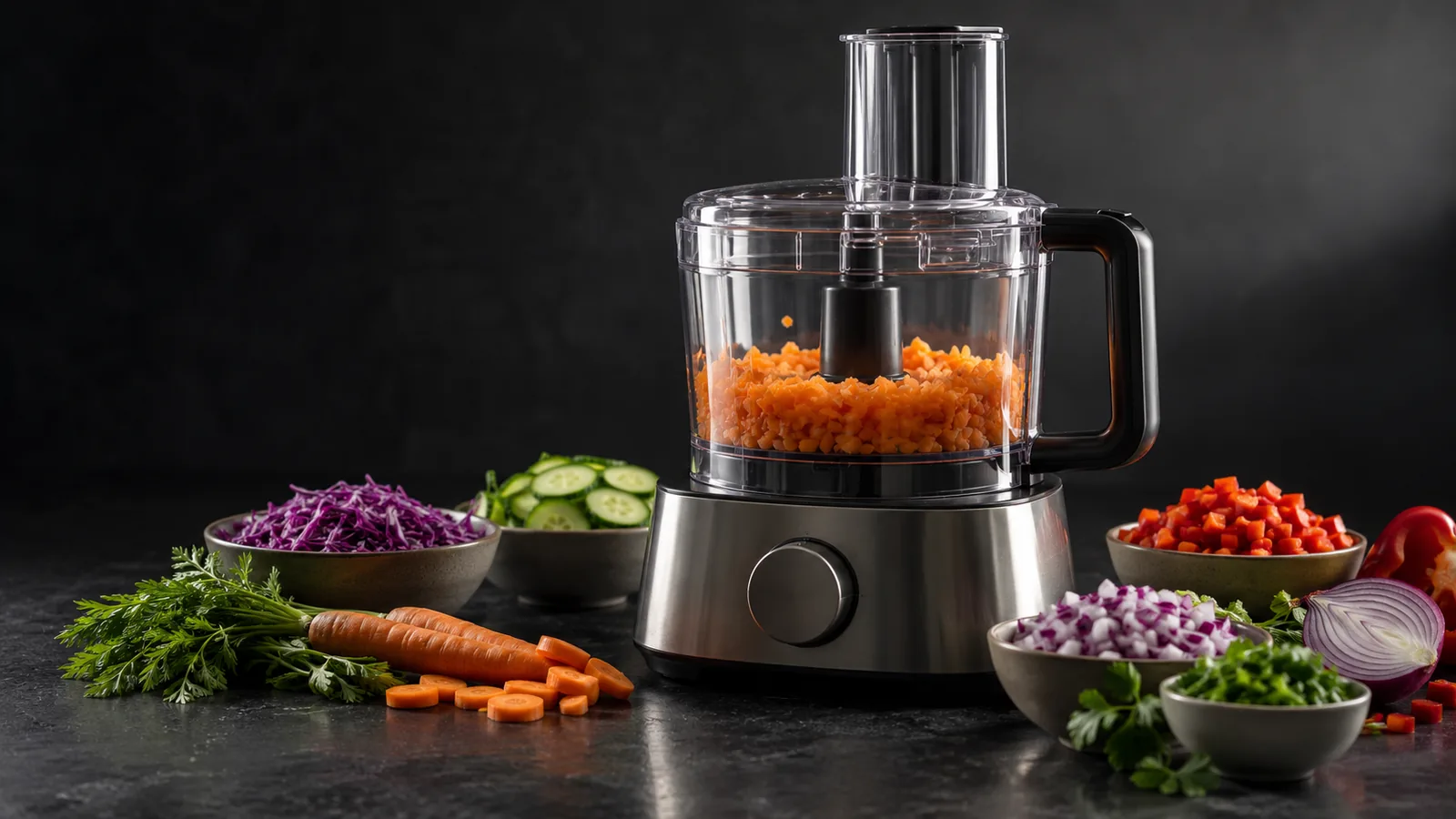
Midsize — roughly 7 to 9 cups. The versatile default for most households. It covers everyday vegetable prep, pesto and hummus, shredding a block of cheese, and small doughs, while staying manageable on the counter. For a couple or a small family that cooks regularly but not in bulk, this is usually the right single machine.
Full-size — roughly 11 to 16 cups. For families of four or more, batch cooking, bread and pizza dough, and large-volume slicing and shredding. This is the size that processes a full head of cabbage or a double dough recipe in one pass. The cost is footprint: it is heavier, takes real counter and cupboard space, and has more parts to clean for a small job.
| Your typical use | Best size |
|---|---|
| Herbs, dressings, salsa, small chops (1-2 people) | 3-4 cup mini |
| Everyday cooking, pesto, cheese, small dough | 7-9 cup midsize |
| Family meals, batch prep, dough, big slicing jobs | 11-14 cup full-size |
| Both small daily jobs and occasional big batches | Full-size with a nested mini bowl |
What size for your household
If you’d rather size by how many people you cook for than by task, here’s the rough mapping:
| Household | Everyday cooking | If you batch-cook or make dough |
|---|---|---|
| 1–2 people | 3–4 cup mini or 7-cup | 9–11 cup |
| Family of 3–4 | 9–11 cup | 12–14 cup |
| 5–6 people | 11–14 cup | 14 cup |
| 7+ / regular big batches | 14–16 cup | 14–16 cup |
The standard, do-everything size most kitchens settle on is around 9 to 11 cups — big enough for family prep and most doughs, small enough to still handle everyday jobs well. Size up beyond that only if large batches or dough are a routine part of your cooking, not an occasional one.
If that do-everything full-size is where you’ve landed — where most kitchens do — this is the value pick; the sizing detail below explains when to go smaller or larger instead.
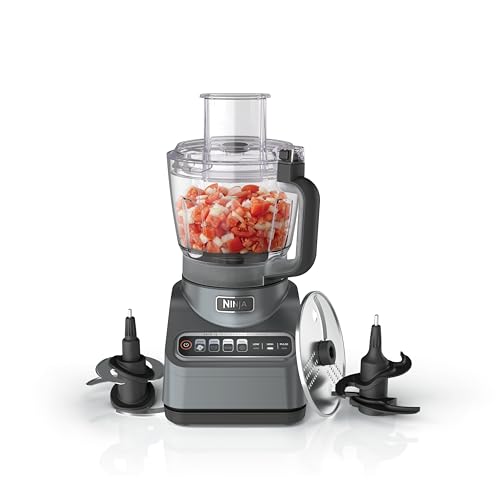
Ninja Professional Plus Food Processor
For the do-everything full-size that suits most kitchens, this is the value pick. Owners reward it for quality, value, and motor power on the deepest review base of any full-size machine here — strong for dough and nut butter, and better value than the pricier, fiddlier Cuisinart. The honest caveat is a real lid-breakage pattern (some within months), so buy with an easy return window and handle the lid gently. Get a smaller mini if you mostly do tiny daily jobs, or size up only for routine big batches.
Prime Day Amazon Prime Big Deal Days is on — a good time to check the live price.
Check current price on AmazonWhat buyers praise
- Rewarded for quality, value, and motor power
- Deepest review base of the full-size machines
- Strong for dough and nut butter; better value than the Cuisinart
What buyers flag
- Lid-breakage pattern — buy with an easy return window
- Full-size, so a mini is better for mostly-tiny daily jobs
At a glance
- Dimensions
- 7.76"D x 9.88"W x 16.02"H
- Power
- 1000 watts
- Weight
- 7.7 pounds
- Material
- Plastic
- In the box
- 1000-Peak-Watt Motor Base, 9-Cup Precision Processor Bowl with Feed Chute Lid and Pusher, Chopping Blade
Owner evidence report
Ninja Professional Plus Food Processor
What owners praise
What to watch
Themes from our analysis of verified owner reviews. Each bar is that theme's share of what owners raise, with the category average beside it for context. Noolaguide does not claim hands-on lab testing; the authority here is the accumulated experience of the people who own it.
Why bigger is not automatically better
The instinct to “size up so I never run out” backfires with food processors. A large bowl needs a minimum volume of food to work: small quantities sit below the blade’s sweep, so a clove of garlic or a small handful of parsley gets thrown to the sides and chopped unevenly rather than processed. Owners who buy a 14-cup machine for a two-person kitchen most often report that it does small jobs worse than a mini would — the opposite of what they paid for — while also being heavier to lift and more of a chore to wash.
This mirrors the same over-buying pattern seen with drip coffee maker capacity: the machine sized well above the household’s real routine delivers worse everyday results, not better ones.
The practical rule
Estimate the task you do most often, not the largest one you might someday attempt, and size to that — then step up one tier only if a genuine big-batch job (dough, family-sized slicing) is a regular part of your cooking. If your needs split cleanly between tiny daily jobs and rare large ones, a full-size processor that ships with a nested mini bowl gives you both without owning two machines.
For the wider buying decision beyond size — motor, attachments, and the assembly friction that defines this category — see how to choose a food processor. For the specific mini-versus-full-size trade-off, see full-size vs mini food processor. Once you know your size, see our top food processor picks for the models by use case.