Ready to pick one? For most serious cooks the Cuisinart 14-cup is the best overall — see the best food processors.
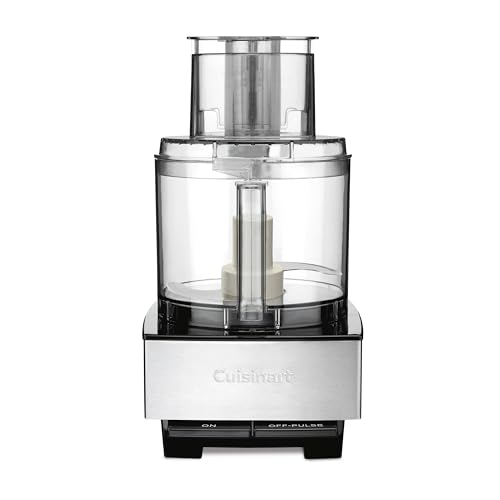
Cuisinart 14-Cup Food Processor
The workhorse, and the best food processor for most serious cooks. Owners reward it for overall quality and processing strength above almost anything in the category — strong for chopping, slicing, dough, and nut butter. The honest trade-offs: ease of use is its weak point (fiddly assembly), value is penalized, and the category breakage risk applies. Buy with an easy return window and learn the locking sequence.
Prime Day Amazon Prime Big Deal Days is on — a good time to check the live price.
Check current price on AmazonWhat buyers praise
- Overall quality and processing strength are its standouts
- Clean, precise cuts; strong motor for demanding tasks
- 14-cup capacity plus slicing and shredding discs
- Deep, trustworthy review base
What buyers flag
- Ease of use is its weak point — fiddly assembly
- Value-for-money is penalized — a premium price
- Category breakage risk — buy with an easy return window
The decision framework
Food processor dissatisfaction concentrates in two patterns: machines that are too large for the household’s actual use (oversized, hard to store, cleaned less frequently because the effort-to-output ratio is unfavorable), and machines whose motors stall on the specific tasks the buyer intended (bread dough and nut butter are the consistent culprits). Address both before choosing. (Cleaning weighs on food-processor satisfaction more than it does for a kettle or mixer, but less than for a blender — see where each category lands in the Kitchen Chore Index.)
1. Capacity: buy smaller than you think
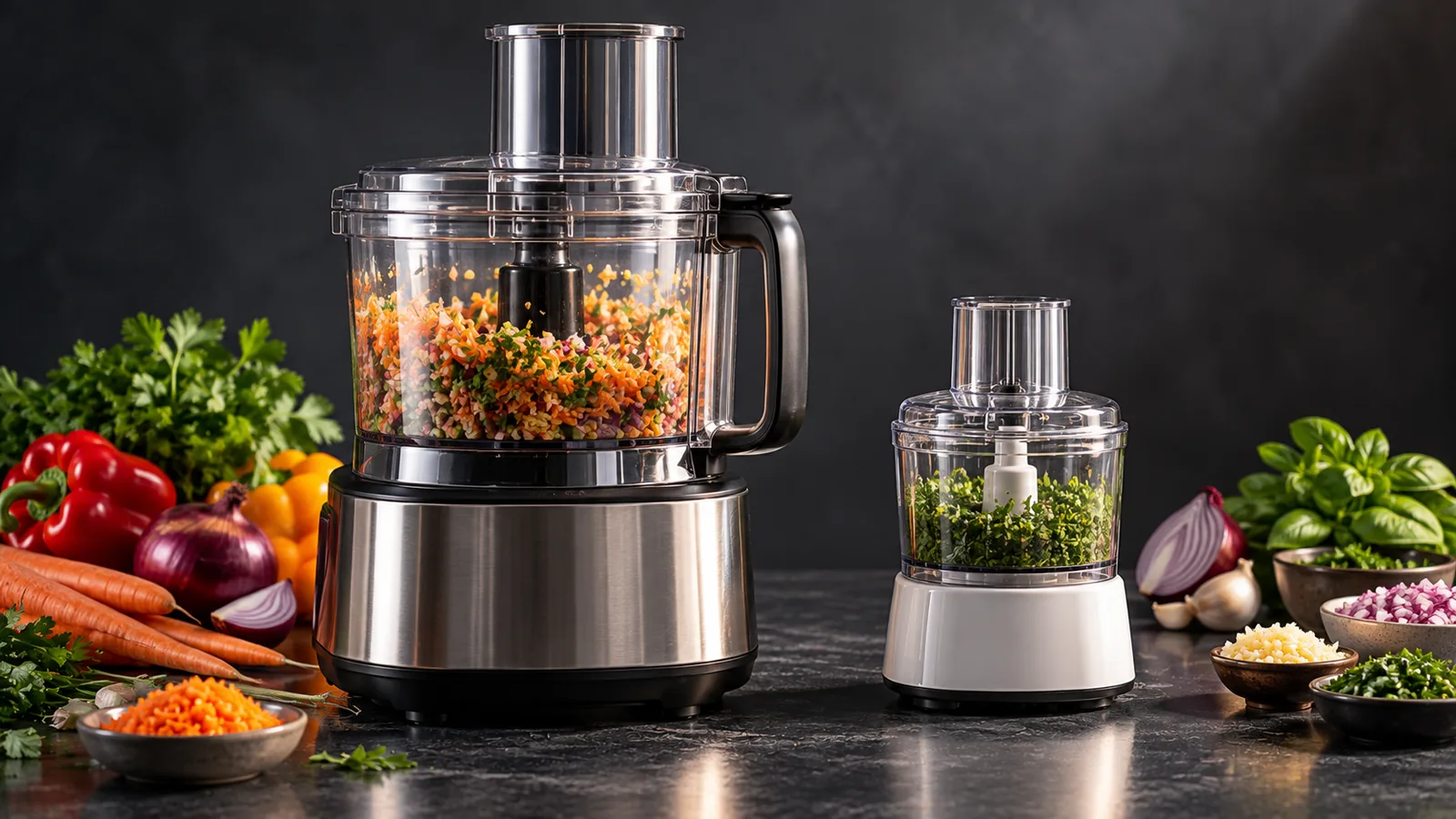
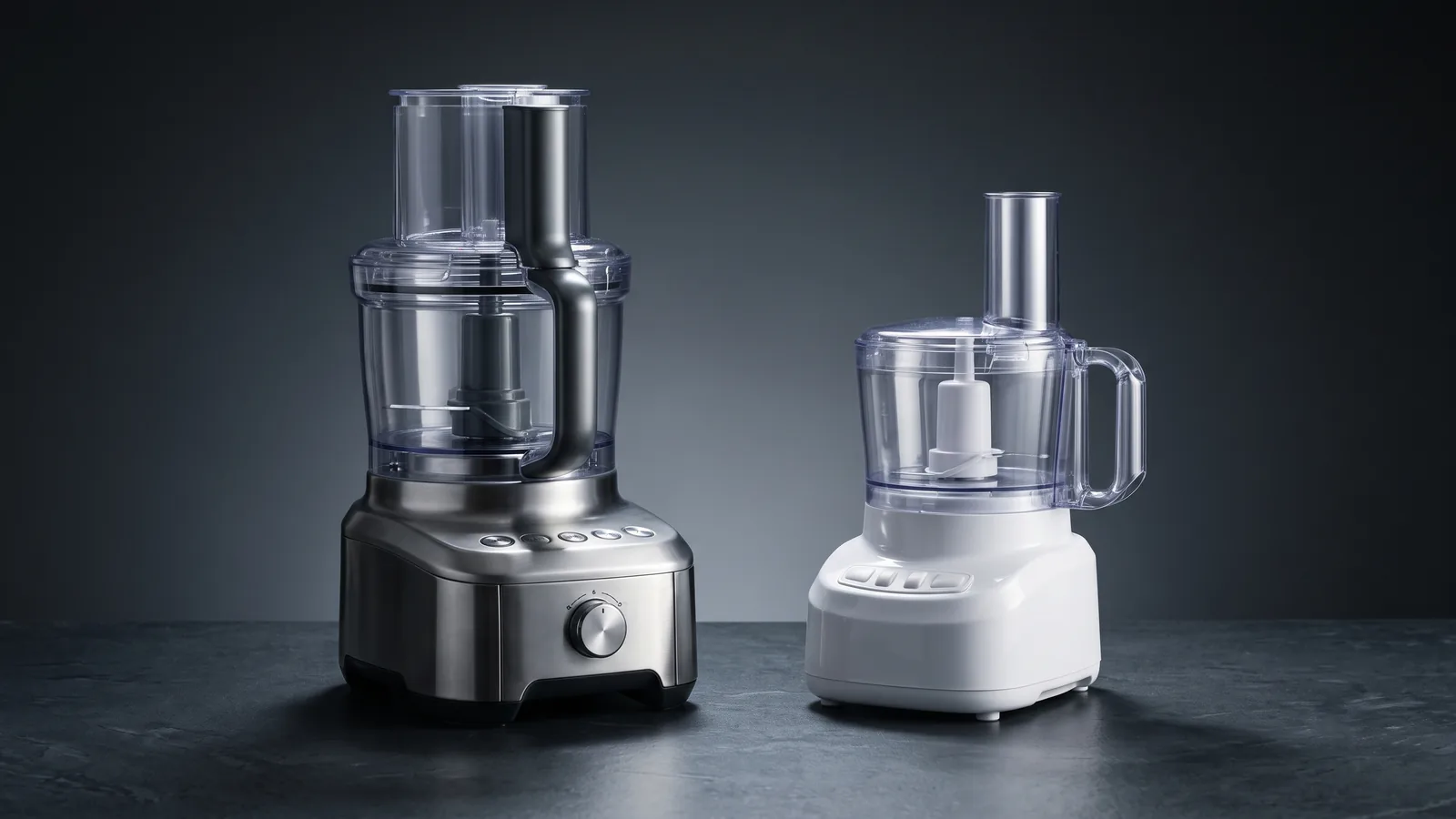
Food processor capacities run from 3-cup mini choppers to 16-cup commercial-grade machines. The segment most buyers are actually choosing between: 7-cup, 11-cup, and 14-cup.
Where capacity regret concentrates
Buyer review data shows a consistent and one-directional pattern: buyers who purchase 14-cup machines for households of 1–3 people report using them at 30–50% capacity on a typical day. A 14-cup processor processing one onion, three carrots, and a can of chickpeas is running at quarter capacity. The machine is harder to clean (more surfaces, larger bowl), takes more storage space, and produces the same result as a smaller machine would. Buyers who purchased 11-cup machines for the same household size report much higher satisfaction rates.
The overcapacity problem in concrete terms: a 14-cup food processor bowl has a minimum fill level — below which the S-blade does not make effective contact with the ingredients and chopping becomes uneven. For small-volume tasks (making a cup of salsa, shredding half a block of cheese), a smaller bowl produces better results than a large bowl half-empty.
Capacity guide by household and use
| Household / primary use | Recommended capacity |
|---|---|
| 1–2 people, weeknight cooking | 7-cup |
| 2–4 people, regular cooking | 11-cup |
| 4+ people, batch cooking | 11–14 cup |
| Bread dough for 2+ loaves at once | 14-cup (dough volume matters) |
| Entertaining regularly | 14-cup |
| Dedicated mini chopper for garlic, herbs, small tasks | 3–4 cup mini |
2. Motor wattage: the honest breakdown
400–600W: budget tier
Handles most chopping, slicing, and pureeing adequately. Struggles with: bread dough (stalls; generates heat that stresses the motor); nut butter (continuous-run high resistance — the machine most likely to overheat and trip the thermal cutoff); large batches of hard vegetables (carrots, beets, sweet potatoes).
If your primary use is making hummus, chopping vegetables for weeknight cooking, and occasional pastry — a 600W machine is adequate. If you plan to make bread dough or nut butter regularly, it is not.
600–750W: mainstream tier
The working zone of the market. Cuisinart’s flagship DFP-14BCWN runs at 720W. This range handles most kitchen tasks well. Bread dough in reasonable quantities is feasible with a good dough blade; nut butter in small batches is possible but pushes the motor. The most common configuration for buyers who cook regularly without specializing in baking.
900W+: heavy-duty tier
Breville Sous Chef (1200W), Magimix (1300W). Motors that do not stall on extended runs. The right choice for: regular bread baking (weekly or more), nut butter production, large-batch cooking that requires continuous long cycles. The price premium is $150–$250 over mainstream-tier machines; it is justified for the specific tasks that stressed mainstream motors.
The stalling problem and its consequences
Motor stalls on high-resistance tasks are not just an inconvenience — they are a longevity issue. A motor that overheats and trips its thermal cutoff repeatedly ages faster than one running at appropriate capacity. Budget machines used for dough or nut butter fail earlier because the motor is being run at its limits on every high-demand cycle. This is why wattage is more important for buyers who intend demanding tasks, and adequate for buyers who don’t.
3. The S-blade: where quality actually shows up
The S-blade (standard or multipurpose blade) is the curved, double-edged blade that sits on the center spindle of the bowl. It performs chopping, mincing, pureeing, mixing, and emulsifying — the tasks that comprise the majority of food processor use.
What separates a good S-blade from a poor one:
Sharpness retention. Cheap blades dull quickly and require more processing time to achieve the same chop quality, generating more heat in the food and motor. Quality blades (Cuisinart, Breville) maintain their edge through years of use.
Seat security. The blade must lock onto the center shaft firmly. A loose fit causes the blade to wobble, which produces uneven chopping and can allow the blade to contact the bowl wall. In budget machines, blade wobble is the most common cause of uneven results.
Stability during liquid processing. When pureeing soups, making sauces, or emulsifying, the blade must maintain contact with the liquid consistently. Blades that sit too high on the spindle leave a pocket of liquid below them that does not process evenly.
4. Bowl seal: the leak question
Bowl seal leaking is the single most common complaint in negative food processor reviews across all price tiers. When the bowl does not seat perfectly onto the motor base and the blade assembly does not seal adequately, liquid from soups, sauces, and wet processing seeps under the blade and onto the motor base. This is messy, hard to clean, and in sustained cases can damage the motor.
How to check before buying: sort Amazon reviews by “Critical” and search for “leak,” “leaks,” and “liquid under blade.” If this complaint appears more than occasionally in a machine’s reviews, it is a design issue, not a user error, and it will happen to you too.
Cuisinart’s standard line has had intermittent seal complaints across different production runs; their newer models have improved. Breville Sous Chef has notably fewer leak complaints in its review population. Budget brands with price points below $60 have the highest concentration of seal-related complaints.
5. Discs and attachments: what you’ll actually use
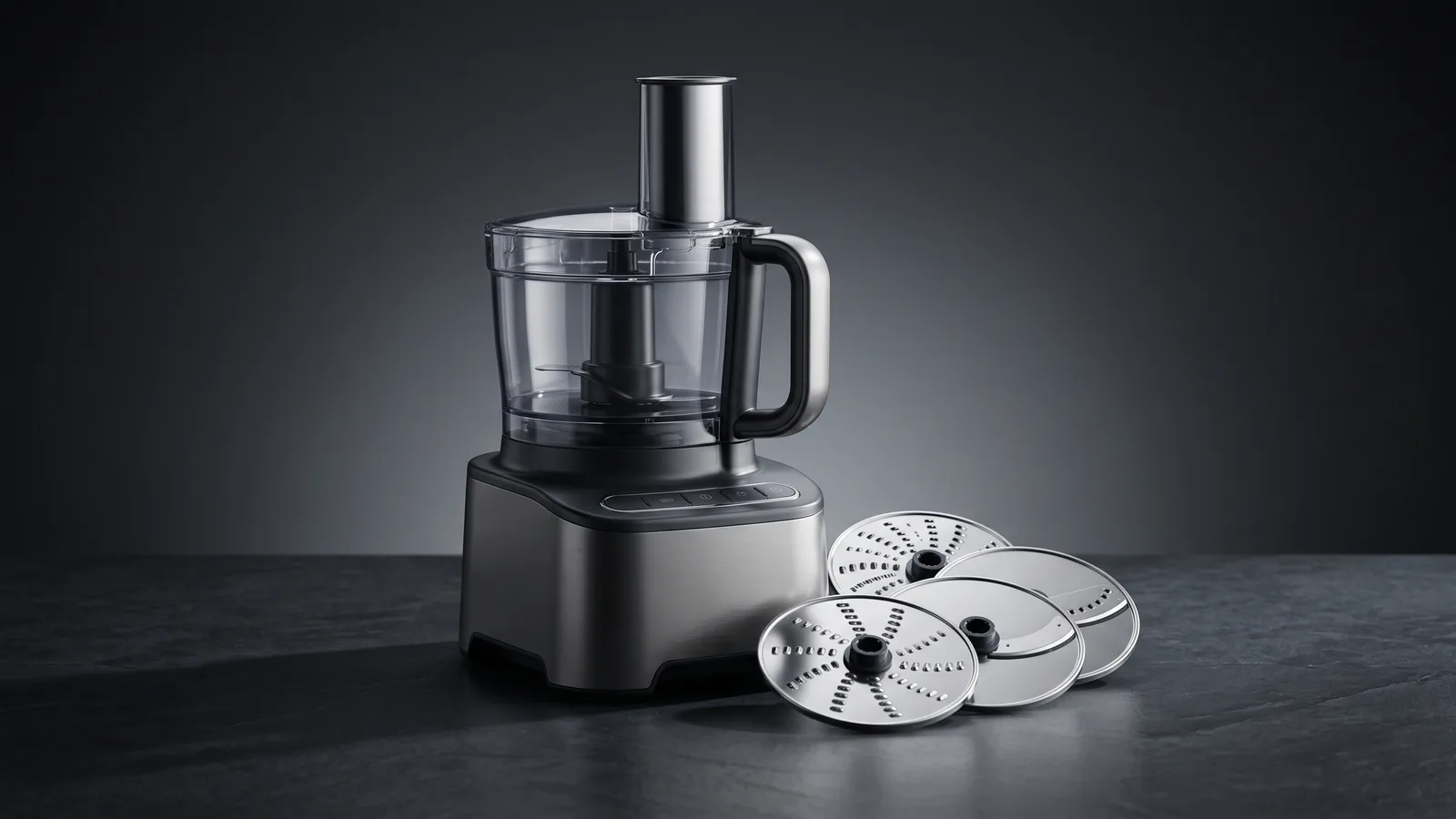
Most food processors ship with an S-blade, a shredding disc, and a slicing disc. Additional accessories vary by model and price.
What buyers actually use consistently:
- S-blade (chopping, mincing, pureeing) — used in almost every session
- Shredding disc (cheese, cabbage, carrots) — used regularly by most buyers
- Slicing disc — used for cucumbers, zucchini, potatoes; less used than shredding
What buyers report never using:
- Dough blade (only relevant for bread bakers — most buyers are not)
- Julienne disc (buyers have good intentions; this disc is almost universally underused)
- Whipping disc (eggs and cream are easier in a stand mixer or by hand)
- Citrus juicer attachment
The practical implication: do not pay a significant premium for an extensive disc set you have not planned specific uses for. The S-blade and shredding disc cover most of what most buyers actually do.
6. Feed tube width: the underrated spec
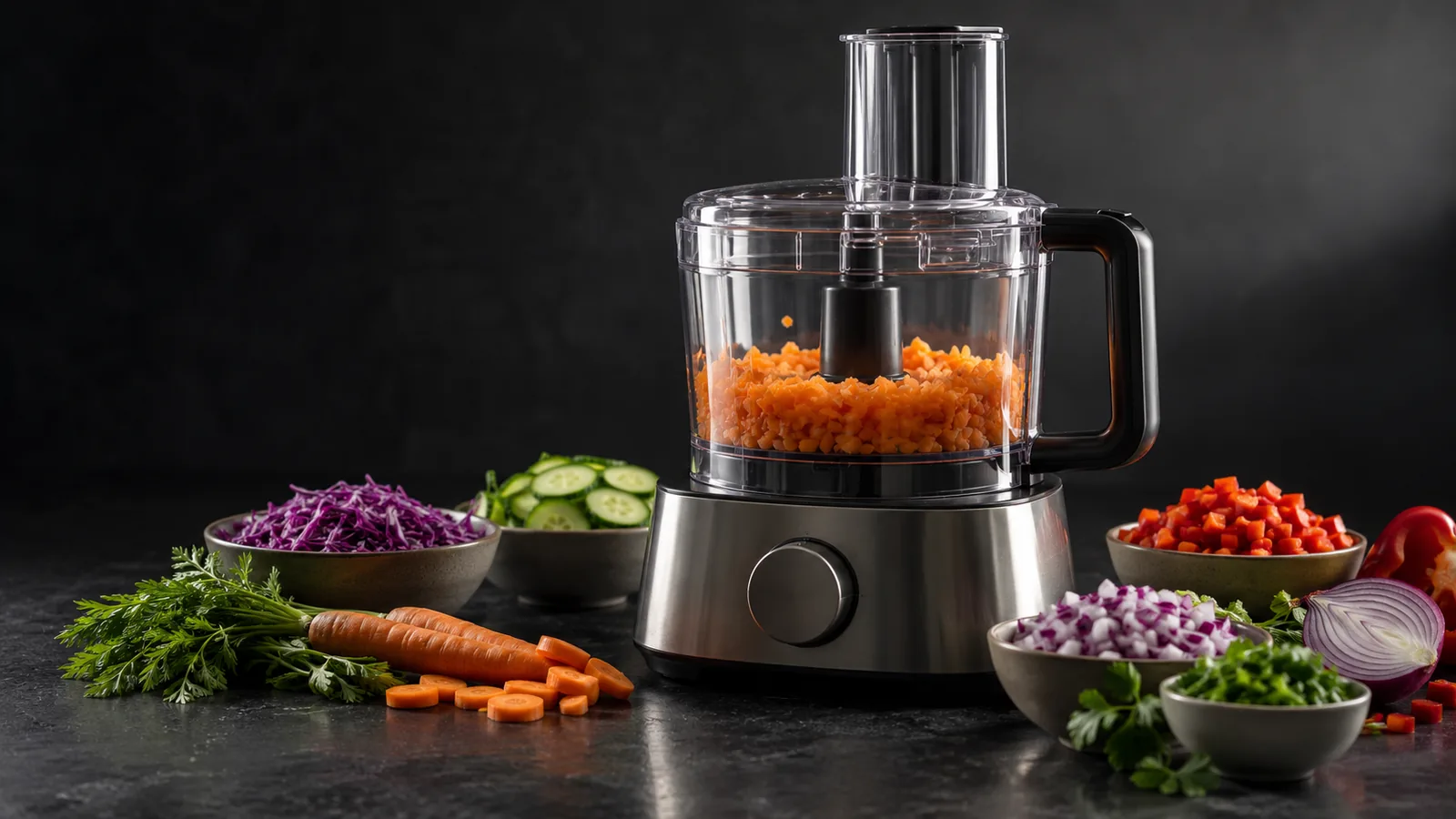
The feed tube is the opening in the lid through which whole ingredients are added during processing. A narrow feed tube requires pre-cutting ingredients before adding them; a wide feed tube allows whole onions, large carrots, and unsliced blocks of cheese to be fed directly while the machine runs.
Standard feed tubes are approximately 2–2.5 inches in diameter. Wide-mouth feed tubes (Breville, KitchenAid wide-mouth models) are 3.5+ inches and accommodate a whole medium onion without pre-cutting.
For buyers who primarily use the slicing disc for whole vegetables, the feed tube width is a meaningful spec. For buyers who primarily chop, mince, or puree with the S-blade (where feed tube is irrelevant — ingredients go in the bowl), it is not.
The buying checklist
- Capacity: estimate your realistic batch size for the tasks you cook weekly, then buy one size down from your instinct.
- Wattage: 600–750W for everyday cooking; 900W+ for dough and nut butter.
- S-blade quality: read critical reviews specifically for “uneven chopping” and “blade wobble.”
- Seal integrity: check for “leak” complaints in critical reviews before purchasing any machine.
- Feed tube: only pay for a wide-mouth feed tube if you regularly process whole vegetables through the slicing disc.
- Disc set: identify the specific discs you will actually use before paying for an expanded set.
What size food processor do I need · Full-size vs mini food processor · Food processor vs blender · How to clean a food processor · The best food processors