The fundamental difference
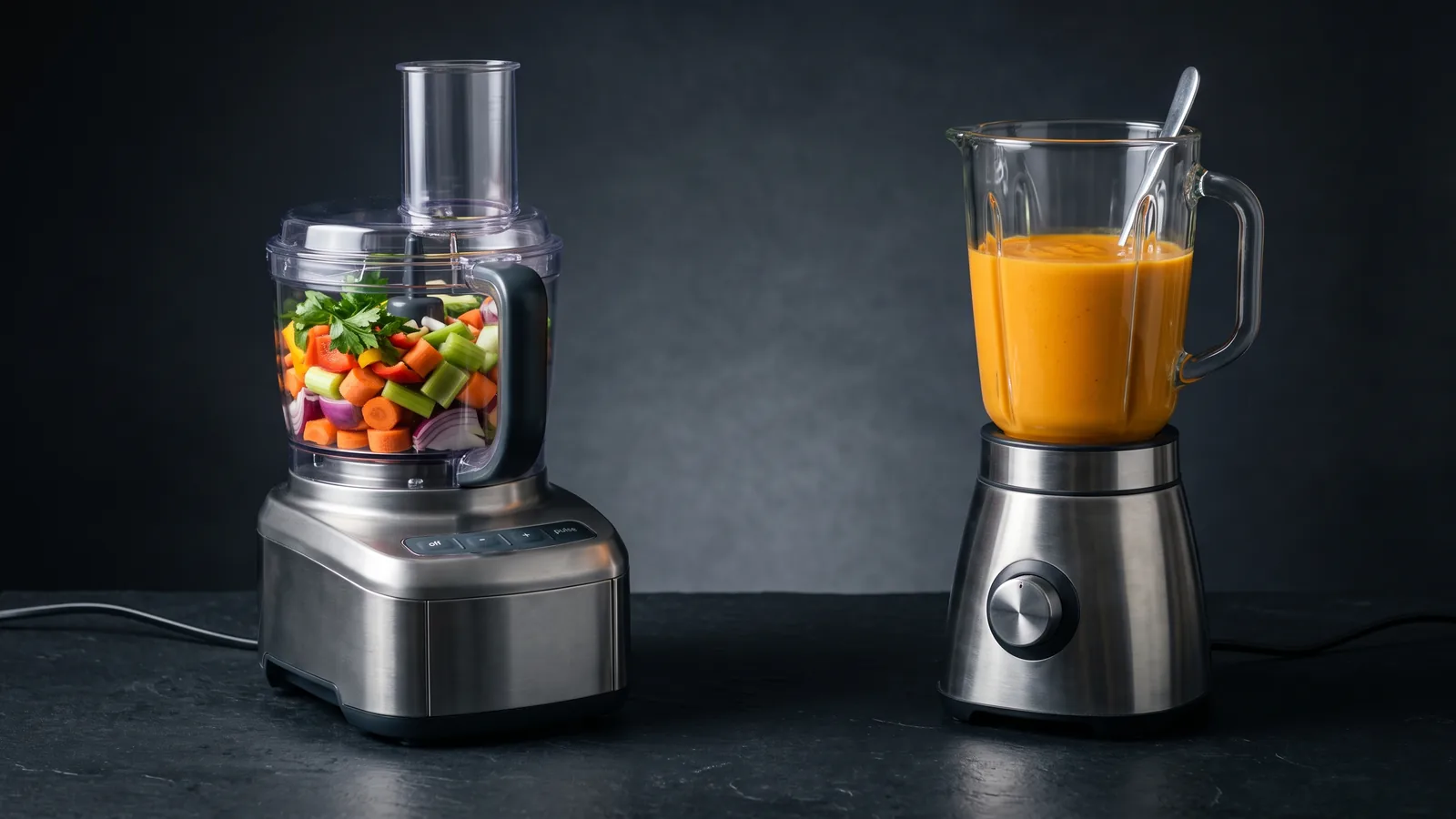
A blender works by creating a vortex. Ingredients are pulled down toward the spinning blade by liquid flow, processed, and pulled back up in a continuous cycle. This produces smooth, liquid-integrated results. Remove the liquid and the vortex cannot form — the machine processes unevenly or not at all.
A food processor works by rotating a blade or disc through stationary ingredients. The S-blade chops by moving rapidly through ingredients sitting in the bowl. Discs process by feeding ingredients through a spinning blade or grating surface. No liquid required; in fact, too much liquid in a food processor creates seal problems.
This fundamental mechanical difference determines what each machine does well.
What only a blender does well
Smoothies. A blender’s vortex pulls ice and frozen fruit down into the blade and creates a homogeneous liquid. A food processor cannot replicate this — the S-blade chops but does not liquefy, and the frozen ingredients sit on the blade rather than being pulled through a vortex. The result is chunky and inconsistent. This is not a technique problem; it is a machine design difference.
Ultra-smooth soups and sauces. A blender processes tomato soup, butternut squash bisque, and hollandaise to a completely smooth, emulsified texture. A food processor can puree these soups but produces a slightly coarser result and, critically, cannot handle large liquid volumes without leaking from the bowl seal.
Hot liquid processing. A high-powered blender (Vitamix, Blendtec) can process hot soups directly. A food processor bowl and seal are not designed for sustained hot liquid contact — manufacturers advise against processing very hot liquids in a food processor.
Nut milk and plant milks. A blender processes soaked nuts and water into nut milk. A food processor can do this but produces a coarser result that requires more straining.
Crushing ice. A high-powered blender crushes ice to a consistent powder or snow. A food processor can chop ice but produces irregular pieces and puts significant stress on the motor and blade.
What only a food processor does well
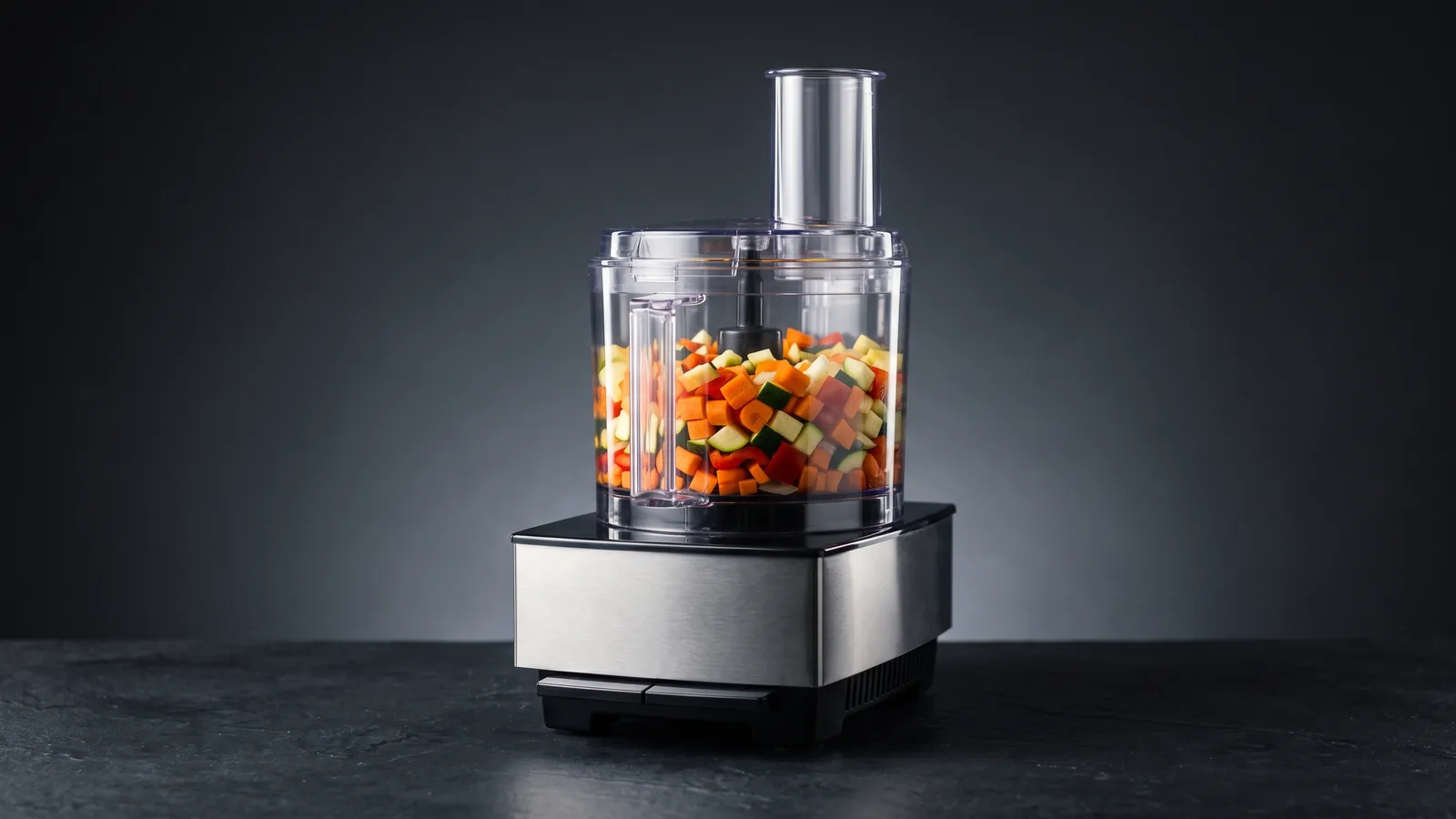
Chopping and mincing dry ingredients. Onions, carrots, celery, herbs, garlic — all processed in seconds with the S-blade. A blender cannot chop dry vegetables; without liquid, the vortex cannot form and ingredients sit on the blade without processing.
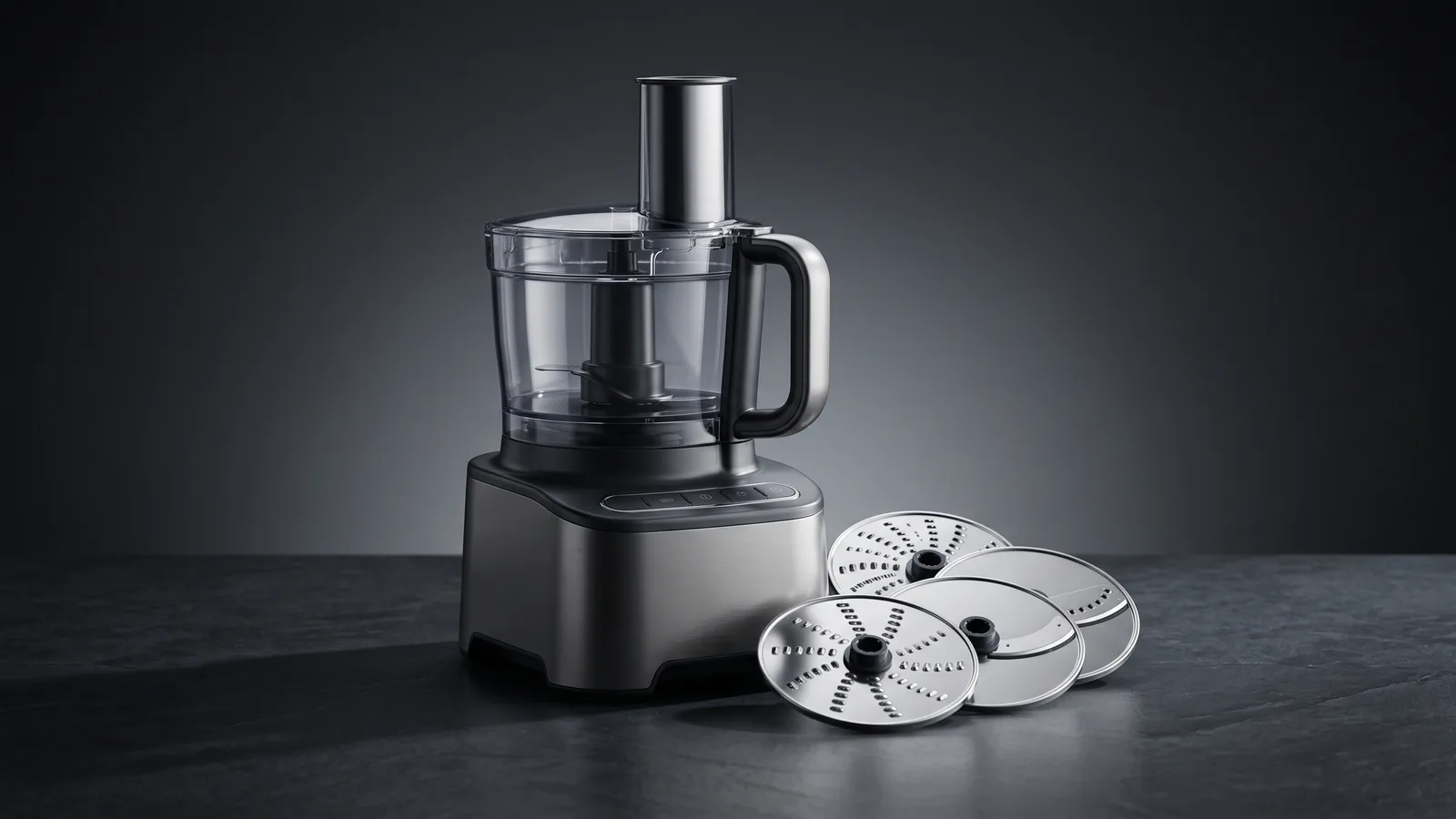
Slicing and shredding. A food processor with a slicing disc turns a cucumber into uniform coins in 10 seconds. The shredding disc produces uniform shredded carrots, cabbage, and cheese with no hand work. A blender has no equivalent for either task.
Dough. Pie crust, biscuit dough, and bread dough are processed in a food processor. A blender cannot handle dry ingredients in the quantities required for dough and has no dough blade.
Shredding cooked meat. Pulled pork and chicken can be shredded in a food processor with brief S-blade pulses. A blender liquefies rather than shreds.
Making nut butter. Processing nuts to butter requires sustained dry processing. A food processor handles this (with appropriate motor wattage for the continuous load). A blender either requires added oil to form a vortex or struggles with the dry processing.
Pastry fat cutting. The S-blade cuts cold butter into flour in 10–15 pulses for pie crust. A blender cannot process cold, dry flour and butter without liquid.
The limited overlap
A few tasks can be done adequately by both:
Hummus and thick dips. Both machines process chickpeas into hummus. A food processor produces a slightly textured, chunky hummus that many buyers prefer. A blender produces a smoother result closer to commercial hummus texture. Both are acceptable; the choice is a texture preference.
Cooked vegetable purees. Roasted butternut squash, steamed cauliflower, cooked beets — both machines puree these effectively. A blender is smoother; a food processor is slightly coarser. For a chunky mash, food processor. For a smooth soup, blender.
Chopping nuts. Both machines chop nuts. A blender can do it in short pulses with limited liquid; a food processor does it more evenly without any liquid requirement.
Which to buy first: the decision table
| If you primarily cook / make | Buy first |
|---|---|
| Smoothies and protein shakes daily | Blender |
| Soups and sauces | Blender |
| Weeknight vegetable prep (chopping, dicing) | Food processor |
| Hummus, dips, and spreads | Either; food processor for texture, blender for smooth |
| Shredding cheese or cabbage | Food processor |
| Bread dough or pie crust | Food processor |
| Frozen cocktails and icy drinks | Blender |
| Batch cooking and large prep tasks | Food processor |
| Baby food (purees) | Blender (smoother) or food processor (texture depends on stage) |
| Nut butter | Food processor |
What about a combined blender + food processor?
Some machines bundle both into one base — a “2-in-1” or blender/food-processor combo (Ninja, Cuisinart, and others make them). The shared motor drives either a tall blender jar or a wide processor bowl with swappable attachments.
The appeal: one motor, one footprint, one purchase — genuinely convenient for a small kitchen, and cheaper than buying two good standalone machines.
The compromise: a combo is rarely as good at either job as a dedicated machine. The blender jar is often smaller or less powerful than a standalone, and the processor bowl and disc set tend to be more basic. The shared base is also a single point of failure — if the motor dies, you lose both functions.
Who it’s for: small kitchens, light-to-moderate cooking, and anyone who wants both capabilities without two appliances on the counter. If you lean heavily on either smoothies or prep, a strong standalone of that type usually serves you better than a mid-tier combo.
The case for eventually owning both
Buyers who cook regularly and own only one of the two machines consistently report finding tasks they cannot complete. A home cook with only a blender hand-chops vegetables for stir-fry and avoids making pastry because they have no way to cut cold fat into flour efficiently. A home cook with only a food processor makes chunky soup when they want smooth and cannot make smoothies for weekday mornings.
The price of owning both is $100–$400 depending on quality tier:
- Budget combo: $30 mini chopper + $50 countertop blender = $80
- Mainstream combo: $150 Cuisinart 11-cup + $100 blender = $250
- Premium combo: $250 Breville food processor + $500 Vitamix = $750
For most regularly cooking households, the mainstream combo covers nearly all kitchen processing tasks.
Ready to choose a processor? See our top food processor picks by use case.
Our top food-processor pick — Cuisinart 14-Cup. If the verdict is a processor, this is the workhorse most serious cooks land on:
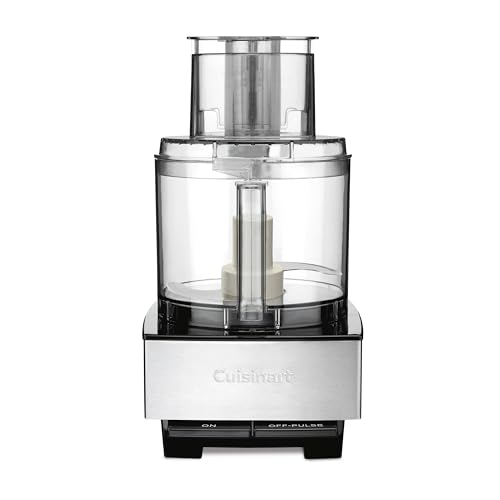
Cuisinart 14-Cup Food Processor
The workhorse, and the best food processor for most serious cooks. Owners reward it for overall quality and processing strength above almost anything in the category — strong for chopping, slicing, dough, and nut butter. The honest trade-offs: ease of use is its weak point (fiddly assembly), value is penalized, and the category breakage risk applies. Buy with an easy return window and learn the locking sequence.
Prime Day Amazon Prime Big Deal Days is on — a good time to check the live price.
Check current price on AmazonWhat buyers praise
- Overall quality and processing strength are its standouts
- Clean, precise cuts; strong motor for demanding tasks
- 14-cup capacity plus slicing and shredding discs
- Deep, trustworthy review base
What buyers flag
- Ease of use is its weak point — fiddly assembly
- Value-for-money is penalized — a premium price
- Category breakage risk — buy with an easy return window
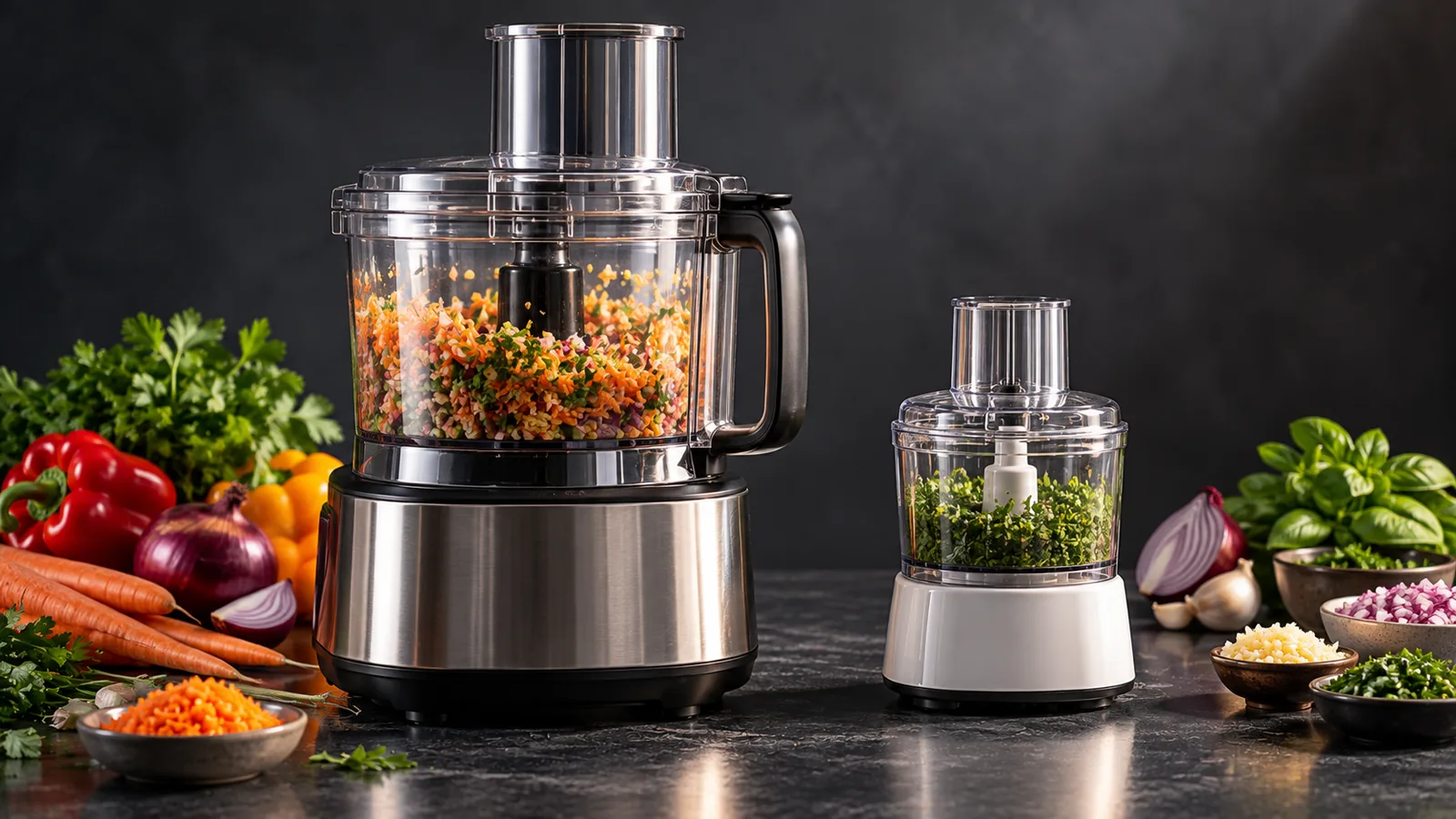
What can a food processor actually do · Full-size vs mini food processor