The core cleaning sequence
Food processor cleaning is straightforward when done in the right order. The sequence matters: disassemble first, clean the blade first (most hazardous), then the bowl and lid.
Step 1: Unplug before disassembly
Before touching any part of the machine for cleaning, unplug it. Food processors have interlock systems that prevent the blade from running without the bowl and lid in place, but there is no interlock that prevents accidental contact with a stationary blade. Unplug as a default habit.
Step 2: Remove the bowl from the base
Twist or lift the bowl off the motor base according to your machine’s mechanism. Set the base aside — the motor base never goes near water or any wet cleaning method.
Step 3: Remove the blade by the hub
This is the step where cuts most commonly occur: reaching into the bowl to remove the blade without looking, or grabbing it by reflex without thinking about the edge orientation.
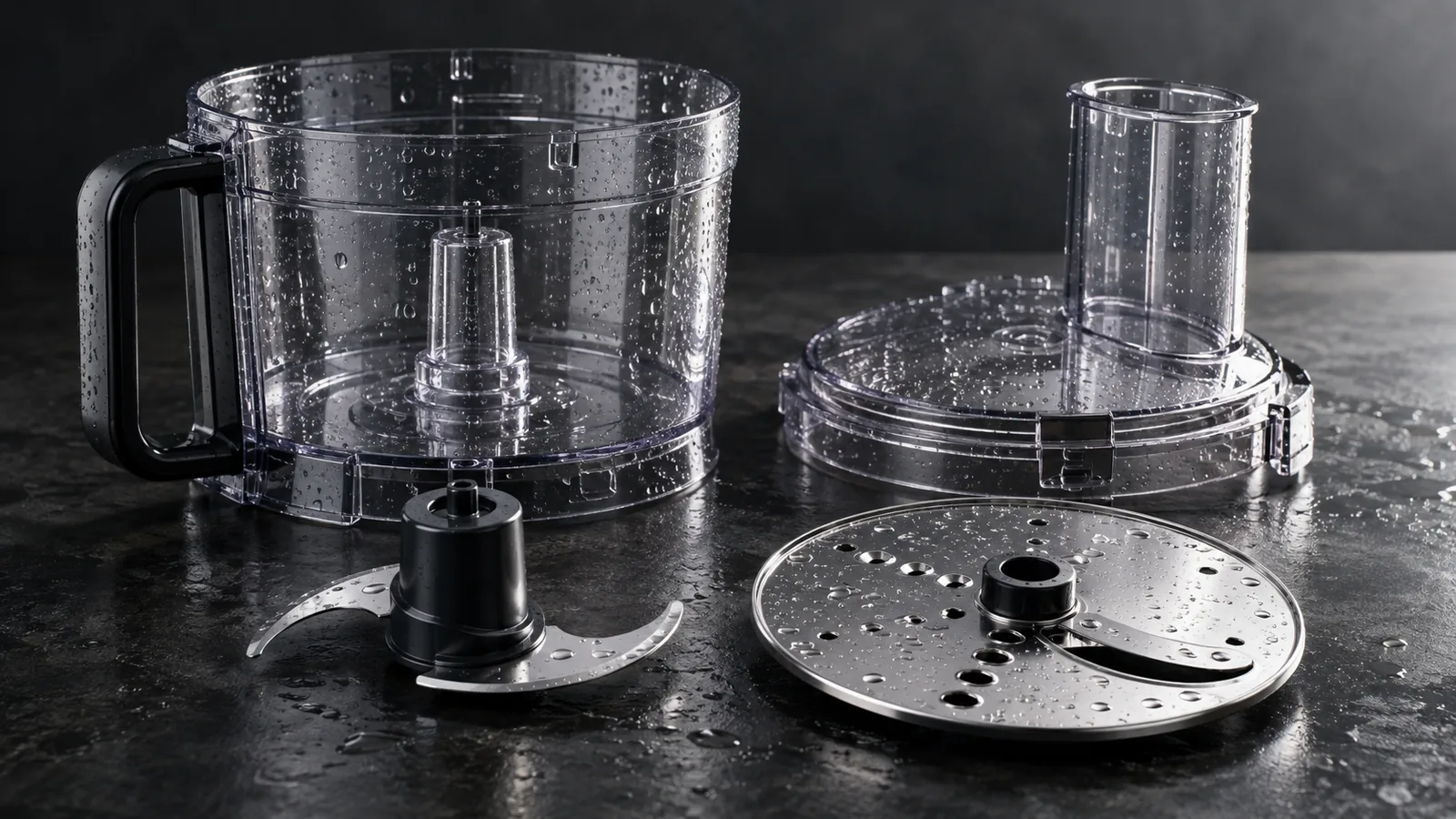
The correct method: grasp the blade by the plastic center hub that sits on the spindle. The plastic hub is always in the center of the S-blade and is the only safe gripping point. Lift the blade straight up. Place it on a flat, stable surface — not propped against the bowl edge where it can fall blade-down.
If your machine includes a blade removal tool (a plastic tool designed to hook the hub without touching the edge), use it every time.
Step 4: Clean the blade
Immediate rinse: if cleaning promptly after use, rinse the blade under warm running water to remove loose food. Most residue comes off easily when the food has not dried.
Hand washing: hold the blade hub with one hand; wash with a soft sponge from hub outward, moving away from the cutting edge rather than across it. Rinse thoroughly.
Soaking for stuck food: dried hummus, pesto, or dough stuck to the blade releases with a 5–10 minute soak in warm soapy water. Do not scrub dried food off with a stiff brush — the force required to remove dried food pushes against the blade edge in a dulling direction.
Dishwasher: technically dishwasher-safe on most machines, but the cumulative effect of dishwasher detergent (which contains alkaline abrasive agents) dulls blade sharpness over months of use. For buyers who want the blade to stay sharp for years rather than months, hand washing is the better choice.
Step 5: Clean the bowl
Self-cleaning pulse method (for fresh residue): fill the bowl with 2–3 cups of warm water, add a drop of dish soap, place on the base (without the blade), replace the lid, and pulse 5–10 times. The water agitation removes most fresh residue from the bowl walls. Discard the soapy water, rinse, and air dry.
Hand washing: a soft sponge, warm water, and mild dish soap. Never use abrasive scrubbers (steel wool, rough sponge pads) on the plastic bowl — they leave micro-scratches that accumulate over time and cloud the bowl’s transparency.
Dishwasher: top rack only. Bottom rack heat can warp the bowl and cause clouding. Top-rack cycle is appropriate for routine cleaning.
For dried food: soak in warm soapy water for 10–15 minutes before washing. Most dried food releases without significant scrubbing after a short soak.
Step 6: Clean the lid and feed tube
The lid has nooks around the feed tube chute that trap food. A narrow brush (a bottle brush or designated food processor lid brush) cleans the feed tube interior. The lid is dishwasher-safe on most machines; hand washing preserves the seal rubber that keeps the lid latched.
Step 7: Wipe the motor base
The motor base never goes in water or the dishwasher. Wipe the exterior with a damp cloth. For food that has seeped under the bowl seal (a common issue in some machines), use a damp cloth or a cotton swab to clean around the spindle. Do not pour water into the motor opening.
Dishwasher safety by part
| Part | Dishwasher safe? | Recommended method |
|---|---|---|
| Bowl | Top rack (not bottom) | Top rack or hand wash |
| Lid | Top rack | Top rack or hand wash |
| S-blade | Technically yes; dulls faster | Hand wash to preserve edge |
| Shredding disc | Top rack | Top rack |
| Slicing disc | Top rack | Top rack |
| Dough blade | Top rack (plastic) | Top rack |
| Motor base | Never | Damp cloth only |
Preventing the most common damage
Bowl scratching and clouding
Cause 1: abrasive scrubbers. The fix is using only soft sponges or cloths on the plastic bowl.
Cause 2: bottom-rack dishwasher placement. Bottom-rack water jets hit the bowl with more force and heat than top-rack. Always top rack.
Cause 3: acidic food left in the bowl. Tomatoes, citrus juice, and vinegar-based dressings left in a plastic bowl for more than 30 minutes can etch the surface. Rinse promptly after processing acidic ingredients.
Blade dulling
Cause 1: dishwasher detergent’s abrasive action on the edge. Hand washing is the prevention.
Cause 2: processing very hard ingredients repeatedly. Frozen food, hard candy, and ice stress and dull the blade faster than intended use. Process only unfrozen or properly thawed ingredients.
Cause 3: improper storage. Blades stored loose in a drawer accumulate contact damage from other utensils. Store in the included blade storage case or in the bowl with the lid on.
Seal leaking after cleaning
The bowl-to-base seal that prevents liquid from seeping under the bowl onto the motor can degrade from:
- Dishwasher cycles that warp the bowl bottom slightly (especially bottom rack)
- Silicone ring damage from abrasive cleaning
- Repeated exposure to very hot water
If leaking develops after a period of dishwasher use, try hand washing for several cycles — if the bowl is slightly warped from heat, it may reseat better after cooling. If leaking persists, the bowl or the motor base spindle seal may need replacement.
Quick clean vs deep clean
Quick clean (between tasks in the same cooking session): fill the bowl with water, pulse, pour out, and continue. For processing multiple ingredients where cross-contamination is undesirable (sweet and savory in the same session), this quick rinse prevents flavor transfer without full disassembly.
Deep clean (after the cooking session): full disassembly, blade hand-washed, bowl and lid dishwasher or hand-washed, base wiped. This is the routine after every use.
Monthly: check the blade seating and the bowl seal. Confirm the bowl seats firmly on the base with no wobble. Inspect the blade hub for any cracks that could cause the blade to seat unevenly.
How to use food processor blades and discs · What can a food processor actually do · The best food processors