What the two baskets actually do
The portafilter is the handled basket that holds your coffee puck and locks into the machine (see how an espresso machine works for where it sits). The basket inside it comes in two designs:
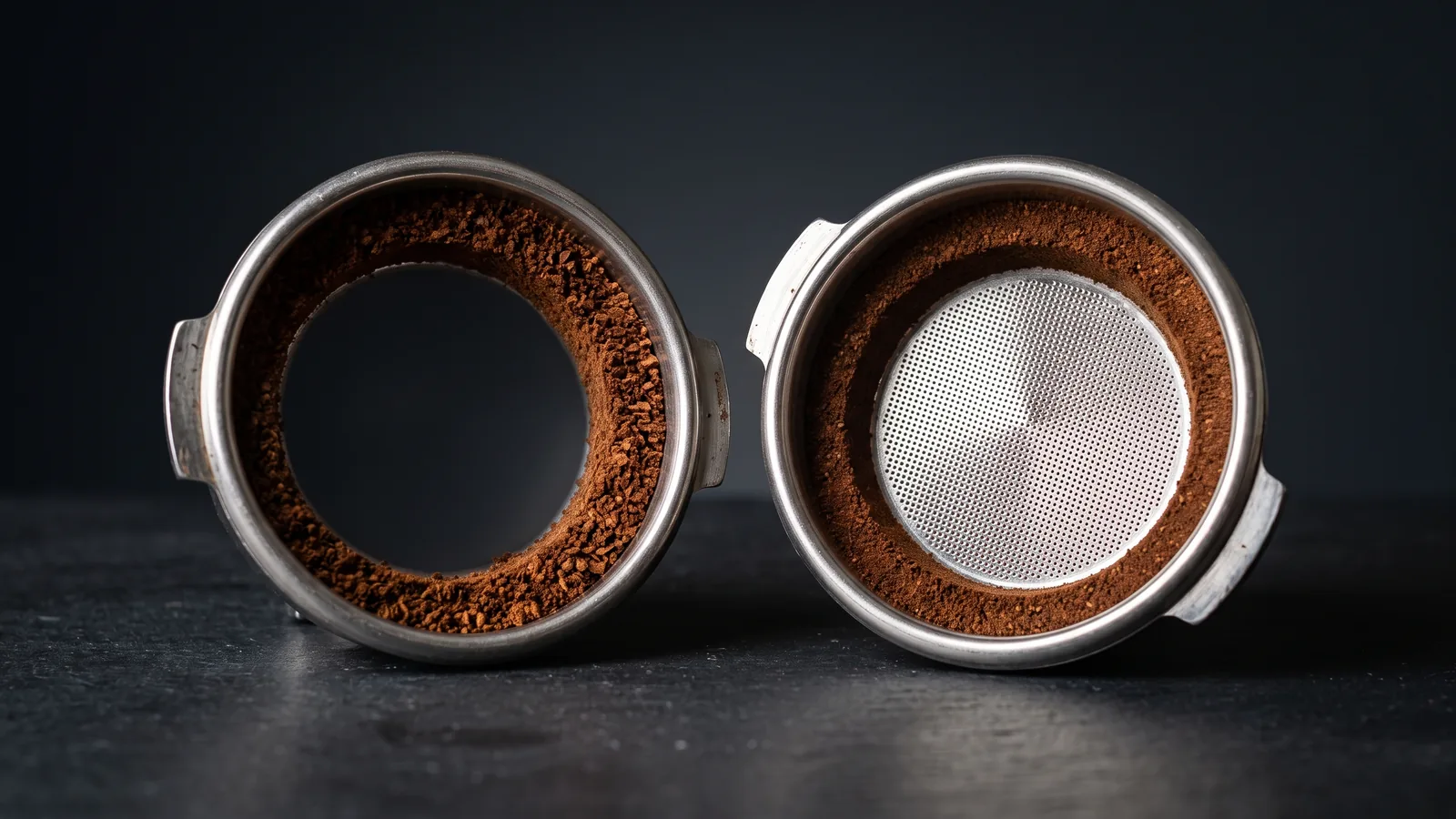
- Non-pressurized (single-wall, “standard”): a basket with many fine holes across the bottom. The resistance to the machine’s ~9 bars of pressure comes entirely from your coffee puck — so it only works well with a fine, even grind and a proper tamp. Get those right and you get true extraction and real crema.
- Pressurized (dual-wall): a basket with a second wall and a single tiny exit hole. That hole creates back-pressure artificially, so a drinkable, crema-topped shot comes out even if your grind is coarse, uneven, or pre-ground.
The trade-off in one line
Pressurized forgives; non-pressurized rewards. The pressurized basket lowers the skill and equipment bar to get a shot. The non-pressurized basket raises the ceiling on how good the shot can be — but only if you bring a real grinder and technique.
| Pressurized (dual-wall) | Non-pressurized (single-wall) | |
|---|---|---|
| Crema from a bad grind | Yes (partly artificial) | No |
| Needs a good burr grinder | No | Yes |
| Rewards technique | Little | A lot |
| Flavor ceiling | Lower | Higher |
| Best for | Beginners, pre-ground, no grinder yet | Dialing in real espresso |
Why the crema is different
A pressurized basket’s crema is partly a mechanical artifact — foam generated by forcing liquid through that single hole — not purely the emulsified oils and CO₂ that real pressure extraction produces. It looks the part, which is exactly why beginner machines use it. A non-pressurized basket’s crema comes from genuine extraction, so it tracks bean freshness and grind quality (and tells you more about your shot).
The grinder is the deciding factor
Here’s the practical catch: a non-pressurized basket is only better if you can grind for it. It needs a fine, consistent, adjustable grind so the puck creates even resistance to 9 bars. A blade grinder or supermarket pre-ground will run too fast and sour, or choke the machine entirely. So the real decision is less “which basket” and more “do I have an espresso-capable grinder yet?” If not, stay pressurized until you do — see the best coffee grinders and why burr beats blade.
Which to use
- No good grinder yet, or just starting: use the pressurized basket. Get comfortable, make drinkable espresso, learn the machine.
- Have a burr grinder and want better shots: switch to the non-pressurized basket and start dialing in with how to pull a shot.
This mirrors the broader budget-vs-premium pattern in espresso: cheap machines lean on pressurized baskets to hide a weak grinder, while the jump in quality comes from a standard basket plus a proper grinder — see premium vs budget espresso machines.
Where to go next
- The best espresso machines for beginners — most come with a pressurized basket to start on and a standard basket to grow into
- How does an espresso machine work — the pressure mechanism
- How to pull a shot of espresso — dose, grind, tamp, yield
- The best coffee grinders — what a standard basket needs