How to Pull a Shot of Espresso: Dose, Grind, Tamp, and Yield
Noolaguide Editorial·Last updated
Disclosure: As an Amazon Associate, Noolaguide earns from qualifying purchases — we may earn a commission when you buy through links on this page, at no extra cost to you. Our recommendations are editorially independent. How we make money.
A good espresso shot is four numbers and one skill: a dose of about 18 grams of finely ground coffee, a level tamp, a yield of roughly 36 grams of liquid (a 1:2 ratio), pulled in about 25–30 seconds. Grind is the dial you turn — if the shot runs too fast and sour, grind finer; too slow and bitter, grind coarser. Everything else stays the same while you chase the time.
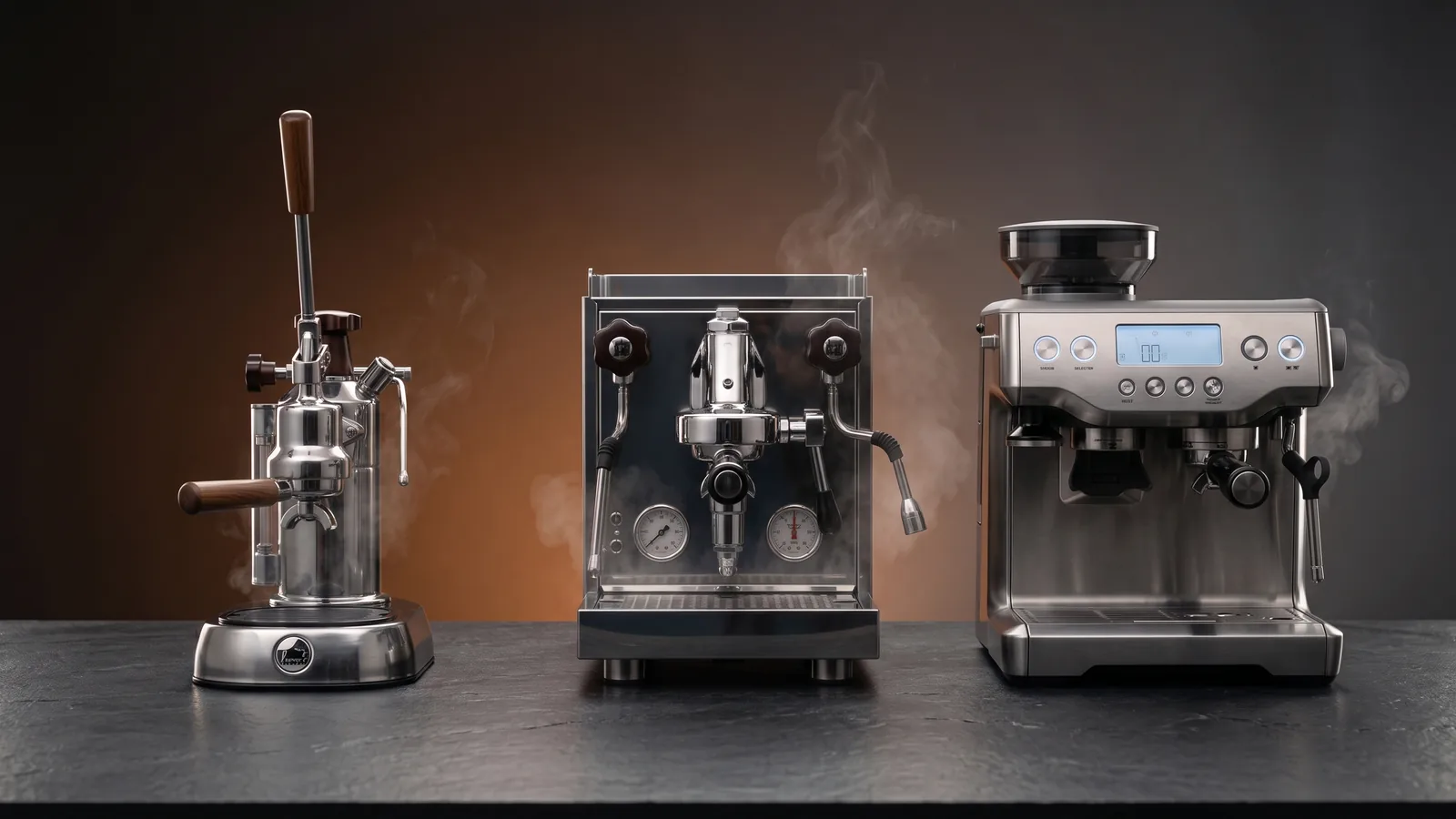
An espresso machine with a portafilter — see the types explained if you’re still choosing.
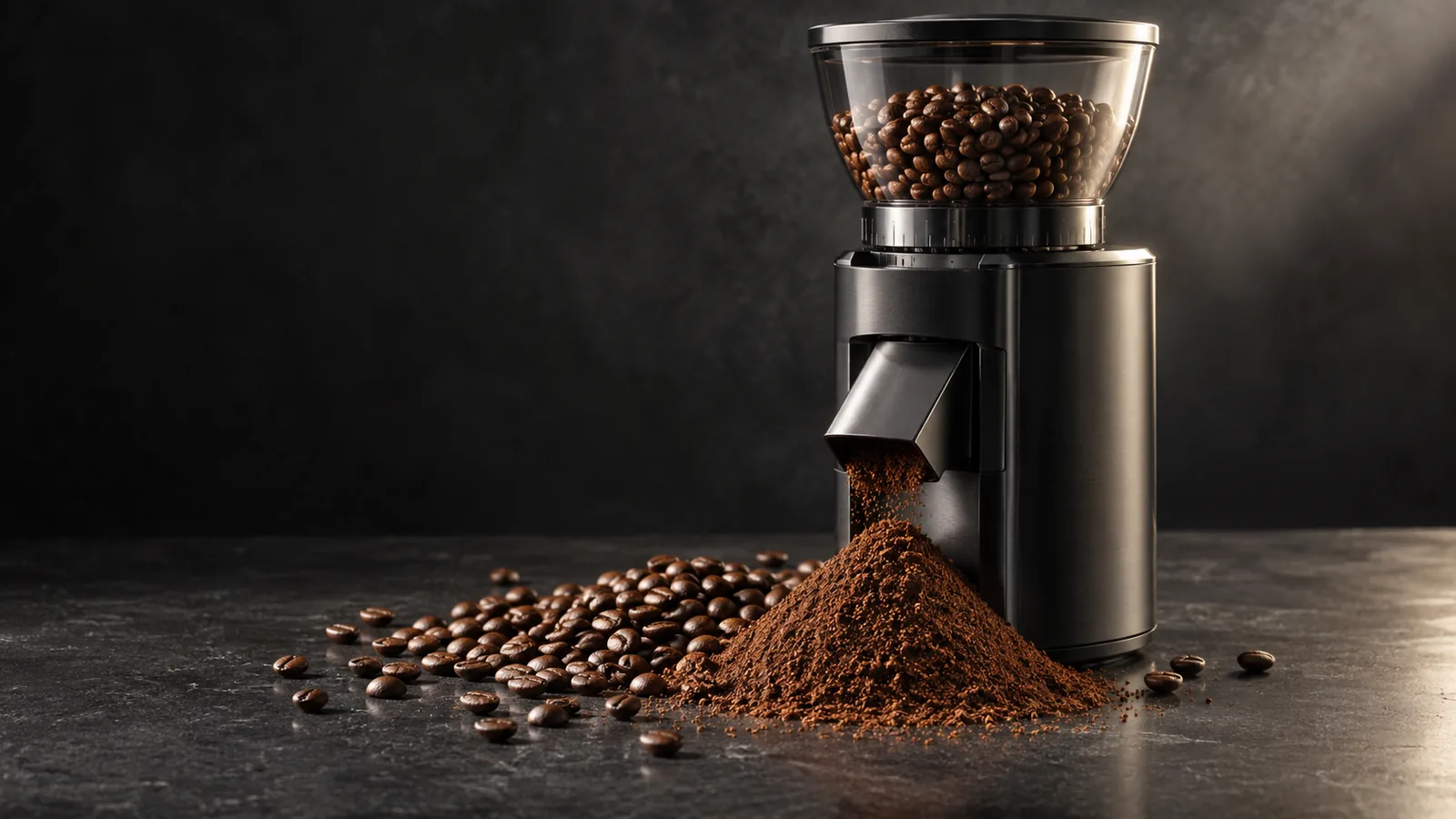
An espresso-capable burr grinder you can adjust in tiny steps. Non-negotiable (why burr beats blade).
A scale that fits on the drip tray — the biggest single upgrade to consistency.
Fresh beans and a tamper.
The four numbers
Dose — ~18 g of coffee in the basket (match your basket’s rated size).
Grind — fine, and adjustable in small steps. This is the dial you’ll turn (grind size guide).
Yield — ~36 g of espresso out (a 1:2 ratio by weight).
Time — ~25–30 seconds to reach that yield.
Yield and dose set the ratio; grind sets the time. You lock the numbers and move the grind until the time and taste land.
The method
Dose and level. Grind fresh, weigh ~18 g into the portafilter, and distribute the grounds evenly so there are no gaps.
Tamp level. Press straight down with firm, consistent pressure — flat and even matters more than hard.
Lock in and pull. Insert the portafilter, put a scale and cup underneath, start the pump and a timer together.
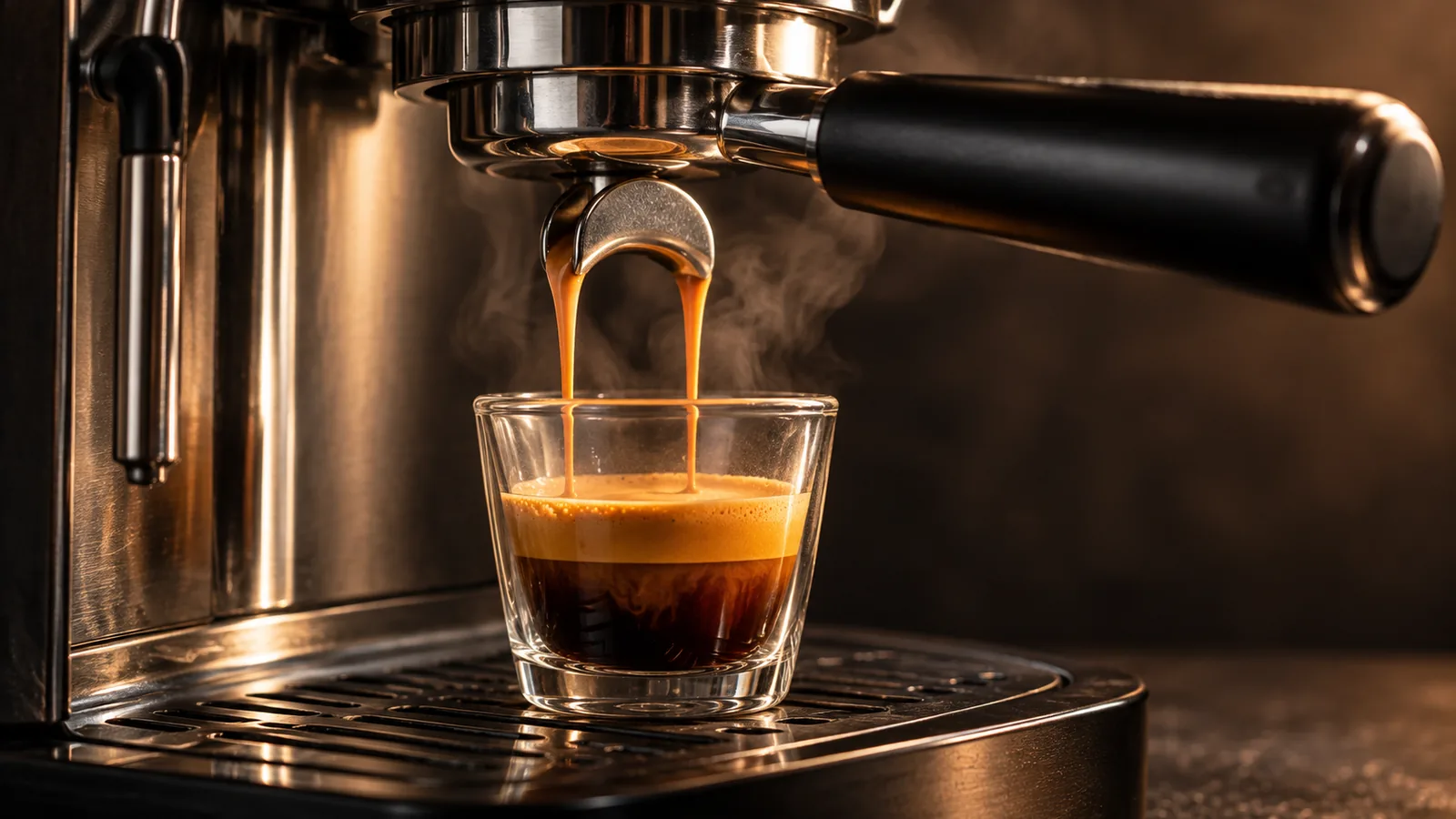
Watch the pour. It should begin after a couple of seconds and run like warm honey — steady, not spitting or gushing.
Stop at ~36 g (about 25–30 seconds). Note the time.
Taste, then adjust the grind for the next shot — nothing else yet.
Fixing a shot
Problem
Cause
Fix
Sour, sharp; shot ran fast
Under-extracted (grind too coarse)
Grind finer
Bitter, harsh; shot ran slow
Over-extracted (grind too fine)
Grind coarser
Gushing, pale, watery
Grind too coarse or dose too low
Grind finer; fill the basket
Dripping, choked, no flow
Grind too fine or dose too high
Grind coarser; reduce dose
Bitter and weak at once
Channeling (uneven tamp/distribution)
Distribute evenly; tamp level
Why grind is the dial
Once your dose, yield, and machine are set, grind size is the one variable that changes the shot — because it controls how fast water moves through the puck, which controls extraction and time. That’s why espresso needs a grinder you can adjust in tiny increments: a step too coarse and the shot gushes sour, a step too fine and it chokes bitter. A great machine can’t overcome a grinder that can’t dial in. If you’re building a setup, weight the grinder at least as heavily as the machine.
The machine to start on. It has a deep owner record and the most favorable feedback of the manual machines we analyzed: praise outweighs complaints more than two and a half to one, led by ease of use, quality and value. It is a compact semi-automatic machine with a steam wand and no grinder. The complaints are units that did not work, durability, and some leaks. You must let it cool after frothing milk before brewing again.
Prime DayAmazon Prime Big Deal Days is on — a good time to check the live price.
Most favorable owner feedback of the manual machines
Owners praise ease of use, quality and value
Compact, with a steam wand for milk
What buyers flag
No built-in grinder
Some units did not work, or failed; a few leaks
Must cool after frothing before the next shot
At a glance
Dimensions
12.28"D x 5.47"W x 11.97"H
Power
1350 watts
Weight
8.59 pounds
Material
Brushed Stainless Steel
Warranty
1-year
In the box
Instruction Manual, 34 oz Removable Water Tank, 51mm One Cup Filter, 51mm Two Cup Filter, 51mm Portafilter
Owner evidence report
CASABREWS CM5418 Compact Espresso Machine
What owners praise
Ease of use17% category avg
24%
Quality13% category avg
23%
Value for money11% category avg
16%
Compactness5% category avg
8%
Ease of cleaning7% category avg
8%
What to watch
Functionality2% category avg
15%
Quality2% category avg
15%
Durability2% category avg
12%
Value for money2% category avg
12%
Themes from our analysis of verified owner reviews. Each bar is that theme's share of what owners raise, with the category average beside it for context. Noolaguide does not claim hands-on lab testing; the authority here is the accumulated experience of the people who own it.
A standard modern espresso is about a 1:2 ratio by weight — roughly 18 grams of ground coffee in, 36 grams of liquid espresso out. This is the dose-to-yield ratio, measured on a scale, not a pot ratio like drip coffee. A 1:2 is the balanced default; a shorter ratio like 1:1.5 (a ristretto) is more concentrated and sweeter, while a longer 1:3 (a lungo) is bigger and more extracted. Start at 1:2 and adjust to taste once your shot time is consistent.
About 25 to 30 seconds from the moment you start the pump to reaching your target yield, though the window is a guide rather than a rule. Time is a symptom, not the goal: what you're really chasing is the right yield at the right taste. If a 1:2 shot pours in well under 25 seconds it's usually under-extracted and sour, so grind finer; if it takes much more than 30 seconds it's usually over-extracted and bitter, so grind coarser. Adjust the grind, keep everything else the same, and re-pull.
Weigh your dose (about 18 g) of finely ground coffee into the portafilter. Distribute the grounds evenly and tamp them level with firm, consistent pressure. Lock the portafilter into the machine and start the shot with a scale under the cup and a timer running. Watch the espresso pour: it should start after a couple of seconds, run in a steady, honey-like stream, and reach about 36 g in 25–30 seconds. Stop at your target yield. Then taste, and adjust the grind for the next shot if it was sour (finer) or bitter (coarser).
Sour, sharp espresso is usually under-extracted: the shot ran too fast, so grind finer, and check your dose is full. Bitter, harsh espresso is usually over-extracted: the shot ran too slow, so grind coarser. Uneven, both-at-once flavors often mean channeling — water finding a path through the puck instead of soaking it evenly — which comes from uneven distribution or tamping. Grind is the main dial; distribution and a level tamp fix channeling. Change one thing at a time so you can tell what worked.
It's the single biggest upgrade to consistent espresso. Espresso is defined by small weights — an 18 g dose, a 36 g yield — and eyeballing them makes every shot different. A small scale that fits on the drip tray lets you weigh the dose going in and the shot coming out, so you can actually hit a 1:2 ratio and change one variable at a time. You can learn without one, but a scale turns guesswork into something repeatable far faster.