Why grind size changes the taste
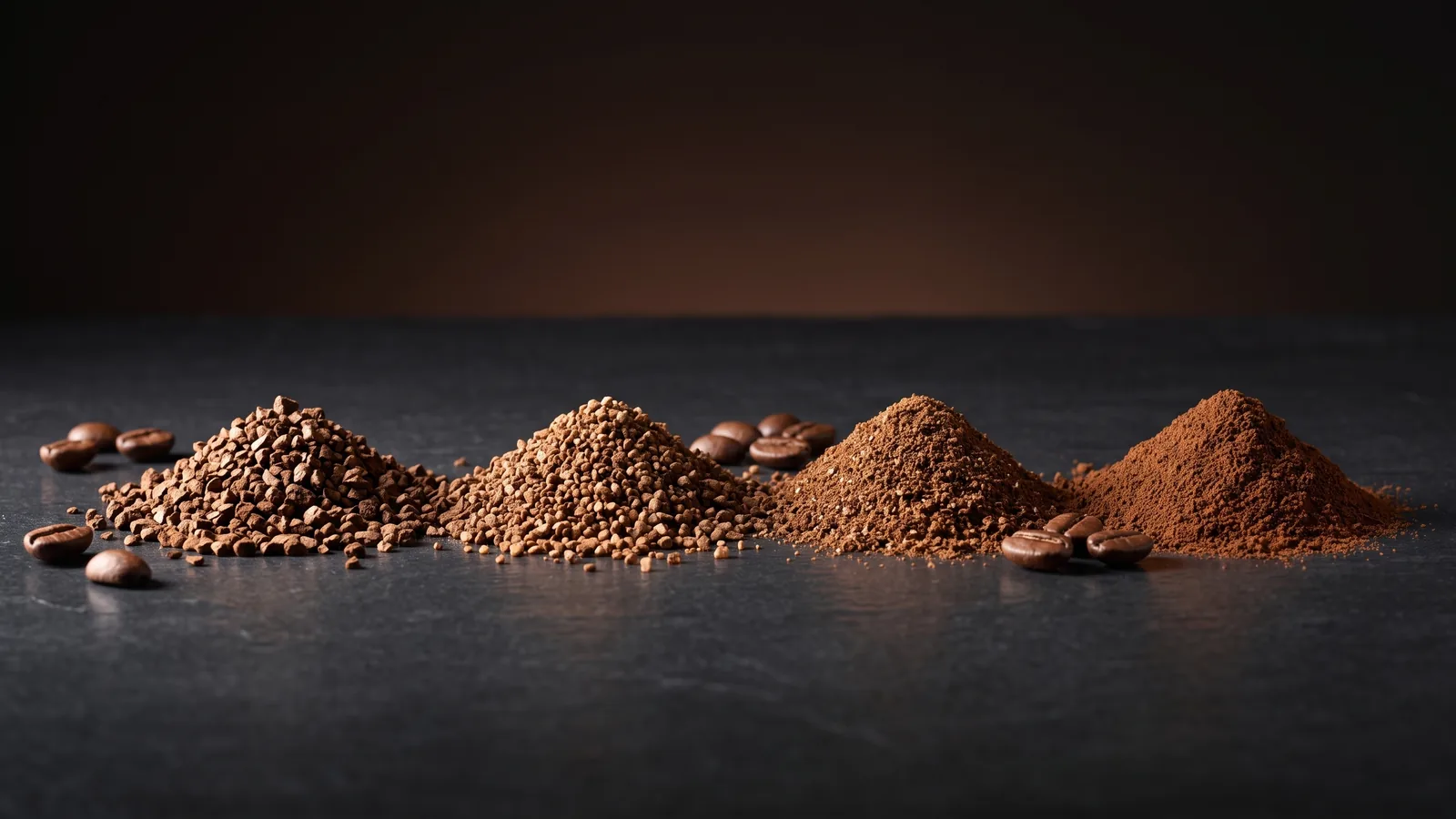
Brewing is extraction: water dissolves flavor out of the grounds. Finer grounds have more surface area, so they extract fast; coarser grounds extract slowly. Every brew method holds water against the coffee for a different length of time, so the grind has to match that time. Get it right and the coffee is balanced; get it wrong and the same beans turn bitter (over-extracted, too fine) or sour and thin (under-extracted, too coarse).
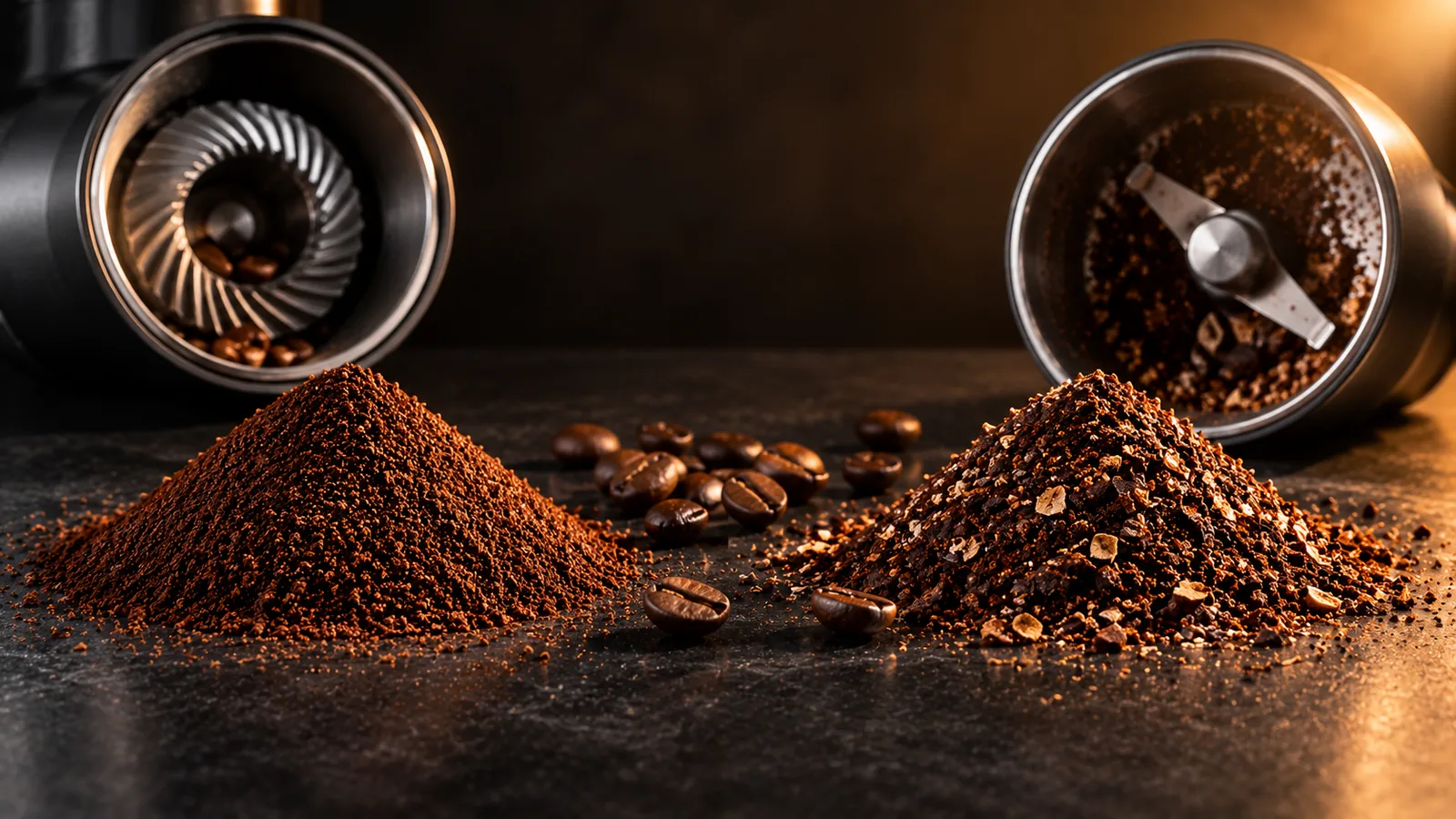
Two things matter about a grind: its average size (which you match to the method, below) and how uniform it is. Even at the right average, a grind full of fines (dust) and boulders (oversized chunks) extracts unevenly — the fines turn bitter while the boulders stay sour. A tight particle distribution is why a burr grinder tastes cleaner than a blade one at the same setting.
The grind chart, fine to coarse
| Brew method | Grind | Looks like |
|---|---|---|
| Espresso | Fine | Powdered sugar / fine sand |
| Moka pot | Fine–medium | Between espresso and table salt |
| AeroPress | Medium-fine | Fine table salt |
| Pour-over (V60, Chemex) | Medium | Table salt / sand |
| Automatic drip | Medium | Table salt |
| French press | Coarse | Coarse sea salt / breadcrumbs |
| Cold brew | Extra coarse | Cracked peppercorns |
The rule behind the chart: shorter, higher-pressure contact → finer; longer steep → coarser. Espresso pushes water through in seconds (fine); cold brew steeps for hours (extra coarse).
How to tell if your grind is off
- Bitter, harsh, or the brew ran slow → too fine (over-extracted). Grind coarser.
- Sour, weak, watery, or the brew ran fast → too coarse (under-extracted). Grind finer.
Adjust in small steps and change only the grind at first — keep your coffee dose, water, and time the same so you can tell what the grind did.
Why you need a burr grinder to do this
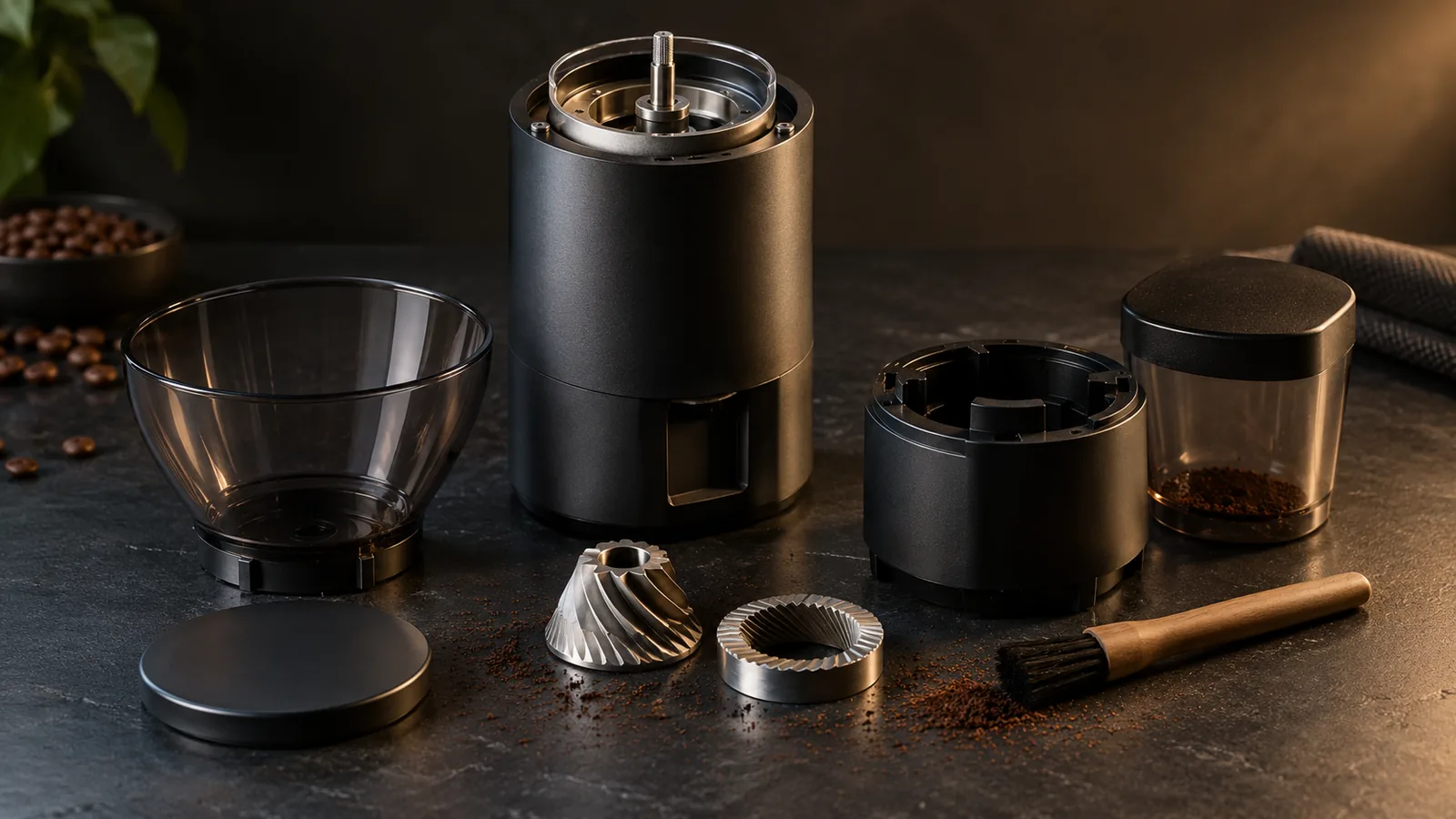
Dialing in grind size only works if the grinder produces a uniform, repeatable size — which a blade grinder can’t. A blade grinder gives a random mix of fine and coarse in every batch, so “medium” isn’t really medium, and you can’t reliably reproduce a setting. A burr grinder sets one consistent size you can dial and repeat, which is what makes matching the grind to the method possible. See burr vs blade grinders for why, and how to clean a coffee grinder to keep it grinding true.
See also: The best coffee grinders — our ranked, data-backed picks.