The core difference: how they cut
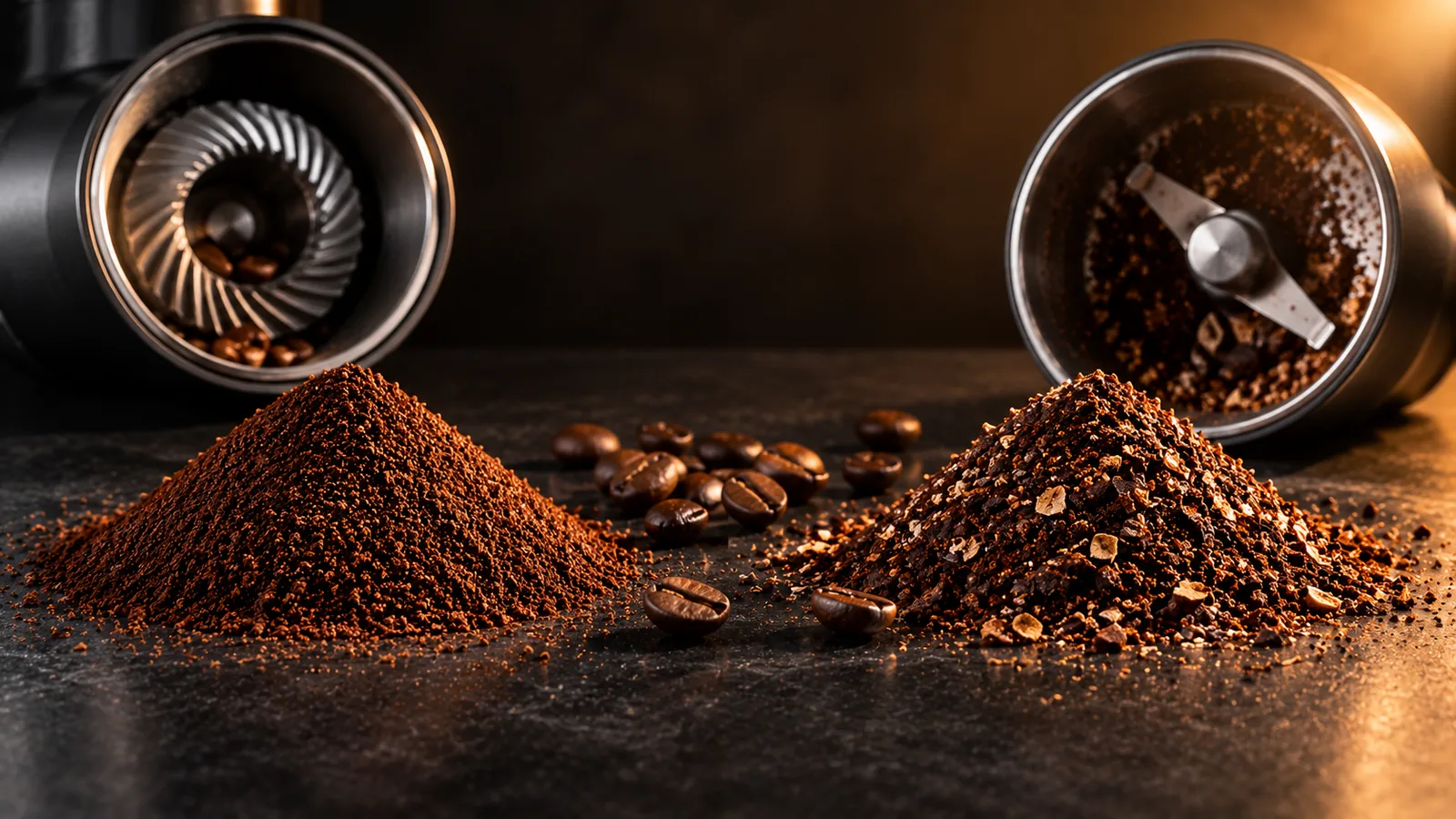
- Blade grinder — a single blade spins and chops the beans randomly for as long as you hold the button. You get a mix of fine powder and coarse chunks, and no control over the size beyond grinding longer.
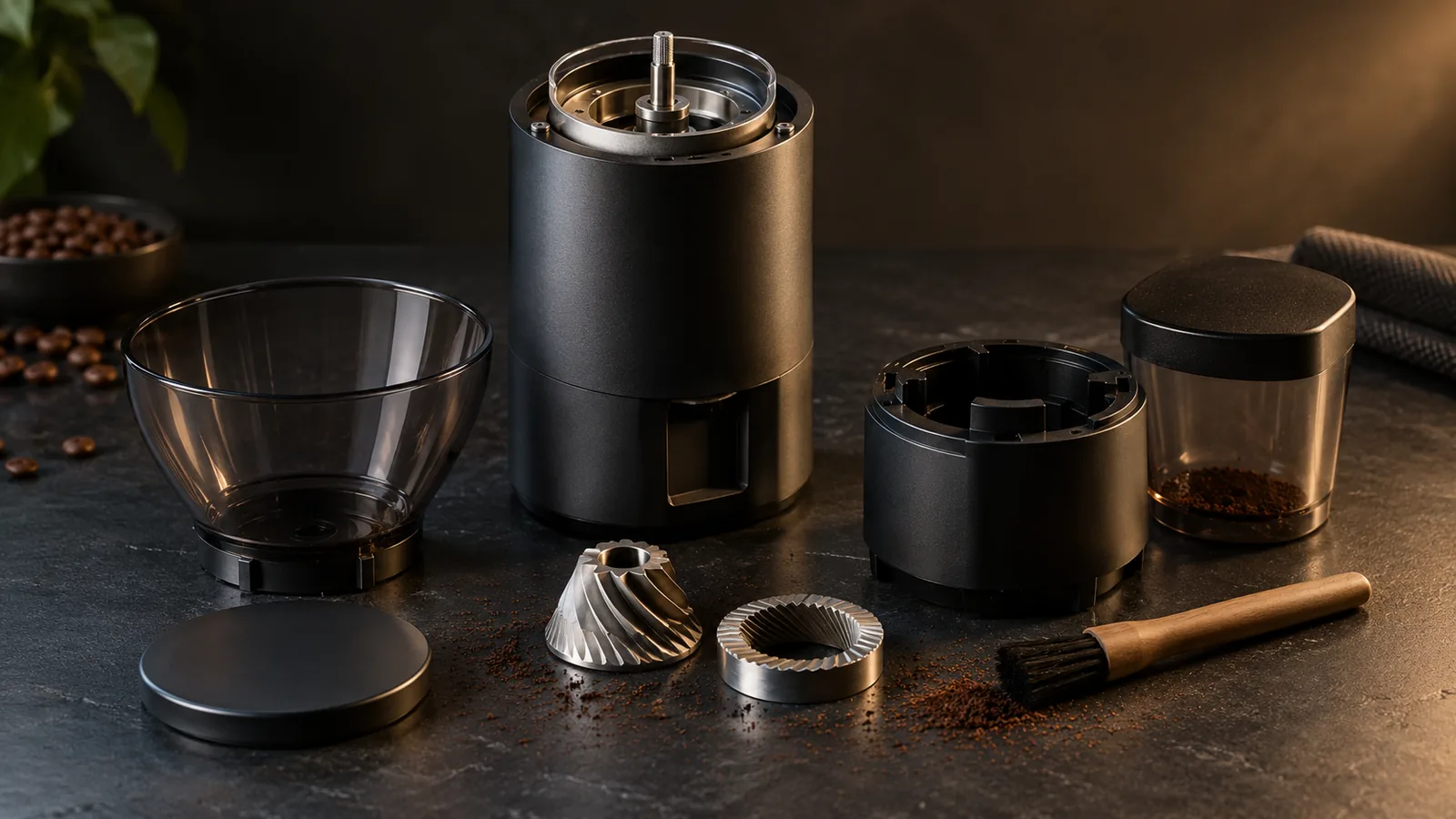
- Burr grinder — two abrasive surfaces (the burrs) sit a set distance apart and crush the beans as they pass through. Every ground comes out the same size, and moving the burrs closer or farther apart changes that size precisely.
Why uniform grind size matters
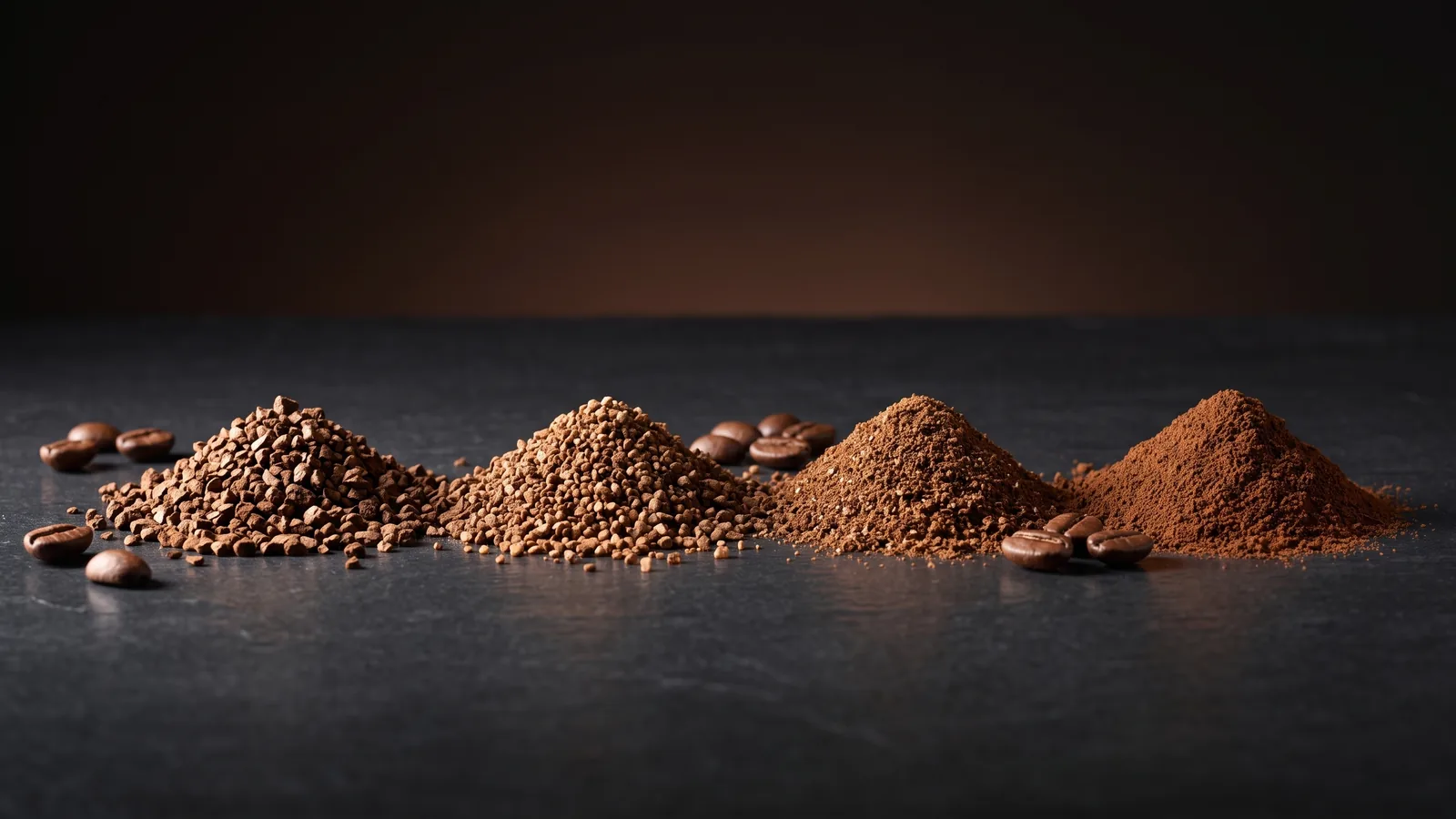
Coffee flavor comes from water extracting compounds out of the grounds, and extraction depends on size. Fine particles give up their flavor fast; coarse ones slowly. The technical name for the spread of sizes in a batch is the particle distribution, and it’s the whole ballgame: a blade grinder produces a wide distribution, full of fines (dust) and boulders (oversized chunks) at once. In the same cup, the fines over-extract into bitterness while the boulders under-extract into sourness. A burr grinder produces a tight distribution — few fines, few boulders — so the grounds all extract at nearly the same rate and the coffee tastes balanced. This is the single biggest reason a burr grinder makes better coffee, and it’s a limitation no blade grinder can overcome. (These terms are defined in the coffee brewing glossary; how fine or coarse to set the grind is in the coffee grind size guide.)
When each makes sense
- Buy a burr grinder if you brew espresso, pour-over, French press, or generally care how your coffee tastes. Espresso and pour-over in particular require a uniform, dial-able grind — a blade grinder can’t do them properly.
- A blade grinder is fine only if you want the cheapest possible grinder for very casual drip coffee — or, usefully, for grinding spices, where uniformity doesn’t matter.
If you care how your coffee tastes, it’s a burr — and this is the one most people should own; the burr-shape detail below is secondary to picking a good one.

KitchenAid Burr Coffee Grinder (KCG8433)
The electric burr grinder with the best owner feedback in our analysis: praise outweighs complaints by more than three to one. It offers 70 grind settings and doses by the cup. Owners praise the quality, how easy it is to clean, and how easy it is to use. The complaint that does appear is durability — a few owners report it failing after months or a couple of years — and one points to plastic internal parts.
Prime Day Amazon Prime Big Deal Days is on — a good time to check the live price.
Check current price on AmazonWhat buyers praise
- Best owner feedback of the electric burr grinders we analyzed
- Easy cleaning is among its most-praised traits
- 70 grind settings, from French press to fine
- Easy to use, per owners
What buyers flag
- Some reports of failure after months or a few years
- Plastic internal parts, per one owner
- Shallower owner record than the best-sellers
At a glance
- Capacity
- 10 ounces
- Dimensions
- 5"L x 8.2"W x 15"H
- Power
- 150 watts
- Weight
- 6.5 pounds
- In the box
- Burr Grinder, Grounds Tray, Portafilter Holder, Bottom Hopper, Top Hopper, Cleaning Brush
Flat vs conical burrs (don’t over-think it)
Both are burr grinders and both make a uniform grind. Conical burrs (one cone nested in another) are common, quieter, cooler-running, and clog less. Flat burrs (two parallel rings) can be extremely consistent and are favored for espresso, but cost more and run warmer. For most home brewers the practical difference is small — burr alignment (how true the two burrs sit, which tightens the particle distribution) and grind retention (how little stale coffee stays stuck inside between uses) matter far more than burr shape.
The bottom line
If coffee quality matters to you at all, a burr grinder is the upgrade that changes the cup — evenness, control, and consistency a blade grinder structurally cannot match. See the best coffee grinders for our ranked burr picks. Keep whichever you own clean so it keeps performing (how to clean a coffee grinder).