The one axis that matters: control vs. automation
Every espresso machine sits somewhere on a single line — from you do everything to the machine does everything. More control means a higher ceiling on quality and a steeper learning curve; more automation means convenience and consistency at a slightly lower ceiling. Pick where on that line you want to live, and the rest of the decision follows.
The four families (plus capsules)
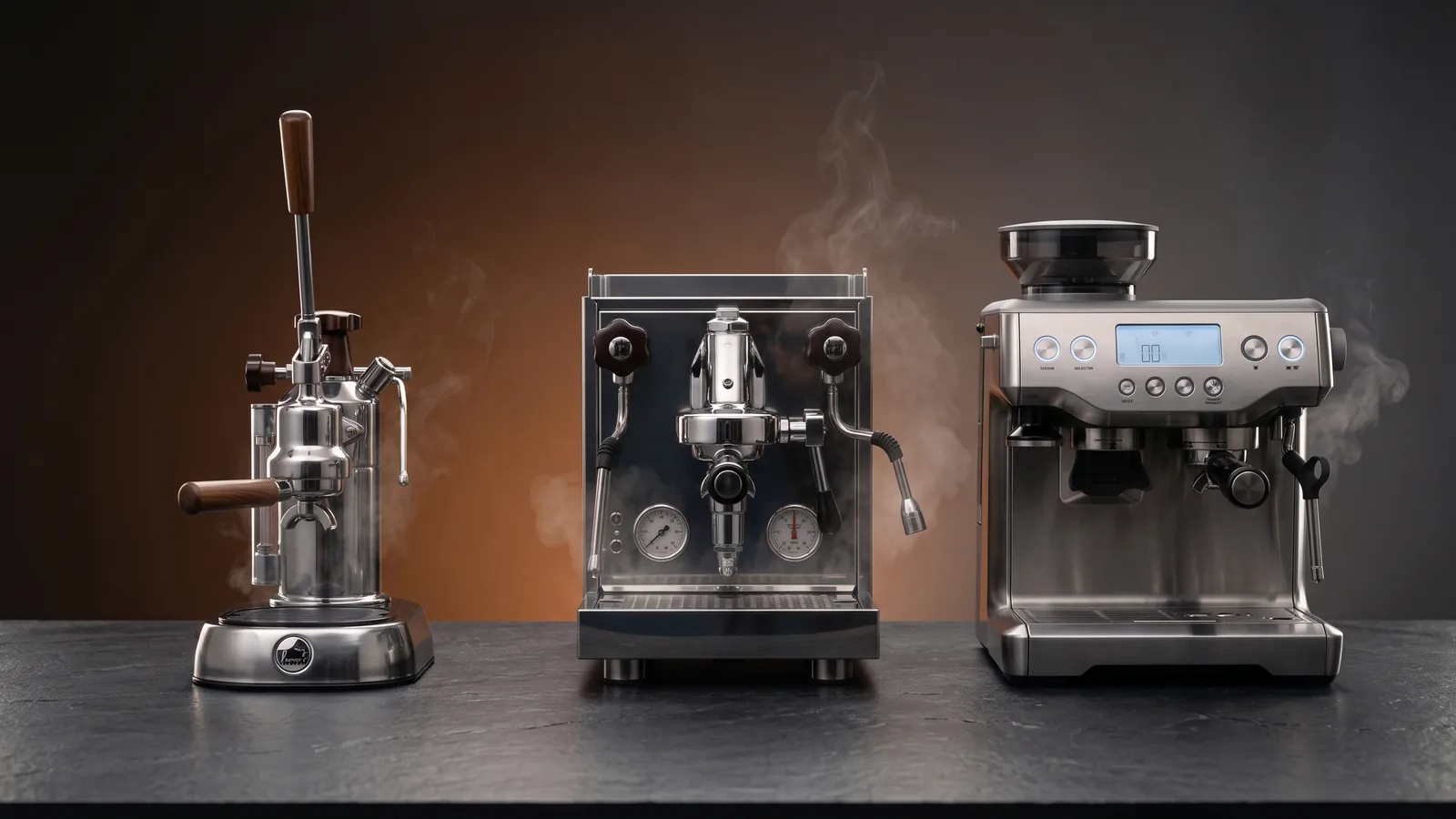
Manual / lever
You pull a physical lever to force hot water through the coffee. The most control, the steepest learning curve, and the most ritual. Beautiful results in skilled hands; frustrating for beginners. A niche, enthusiast choice.
Semi-automatic
An electric pump provides the pressure, but you grind, dose, tamp, start, and stop the shot (and steam the milk). This is the enthusiast standard — the best balance of control and practicality, and the type most cafes use. It demands a dedicated espresso grinder and some practice, and rewards both.
Automatic
Like semi-automatic, but the machine stops the shot at a pre-set volume so you don’t have to time it. A small convenience over semi-auto; otherwise similar in feel and quality.
Super-automatic
Push a button and it grinds, doses, tamps, brews, and often froths milk automatically. Maximum convenience and day-to-day consistency, minimum control. The grinder is built in. Great if you want cafe-style drinks with no technique; less rewarding if you want to dial in shots.
Capsule (Nespresso-style)
Brews a concentrated, espresso-style coffee from sealed pods — no grinding, dosing, tamping, or cleanup. The most convenient, the most consistent, and the least flexible. Purists don’t call it true espresso, but for speed and repeatability it’s hard to beat.
Quick comparison
| Type | You control | Convenience | Needs a grinder | Best for |
|---|---|---|---|---|
| Manual / lever | Everything | Low | Yes | Hobbyists who want ritual |
| Semi-automatic | Grind, dose, tamp, shot | Medium | Yes | Most enthusiasts |
| Automatic | Grind, dose, tamp | Medium-high | Yes | Semi-auto feel, timed shots |
| Super-automatic | Very little | High | Built in | Push-button cafe drinks |
| Capsule | Almost nothing | Highest | No (pods) | Speed and consistency |
The grinder is not optional
For manual, semi-automatic, and automatic machines, the grinder matters as much as the machine. Espresso needs a fine, uniform, finely adjustable grind that pre-ground coffee and blade grinders simply can’t deliver — see why burr beats blade and the grind size guide. The classic beginner mistake is spending everything on the machine and pairing it with a cheap grinder; the result is bad espresso from a good machine. Budget for both together. (New to the vocabulary — dose, yield, channeling, pre-infusion? The coffee brewing glossary covers it.)
How to choose
- Want to learn, and care about quality? Semi-automatic + a real burr grinder. Best long-term value.
- Want cafe drinks with no technique? Super-automatic.
- Want speed and zero fuss? Capsule.
- Want the craft and the ritual? Manual/lever, eyes open to the learning curve.
- Want espresso away from home? A hand-pumped or battery-powered portable maker; see the best portable espresso makers.
Get the family right first; the specific model is the easier decision after that.
Ready for the model? Once you’ve settled on a family, see the best espresso machines for beginners for our top picks, grounded in verified owner reviews — most are semi-automatics, the best-value place to start. For a closer look at two popular beginner options, see the De’Longhi Dedica (a compact semi-automatic) and the De’Longhi Magnifica S (a bean-to-cup super-automatic).