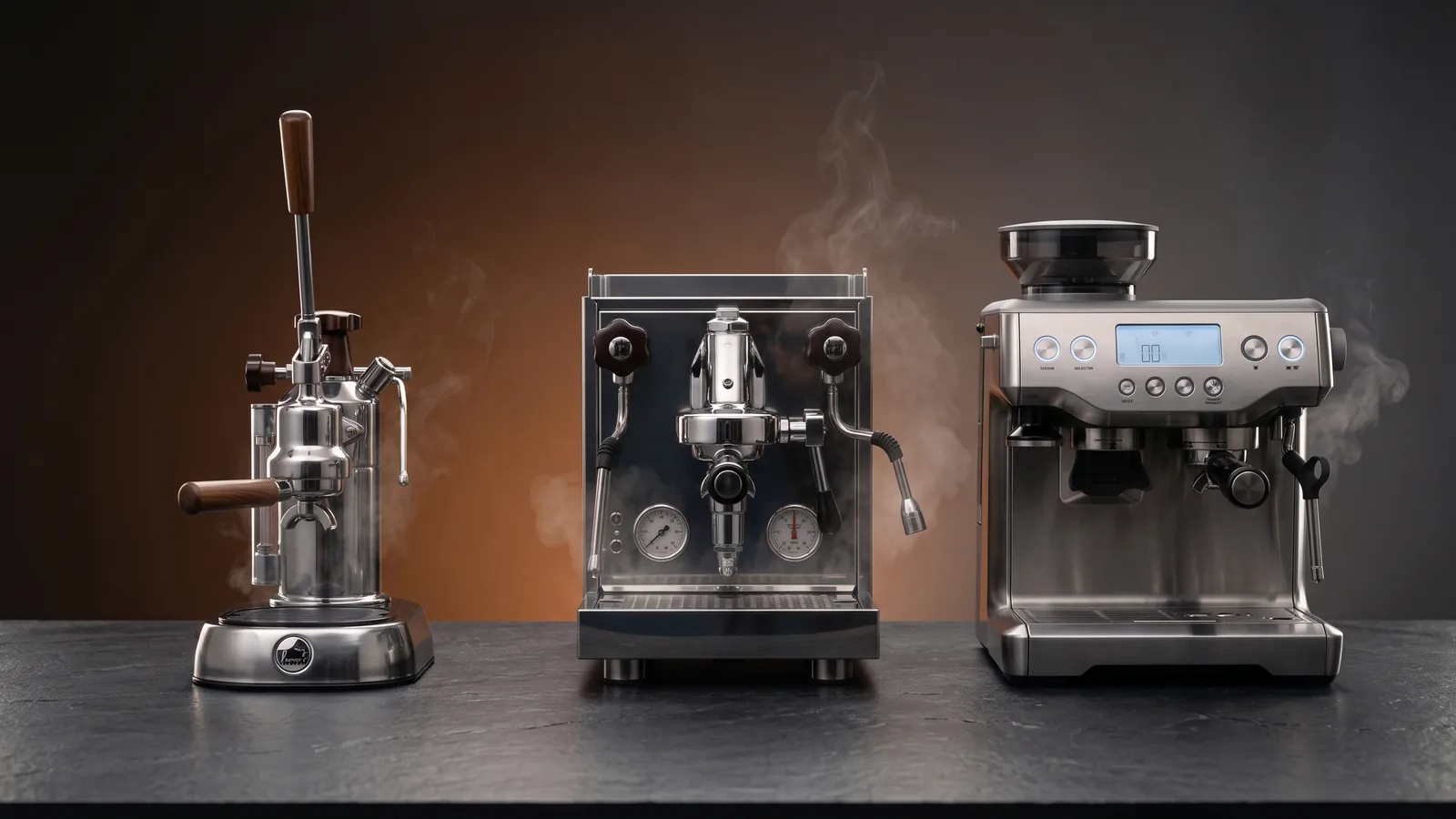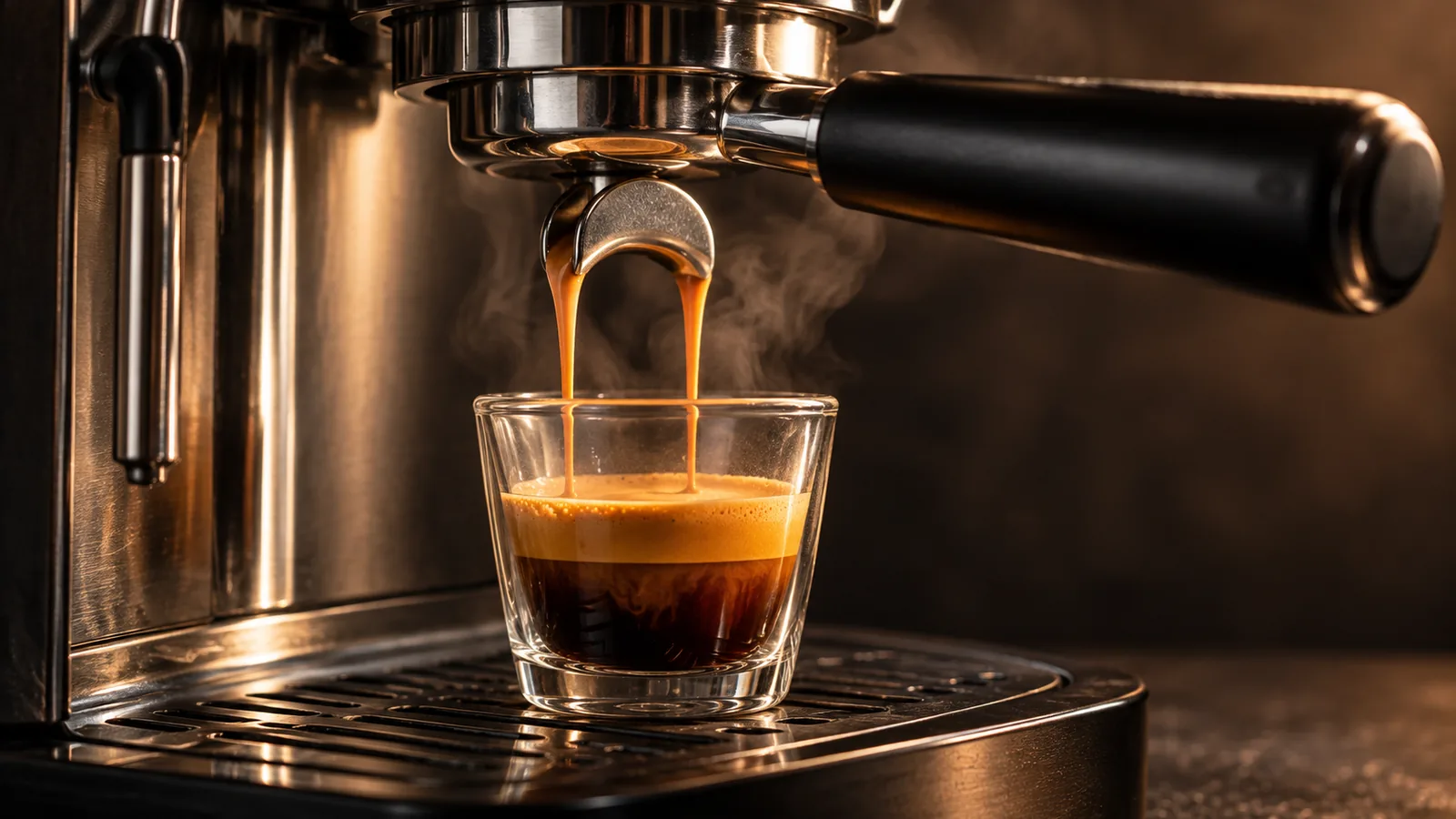
Our top pick either way: the Breville Barista Express — see the best espresso machines for beginners.
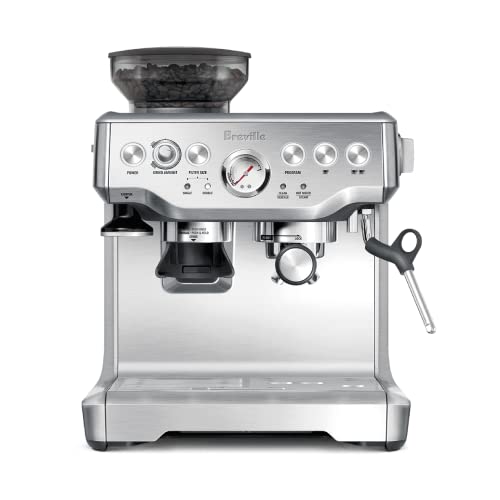
Breville Barista Express (BES870XL)
The all-in-one that grows with you — a built-in burr grinder plus real semi-automatic controls make it the machine most beginners keep for years.
Prime Day Amazon Prime Big Deal Days is on — a good time to check the live price.
Check current price on AmazonWhat buyers praise
- Built-in conical burr grinder — no separate grinder to buy
- Real semi-automatic control to learn true espresso
- Steam wand makes cafe-style microfoam
- One of the largest owner communities for support
What buyers flag
- A premium, higher-commitment purchase
- Takes counter space and rewards some practice
At a glance
- Capacity
- 1 cup
- Dimensions
- 13.8"D x 12.5"W x 15.9"H
- Power
- 1600 watts
- Weight
- 22.1 pounds
- Material
- Steel
- Warranty
- 1-year limited
- In the box
- Coffee Scoop, Filter, Integrated Tamper, Razor Dose Trimming Tool
First, the thing that decides espresso quality most: the grinder
Before comparing machines, know this: grind consistency matters as much as the machine. Espresso is unforgiving — a slightly uneven or wrong grind ruins a shot on any machine. A mid-price machine with a good burr grinder beats an expensive machine fed by a cheap one. So if your budget is fixed, the highest-leverage dollar often goes to the grinder, not the machine. See how to pull a shot of espresso for why.
Everything below is what the machine’s price buys.
What you actually pay more for
1. Temperature stability
Espresso extracts in a narrow temperature window, and small swings change the cup from balanced to sour or bitter. Pricier machines hold brew-water temperature tightly — often with a PID controller — while budget machines swing between shots. This is the least visible upgrade and one of the most tasteable.
2. Real pressure vs. a pressurized portafilter
Better machines deliver an even ~9 bar through a non-pressurized (standard) portafilter, which rewards good grinding with real extraction. Most budget machines use a pressurized portafilter that forces water through a single hole to fake crema — forgiving of bad grinding, but a ceiling on quality. Moving to a machine that takes a standard basket is a real step up (and see the types of espresso machines for how pods, semi-auto, and automatic differ).
3. The steam wand
Milk drinks live or die on microfoam. Premium machines have a stronger, faster steam wand (often a proper articulating wand) that makes silky microfoam; budget wands are weaker, slower, and produce coarser foam. If lattes and cappuccinos are your main drink, steam power is where you feel the price.
4. Boiler and build
Cheap machines use a single thermoblock; step up and you get single-boiler, heat-exchanger, or dual-boiler designs that hold temperature better and (on dual boilers) let you brew and steam at once. Better boilers and metal internals also last longer and recover faster between shots.
Budget vs premium, side by side
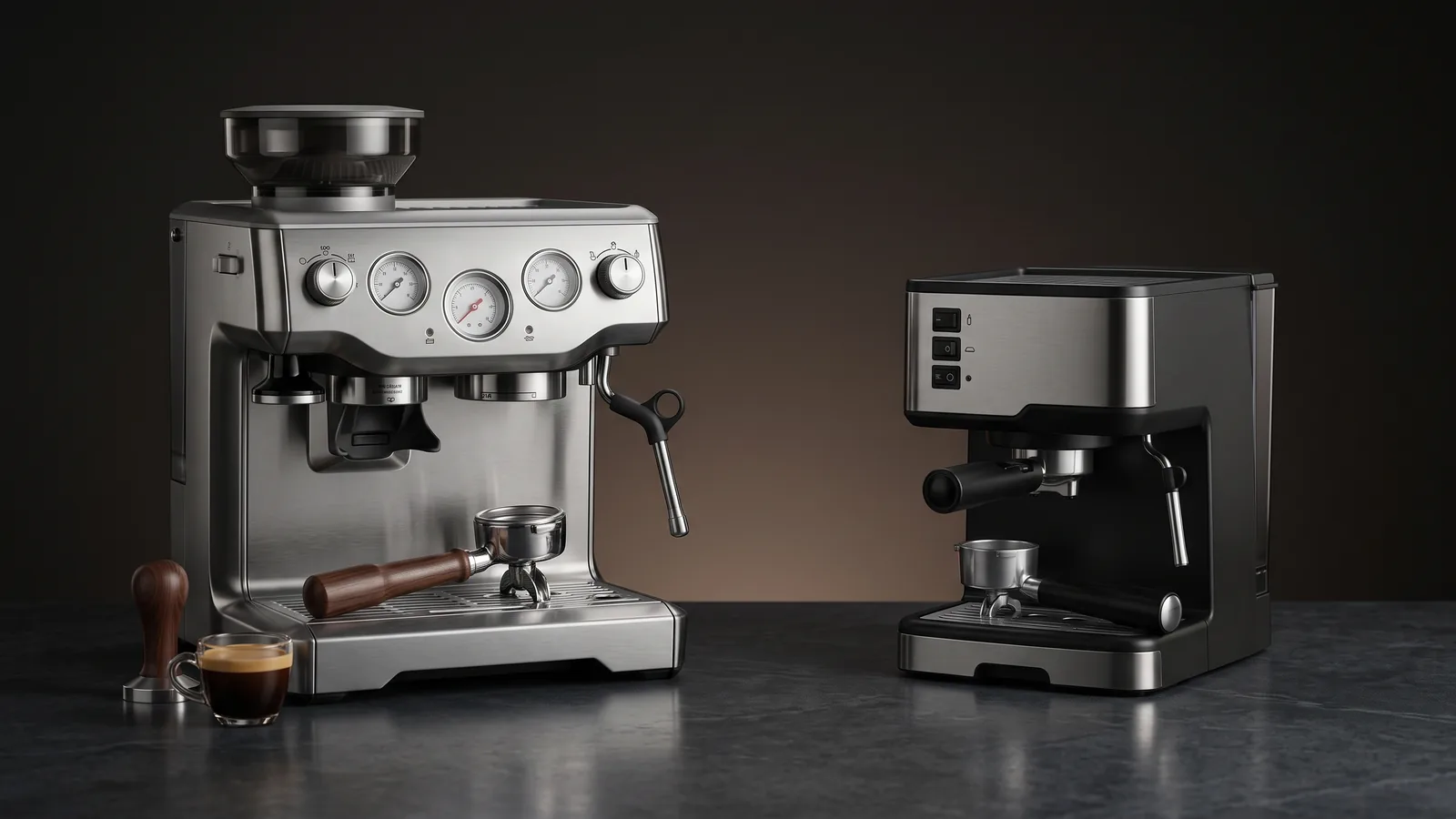
| Budget (~$100–$300) | Premium ($600–$2,000+) | |
|---|---|---|
| Portafilter | Usually pressurized (fakes crema) | Non-pressurized (real extraction) |
| Temperature | Swings between shots | Stable (often PID) |
| Steam wand | Weak, slow | Strong microfoam |
| Boiler | Thermoblock | Single / heat-exchanger / dual |
| Grinder | Often none | Built-in or paired standalone |
| Best for | Milk drinks, convenience, testing the habit | Balanced shots, real microfoam, daily ritual |
When a budget espresso machine is the smart buy
When you mostly make milk drinks, want convenience, or are still deciding whether espresso is a habit worth investing in. A budget machine — often pod-based or with a pressurized portafilter — makes a forgiving, acceptable shot and steams enough milk for a latte. It is the sensible place to start.
When it is worth paying up
Spend more when you want to:
- Pull balanced, unfiltered shots you dial in yourself → a machine that takes a standard portafilter + a good grinder.
- Steam real microfoam for latte art → a strong steam wand.
- Brew and steam back-to-back → a heat-exchanger or dual boiler.
- Make espresso a daily ritual → temperature stability you can taste every morning.
The verdict
Espresso rewards consistency, and consistency is exactly what price buys — stable temperature, real pressure, a proper steam wand. But the machine is only half the chain: a good grinder and fresh beans decide as much as the machine does. Buy the tier that matches your drink — budget for convenient milk drinks, premium for shots you craft — and never let an expensive machine sit behind a cheap grinder.