The one idea: pressure
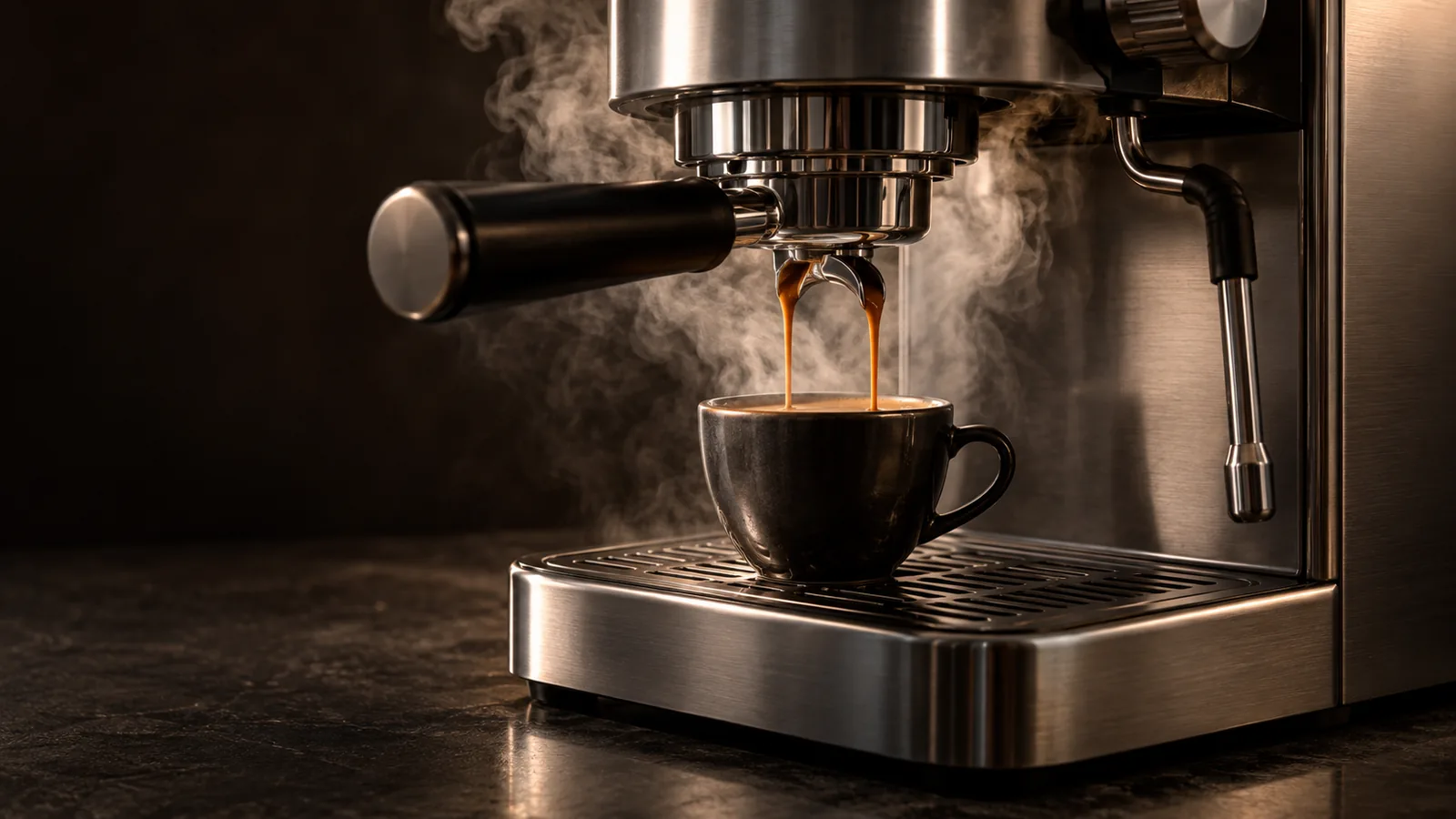
Every other home brewing method — drip, pour-over, French press — moves water through coffee with gravity and time. An espresso machine does something fundamentally different: it pumps hot water through a dense bed of finely ground, tamped coffee under about 9 bars of pressure. That single difference is what makes espresso concentrated, thick-bodied, and topped with crema. If you understand the pressure, you understand the machine.
What happens when you pull a shot
- Water is heated to around 200°F (93°C) by a boiler or a thermoblock.
- A pump builds pressure — most home machines use a vibratory pump — pushing that hot water toward the coffee.
- The water hits the puck. Finely ground coffee sits tamped (compressed) in the portafilter, locked into the group head. The tight, even puck creates the resistance the pressure needs to work against.
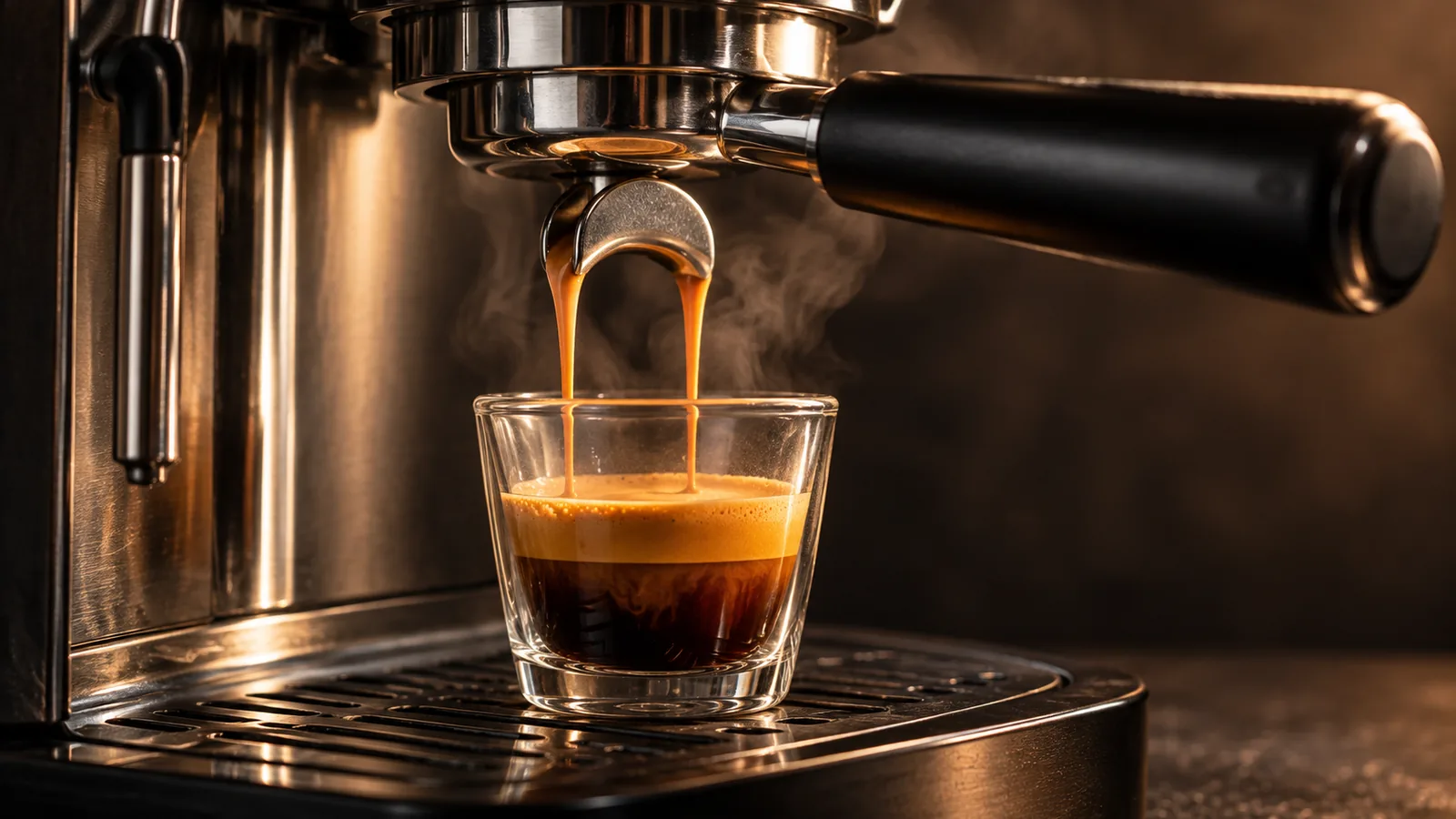
- Extraction happens over 25–30 seconds: the pressurized water dissolves and emulsifies coffee solids and oils, producing about 1–2 oz of concentrated liquid.
- Crema forms on top as pressure emulsifies the oils and forces out dissolved CO₂ from fresh beans.
For the technique side of this — dose, grind, tamp, and yield — see how to pull a shot of espresso.
The parts that make it happen
The pump creates the pressure. You’ll see machines advertised as “15 bar” or “20 bar” — that’s the pump’s maximum, not the brewing pressure. The ideal pressure at the puck is about 9 bars, and better machines regulate down to it rather than blasting the coffee at 15.
The boiler or thermoblock heats and holds the water temperature. A thermoblock heats water on demand (common in budget machines); single, heat-exchanger, and dual boilers hold temperature more steadily (and dual boilers let you brew and steam at once). Temperature stability is a big part of what separates cheap machines from good ones — more on that in premium vs budget espresso machines.
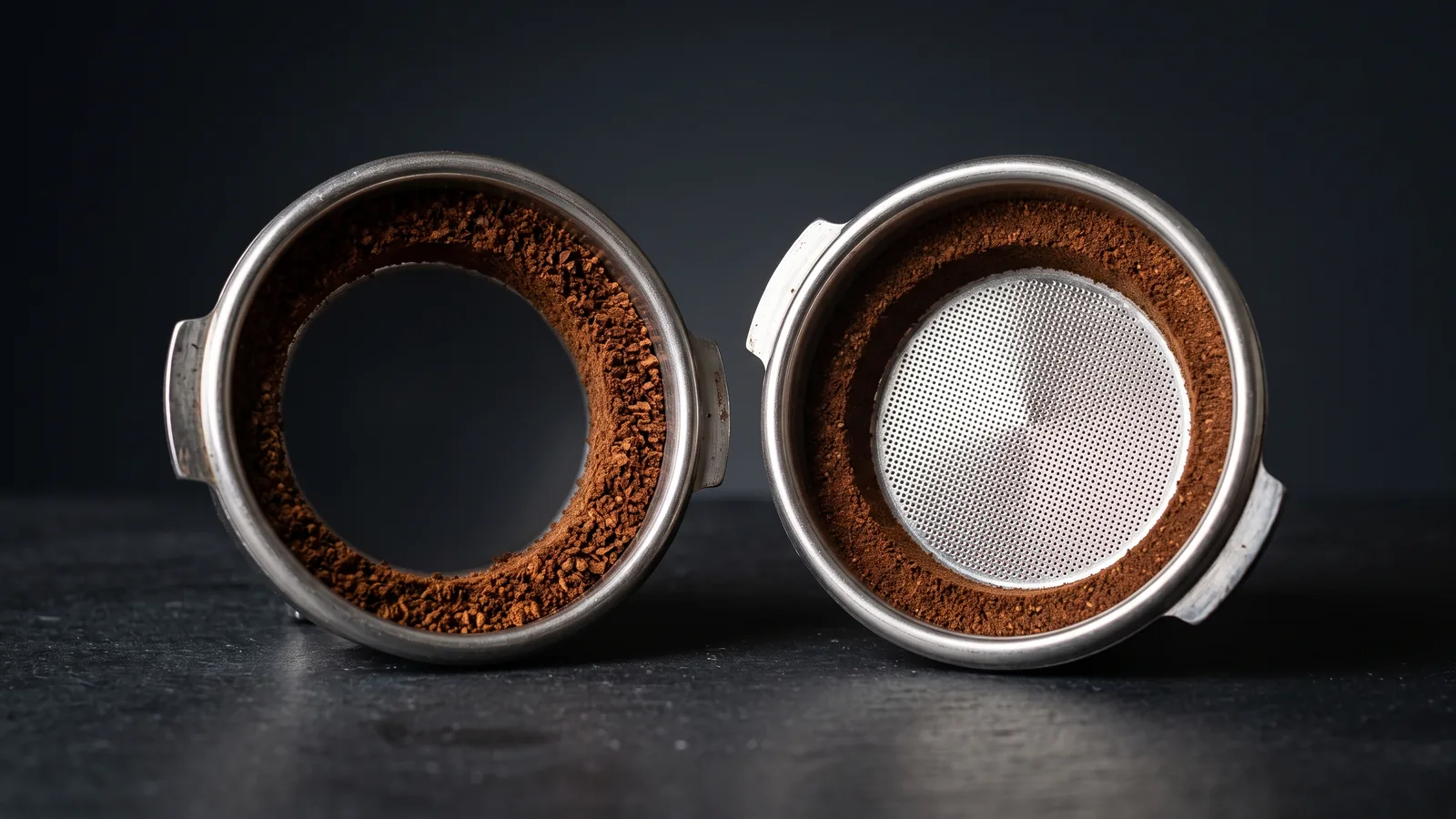
The group head and portafilter hold the coffee puck and lock it against the pressure. The portafilter’s basket can be non-pressurized (rewards a good grind with real extraction) or pressurized (forces crema through a single hole, forgiving of a bad grind) — a distinction worth understanding before you buy.
The steam wand is a separate function: it uses steam from the boiler to heat and froth milk for lattes and cappuccinos. It doesn’t touch the shot itself.
The 9-bar number, and the marketing around it
The most common point of confusion is bar ratings. 9 bars at the puck is the sweet spot for extraction. A “20-bar” machine is not making better espresso than a “9-bar” one — the number describes the pump’s capacity, and over-pressure is actually undesirable. Judge a machine by temperature stability, build, and whether it takes a standard (non-pressurized) portafilter, not by the headline bar figure.
Why the grinder matters as much as the machine
Because espresso relies on the puck creating even resistance to 9 bars of pressure, the grind is critical: too coarse and water rushes through (a fast, sour shot); too fine and it chokes (a slow, bitter one). A consistent, fine, adjustable grind is essential — which is why an espresso setup needs a good burr grinder as much as a good machine. See the best coffee grinders and burr vs blade.
Where to go next
Once the mechanism makes sense, the real question is which machine. If you’re ready to choose, start with the best espresso machines for beginners — our top picks, grounded in verified owner reviews. To go deeper first:
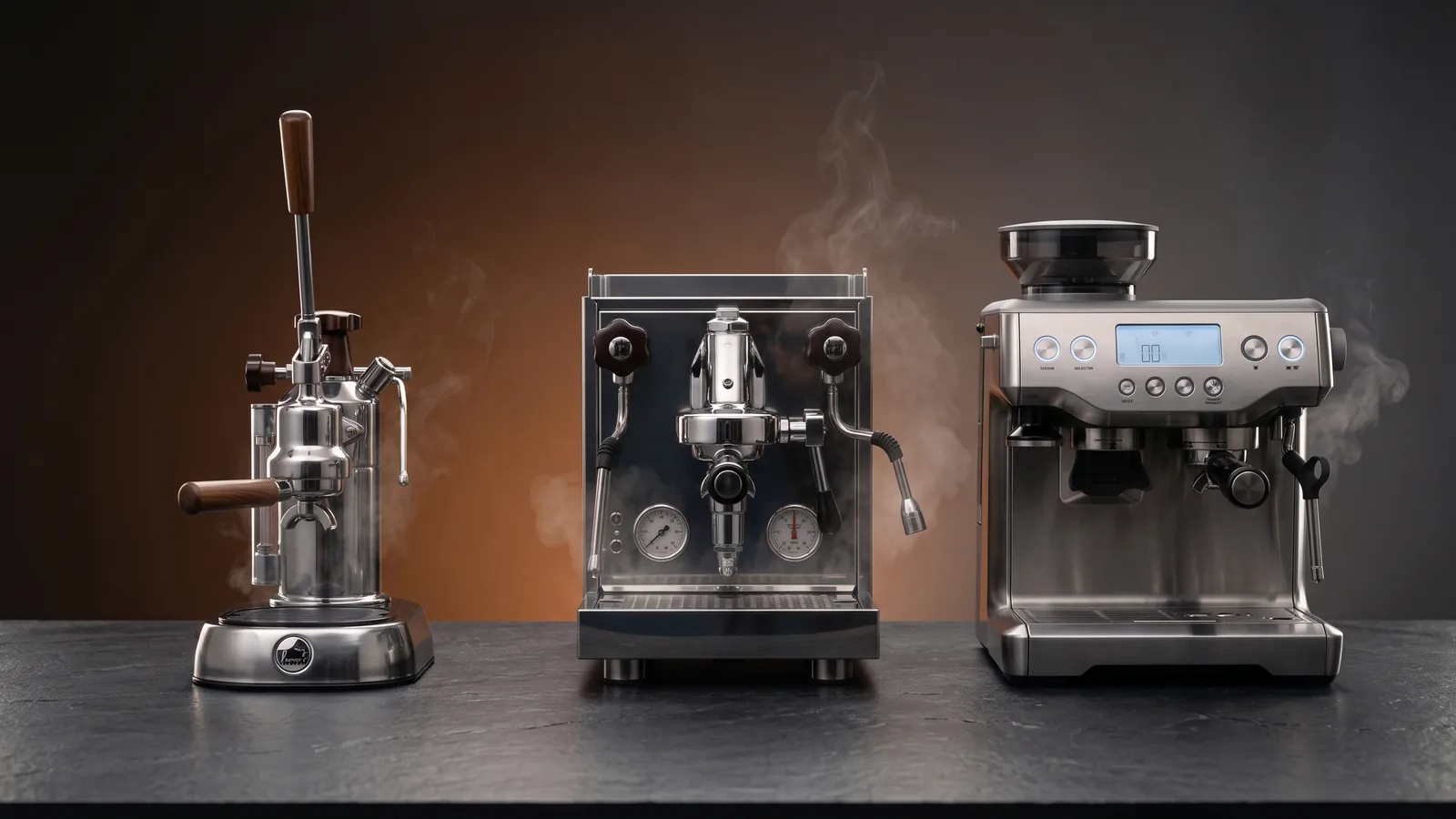
- Types of espresso machines, explained — manual, semi, automatic, super-automatic
- How to pull a shot of espresso — dose, grind, tamp, yield
- Premium vs budget espresso machines — what the money actually buys