The five essentials
1. An espresso machine
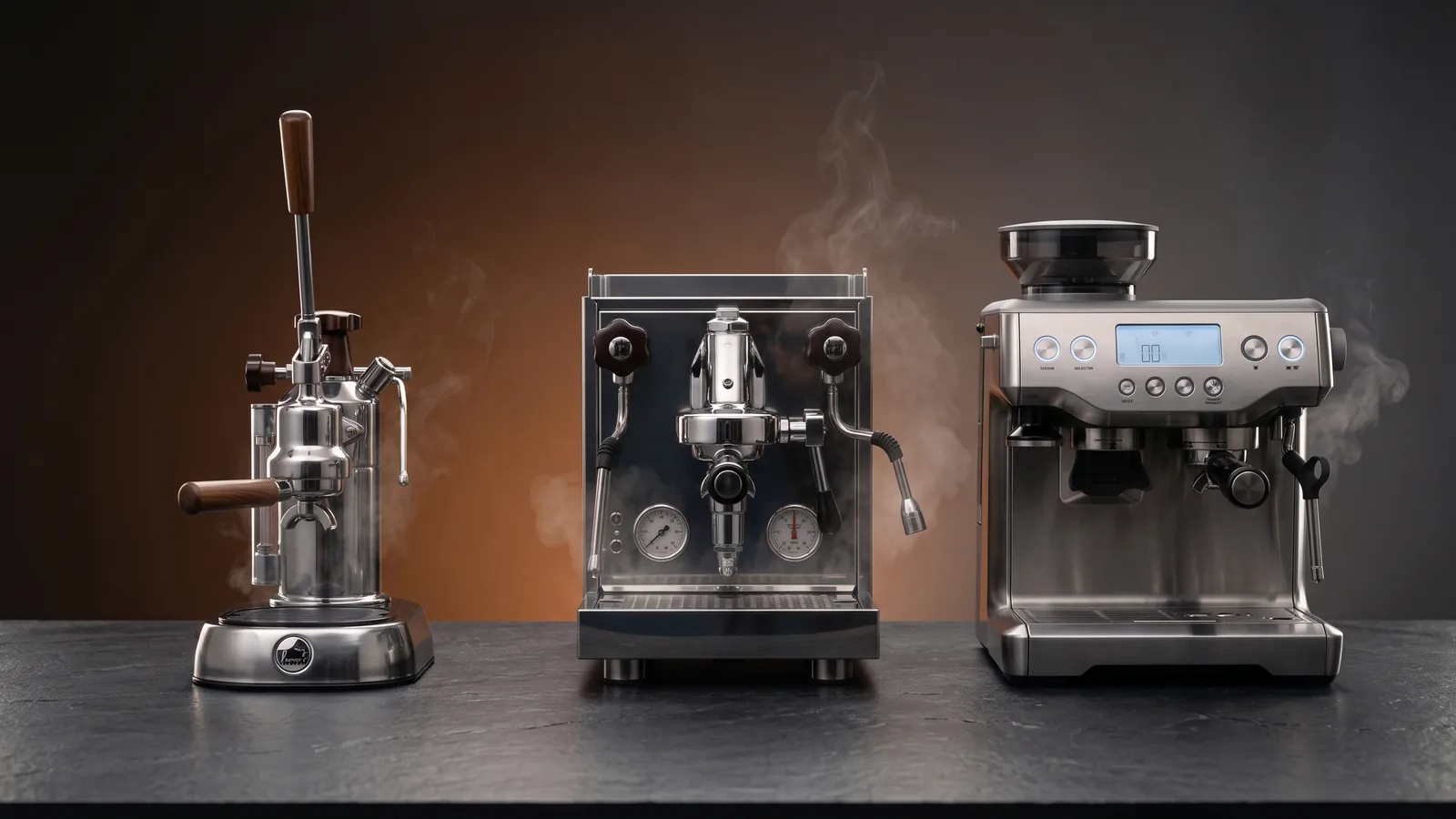
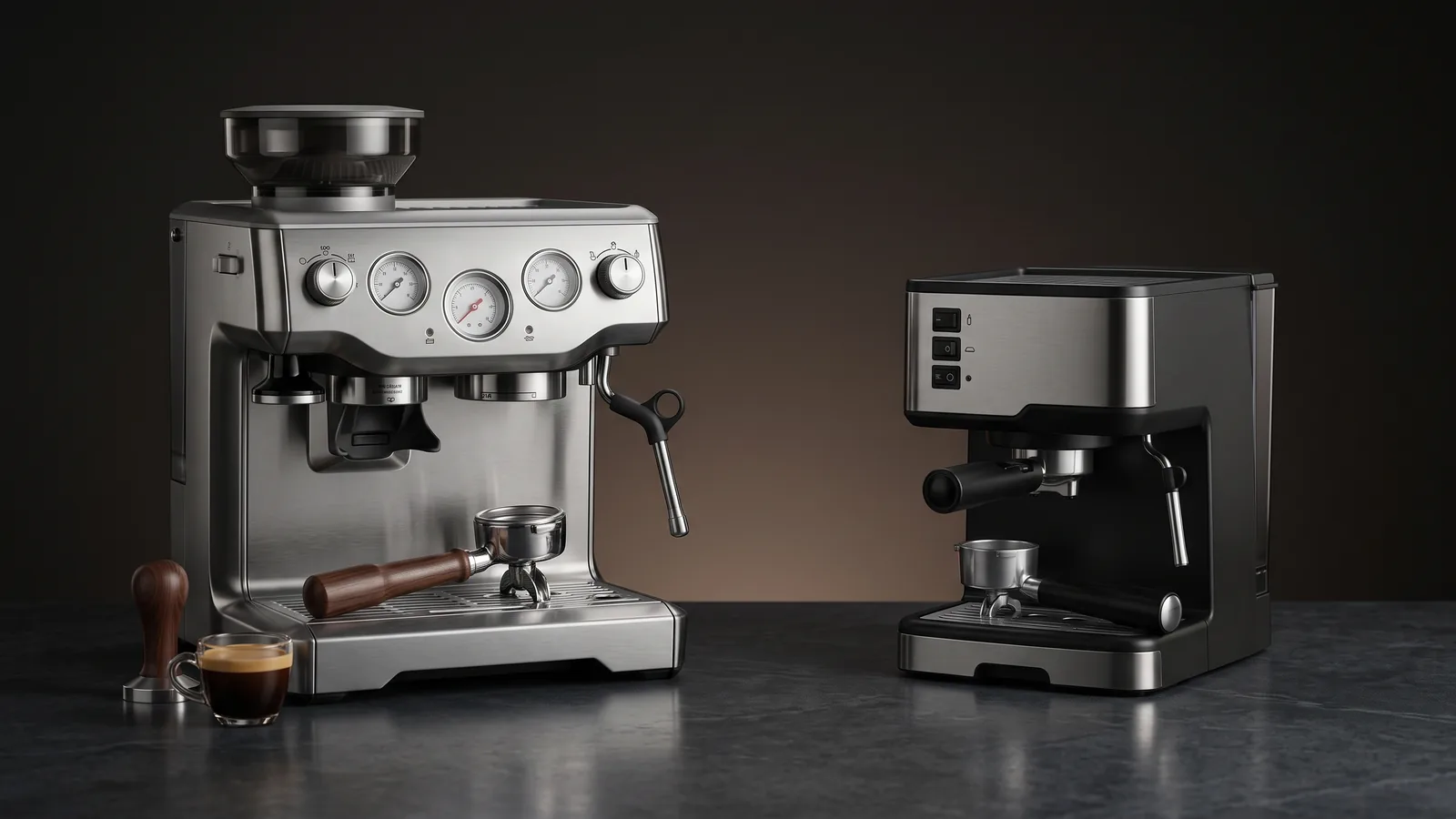
The machine forces hot water through coffee at about 9 bars of pressure — the thing that makes espresso espresso (see how it works). Which kind you choose — manual, semi-automatic, automatic, or super-automatic — is the biggest decision, and it’s covered in types of espresso machines. What the price buys (temperature stability, a real steam wand, a standard portafilter) is in premium vs budget espresso machines.
2. A burr grinder (don’t skip this)
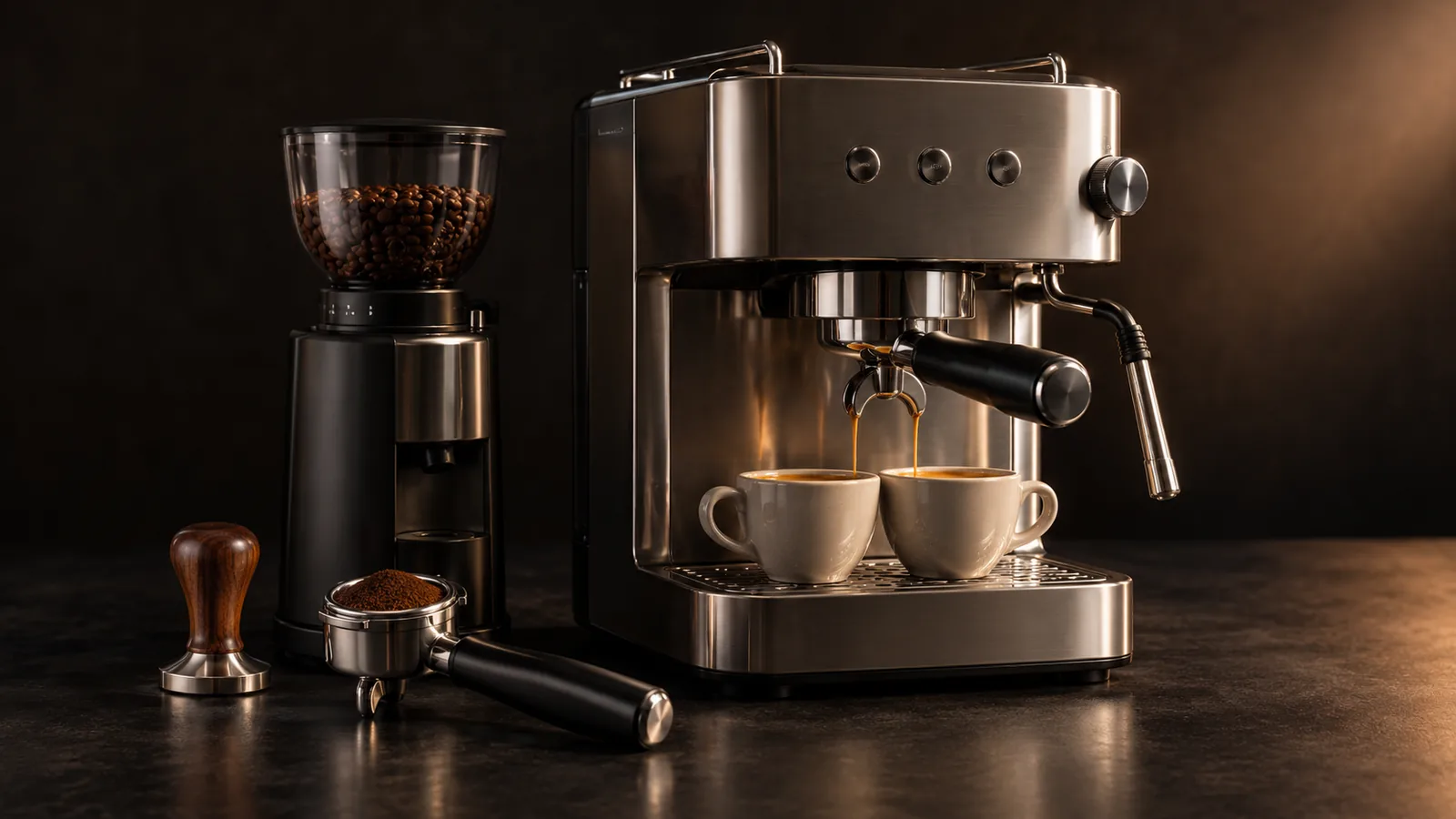
This is the piece beginners underestimate. Espresso needs a fine, consistent, adjustable grind so the puck creates even resistance to 9 bars — too coarse runs fast and sour, too fine chokes the machine. Most built-in grinders are mediocre, and pre-ground or blade-ground coffee simply can’t do it. A capable espresso-grade burr grinder is often the highest-impact purchase in the whole setup. See the best coffee grinders and why burr beats blade.
3. A tamper
You compress the ground coffee into a level, even puck before pulling the shot. Many machines include a cheap plastic tamper; a proper flat metal tamper sized to your basket makes tamping more consistent, which makes shots more repeatable.
4. A scale
Espresso is a recipe of weights: a dose in (about 18 g) and a yield out (about 36 g), pulled in 25–30 seconds. A small scale — ideally one that fits under the portafilter — turns guesswork into repeatable shots. It’s the cheapest upgrade to consistency you can buy. See how to pull a shot for the numbers.
5. Fresh beans
Freshness matters more than a bag labeled “espresso.” Recently roasted beans give better crema and flavor; stale beans make flat, thin shots no matter how good your gear is. Buy smaller amounts more often, and grind right before pulling.
Optional, for milk drinks
A milk pitcher — if you want lattes or cappuccinos. Most espresso machines have a steam wand; a stainless steaming pitcher is all you add to froth milk. (A separate milk frother is an alternative if your machine’s wand is weak.)
A knock box — a small bin to knock the spent puck into. A convenience, not a requirement.
The budgeting rule that saves beginners
The most common home-espresso mistake is spending the entire budget on the machine and pairing it with a cheap grinder or pre-ground coffee. Split the money. A mid-price machine with a good grinder beats an expensive machine fed by a poor one — every time. Espresso is a two-part system: the machine and the grinder each decide the result.
Where to go next
- The best espresso machines for beginners — our top picks once you’re ready to choose the machine
- Types of espresso machines — pick the right family first
- Premium vs budget espresso machines — where the money is worth it
- The best coffee grinders — the piece not to skimp on
- How to pull a shot of espresso — put the kit to work