Assemble it in the right order
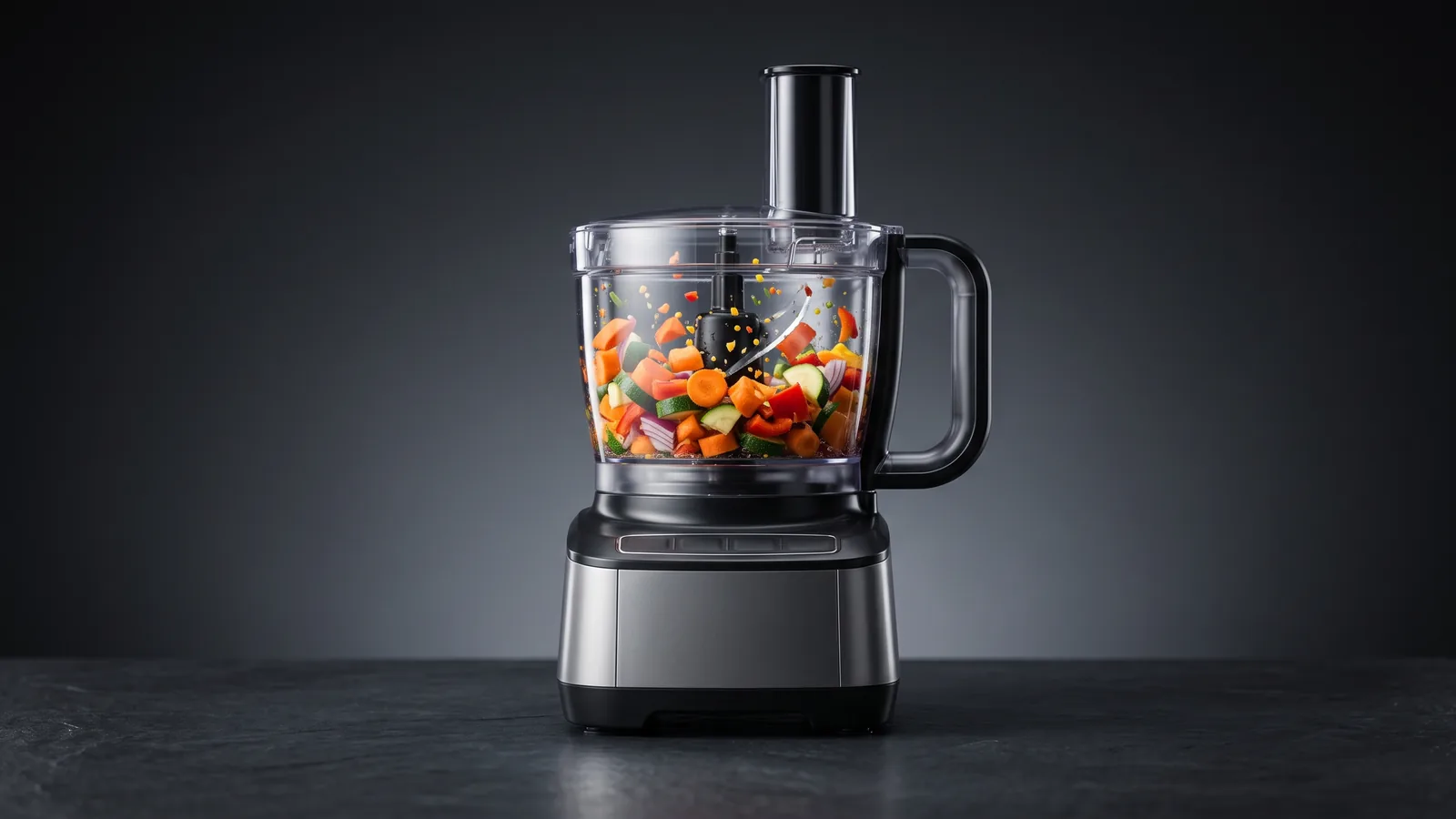
A food processor only runs when it is put together correctly, because a safety interlock keeps the blade from spinning while the machine is open. The order:
- Bowl on the base. Set the work bowl on the motor base and twist until it locks (line up the marks — most bowls click into place).
- Blade or disc on the spindle. Drop the S-blade onto the central post and press it all the way down so it seats. For discs, fit the disc on its stem.
- Add your food. For the S-blade, put ingredients in the bowl. For discs, you will add food through the feed tube after the lid is on.
- Lock the lid. Put the lid on and latch it. The machine will not start until the lid is locked — this is a feature, not a fault.
If it will not turn on, the bowl or lid almost certainly is not fully locked. That single issue accounts for the large majority of “my food processor is broken” complaints.
The controls: pulse vs. run
Nearly every food processor has two ways to run, and knowing which to use is most of the skill:
- Pulse — short bursts. Each press processes a little more, so you control the final texture and stop before things turn to paste. This is your default for chopping vegetables, mincing garlic, making crumbs, and cutting butter into flour.
- Run / On (continuous) — the blade spins until you switch it off. Use it for tasks that need to become smooth: pureeing, hummus, nut butter, and emulsifying dressings while you drizzle oil through the feed tube.
The most common beginner mistake is holding Run when you should be pulsing — three pulses gives you a coarse chop; ten seconds of continuous run gives you mush.
Using the S-blade and the discs
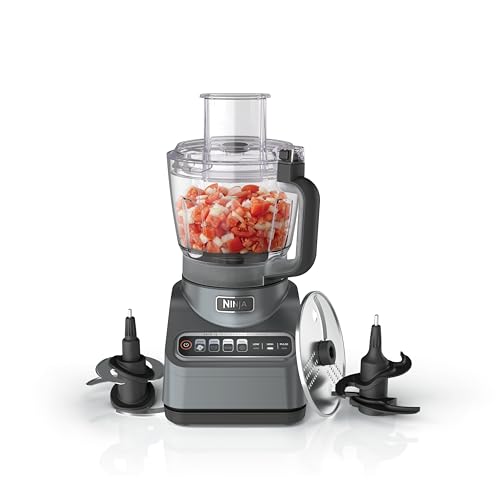
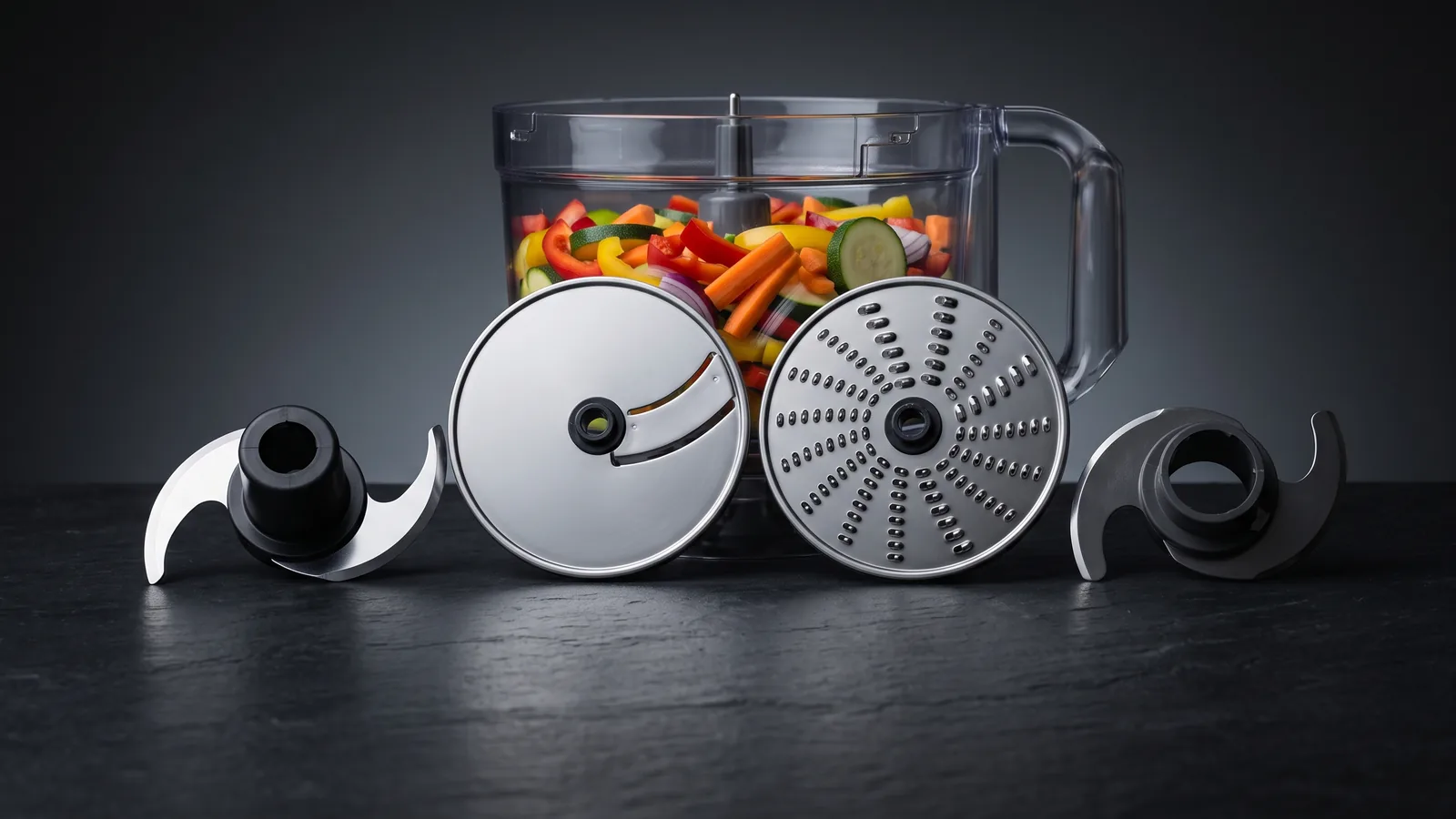
The S-blade (the curved steel blade that ships mounted on the spindle) does about 80% of tasks — chopping, dips, pesto, crumbs, pastry. Put the food in the bowl and pulse.
The slicing and shredding discs work differently: they replace the S-blade on the spindle, and you feed food down the feed tube against the spinning disc, using the pusher with light, steady pressure. This is how you get uniform cucumber slices or fast-shredded cheese and cabbage.
For the full breakdown of every attachment and exactly when to use each, see how to use food processor blades and discs.
What goes where — a starter cheat sheet
| You want to… | Use | How |
|---|---|---|
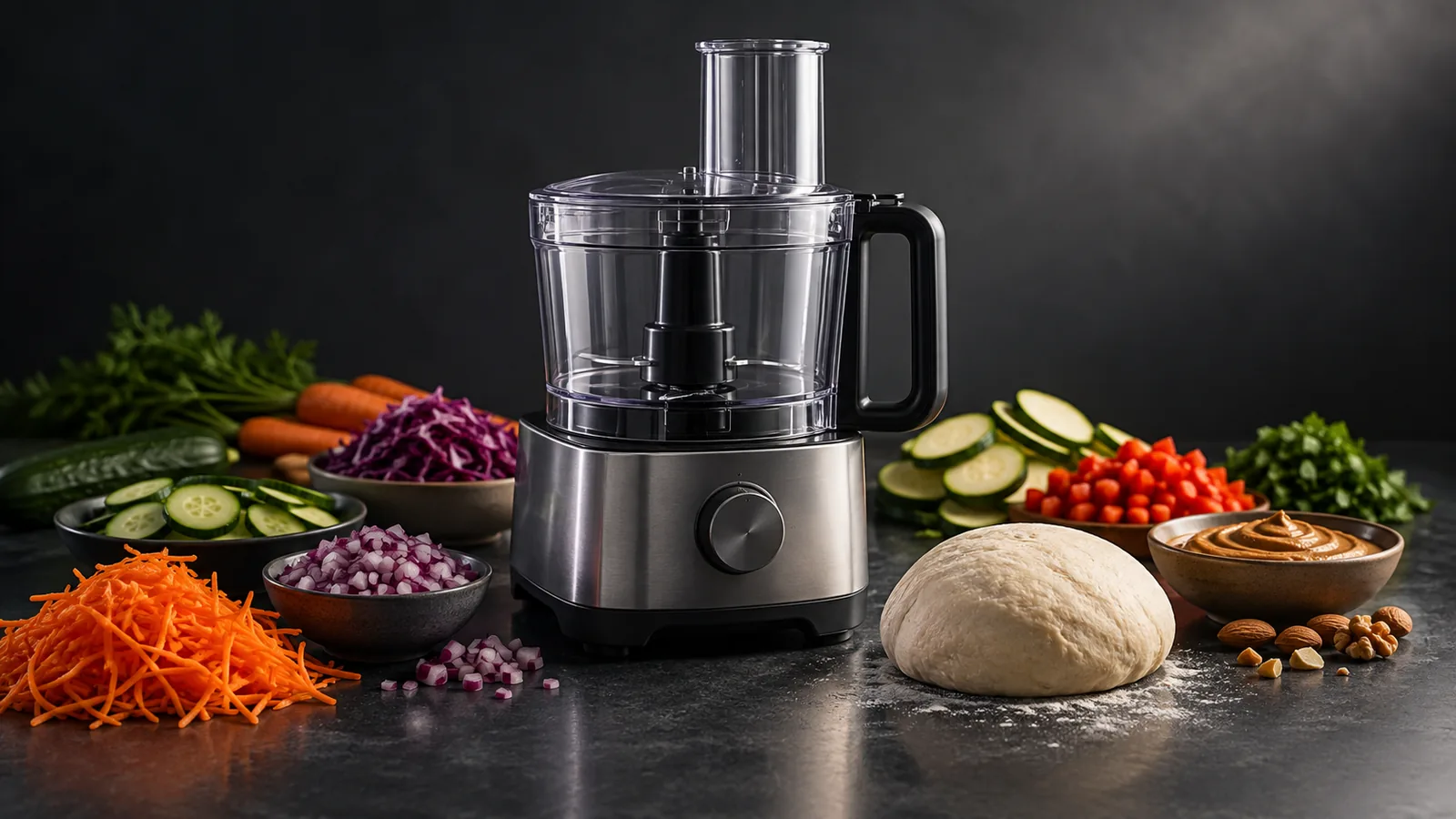
| Chop onions, herbs, garlic | S-blade | Pulse 5–10 times |
| Make hummus, pesto, dips | S-blade | Run continuously, scrape down |
| Make pastry / pie dough | S-blade | Pulse until coarse crumbs, add water |
| Slice cucumber, potato, apple | Slicing disc | Feed through the tube |
| Shred cheese, cabbage, carrot | Shredding disc | Feed through the tube (keep cheese cold) |
| Knead bread / pizza dough | Dough blade | Run until it forms a ball |
Common beginner mistakes
- Overfilling the bowl. For the S-blade, keep it no more than half full — a crowded bowl chops unevenly, with big pieces on top and mush at the bottom.
- Over-processing. Pulse and check often. It is easy to go from chopped to pureed in a second or two.
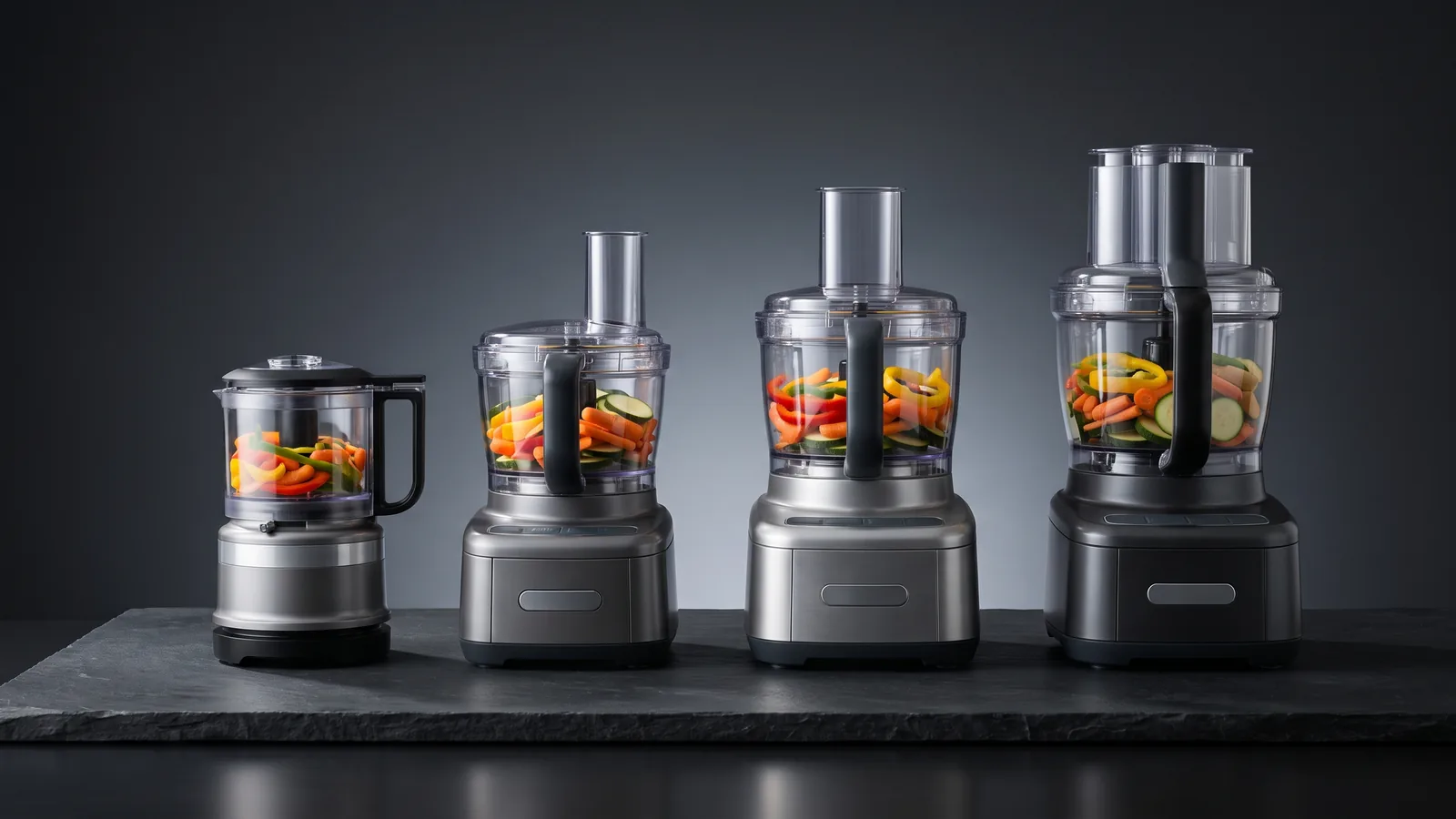
- Ignoring the liquid line. The cup rating is for dry food; the safe liquid limit is much lower. Fill past it and liquid leaks from the bowl seal. For anything pourable, check the liquid max line, not the cup number. See what size food processor you need.
- Lifting the blade by the edge. The S-blade is very sharp. Always handle it by the central hub, and remove it before you tip food out of the bowl.
Does it work the same on a Cuisinart, KitchenAid, or Ninja?
Yes. Brands differ in button labels and how many speeds they offer, but the operation is identical: lock the bowl, seat the blade, add food, latch the lid, then pulse or run. Cuisinart and KitchenAid both use a Pulse button plus a continuous setting and a safety interlock; Ninja’s stack-and-lock designs work the same way with their own latch. If you have used one food processor, you can use any of them — and the “won’t turn on” fix (lock the bowl and lid fully) is the same across all of them.
When you’re done
Switch off, wait for the blade to stop completely, then unlock the lid, lift the blade out by its hub, and empty the bowl. Rinse the blade and bowl right away so food does not dry on — most parts are dishwasher-safe, but hand washing keeps the blades sharp longer. Full routine: how to clean a food processor.
New to what the machine can actually do? See what a food processor can do, or jump to the best food processors if you are still choosing one.