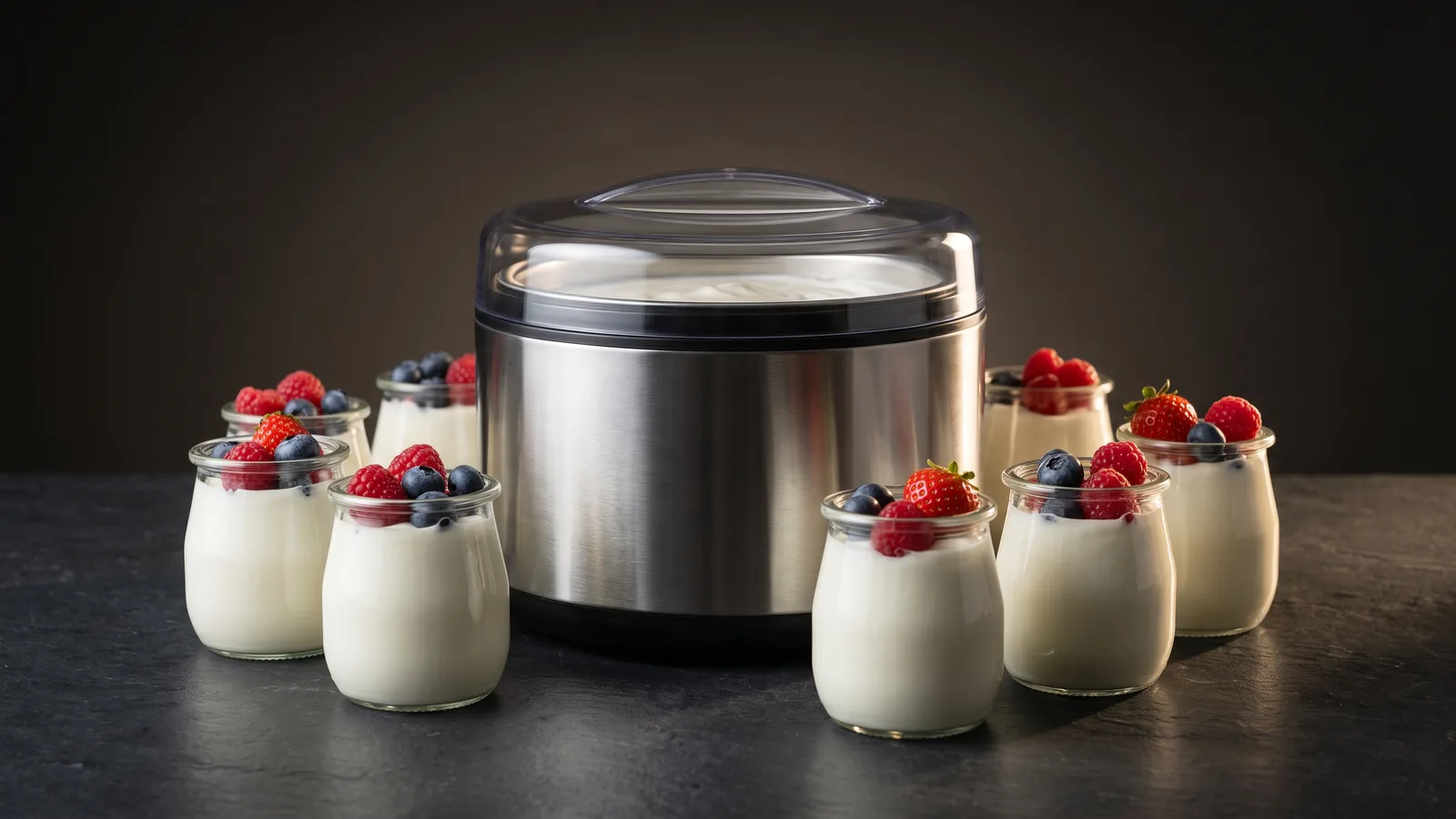
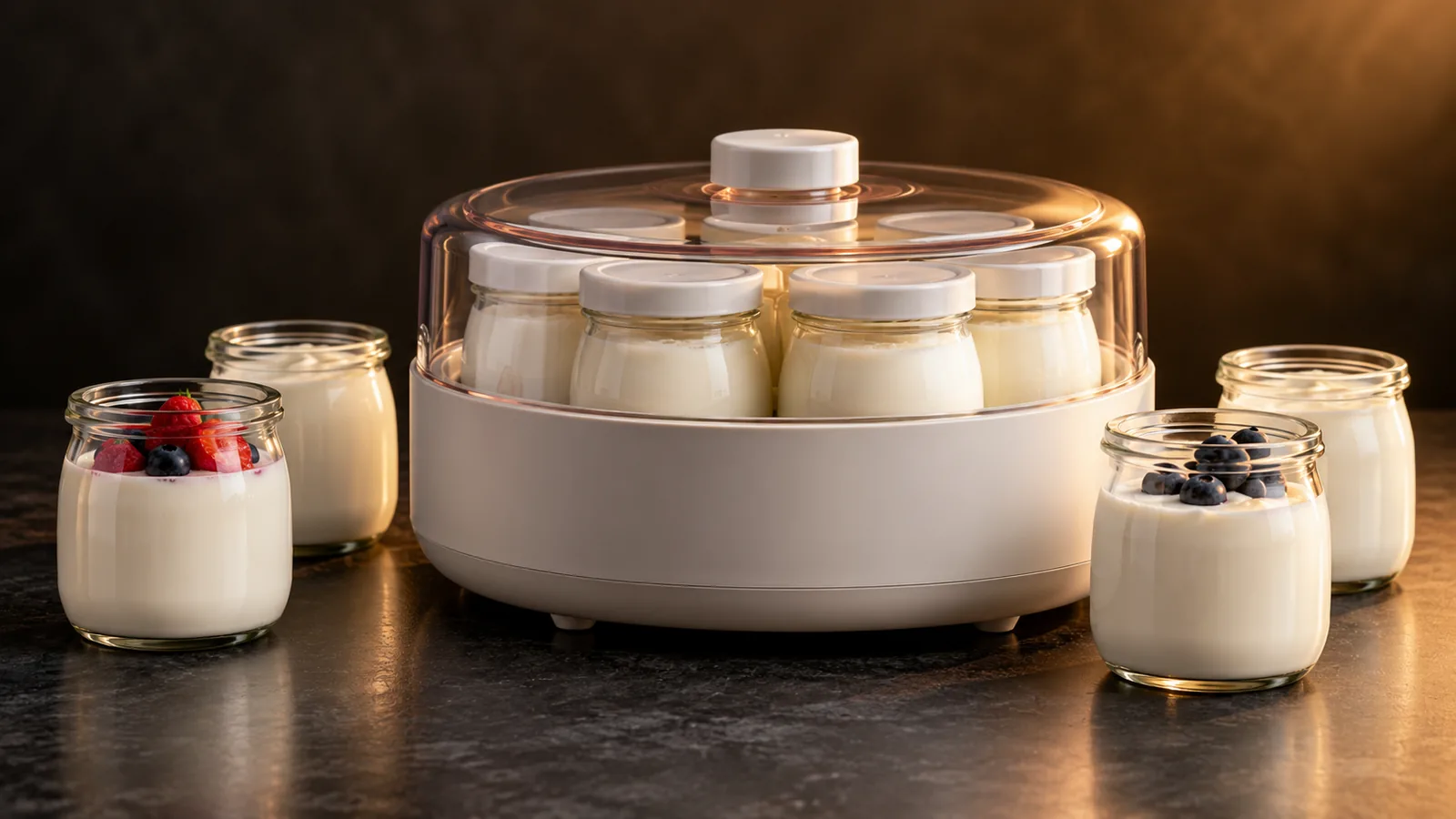
If you are shopping for a “curd maker” and finding mostly “yogurt makers,” that is not a mismatch — they are the same appliance. The difference is only the word, and it is worth clearing up because it changes nothing about what you should buy.
Why the two names mean one machine
In Indian and South Asian English, curd means dahi: the thick, set, cultured yogurt made at home by stirring a spoonful of existing curd into warm milk and letting it set overnight. That is precisely what a yogurt maker does — it holds inoculated milk at a warm, steady temperature (about 110°F / 43°C) for several hours while the cultures thicken it (see how a yogurt maker works). Manufacturers and shoppers in different regions simply call the same device a curd maker or a yogurt maker.
One thing to clear up: the curd in a curd maker is not cheese curds. Cheese curds form when milk is curdled with acid or rennet and separated from the whey. The curd here is cultured — thickened by bacteria, spoonable, and mild — the dahi kind, not the cheese kind.
How to make curd in one
The method is exactly the yogurt method, and the starter is the everyday trick:
- Warm the milk — traditionally boiled, then cooled to about 110°F.
- Add a starter — a couple of teaspoons of existing plain curd or yogurt is a perfect culture.
- Pour into the jars and let the machine hold it warm for roughly 6 to 10 hours until set — shorter for mild, longer for tangy.
- Refrigerate once set to firm it up.
The machine’s entire contribution is holding that steady warmth. (Full method: how to make yogurt at home.)
What to look for when buying
Because a curd maker is a yogurt maker, the buying criteria are identical — and the first one dominates:
- Steady temperature above all. Temperature consistency is the only thing that determines a reliable set. A machine that drifts or runs hot gives watery or sour curd. If yours keeps failing, test its real temperature before blaming the milk. A thermostatically controlled model holds temperature better across a cold kitchen than a basic fixed-warmer plate.
- Capacity that matches how much curd your household gets through — daily curd eaters want larger or multi-jar machines.
- Glass containers for easy cleaning and no plastic smell.
For the machines that hold temperature most reliably — the trait that makes good curd every time — see the best yogurt makers, and how to choose a yogurt maker for the rest of the decision.
The everyday curd pick — Euro Cuisine YMX650. A hands-off, glass-jar machine that holds a steady preset temperature — the reliable default for daily dahi:

Euro Cuisine YMX650 Automatic Yogurt Maker
The best yogurt maker for most people. A preset fermentation temperature plus an auto-shutoff timer make it genuinely hands-off, and it produces the same quality dairy yogurt — or curd — as far pricier machines on a standard cycle. Seven glass jars let you set several at once. Not the tool for 24-hour SCD or long plant-based fermentation — for that, an Instant Pot's yogurt setting is the more reliable choice.
Prime Day Amazon Prime Big Deal Days is on — a good time to check the live price.
Check current price on AmazonWhat buyers praise
- Hands-off — auto-shutoff timer runs the cycle and turns off on its own
- Sets reliable everyday curd, same quality as pricier machines
- Seven glass jars — set several at once, serve from the jar
- Affordable and simple to use
What buyers flag
- Preset temperature — not for 24-hour SCD fermentation
- Timer maxes well short of 24 hours
- Individual jars make bulk straining less convenient
Whatever the label on the box, that is the curd maker you are looking for.