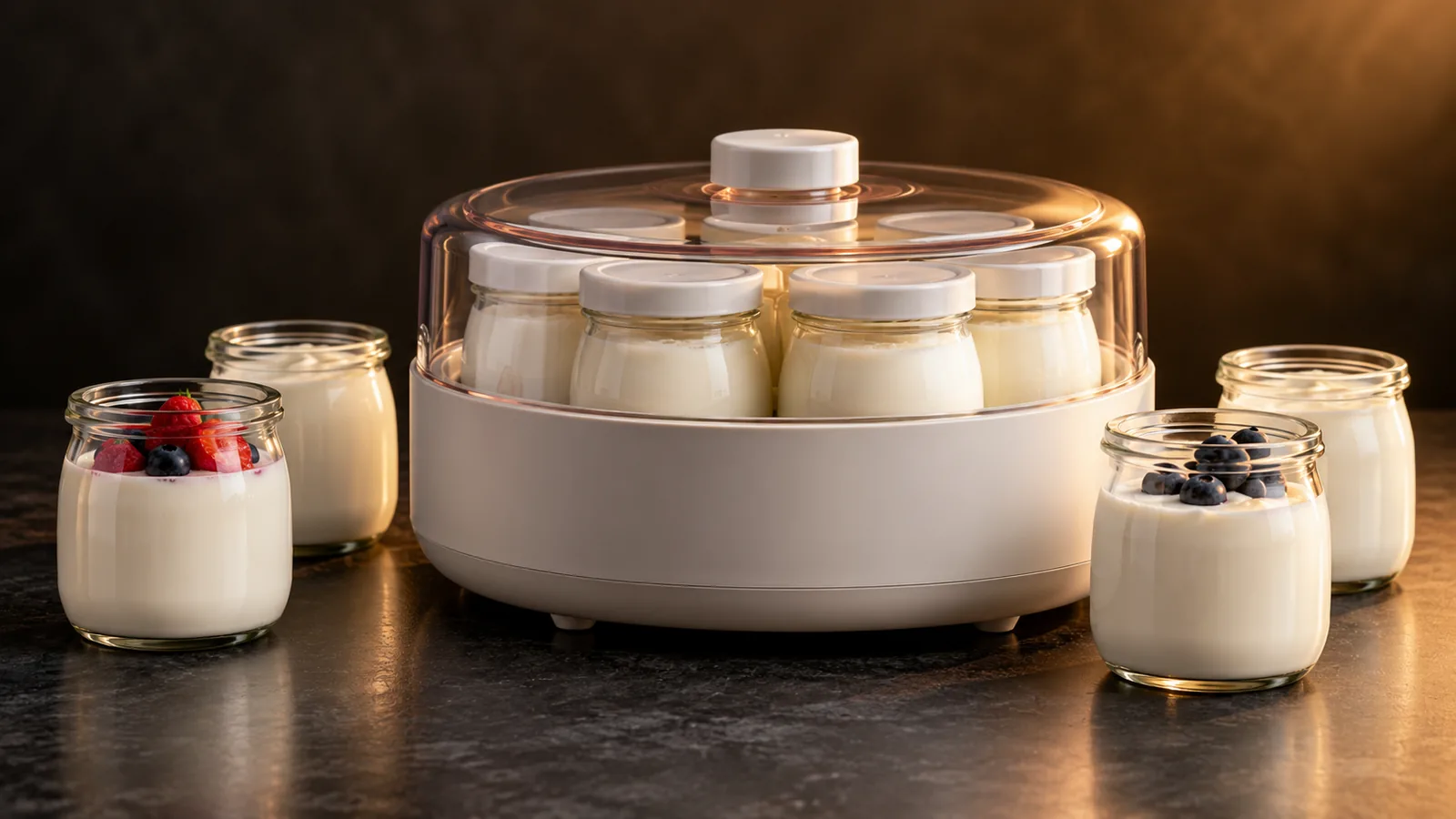
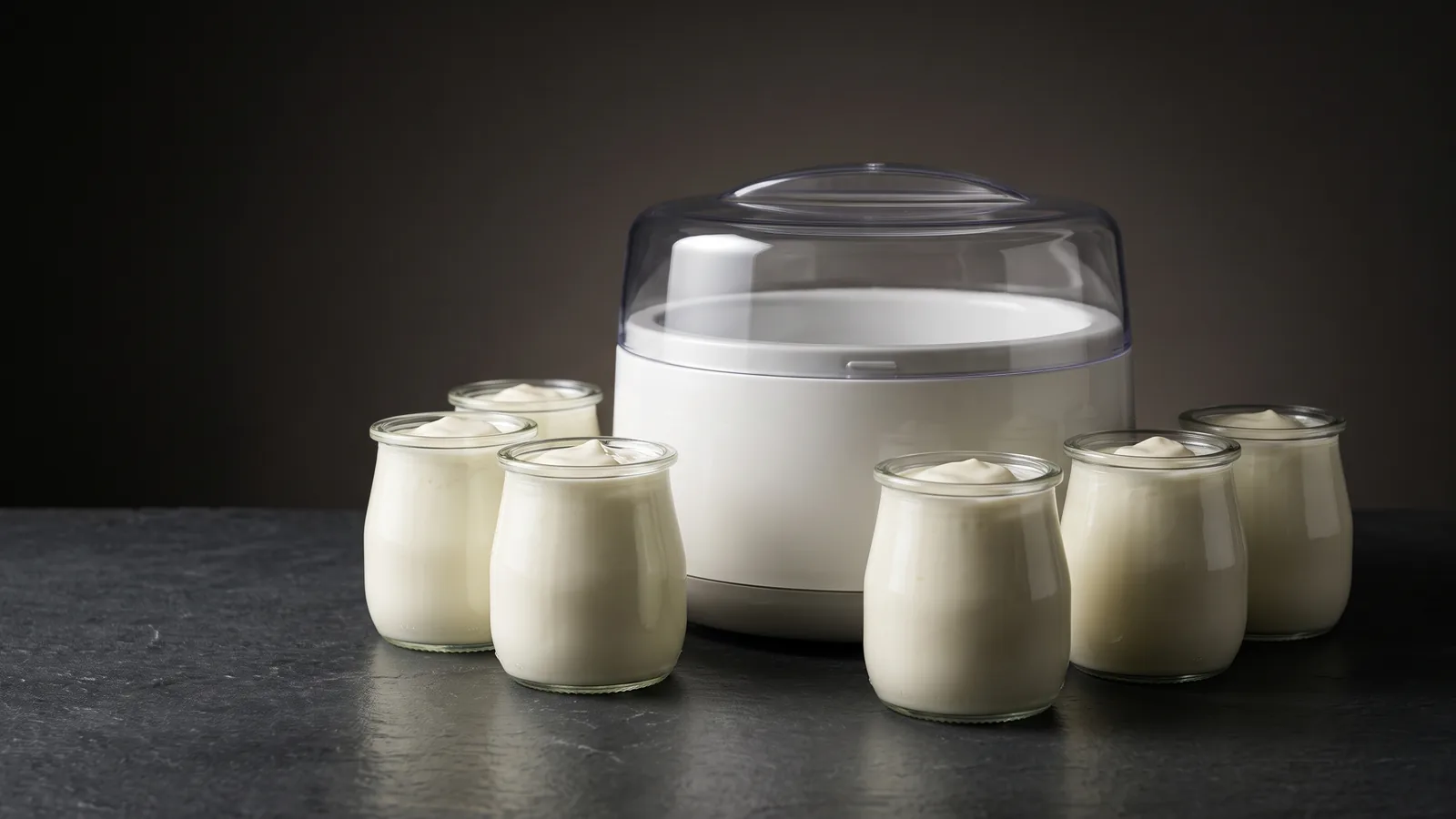
A surprising share of “my yogurt didn’t work” comes down to one thing: the machine was not actually holding the temperature it was supposed to. And in the reviews owners leave afterward, the striking pattern is self-blame — people assume they used the wrong starter, stopped too early, or “aren’t good at this” long before they suspect the appliance. Sometimes that is true. Often the machine is quietly drifting off target, and no amount of technique fixes a machine that runs too hot or too cold.
A yogurt maker has exactly one job: hold milk near 110°F (43°C) for several hours while cultures thicken it. (For the full mechanism, see how a yogurt maker works.) The viable window is narrow — roughly 105°F to 115°F. Below it, the cultures go sluggish and the batch stays thin and slow. Above it, they start to die and the batch curdles or separates. Fifteen degrees is the whole margin, which is why a few degrees of drift is the difference between clean yogurt and a ruined jar.
The two failure patterns, and what they look like in the jar
Before you test anything, read the batch — it usually points to the direction of the problem.
Running too cold shows up as yogurt that never sets: thin, milky, still pourable after a full incubation, sometimes faintly sweet because fermentation barely started. Owners most often report this in cold kitchens, in winter, or with machines placed on cold stone counters.
Running too hot shows up as yogurt that sets badly: grainy or lumpy texture, a distinct layer of watery whey pooling over a curdled solid, and a sharp, almost cooked taste. This is the pattern that gets misread as “bad starter” when the real cause is a warming plate pushing past 115°F.
How to test your yogurt maker’s real temperature
You need an instant-read or probe kitchen thermometer. Do not measure the air inside the lid or the base plate — measure the liquid, because that is what the cultures actually experience.
- Run an empty batch with water. Fill the jars (or the inner container) with water at room temperature, assemble the machine exactly as you would for yogurt, and switch it on.
- Read at hour 2-3. Lift the lid briefly and read the water temperature in a jar. You are looking for roughly 108-112°F. Consistently below ~105°F or above ~115°F is a problem.
- Read again after hour 8+ to catch drift. Some machines climb as they run — they hit target early, then keep warming. A second reading late in the cycle reveals a unit that starts fine and overheats over a long incubation, which is exactly the failure that ruins 24-hour batches.
- Check jar-to-jar variance on multi-jar models. Read the jar nearest the center and one at the edge. Owners of some multi-jar machines report that outer jars run cooler than inner ones, so part of a batch sets and part does not.
If you want an overnight reading without breaking the seal repeatedly, a probe thermometer with a wire lead run under the lid lets you watch the temperature across the full cycle.
What buyer reviews reveal about drift
Two patterns come up again and again in long-term owner reviews, and both are the kind of thing a short bench test would miss.
The first is ambient sensitivity. Most basic machines have no thermostat — they are a fixed-wattage warmer that assumes a normal room. So the same unit that worked in a warm kitchen runs cool in a cold one, which is why “it suddenly stopped working” reports cluster in winter and in draughty or tiled kitchens rather than pointing to a broken machine.
The second is drift with age. Owners frequently describe a machine that set yogurt perfectly for a year or two and then began running hot or failing to hold — the hallmark of a warming element or its simple control degrading over time. Because it happens gradually, it is easy to blame the milk or the starter for months before testing the machine.
What to do about it
If your test shows the machine runs cool, try the machine before replacing it: move it off cold counters, sit it on a wooden board or towel, keep it out of draughts, and in a cold room loosely tent it with a tea towel. Warming the milk correctly on the way in helps too. If it runs hot, or if it cannot reach ~108°F in a room-temperature water test, the element or control is the problem — return it inside the window or replace it.
And if you are shopping precisely because a fixed-warmer machine let you down, the fix is a model that actually regulates temperature. A true thermostat or digital temperature control holds the target across a cold kitchen, a long 24-hour ferment, and an ageing unit far better than a fixed warming plate. That single feature is what separates the machines that keep working from the ones that quietly drift.
When you need a machine that actually regulates temperature. If a fixed-warmer machine has let you down and you need a steady hold over a long ferment, here is the honest state of the options: the single-container maker that held an adjustable temperature well (the Luvele Pure) is no longer sold on Amazon, and the current budget “adjustable temperature” dedicated makers draw consistent owner complaints about the very drift you are trying to escape. For a genuinely regulated hold across a 24-hour ferment, an Instant Pot’s yogurt setting is the most reliable tool today. For ordinary 8–12 hour dairy yogurt, a good fixed-temperature maker like the Euro Cuisine is steady enough.
For the full range of picks — including the affordable default for standard dairy yogurt — see the best yogurt makers, and how to choose a yogurt maker for the rest of the buying decision.