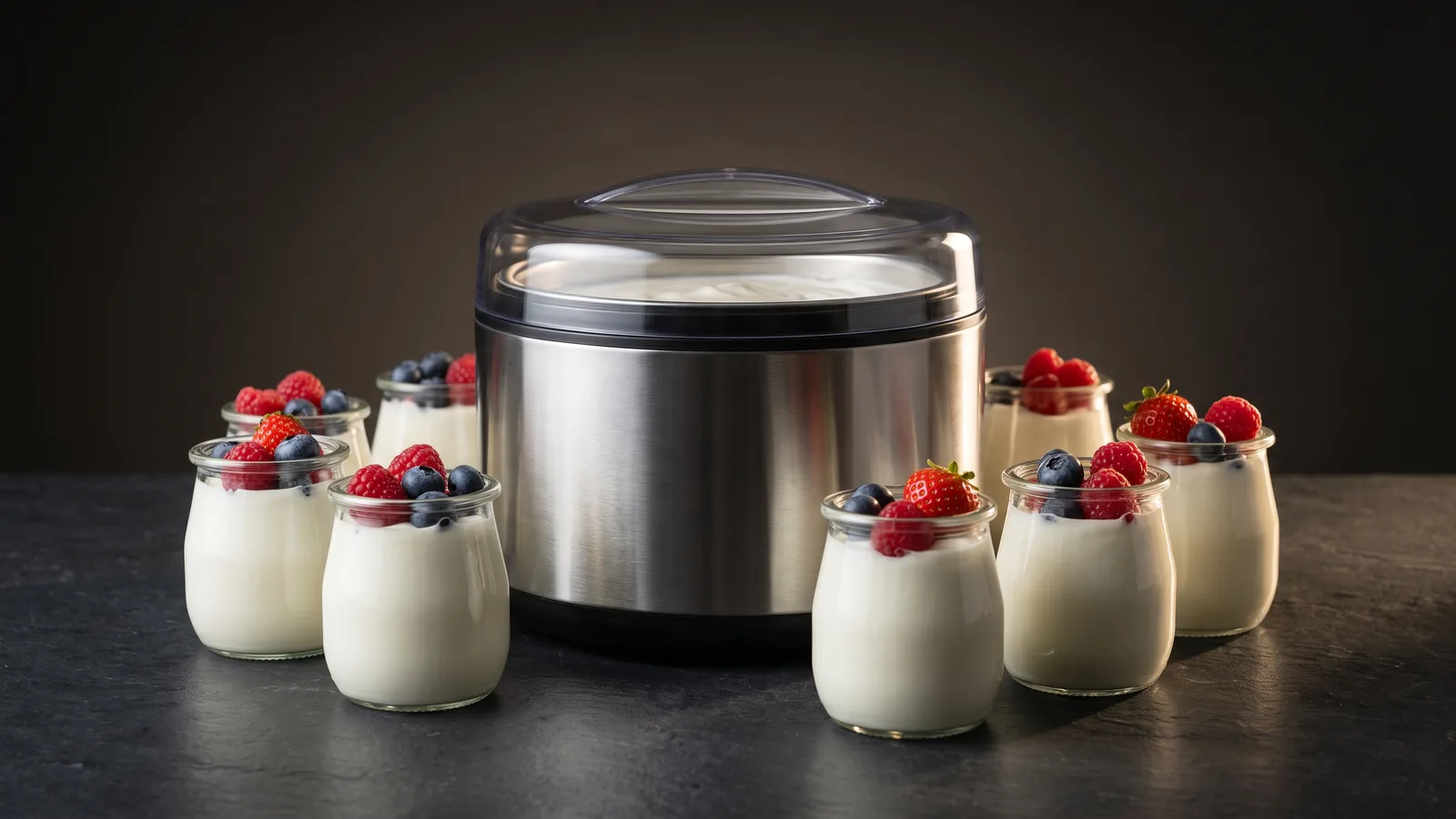
Ordinary yogurt is done in 6 to 10 hours — long enough for the milk to set and sour. The Specific Carbohydrate Diet (SCD) asks for something different: a full 24-hour ferment. The temperature is the same as regular yogurt, around 100-110°F; what changes is that you keep the cultures working far past the point where the yogurt has merely thickened, so they have time to consume nearly all of the remaining lactose.
That single change — a full day at temperature instead of part of a night — is what quietly disqualifies a lot of otherwise-fine yogurt makers.
This guide explains the fermentation and the machine, not the diet. Whether SCD or the related GAPS protocol is right for you is a matter for you and a qualified clinician or dietitian; nothing here is medical or dietary advice.
Why 24 hours changes the machine requirement
A normal yogurt maker only has to hold temperature for one evening. Over 24 hours, small problems compound into ruined batches.
Most inexpensive machines are a fixed-wattage warming plate with no thermostat — they don’t measure or regulate temperature, they just output a set amount of heat calibrated for a normal room (see how a yogurt maker works). Two things go wrong over a long ferment:
- Heat creep. Some warmers keep adding heat and slowly climb over many hours. A machine that reads a fine 110°F at hour 3 can be sitting above 115°F by hour 18 — hot enough to start killing the cultures right in the middle of the ferment.
- Ambient drift. With no thermostat, the machine rises and falls with the kitchen. A cold overnight stretch in a winter kitchen can pull a full-day batch below the active range for hours.
Either way, the batch that mattered for a full 24 hours is wasted — and because the failure happens silently mid-ferment, it is easy to blame the milk or the starter instead of the machine.
How to know whether your machine can hold 24 hours
Before you commit a batch, test the machine the same way you would for any temperature problem: run it with jars of water and read the water — not the air or the base — with a kitchen thermometer early and again late in a long run, to catch creep. The full method is in how to test your yogurt maker for temperature drift. You want a steady ~108-112°F held across the whole day, not just at the start.
If it climbs, drifts, or can’t sustain the low end, no amount of technique will save a 24-hour batch.
What to look for in a machine for the long ferment
The decisive feature is regulated temperature over a long hold — a genuine thermostat or digital temperature control that actively keeps the target for a full 24 hours, rather than a fixed warming plate that assumes a normal room. After that, match capacity to how much you make and favor containers that are easy to clean between the frequent batches a long-ferment routine tends to produce.
The honest state of the hardware. The machine the SCD and GAPS communities long relied on for this — the Luvele Pure, a single-container maker that held an adjustable temperature steady across a 24-hour cycle — is no longer sold on Amazon, and the current budget “adjustable temperature” dedicated makers draw consistent owner complaints about exactly the failure above: drift over a long hold. So the most reliable tool for a 24-hour SCD ferment today is an Instant Pot (or similar multi-cooker) with a yogurt setting — it holds a steady incubation temperature across the full day and ferments one large batch you can strain in a single step.
See yogurt maker vs Instant Pot for the trade-offs, or the best electric pressure cookers for models with a yogurt function. A standard dedicated maker like the Euro Cuisine is fine for ordinary 8–12 hour dairy yogurt — see the best yogurt makers — but its preset temperature and short timer are not built for the SCD protocol; how to choose a yogurt maker covers the rest of the decision. If you already make ordinary yogurt and want to move to the long ferment, the base method is the same — how to make yogurt at home — with the incubation simply extended to a steady 24 hours.