What “non-toxic” actually means for a milk maker
The concern behind the search for a non-toxic milk maker is usually one of two things: plastic leaching into heated liquid, or microplastics shed from plastic components over time. Both are legitimate questions — and the answer depends on where the plastic is and what temperature it reaches.
The food-contact hierarchy, from lowest to highest concern:
- 304/316 stainless steel — inert. Does not react with hot or cold liquid, does not degrade over repeated use cycles, does not impart taste or compounds to the milk.
- Borosilicate glass — inert. Standard for laboratory and kitchen use with hot liquids.
- Polypropylene (PP) at room temperature — low risk. Cold-extraction milks that never contact heated plastic carry minimal leaching concern.
- Polypropylene (PP) at 80–100°C, repeatedly — moderate concern. Research into heated PP repeatedly cycling shows increasing release of volatile organic compounds over time. The effect is cumulative — a new machine leaches less than one used daily for 12 months.
- BPA-free plastics at high heat — BPS and BPF, the common BPA substitutes, have similar molecular structures. Long-term thermal stability data is accumulating but not complete.
The practical conclusion: the interior carafe and blade assembly are what matter. Exterior casings and bases do not contact milk. A machine with a stainless interior and plastic exterior is meaningfully different from a machine with a plastic interior at high heat.

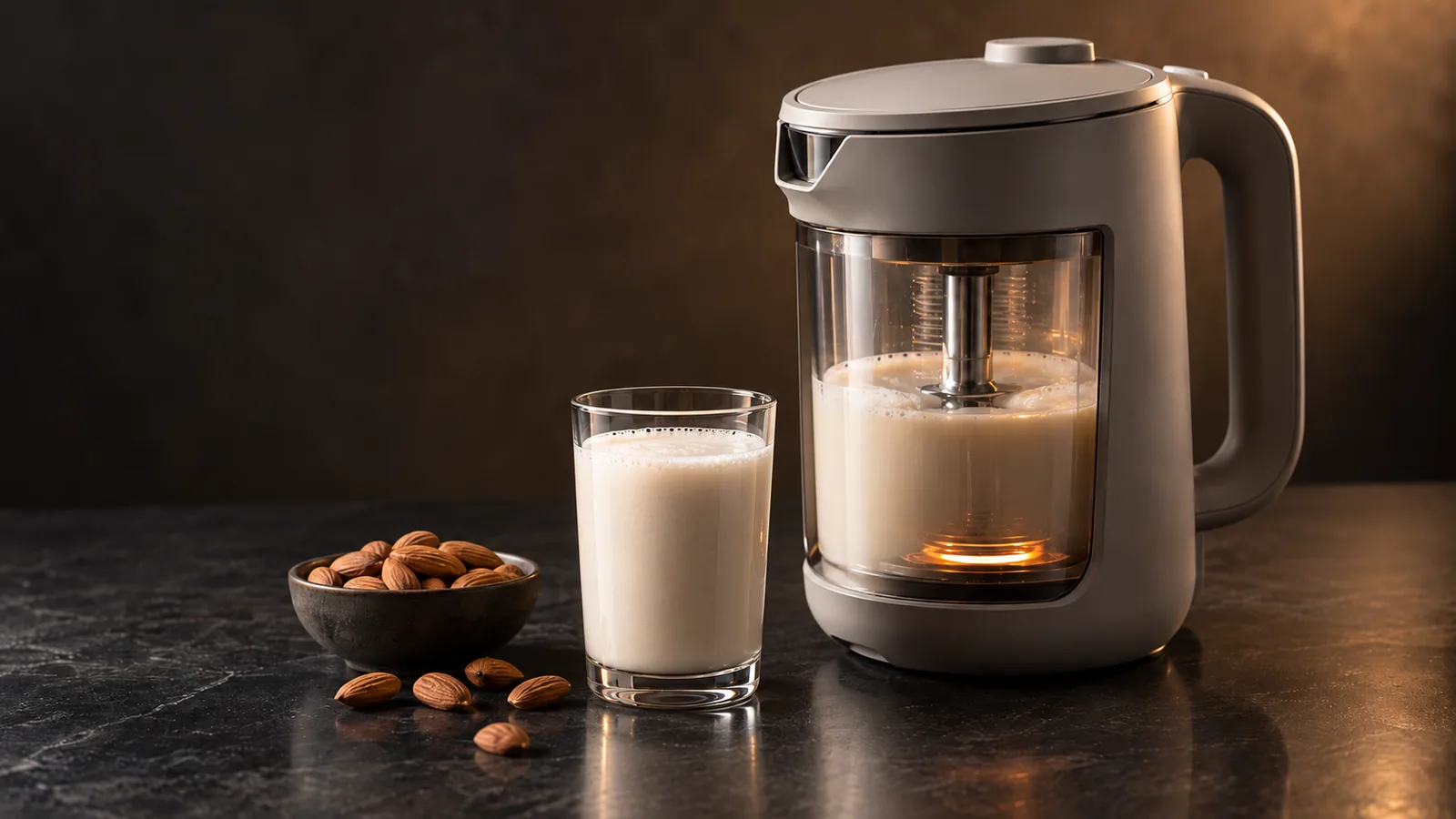
Almond Cow Nut Milk Maker
Food-grade 304 stainless steel is the only material that contacts the milk during processing. No heating element means no thermal leaching risk at all — the milk is never exposed to heated plastic at any point in the cycle. Cold extraction in 60 seconds, 5–6 cups per batch, built-in pulp separation.
Prime Day Amazon Prime Big Deal Days is on — a good time to check the live price.
Check current price on AmazonWhat buyers praise
- 304 stainless steel basket and filter — the only surfaces that contact milk
- No heating element — zero thermal leaching risk
- 60-second cold extraction cycle
- 5–6 cups per batch — largest output for a cold-extraction machine
- No straining bag required — built-in pulp separation
What buyers flag
- Cold extraction only — cannot make soy milk (requires heat)
- BPA-free polypropylene collector cup — milk contacts it briefly after processing
- Higher price than budget stainless alternatives
- No delay start or keep warm (not applicable to cold milk)
Why Almond Cow leads on non-toxic criteria
The Almond Cow earns this position because of two compounding factors: stainless food-contact surfaces and the complete absence of a heating element.
The stainless basket and filter handle the blending and straining — the stages where material contact is most sustained and most relevant to leaching. The BPA-free collector cup receives milk briefly at the end of the process; it is a concern worth naming but a smaller one than plastic contact during the 60-second processing cycle itself.
The no-heat design eliminates the main thermal leaching mechanism entirely. There is no phase in the Almond Cow’s operation where liquid reaches 80°C and contacts plastic. For buyers whose non-toxic concern is specifically about heated plastic, this is the structurally safest available option in the automated milk maker category.
What it cannot do: soy milk, which requires 100°C heating to deactivate trypsin inhibitors. If soy milk is part of your routine, the Almond Cow is not sufficient as a standalone machine.
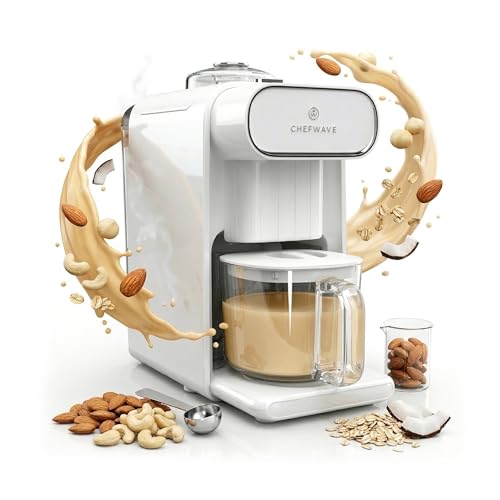
ChefWave Milkmade 6-in-1
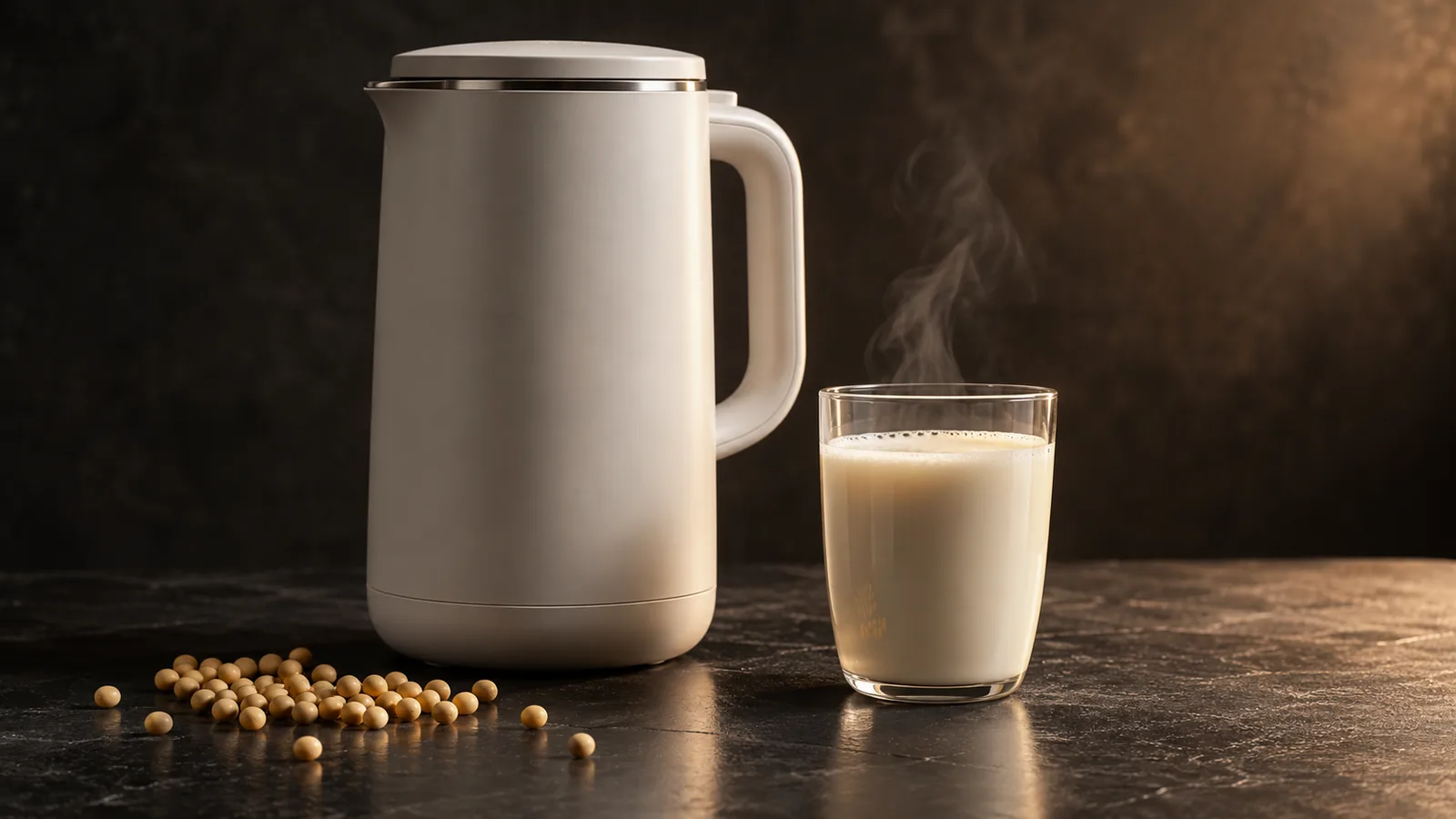
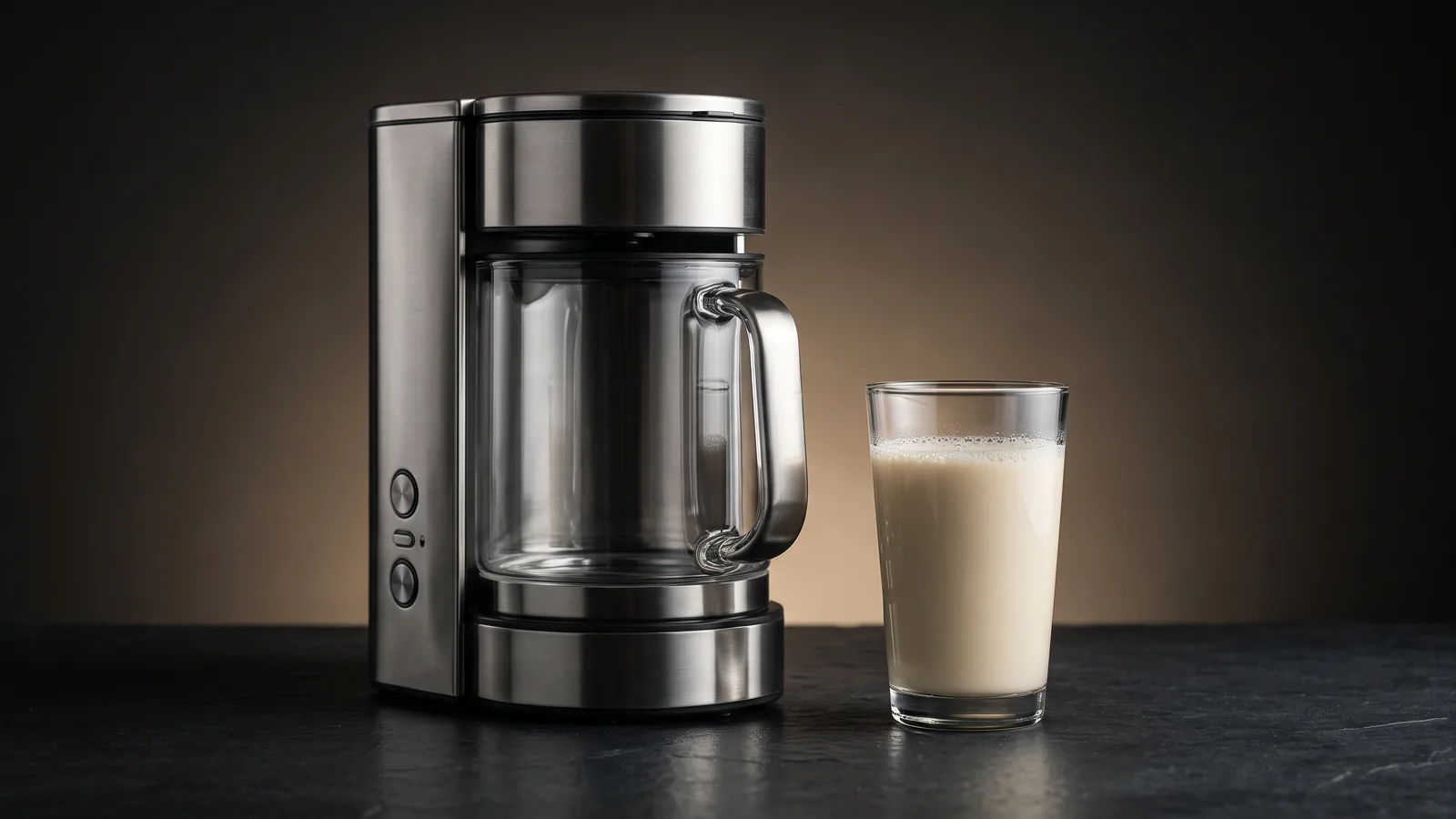
The non-toxic choice if you make soy milk or heated grain milks. Stainless steel processing interior plus a borosilicate glass pitcher — processed milk goes into glass, not plastic. Cleaning is the quality its owners reward it for most; durability is the one they penalize most, and a few note an off-smell specifically on the soy cycle.
Prime Day Amazon Prime Big Deal Days is on — a good time to check the live price.
Check current price on AmazonWhat buyers praise
- Borosilicate glass pitcher — processed milk stored and served in glass, not plastic
- Stainless steel interior during processing — no plastic contact at boiling
- Cleaning is its standout strength — owners reward it here above the norm
- Six programs including soy, oat, almond, cashew, coconut
- No soaking required; 24-hour delay start; auto self-cleaning
What buyers flag
- Durability is the quality its owners penalize most
- A few owners report an off or rust-like smell on the soy cycle specifically
- Outer body has plastic components (no milk contact)
- Moderate capacity for families; soy program runs around 25 minutes
ChefWave for buyers who make heated milks
If your non-toxic concern specifically covers heated milk programs — soy milk at 100°C, warm oat milk, rice paste — the ChefWave is the most practical answer. Two design decisions separate it from competitors:
The glass pitcher. Most milk makers dispense into a plastic carafe or expect you to pour into a separate container. The ChefWave’s borosilicate glass pitcher is the receiving vessel for the processed milk. The milk goes from stainless processing components directly into glass. At no point does hot milk contact polypropylene or BPA-free plastic.
Stainless interior. The processing surfaces — blade assembly, interior carafe walls — are stainless steel. The heated soy cycle runs at boiling for around 25 minutes; during that time, the liquid contacts stainless, not plastic.
One honest note from its reviews: a minority of owners mention an off or rust-like smell specifically on the soy cycle. It is not the dominant theme — cleaning is what owners reward it for most — but if soy is your main use, run an empty hot-water cycle before first use and weigh it. It is a very different signal from the pervasive plastic-burning-smell complaints that define some budget machines (see the red flags below).
Also worth considering
Nama M1 — cold-press stainless, best for grain and nut milks
Cold-press design · sturdy stainless components
For cold-extraction milks (oat, almond, cashew, hemp, seed), the Nama M1’s cold-press motor and stainless components produce a refined result with minimal plastic exposure — and no heating means no thermal leaching concern at all. It is also the durability leader of this cluster: owners penalize it far less on longevity than the category norm, and describe the build as sturdier than rivals. Full Nama M1 review.
What to avoid: material red flags
The clearest real-world signal that a machine’s materials are a problem is not a spec sheet — it is owners reporting a plastic or burning smell during heated use. Two machines in this category illustrate the red flag directly in their reviews:
AlfaBot — the complaint that recurs most across its reviews is a strong plastic smell, and in several cases a burning-plastic smell during heated use (“burning plastic smell put me off”), alongside some early failures. For a non-toxic buyer specifically, that is the single most relevant warning sign, and the reason we do not recommend it here despite a stainless-interior claim. Full AlfaBot review.
Arcmira — on a limited sample, its reviews include a unit that started smoking and gave off a burning smell during use, plus leaking and general quality complaints. A smoking machine is a materials-and-safety red flag; if you own one that smokes, smells of burning, or leaks, stop and return it. Full Arcmira review.
Beyond those specific machines, the general rules:
Plastic-interior machines with heated programs: machines that process soy or hot milks while the liquid contacts polypropylene throughout the cycle. The risk is cumulative — it increases with months of regular use and repeated near-boiling cycles.
Marketing terms that don’t address food-contact materials: “BPA-free” describes the plastic type, not the absence of plastic. “Food-grade” is a regulatory minimum, not a safety premium. Look for the material that contacts the milk during processing, not the exterior.
Unverified “stainless steel” claims: some budget listings claim stainless without specifying which surfaces are stainless and which are plastic. If a listing does not clearly state the interior and blade are stainless, assume the food-contact surfaces may be plastic — and treat any reviews mentioning a plastic or burning smell during heated cycles as the clearest indicator.
The practical summary
For buyers who make cold-extraction milks only (almond, cashew, oat, hemp): the Almond Cow is the most non-toxic automated option, with stainless food-contact surfaces and no heating element.
For buyers who also make soy milk or heated grain milks: the ChefWave Milkmade adds glass storage and stainless processing to the heated-milk use case, at the cost of a higher price.
How to choose based on what you will actually make, not just what a machine supports. · The best plant-based milk makers