Why a soy milk maker is different from a nut milk maker
Most plant milk makers are optimized for cold-extraction nut milks: almond, cashew, hemp. These machines cannot safely make soy milk from raw soybeans. Soybeans contain trypsin inhibitors — compounds that interfere with protein digestion — that must be deactivated by heating the liquid to boiling. A machine that does not heat cannot make soy milk safely, regardless of the marketing.
Every machine here was chosen because it reaches the required temperature. Cold-only machines (Almond Cow, Nama M1) are excluded — they are excellent for cold nut milks but cannot make soy.
What separates a good soy machine from a mediocre one:
- Grinding fineness. Soybeans are harder than nuts; a coarse grind leaves chunky pulp and thin milk. Soy-focused machines with fine grinding produce a silkier result.
- Heating consistency. The machine must hold temperature long enough to fully cook the beans. Discomfort from homemade soy milk usually traces to a machine that heats briefly but not long enough.
- Filter efficiency. Soy pulp (okara) is finer than nut pulp, so coarse filters pass more particulate and produce grainier milk.
- Cleaning. Soy residue is stickier than nut milk; a self-cleaning cycle matters more here than in a nut-only machine.

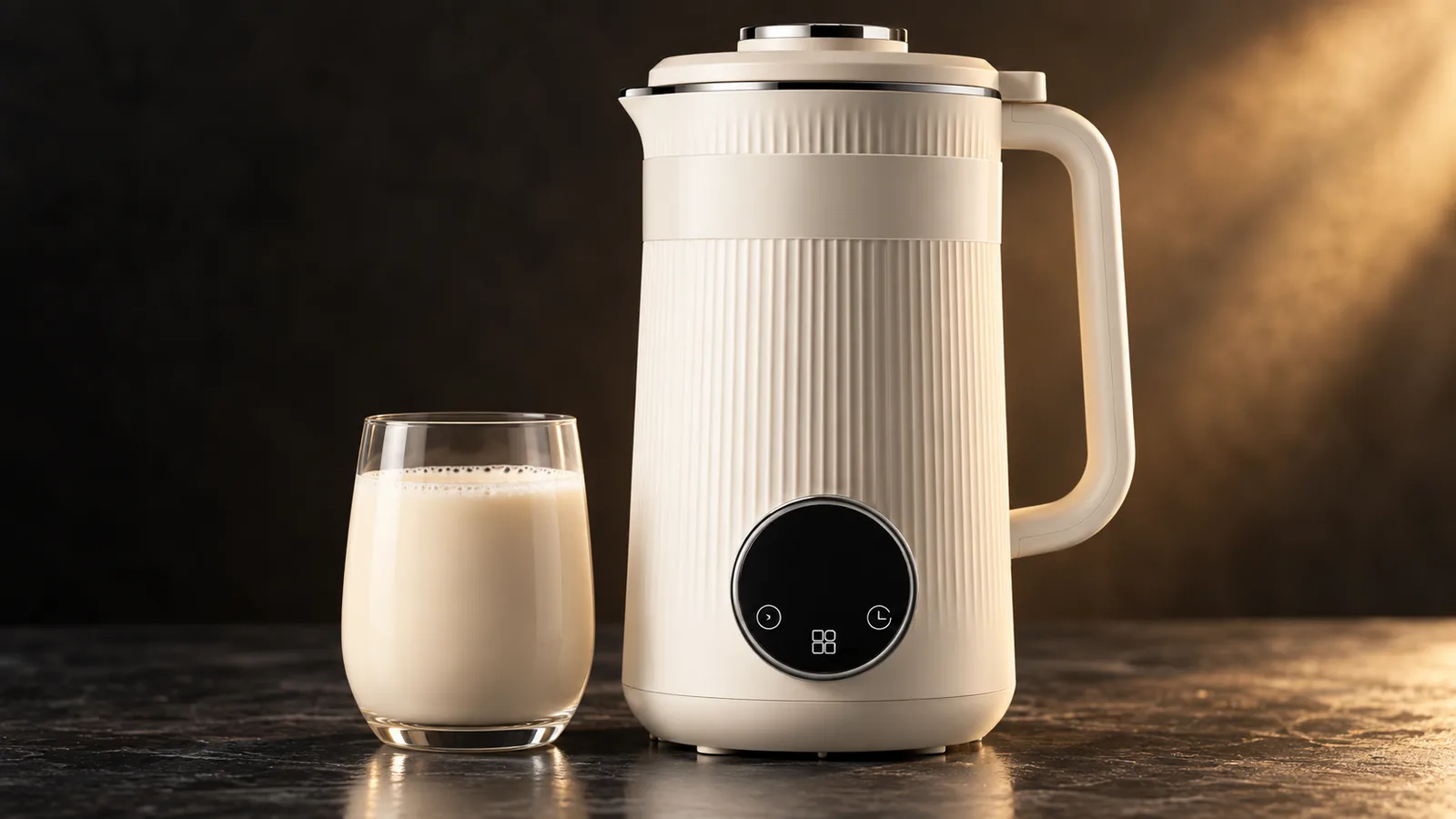
Kidisle Soy Milk Maker (32oz)
The value standout for homemade soy milk. Owners reward it for worth-the-price value, easy cleaning, and ease of use above the norm for its class — the budget soy machine buyers most consistently feel was worth the money. It heats properly for safe soy milk, and its compact size suits small kitchens. As with any budget machine, buy from a seller with an easy return window.
Prime Day Amazon Prime Big Deal Days is on — a good time to check the live price.
Check current price on AmazonWhat buyers praise
- Value-for-money is its standout — owners feel it punches above its price
- Rewarded for easy cleaning and ease of use above the category norm
- Heats to the temperature required for safe soy milk
- Compact footprint suits studios and small kitchens
What buyers flag
- 32oz capacity is limiting for households of two or more
- No established-brand durability record — buy with a return policy
- Fewer convenience extras than premium machines (no glass pitcher)
Why the Kidisle leads on value
Among the heated machines with a usable review sample, the Kidisle Soy is the one whose owners most consistently feel the money was well spent — value-for-money and easy cleaning both rate above the norm for its price class. For a first homemade-soy machine, that is the combination that matters: low cost, low cleanup friction, and buyers who don’t regret the purchase. The honest limits are capacity (single-person to couple) and the lack of a premium brand’s durability track record, which an easy return policy covers.
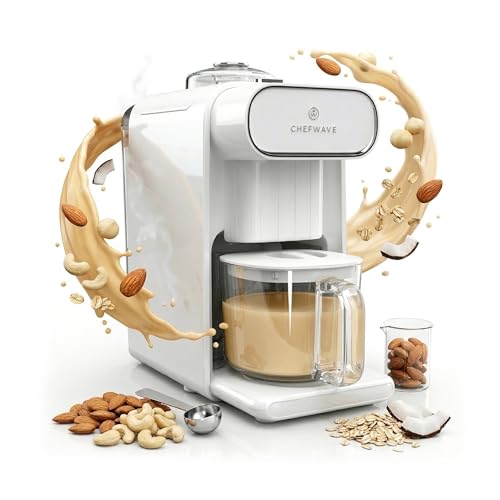
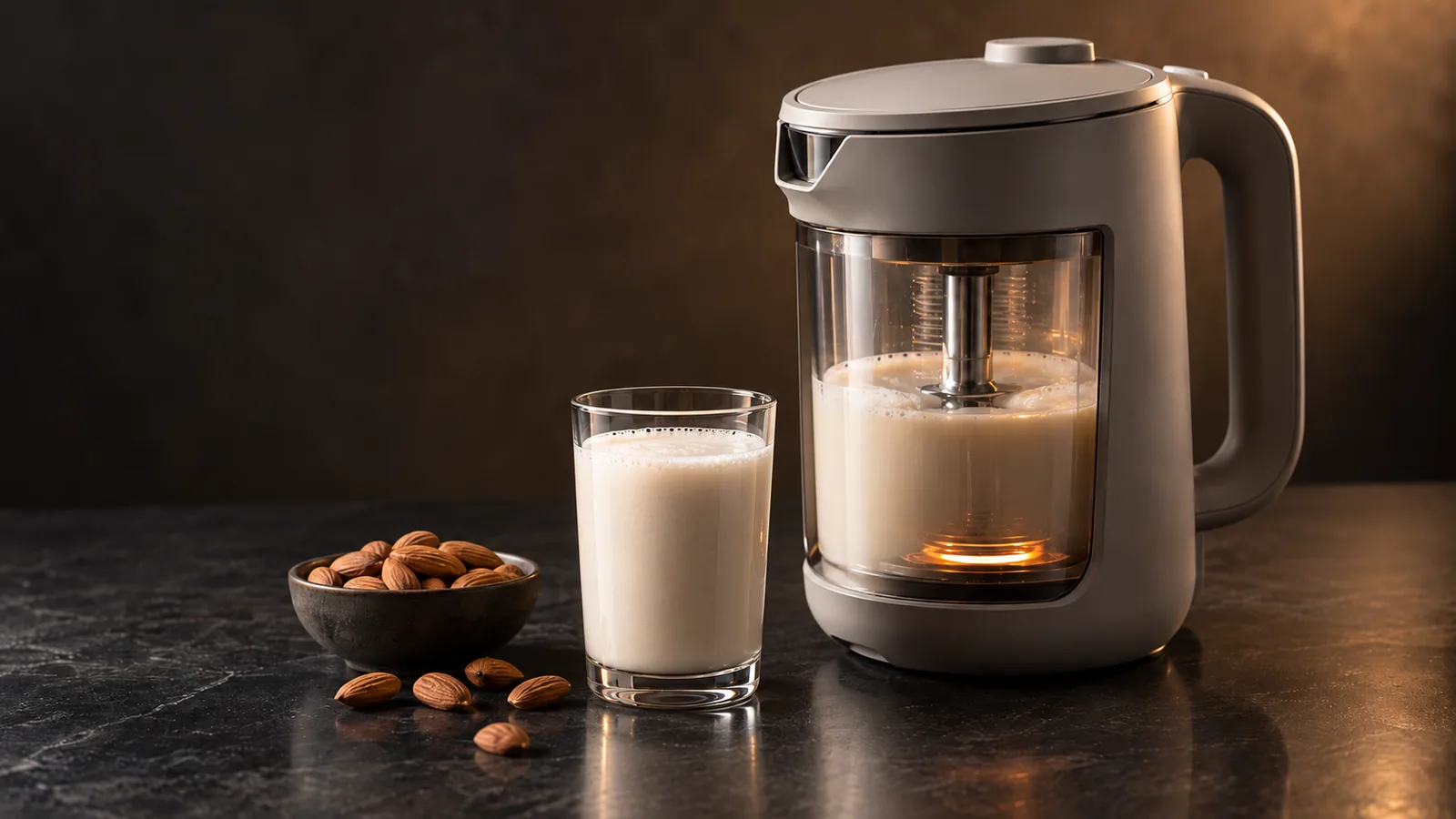
ChefWave Milkmade 6-in-1
The choice if soy is one of several milks you want from one machine. Six programs cover soy, oat, almond, cashew, coconut, and rice, and owners reward it above the norm for ease of cleaning — the standout in its full review profile. Two honest caveats for soy specifically: durability is the quality it is penalized for most, and a few owners note an off or rust-like smell on the soy cycle.
Prime Day Amazon Prime Big Deal Days is on — a good time to check the live price.
Check current price on AmazonWhat buyers praise
- Six programs — soy plus oat, almond, cashew, coconut, rice in one machine
- Cleaning is its standout strength across its full review profile
- Glass pitcher — taste-neutral, no plastic contact with hot milk
- Controlled-heat oat program avoids cold-blended sliminess
What buyers flag
- Durability is the quality owners penalize it for most
- A few owners report an off or rust-like smell specifically on the soy cycle
- Soy cycle runs around 25 minutes — not a fast machine
Why ChefWave is the versatile pick
If you want soy milk as part of a rotation — soy in coffee some days, almond or oat on others — the ChefWave replaces several machines, and cleanup is where its owners reward it most. For soy specifically, weigh two things from its review profile: durability is its softest point, and a minority mention an off-smell on the soy program (running an empty hot-water cycle before use helps). If soy is your primary use, the dedicated Kidisle is the more focused value; if versatility matters more, ChefWave earns the premium.

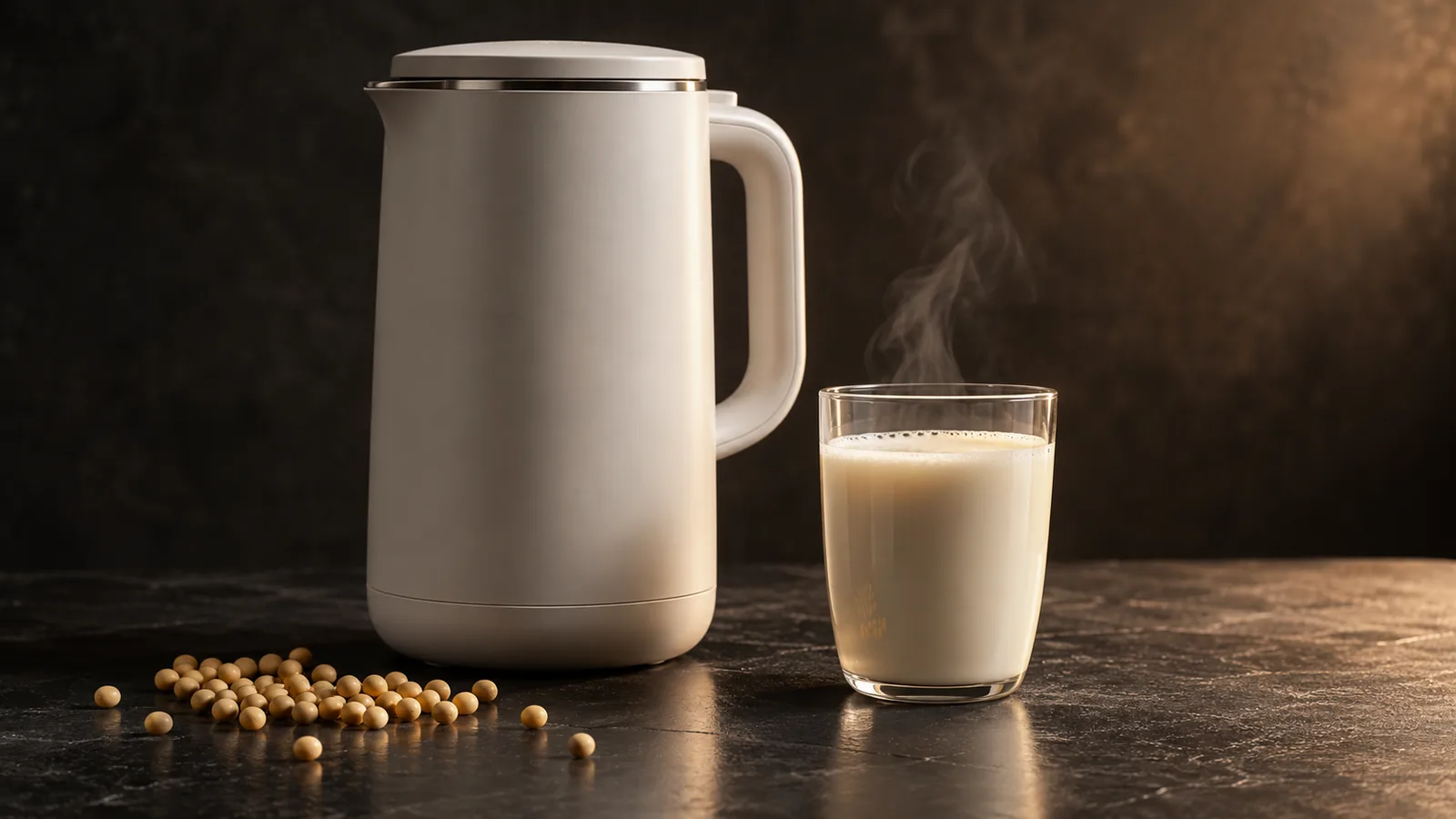
SoyaJoy G5 8-in-1
A soy-focused machine with a long brand heritage, aimed at buyers who want the finest, most traditional-style soy milk. The available review sample is thin, so treat this as a measured option rather than a confident ranking — the signal that exists is positive on quality and heating, but there is not enough of it to place it above the better-documented machines.
Prime Day Amazon Prime Big Deal Days is on — a good time to check the live price.
Check current price on AmazonWhat buyers praise
- Soy-focused design built for the finest grind and most authentic texture
- Long brand heritage in dedicated soy milk machines
- What review signal exists is positive on quality and heating
What buyers flag
- Thin review sample — the verdict is measured, not confident
- Soy-focused design is less versatile for nut milks than the ChefWave
- Tends to run a longer cycle and is a heavier countertop machine
Why SoyaJoy is a measured pick
SoyaJoy has a long history in dedicated soy machines, and buyers who want restaurant-style, finely ground soy milk are its target. The honest constraint is data: its verified-review sample is small, so we keep the verdict measured rather than ranking it above machines with a fuller track record. If authentic fine-grind soy is your priority and you are comfortable with a thinner evidence base, it is worth a look; otherwise the Kidisle and ChefWave are the better-documented choices.
What we did not recommend — and why
Cold-only nut milk makers (Almond Cow, Nama M1): cannot heat to soy-safe temperature. Excellent for cold nut milks, but they do not belong in a soy comparison.
Machines with too little review data: several newer sub-$70 soy machines appear on Amazon with few reviews and inconsistent ratings. We hold off ranking them until enough verified buyer evidence accumulates to say something real — ranking on a handful of reviews is how misleading “best of” lists get made.
High-powered blenders for soy: a Vitamix or Blendtec can blend soybeans, but you must separately boil the milk, a two-step process a dedicated machine avoids.
How to get the best results from any soy machine
Ratio: 1 cup raw soybeans (soaked 8–12 hours) to 5 cups water — roughly 3–4g protein per 8oz, comparable to commercial unsweetened soy milk.
Temperature check: on a new machine, run a full soy cycle and let the milk cool before tasting. Any stomach discomfort usually means the beans were not fully cooked — run a second cycle.
Flavoring: add vanilla (half teaspoon per liter) and a pinch of salt after the cycle, not during — sweeteners added mid-cycle increase foam.
Storing: fresh soy milk keeps 3–4 days refrigerated and separates naturally; shake before drinking. Do not add stabilizers.
How to clean your machine after each soy batch — soy residue is stickier than nut pulp and benefits from immediate rinsing. · The best plant-based milk makers