What the self-cleaning cycle actually does
Every milk maker includes a self-cleaning function. It runs warm or hot water through a rapid high-speed spin — roughly 60–90 seconds. This removes:
- Milk residue on the carafe walls
- Loose pulp that did not exit with the milk
- Surface oil from the blade assembly
It does not remove:
- Nut oil that has adhered to and dried in the mesh filter
- Protein residue embedded in the filter weave
- Residue accumulating around the blade bearing or gasket
- Milk traces on the carafe lid or threads
Buyers who rely on the self-cleaning cycle alone and skip manual filter cleaning typically notice off-taste developing within 10–14 days of daily use. The culprit is rancid nut oil in the filter — it transfers to every subsequent batch.
The daily routine (2–3 minutes)
Run this after every batch:
- Run the self-cleaning cycle immediately after pouring the milk. Do not let residue sit and dry.
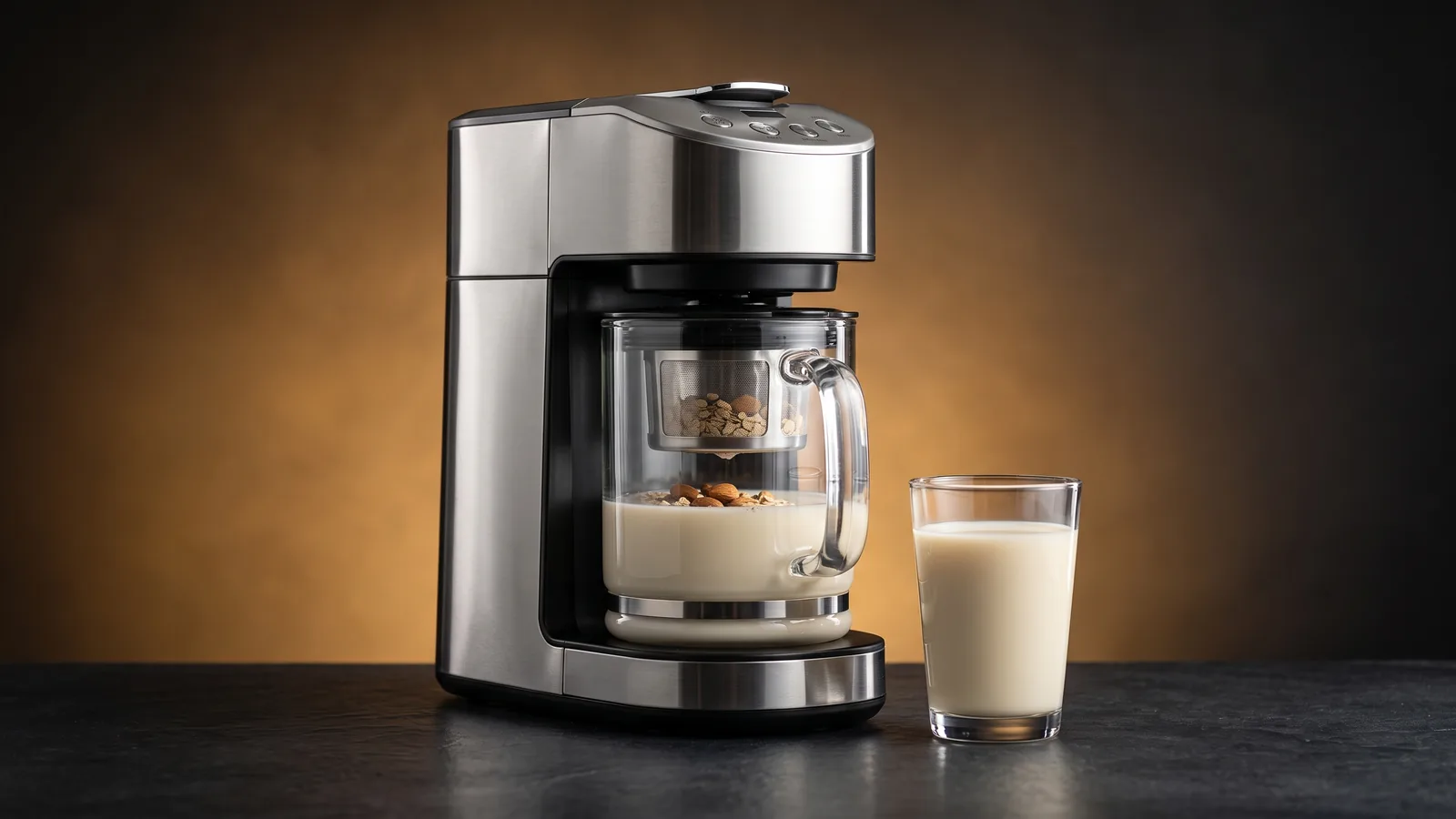
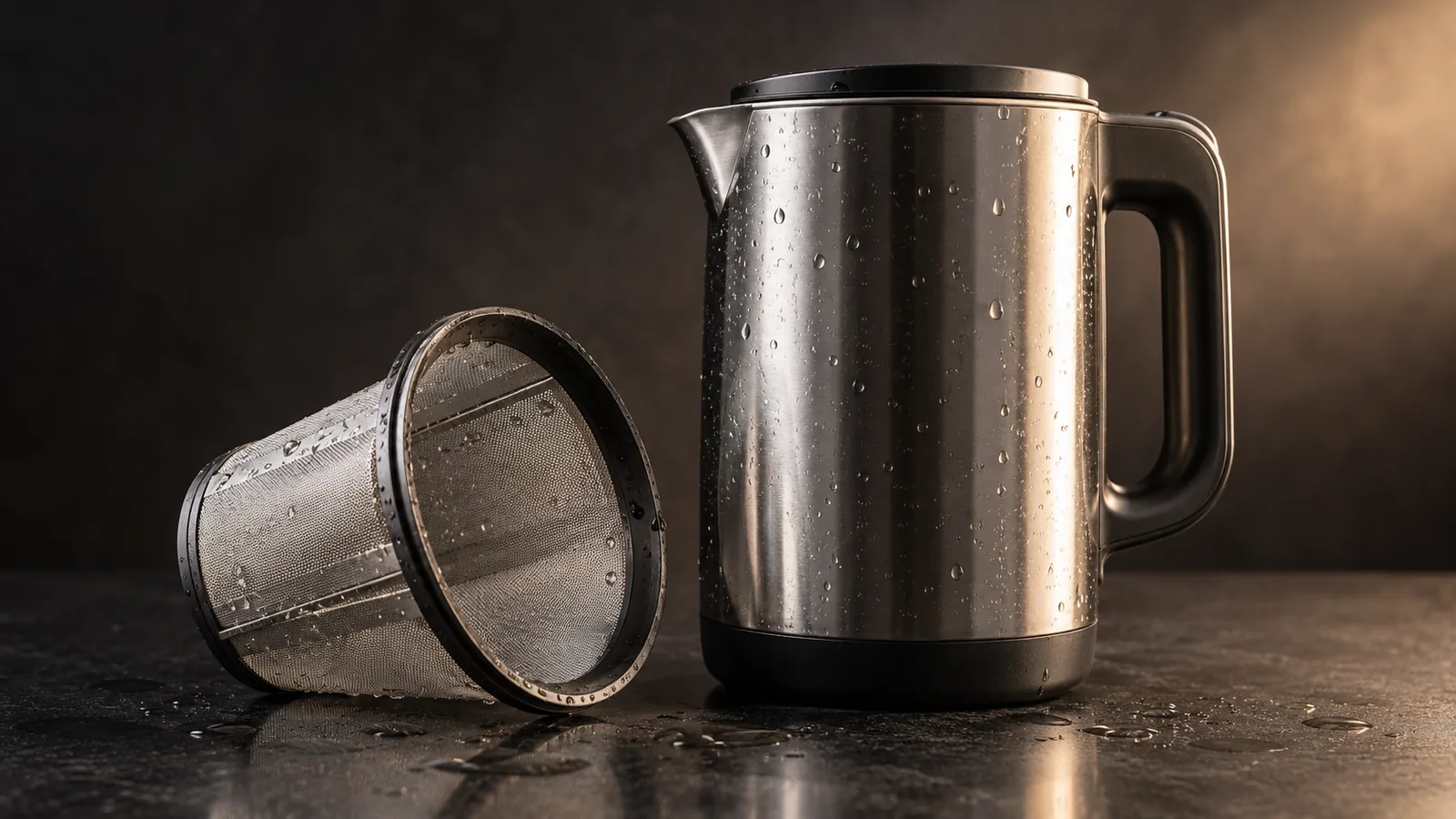
- Remove the filter basket (for strain-free machines) and rinse under warm running water. For most residue, a 20-second rinse with water pressure is sufficient for day-to-day maintenance.
- Rinse the carafe with warm water, swirling to dislodge any residue the self-cleaning missed.
- Wipe the lid and threads with a damp cloth — milk traces on the lid dry sticky and are harder to remove later.
- Leave the carafe open to air-dry. Storing with the lid sealed traps humidity and promotes odor.
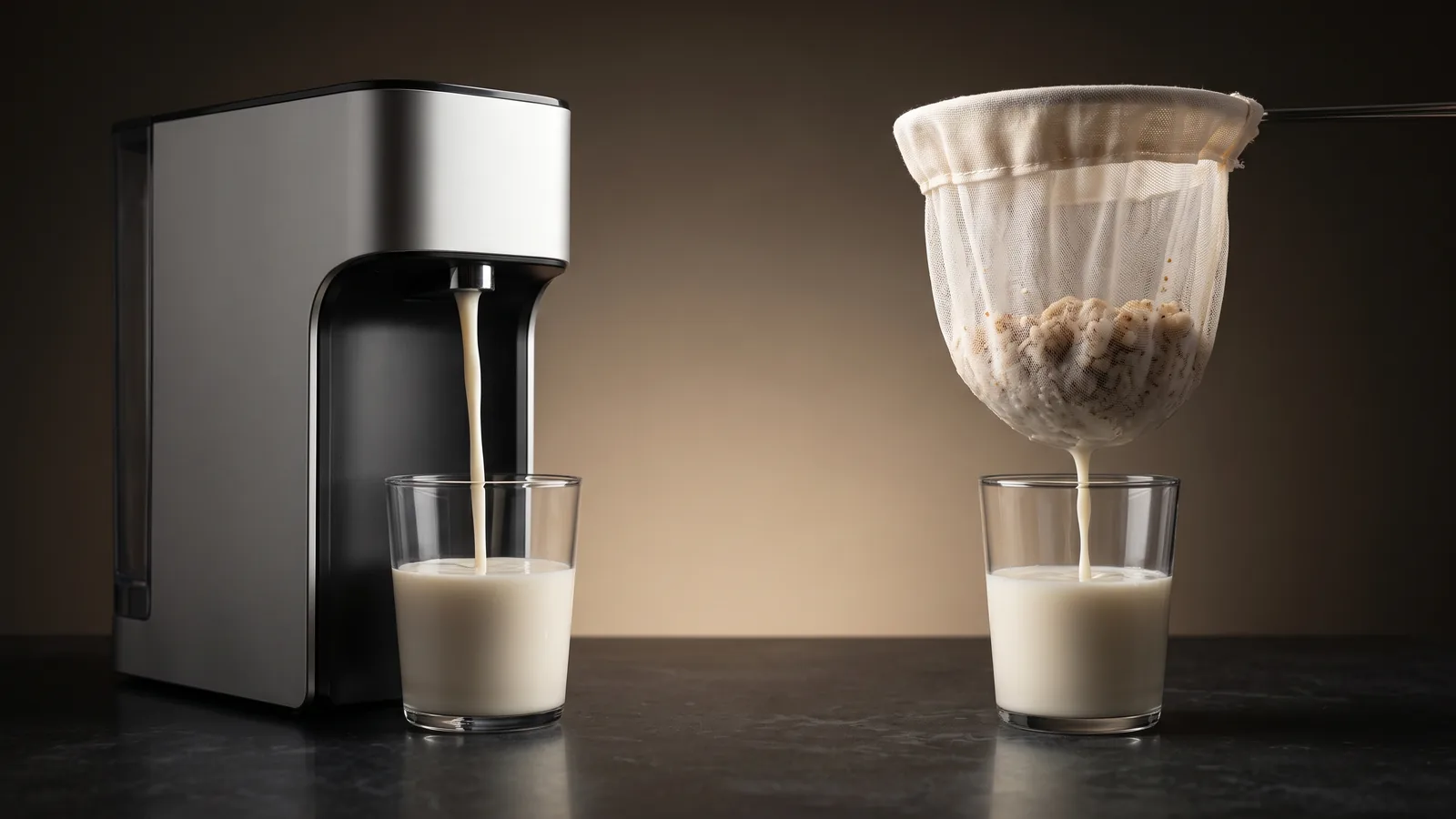
For bag-strain machines, wash the nut milk bag under warm running water immediately after straining, squeeze repeatedly until the water runs clear, then hang to dry. Never store a damp bag.
The weekly deep clean
For daily users, do this once a week. For less frequent users, do it every 4–6 uses.
Filter deep clean:
- Remove the filter basket completely
- Soak in warm water with a drop of dish soap for 10–15 minutes
- Use a small bottle brush or filter cleaning brush to scrub both sides of the mesh — work in circular motions across the entire surface
- Hold the filter up to light and look through it — you should see light passing evenly through the mesh. Dark spots or reduced light in areas indicates embedded residue
- Rinse thoroughly until no soap remains; soap residue causes foam in subsequent batches
Carafe and blade deep clean:
- Fill the carafe with warm water and a few drops of dish soap
- Run a cleaning cycle (or a standard cycle if the machine does not have a cleaning-specific setting)
- Rinse thoroughly with clean water — two rinse cycles if you can smell soap
- Use a bottle brush to clean around the base of the blade assembly where pulp and oil collect
- Check the gasket or O-ring at the blade base for cracks or embedded residue
The plastic smell: cause and which machines are affected
The plastic smell is the most frequently cited negative review across budget heated milk makers. Understanding its cause clarifies both which machines are susceptible and what can be done about it.
The mechanism: polypropylene (PP) and some other food-grade plastics off-gas volatile organic compounds when they contact liquid at sustained elevated temperatures. Most budget milk makers heat liquid to 80–100°C. At these temperatures, components with plastic in contact with the liquid release trace amounts of compounds with a distinctive chemical odor. The compounds are generally considered food-safe at these levels, but the taste transfer is real and unpleasant.
Which machines are affected: the smell concentrates in machines where the carafe interior, the filter basket, or any surface that contacts hot milk is made of plastic. A machine with a stainless steel interior is largely immune — the primary contact surface is metal, not plastic. The heating element itself is typically stainless in all machines.
What does not help: running additional cleaning cycles before the first use reduces the smell in the first few batches but does not eliminate the issue in machines with plastic interiors. The off-gassing continues as long as plastic contacts hot liquid.
What helps:
- Choose a stainless interior: the most effective solution is to select a machine where no plastic contacts the hot liquid. The spec sheet should state “stainless steel interior” or “food-grade stainless carafe” explicitly.
- Cold extraction: if your use does not require heating (almond, cashew, oat), using the cold-blend cycle eliminates the temperature trigger entirely.
- Run a citric acid cycle: for mild plastic smell, dissolving one teaspoon of citric acid in the carafe’s water volume and running a full cycle can reduce the odor. Rinse thoroughly after.
Filter replacement
Built-in mesh filters degrade over time — the mesh stretches, wires break, and embedded residue eventually cannot be fully cleaned. Signs the filter needs replacing:
- Visible mesh damage or bent wires
- Persistent off-taste or odor even after thorough cleaning
- Increased pulp in the finished milk indicating mesh pores have enlarged
- Discoloration that does not respond to a citric acid soak
Most filters last 6–18 months with daily use depending on cleaning consistency and milk type. Almond milk is harder on filters than cashew or hemp due to the fibrous pulp. Oat milk starch residue clogs mesh quickly if the machine is used in a heated cycle.
Before buying a machine, confirm that replacement filters are sold separately and are in stock. Some budget machines discontinue filter availability as the model ages.
Signs the machine needs attention now
- Milk tastes stale or slightly sour within 24 hours of making — filter cleaning needed
- Plastic smell has developed after weeks of use — citric acid cycle, check interior material
- Milk has visible fine grit — filter mesh has degraded or the mesh is coarse
- Machine vibrates more than usual or makes a grinding noise — blade assembly needs inspection; debris may be caught around the bearing
- Self-cleaning cycle produces foam — soap residue in the carafe from a previous cleaning
Back to the full buying guide: how to choose a machine whose design minimizes these issues
Shopping for one that is easier to clean? See the best plant-based milk makers for our picks.