The fundamental difference
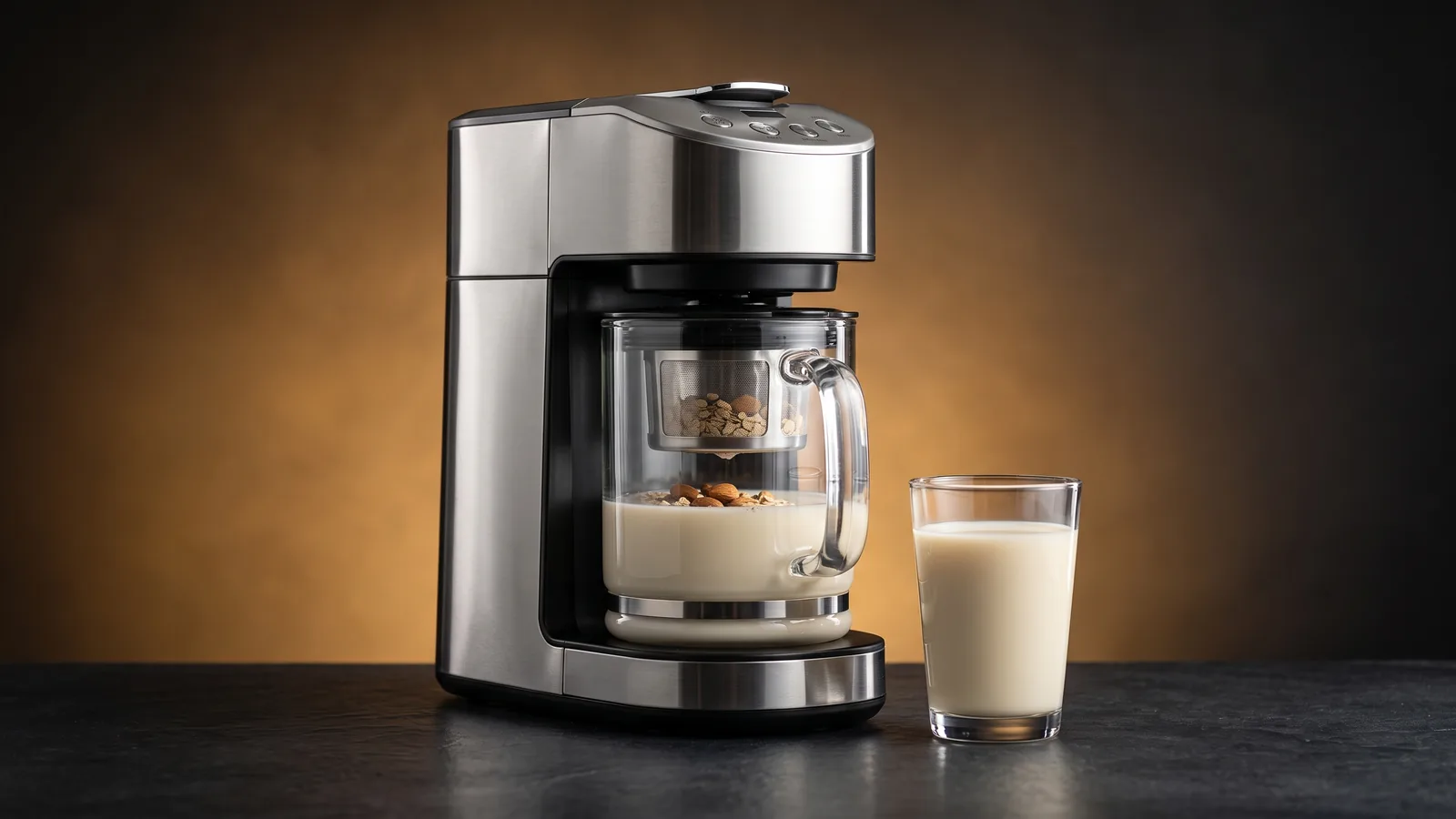
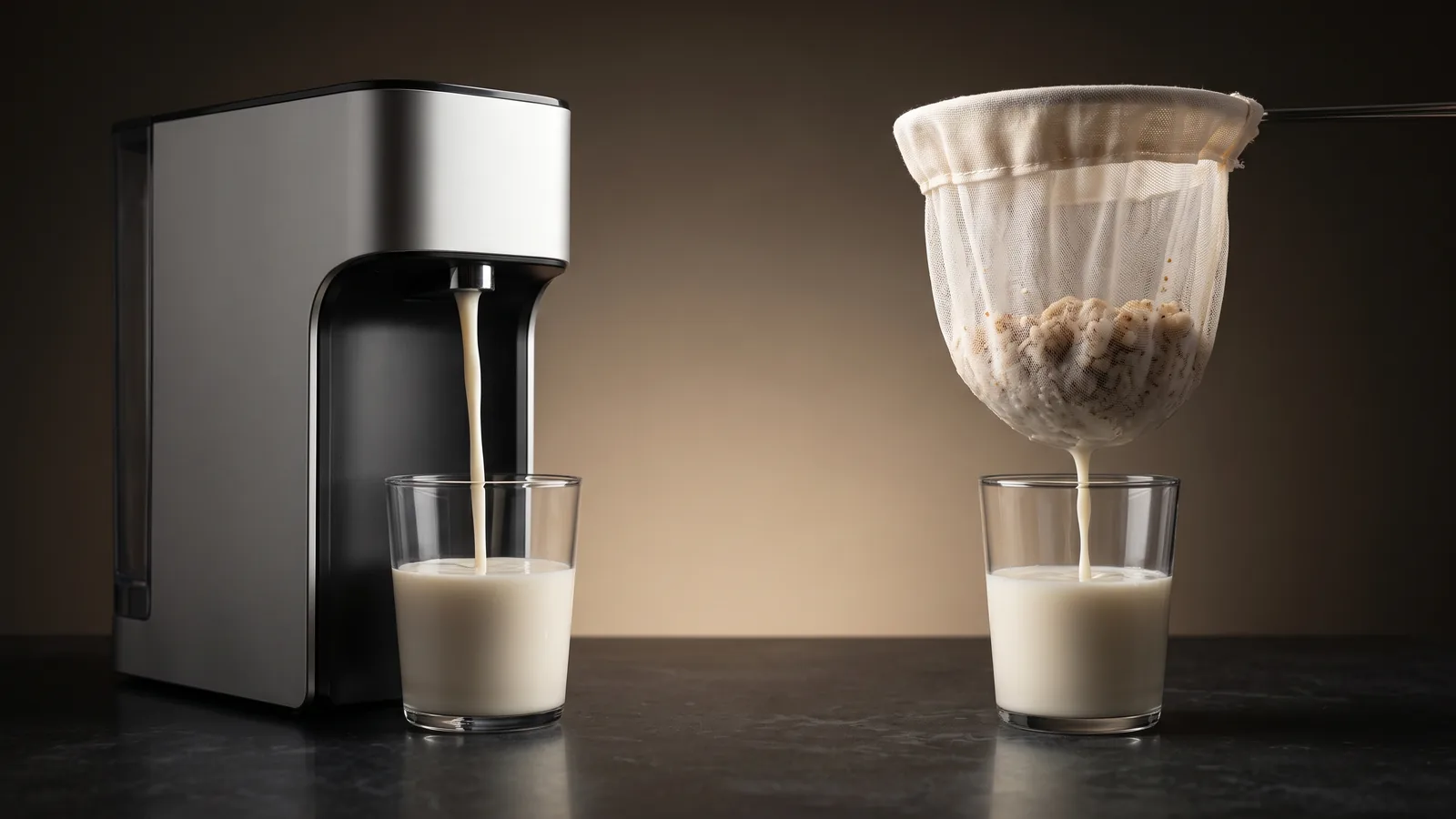
Strain-free machines integrate the straining step into the machine itself. A mesh filter basket sits inside the carafe; the blade assembly sits in the center. The machine blends and heats, and the milk passes through the mesh while the pulp remains in the filter basket. You pour the finished milk directly out of the carafe.
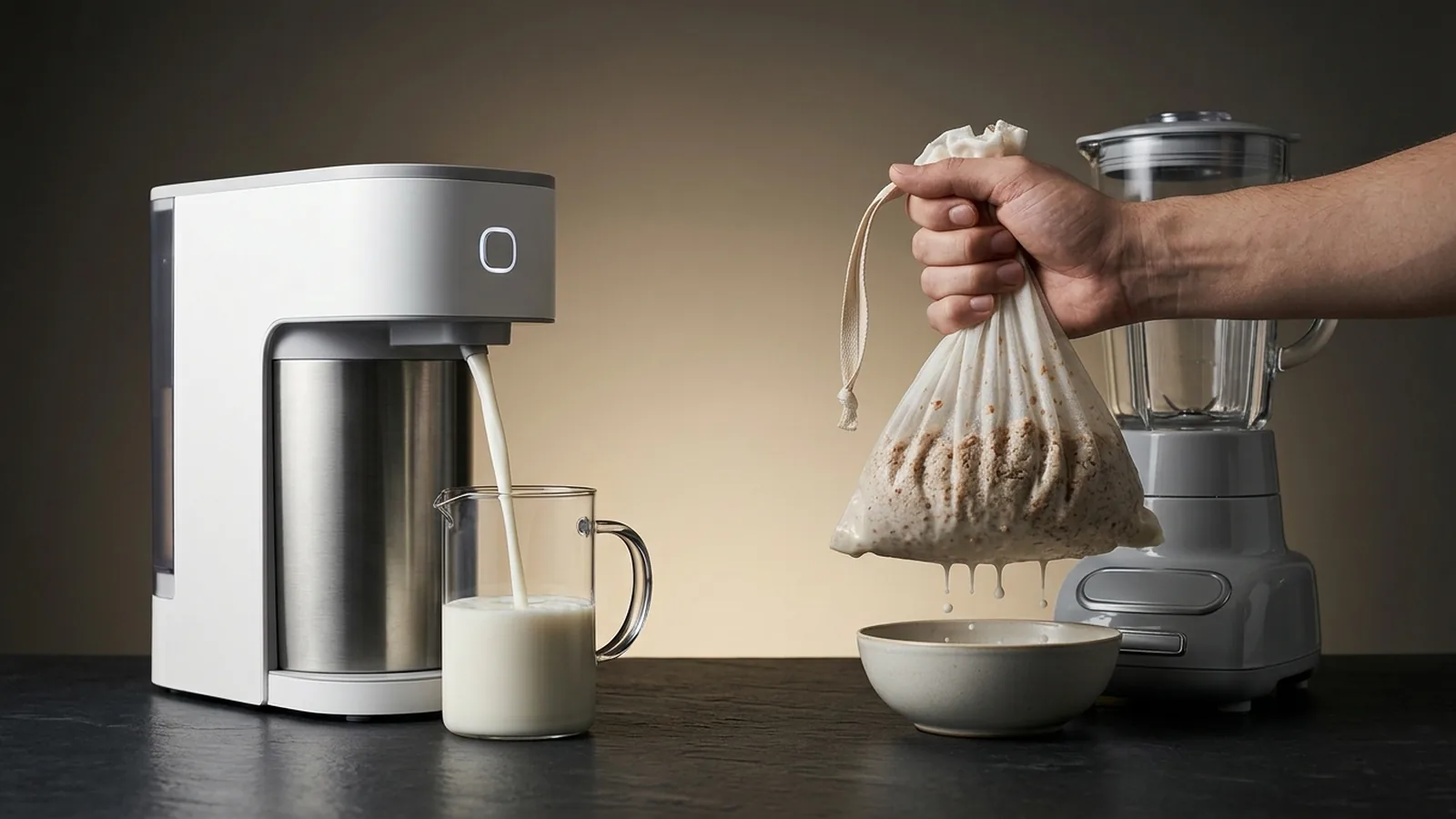
Bag-strain machines blend and heat but leave the straining to you. After the cycle completes, you pour the contents through a separate nut milk bag or cheesecloth, squeezing to extract the remaining milk from the pulp.
Some machines are hybrids — they include a coarse internal filter to catch large particles, but the buyer is expected to strain through a bag for a finer result.
Where strain-free wins: speed per batch
The convenience case for strain-free is real. When the cycle ends, the milk is already strained. You pour, rinse with the self-cleaning cycle, and you are done. There is no bag to set up, no squeezing, no secondary container.
For daily users — making milk every morning as part of a routine — this matters. Removing two minutes and one extra step from a daily ritual adds up over a month.
Strain-free also eliminates the bag-drying step. Nut milk bags cannot be stored wet (they mold). After washing, a bag needs to air-dry, which means managing a damp bag on a hook or drying rack. Strain-free machines eliminate this entirely.
Where bag-strain wins: thoroughness of cleaning
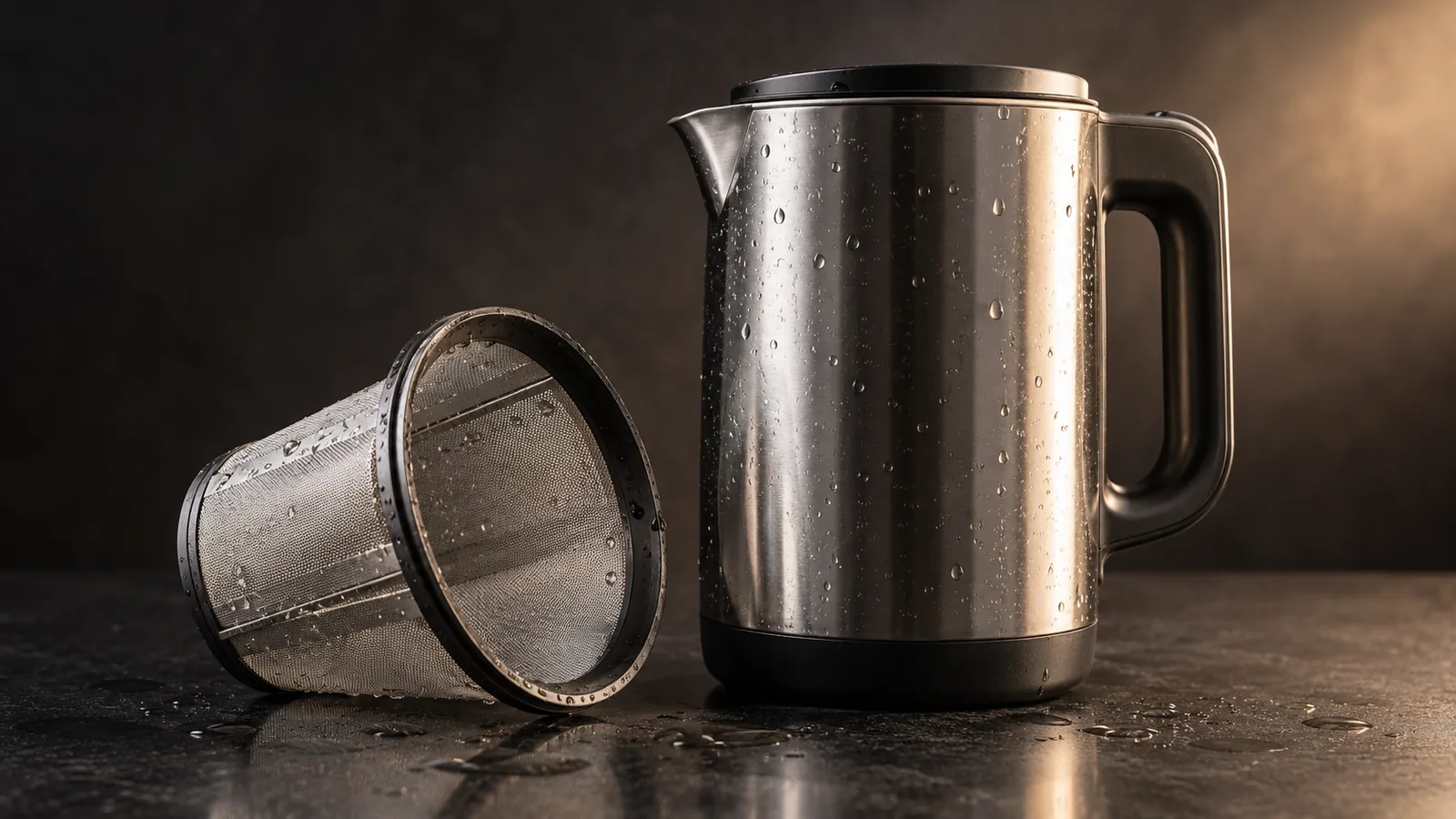
The built-in mesh filter is the strain-free design’s weakest point. Nut particles, nut oil, and protein residue work their way into the mesh weave during blending. The self-cleaning cycle (warm water + high-speed spin) removes the largest particles but does not fully dislodge embedded residue.
Buyers who do not brush-clean the filter after every 1–3 uses report a predictable pattern: milk starts tasting stale or slightly sour within a week. The filter is culpable — rancid oil in the mesh carries over into fresh batches.
A nut milk bag, by contrast, is easy to clean thoroughly. Run warm water through it, squeeze and repeat, and the weave rinses clear in 60–90 seconds. Dishwasher-safe bags are even easier. The absence of a rigid frame means every part of the bag is accessible during washing.
Buyers who are less consistent with cleaning are better served by the bag-strain design.
Milk texture: which strains finer
High-quality strain-free filters (fine stainless mesh, 80–100 microns) produce smooth, clean milk comparable to a squeezed bag. Coarser filters — common in budget machines — leave more fine pulp in the milk, producing a slightly gritty or fibrous texture.
The bag-strain method gives the buyer control over the squeeze pressure. Pressing firmly removes more milk from the pulp; pressing gently produces a slightly lighter result. This manual control is a small advantage for buyers who want to tune the milk’s body.
For nuts with particularly fine pulp — cashews, hemp seeds — the texture difference between methods is minimal. For almonds and oats, a fine mesh or a firmly squeezed bag produces meaningfully smoother results than a coarse mesh.
What to look for in a strain-free filter
If a strain-free design appeals to you, assess the filter before buying:
- Mesh fineness: look for 80–100 micron stainless mesh. Coarser mesh (you can often see this in product photos) allows pulp particles through.
- Removability: the filter basket should detach completely from the carafe for thorough cleaning. Filters that do not detach are very difficult to clean well.
- Replacement availability: confirm the manufacturer sells replacement filters and they are in stock. A machine whose filter is unavailable becomes unusable when the filter eventually degrades.
- Surface area: a larger filter basket catches more pulp before clogging mid-batch.
The practical decision
Choose strain-free if:
- You will use the machine daily and value morning-routine speed
- You are reliable about brush-cleaning the filter after every 1–2 uses
- The specific machine uses a fine, removable stainless mesh
Choose bag-strain if:
- Thorough cleaning matters more to you than speed
- You use the machine 2–4 times per week rather than daily
- You want to produce a very smooth milk and are willing to squeeze firmly
- The filter mesh on your preferred strain-free machine is coarse or non-removable
Choosing between these designs is one step in a larger decision: read the full buying guide
For the machines we recommend in each design, see the best plant-based milk makers.