The honest framing
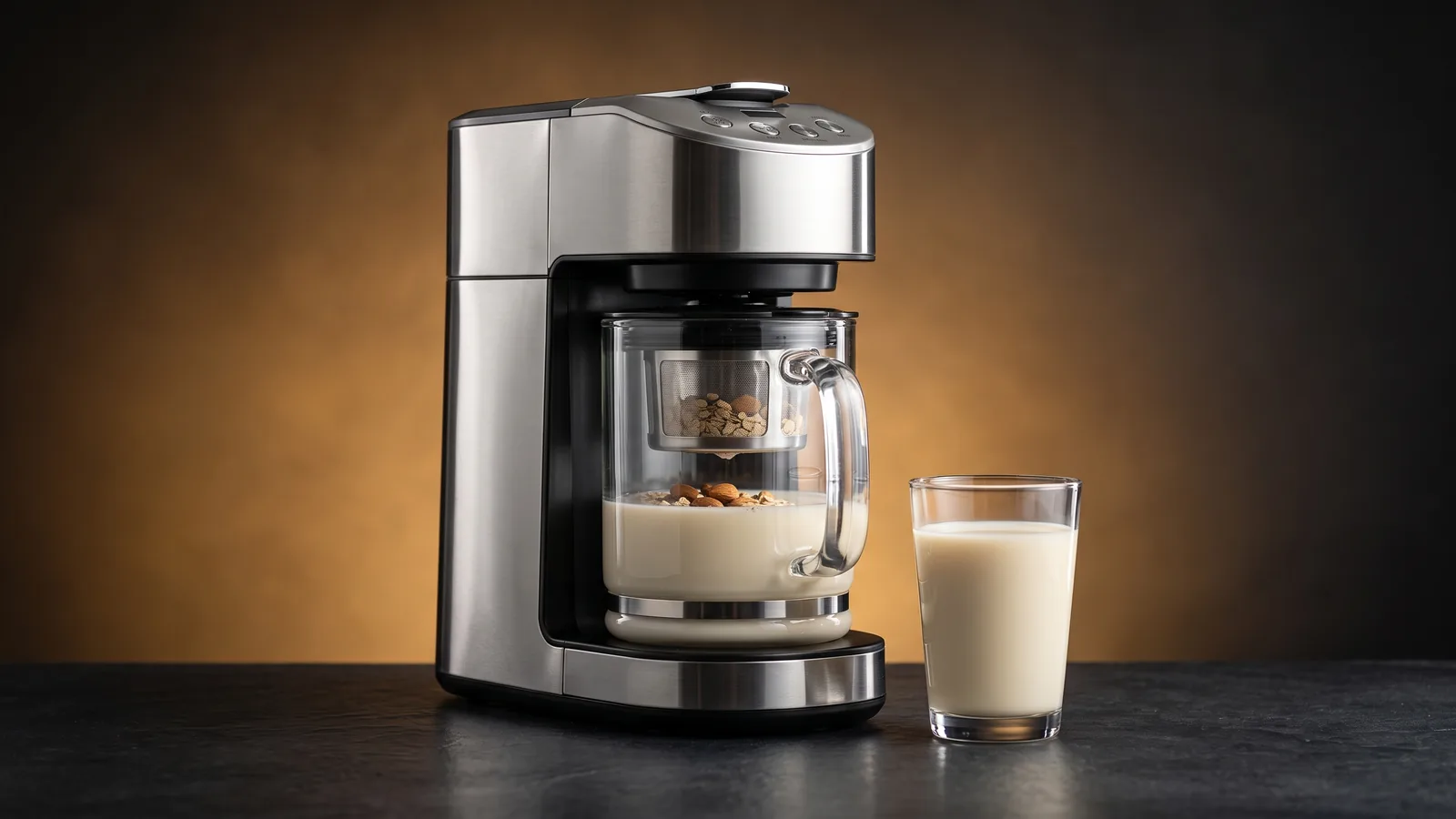
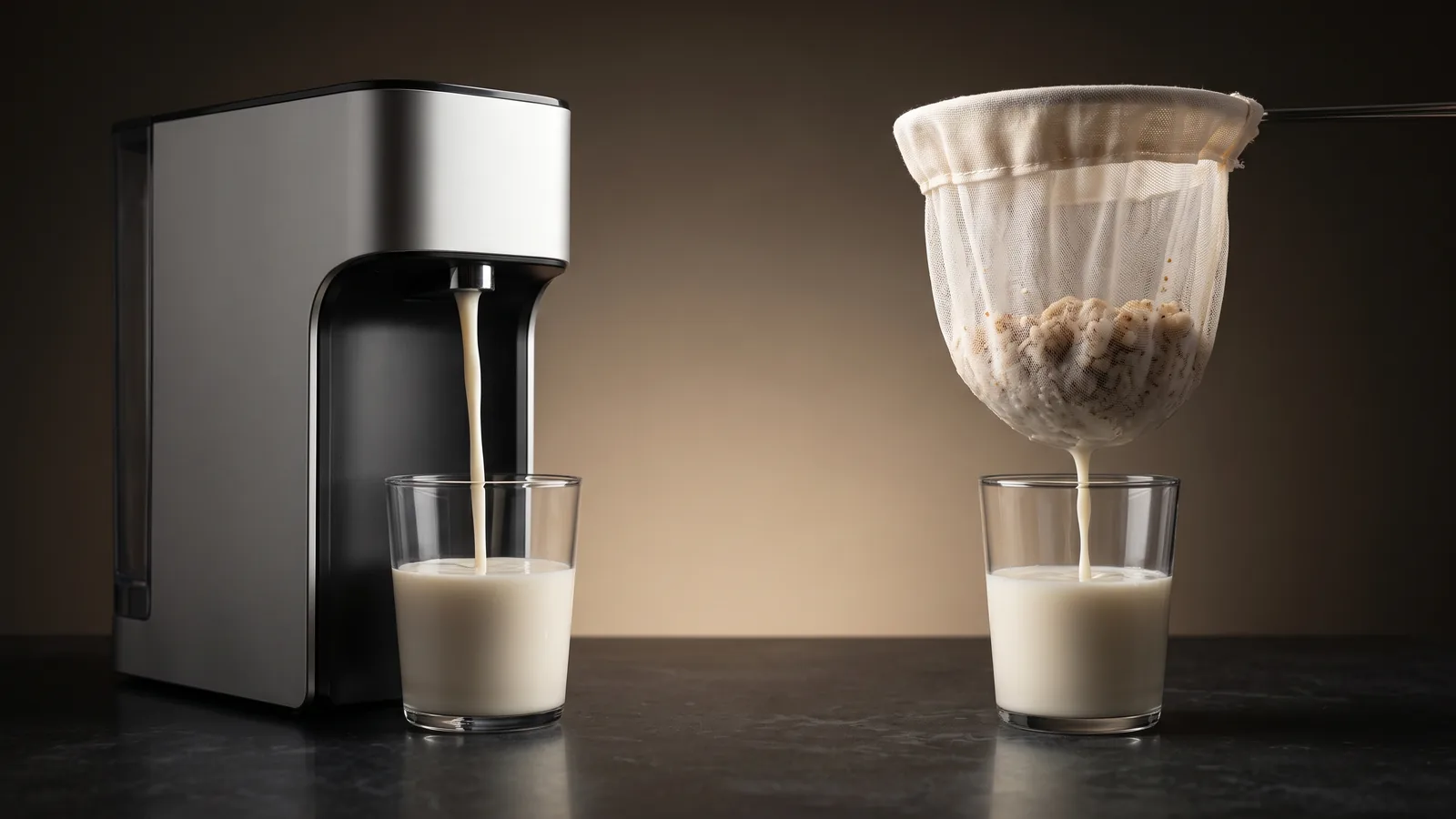
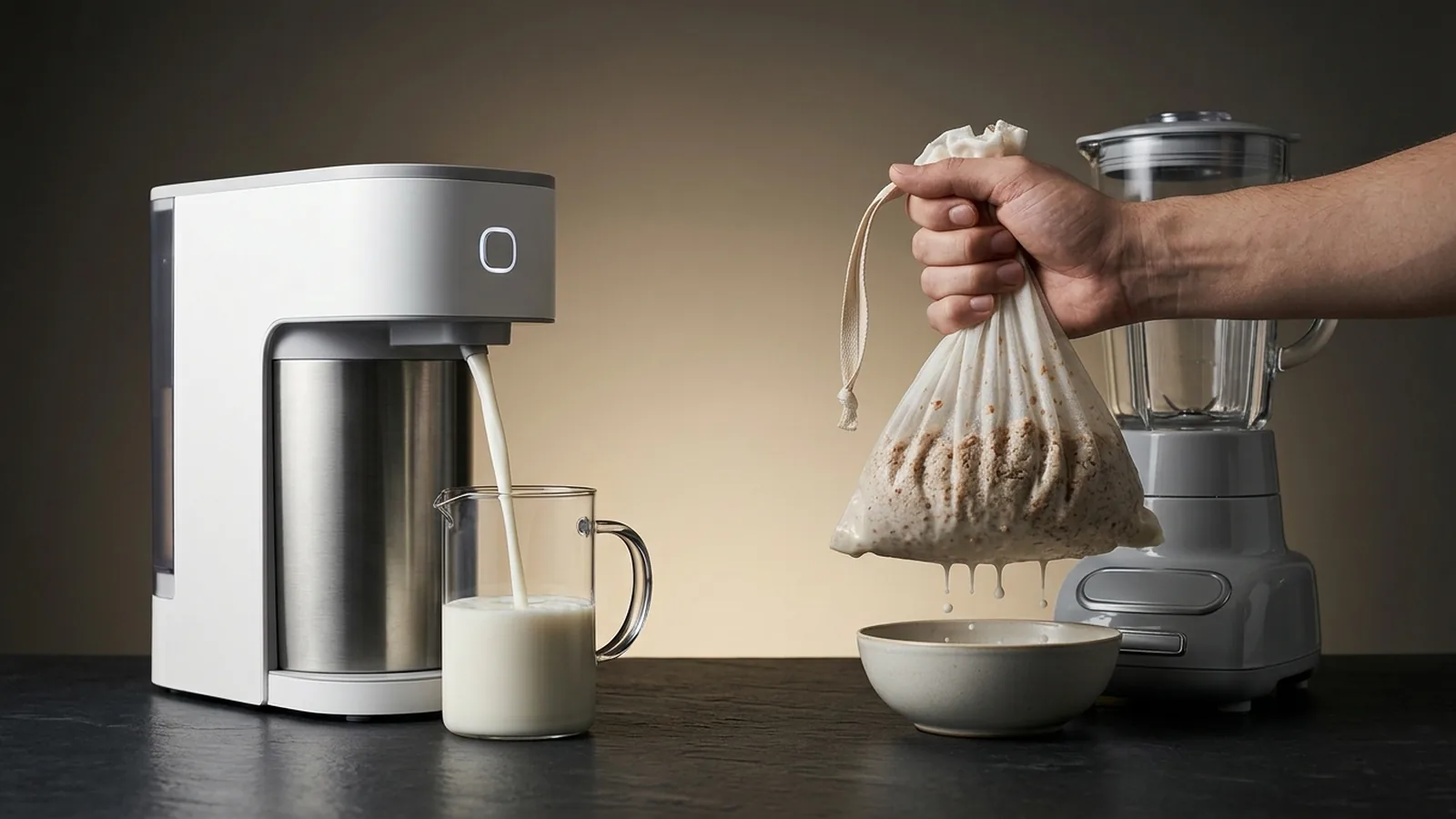
If you own a high-powered blender and a nut milk bag, you can already make plant-based milk. The question is not whether a dedicated milk maker produces better milk — for most nuts, it does not, or the difference is too small to matter. The question is whether the friction of the blender-plus-bag workflow is the reason you are not making milk every day.
Buyers who switched to a dedicated milk maker most often cite cleanup as the reason — not milk quality.
Cost comparison
| Method | Upfront cost | Ongoing cost |
|---|---|---|
| Blender + nut milk bag | $0 (if you own a blender) + $8–15 for a bag | Bag replacement every 6–18 months |
| Dedicated milk maker | $40–$250 | Filter replacement every 3–12 months (varies by machine) |
If you own a capable blender, the incremental cost of a nut milk bag is under $15. That is the comparison for most buyers — $15 versus $40–$250.
The dedicated machine only makes financial sense if you value the convenience enough to pay for it, or if you make soy milk (which requires heating).
Milk quality: where they are equivalent
For almond, cashew, and hemp milk, a blender with a quality bag and properly soaked nuts produces milk that is equivalent to or better than most mid-range dedicated machines. The key variable is soak time:
- Almonds: 8–12 hours
- Cashews: 4–6 hours (or 30 minutes in boiling water)
- Hemp seeds: no soaking required
With proper soaking, a 500W+ blender on high speed for 60–90 seconds extracts thoroughly. The bag does the rest.
Where dedicated machines can produce a marginally creamier result: machines that heat during extraction dissolve slightly more solids into the liquid. The difference is subtle and disappears when you adjust the blender-method nut-to-water ratio.
Milk quality: where the machine wins
Soy milk. Cold blending cannot make safe soy milk. Raw soy contains trypsin inhibitors that require heat to deactivate. A dedicated machine with a soy cycle integrates the required heating step. Using a blender means blending cold, then separately heating in a pot — it works, but it adds a step and a piece of equipment to clean.
Oat milk. Oat milk is tricky in both methods. Blending heats oats enough through friction to partially gelatinize the starches, causing sliminess — especially in high-powered blenders. A machine with a dedicated cold oat cycle handles this better. (Blender oat milk tip: pulse briefly, do not blend at high speed for 90 seconds, and strain through a fine-mesh bag immediately without squeezing.)
Cleanup: where it actually matters
This is the real differentiator for most buyers.
Blender + bag workflow:
- Pour milk through bag into a bowl or jar
- Squeeze bag to extract remaining milk
- Rinse blender (or run a quick blend with soapy water)
- Wash the bag under warm water, squeeze repeatedly to remove nut particles
- Hang bag to dry — the bag cannot be stored wet or it molds
Total active time: 3–6 minutes. The bag drying step means the bag needs to be cleaned and dried between batches, which adds friction for daily users.
Dedicated milk maker (strain-free) workflow:
- Run self-cleaning cycle (60–90 seconds)
- Remove and rinse the filter under the tap with a small brush
- Rinse the carafe Total active time: 2–3 minutes.
For buyers who make milk daily, the cleanup difference is real. For buyers who make milk twice a week, it is minor.
The “I already have a Vitamix” case
A Vitamix or comparable high-powered blender produces milk that is as good as or better than what a $60–$100 milk maker produces. The bag is $12. If milk quality is the goal and you own a capable blender, a dedicated machine adds convenience but not quality.
The dedicated machine makes sense if:
- You make milk daily and find bag cleanup annoying
- You make soy milk regularly
- You want everything integrated in one container
- Your current blender is underpowered (under 400W struggles with almonds)
The blender-plus-bag remains the better choice if:
- You make milk infrequently
- You already use the blender for other things and do not want another appliance
- Milk quality rather than convenience is the priority
- The budget does not support a second machine
Next: how to choose a dedicated machine if you have decided you want one
If you have decided on a dedicated machine, see the best plant-based milk makers for our ranked picks.