Why capacity ratings are misleading
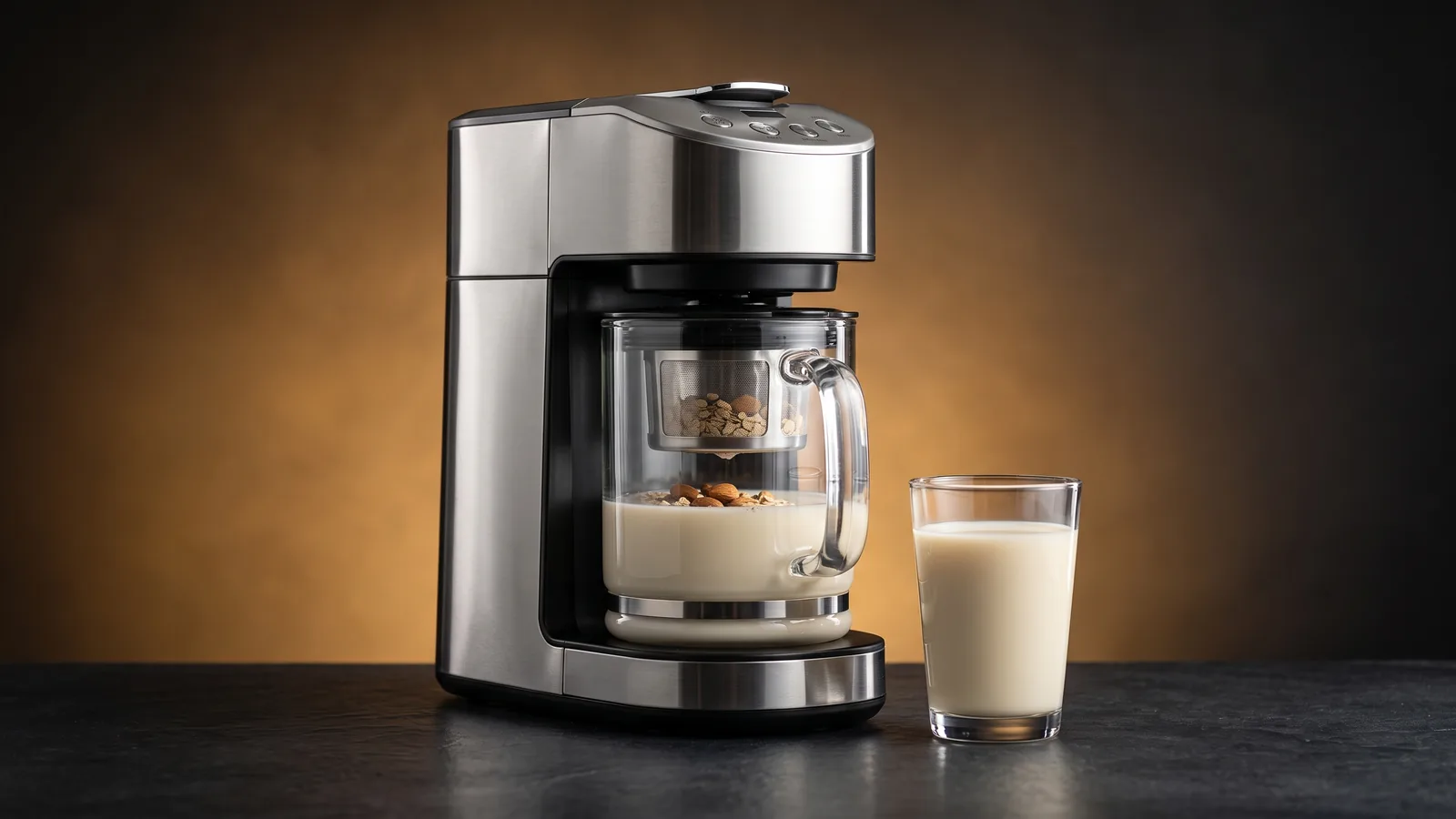
The size listed in a milk maker’s name or spec sheet — 20oz, 32oz, 1 liter — is the carafe’s water capacity, not the amount of finished milk you get from a batch.
The actual drinkable yield is consistently lower than the rated number, for three reasons:
Foam: blending and heating produce foam that stays in the carafe or dissipates. This is not lost — it settles back into the milk — but it means the carafe looks less full than the capacity number implies.
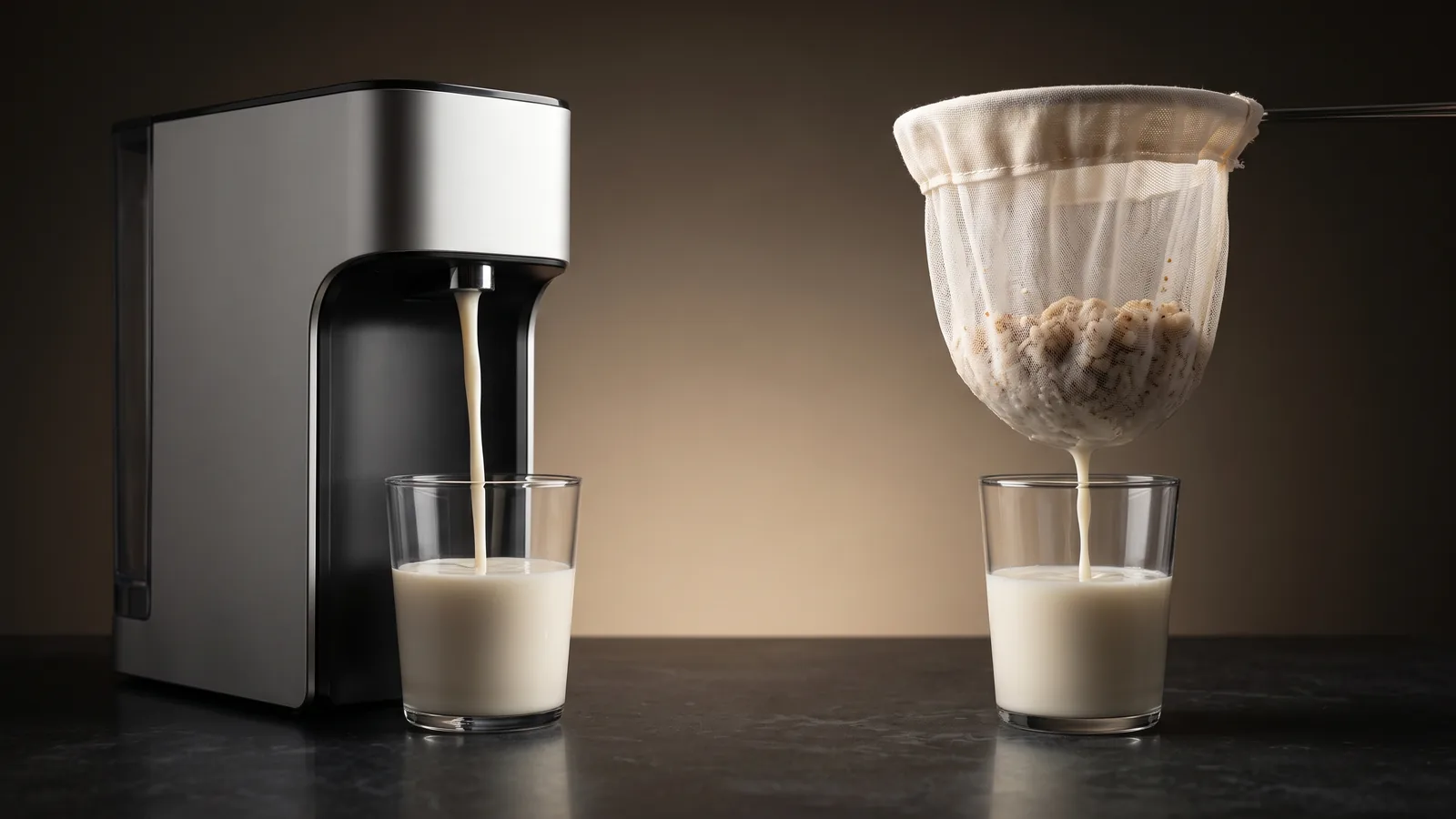
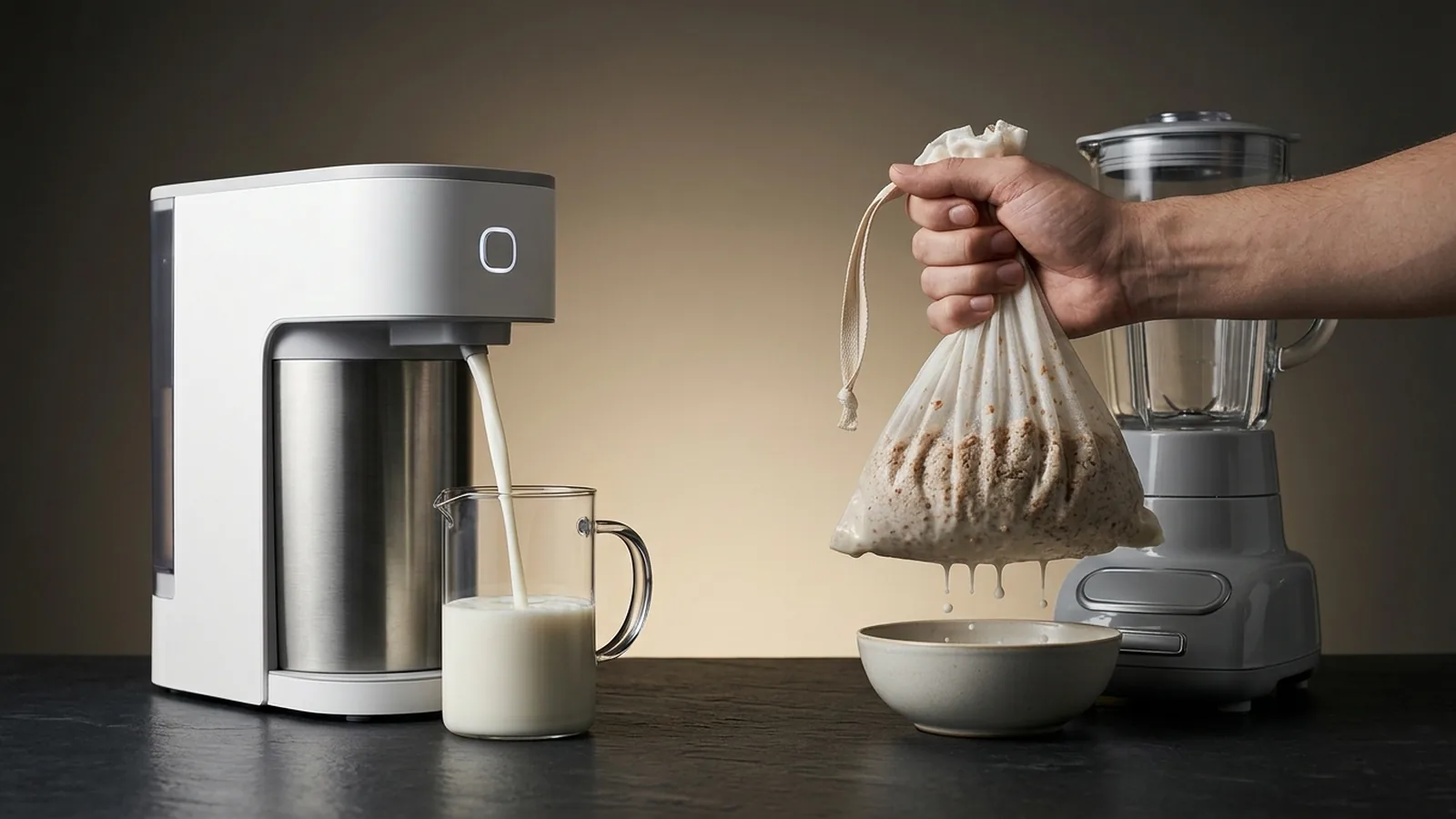
Pulp retention: after straining, some milk remains trapped in the pulp cake. Squeezing the bag or pressing the filter captures most of it, but not all. Budget strain-free filters leave more milk in the residue than a manually squeezed nut milk bag.
Minimum fill lines: most machines require a minimum water level to operate safely and protect the blade or heating element. You cannot make a partial batch right down to the blade.
In practice: a 32oz machine delivers approximately 24–26oz of finished milk per batch. A 40oz machine delivers approximately 30–34oz.
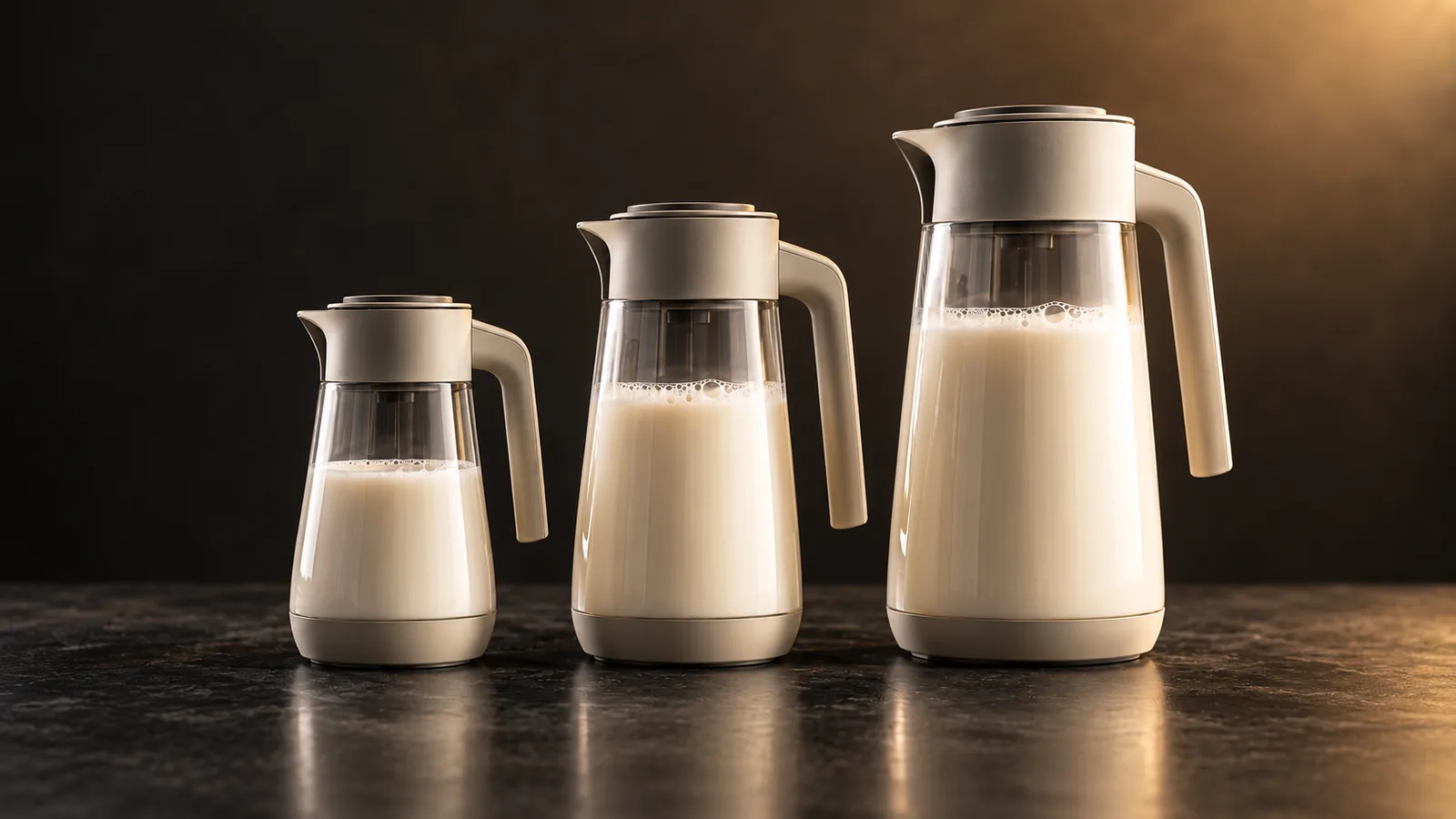
The three size tiers
Personal size — 15–22oz
Who it suits: one person, daily use, primarily for coffee, tea, or a single bowl of cereal.
What it delivers: enough milk for 2–3 cups of coffee or 1–2 bowls of cereal per batch. For a single person, this is typically one day’s supply.
Advantages: fastest to clean (less surface area), smallest countertop footprint, lower price point.
Where buyers get it wrong: buyers who use plant-based milk for cooking — sauces, baking, soups — find the personal-size insufficient. A 20oz batch disappears quickly when a recipe calls for a cup or more. Buyers in this situation regret not sizing up.
Standard size — 28–36oz
Who it suits: one to two people, or a single person with moderate cooking use.
What it delivers: 22–28oz of finished milk per batch — enough for two people’s morning coffee plus some cooking margin.
The most common tier: this is where most machines in the $40–$120 range sit. The category is broad; quality varies significantly within it. Standard-size machines vary more in interior material and filter design than in any other spec.
Where buyers get it wrong: families of three or more find the standard size produces too little milk per batch when everyone uses it daily. Running two consecutive batches in a heated machine usually requires a 20–30 minute cooldown between cycles.
Family size — 40oz+
Who it suits: households of three or more, heavy cooking use, or batch-making once or twice a week rather than daily.
What it delivers: 32–36oz of finished milk per batch — roughly a full liter.
Advantages: one batch covers a family’s daily use; less frequent cleaning required.
Trade-offs: larger machines are slower to heat and slower to clean. The carafe is heavier when full. Countertop footprint is meaningfully larger.
The batch-size-to-use-case match
| Household / use | Recommended rated capacity | Expected yield |
|---|---|---|
| 1 person, coffee + cereal only | 20oz | ~14–16oz |
| 1 person, includes some cooking | 28–32oz | ~20–24oz |
| 2 people, daily morning use | 32–36oz | ~24–28oz |
| Family of 3–4, daily use | 40–48oz | ~32–38oz |
| Batch making (2–3x per week) | 40oz+ | ~32–38oz |
Can you run smaller batches in a larger machine?
Most machines have a minimum fill line — the lowest water level the machine will accept. On a 40oz machine, this is typically 20–24oz. Running below the minimum can expose the heating element or blade bearing, which is why manufacturers enforce it.
This means a 40oz machine cannot make a 10oz batch for one person’s coffee. If you want the flexibility to make small or large batches, a mid-size machine with a lower minimum fill line is more versatile than a large machine.
Related: Nut Milk Maker vs Blender — which gives you more flexibility
Cleaning time scales with size
This is a meaningful factor buyers underestimate. A 20oz personal machine cleans in about 90 seconds of rinsing plus a 30-second self-cleaning cycle. A 40oz+ machine has more surface area, a larger filter, and a heavier carafe — cleaning takes 3–5 minutes.
If daily cleanup is a friction point for you, size down rather than up. Buyers who find cleaning annoying are buyers who stop using the machine.
Read the full cleaning guide: How to Clean a Nut Milk Maker
Once you have settled on a size, see the best plant-based milk makers for the picks at each capacity.