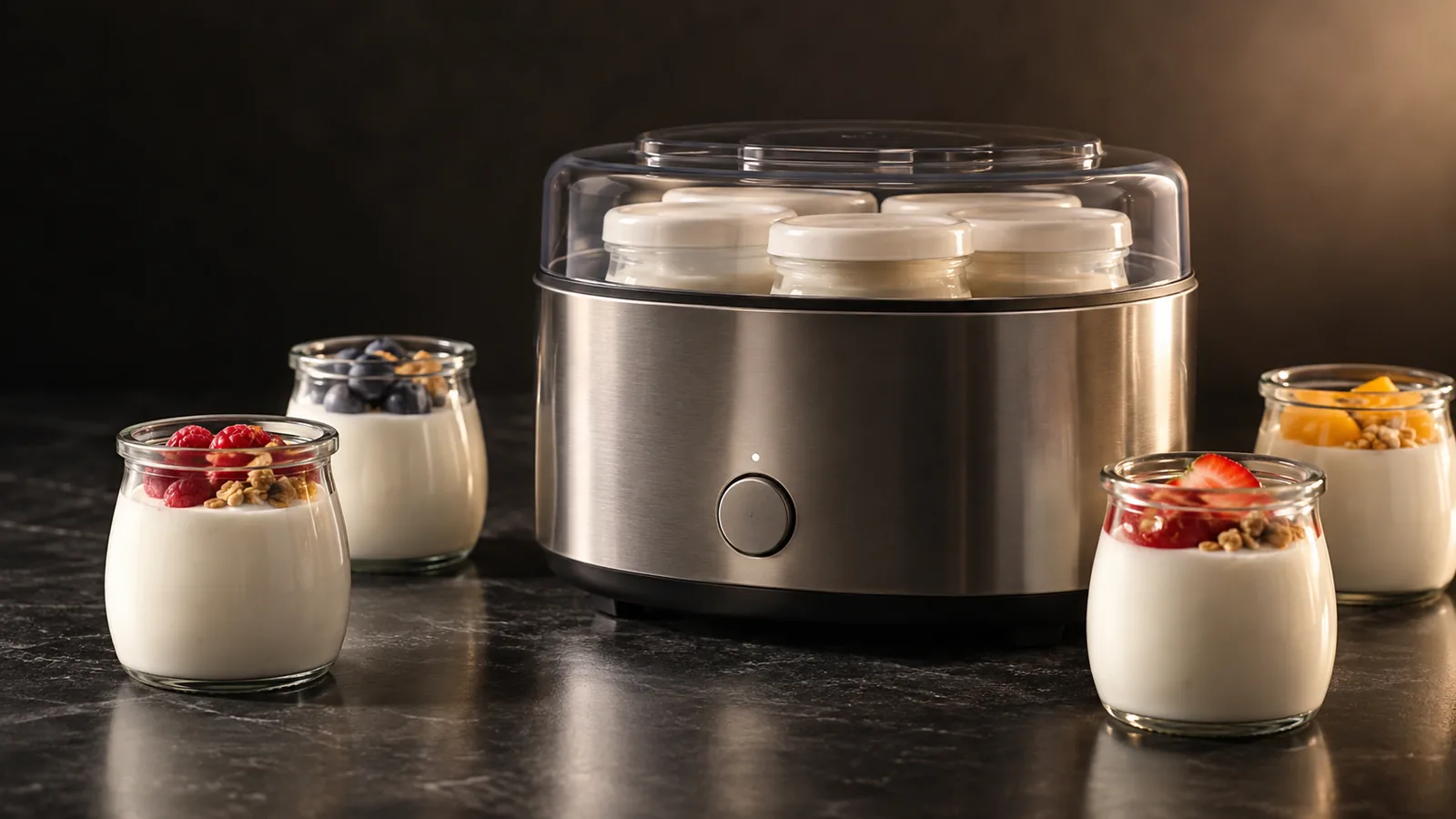
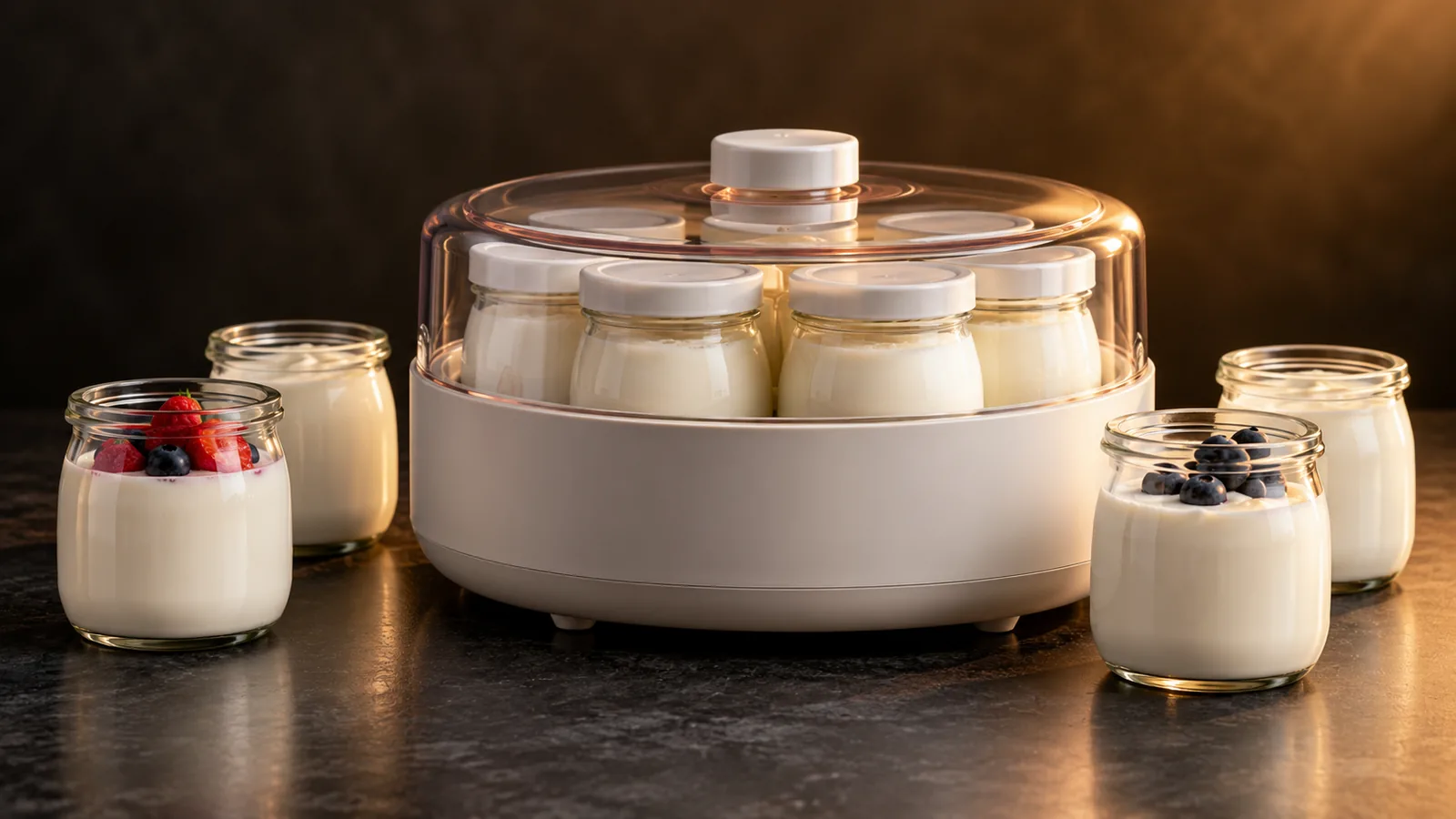
Open the reviews for almost any heated small appliance and you will find the same first-day report: “it smells like hot plastic.” Yogurt makers are no exception, and because the machine then sits warm for hours next to food, owners understandably worry. The good news is that the most common version of this smell is a normal break-in behavior. The important part is telling it apart from the versions that are not.
Why a new yogurt maker smells like plastic
A yogurt maker is, at its core, a warming base that heats plastic and holds it warm for hours (see how a yogurt maker works). The first few times that base heats up, two ordinary things happen: the plastic housing and lid warm to a temperature they have never reached before and give off a faint odor, and any manufacturing or packaging residue on the surfaces burns off. This “off-gassing” is common across heated kitchen gadgets — kettles, air fryers, slow cookers — and it is usually strongest on the very first run, then fades quickly.
That is the smell owners are describing the large majority of the time, and it typically disappears after a cycle or two.
Normal break-in vs. a smell that means stop
The distinction that matters:
Ordinary break-in (usually fine):
- A faint, warm-plastic smell on the first one to three heat cycles.
- It gets weaker each run and soon disappears.
- It is around the machine, not in the finished yogurt.
Not break-in — stop and return:
- A burning, acrid, or electrical smell, or any smoke or visible melting.
- A smell that intensifies over successive runs instead of fading.
- Plastic smell or taste that transfers into the yogurt itself.
The first list is the machine settling in. The second points to an electrical or heating-element fault, or a unit that simply should not be used — unplug it, stop, and return or replace it. Do not try to “run it until the smell burns off.”
How to break in a new machine and clear the smell
Do this before your first real batch:
- Wash the removable parts — jars, lids, any inner container — in warm soapy water and dry them. (Full routine: how to clean a yogurt maker.)
- Run empty water cycles. Fill the machine with plain water — some owners add a little baking soda — and run one or two full heat cycles in a ventilated room, then discard the water. This lets the housing off-gas without any milk in it.
- Make a small test batch if a faint smell lingered, and check that the finished yogurt smells and tastes clean before you commit a full batch.
For most machines that clears it. If a strong smell survives several cycles, that is your signal it is not ordinary break-in.
Does it affect the yogurt?
If the smell is only the exterior warming and it fades after break-in, owners rarely report it tainting yogurt in properly sealed jars. If you can smell or taste plastic in the finished yogurt, treat that as a stop-and-return situation rather than eating the batch. This guide describes the common owner experience; it cannot judge the safety of a specific unit, so send any health question to the manufacturer or a qualified professional.
If a machine’s plastic smell is what is putting you off, it is also worth choosing your next one with materials in mind — glass jars rather than plastic, and stainless or glass food-contact surfaces. Our best yogurt makers picks note materials, and the best yogurt maker for plant-based yogurt guide leans toward glass-jar designs.
A glass-jar pick — Euro Cuisine YMX650. Its seven glass jars keep the food-contact surface glass rather than plastic:

Euro Cuisine YMX650 Automatic Yogurt Maker
The best yogurt maker for most people. A preset fermentation temperature plus an auto-shutoff timer make it genuinely hands-off, and it produces the same quality dairy yogurt as far pricier machines on a standard cycle. Seven glass jars let you make several flavors at once. Not the tool for 24-hour SCD or long plant-based fermentation — for that, an Instant Pot's yogurt setting is the more reliable choice.
Prime Day Amazon Prime Big Deal Days is on — a good time to check the live price.
Check current price on AmazonWhat buyers praise
- Seven glass jars — food-contact surface is glass, not plastic
- Hands-off — auto-shutoff timer runs the cycle and turns off on its own
- Same quality dairy yogurt as much pricier machines
- Affordable and simple to use
What buyers flag
- Preset temperature — not for 24-hour SCD fermentation
- Timer maxes well short of 24 hours
- Individual jars make bulk Greek straining less convenient