Why plant-based yogurt makes different demands
Dairy milk thickens during fermentation because whey proteins naturally gel as pH drops. Plant milks lack these proteins, which means:
- Fermentation takes longer — cultures have less to work with; 12–24 hours is typical vs 8–10 for dairy
- Thickeners are often necessary — agar agar or tapioca starch added before fermentation
- Temperature consistency matters more — a machine that drifts 5°F at hour 18 of a 24-hour cycle can stall a plant-based fermentation that dairy would survive
The machine requirement that follows from this: a steady temperature hold over long cycles. Among dedicated makers this is where temperature drift shows up on the longest ferments; for 18–24 hour cycles, an Instant Pot’s yogurt setting is the steadier choice.

Euro Cuisine YMX650 Automatic Yogurt Maker
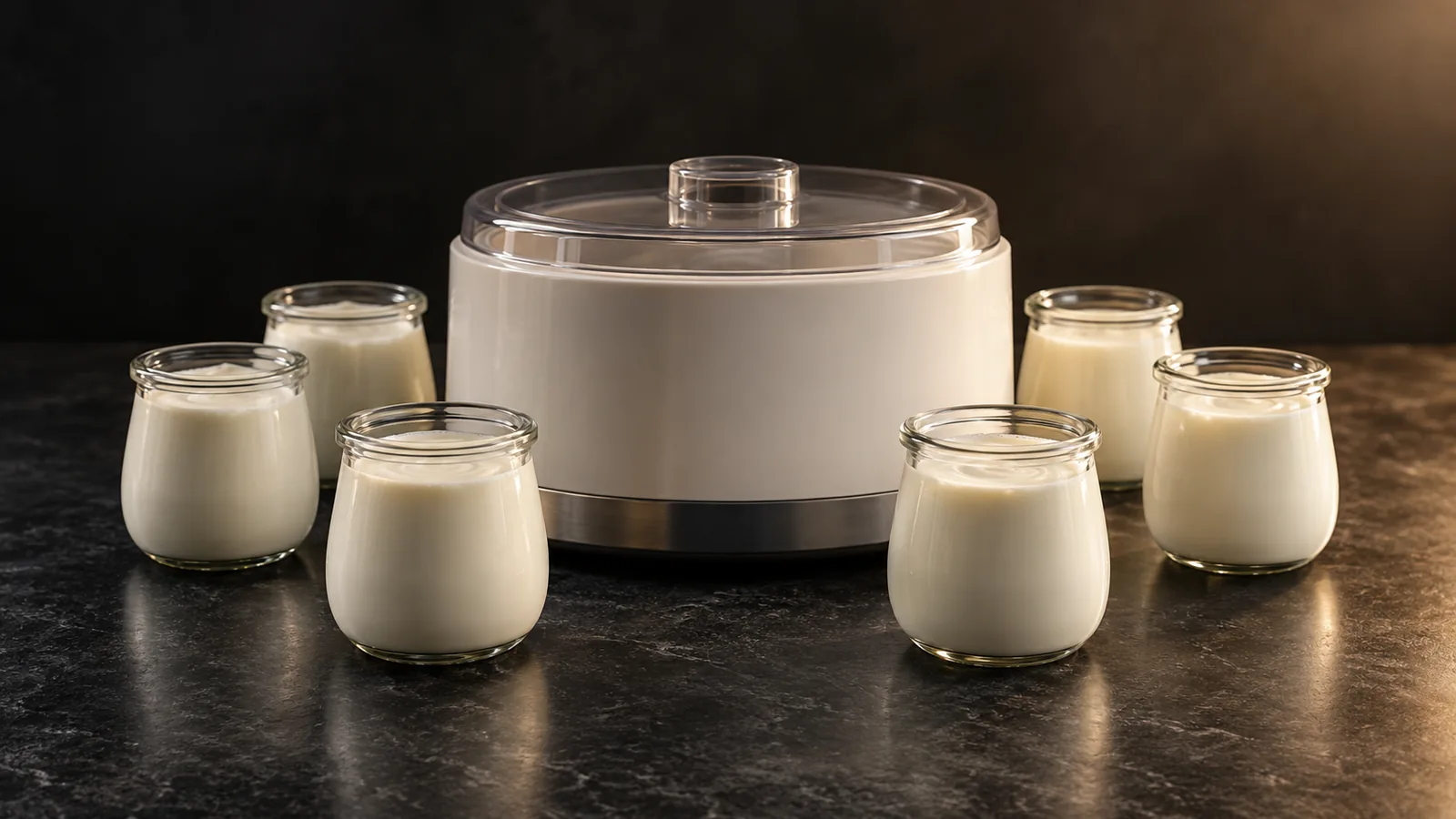
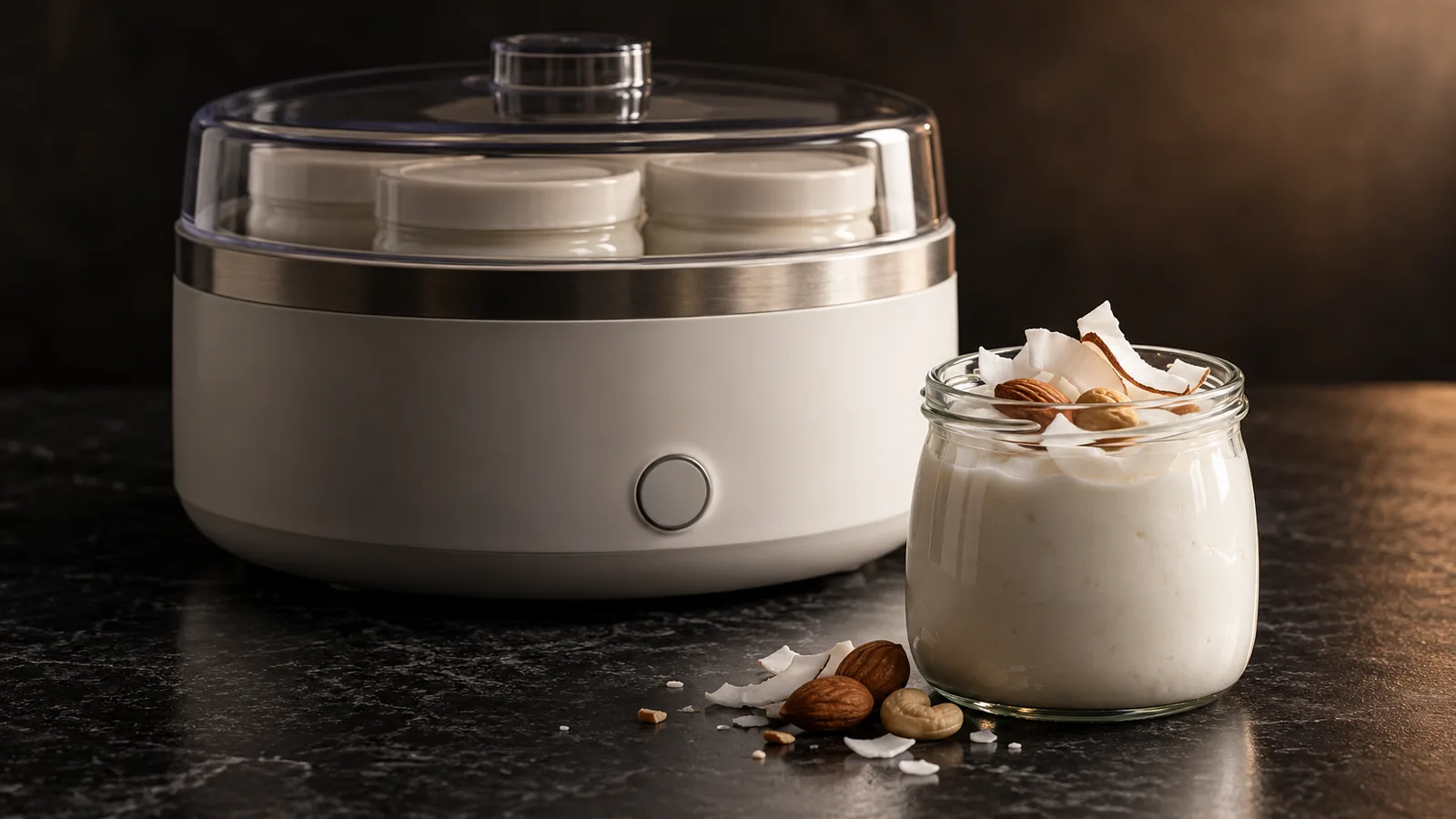
The sensible dedicated machine for plant-based yogurt at standard cycle lengths. It handles full-fat coconut and soy bases reliably in 10–12 hour cycles, it is affordable, and its seven jars let you portion batches. For the longest cycles (18–24 hours, oat and almond), a steadier long hold helps — see the note below.
Prime Day Amazon Prime Big Deal Days is on — a good time to check the live price.
Check current price on AmazonWhat buyers praise
- Most affordable quality option
- One of the most widely owned and consistently well-reviewed machines in the category
- Handles coconut and soy plant-based yogurt reliably at 10–12 hour cycles
What buyers flag
- Temperature can drift during extended cycles — less consistent beyond 12 hours
- Individual jar format requires adding thickeners to each jar separately
- For 18–24 hour oat/almond cycles, an Instant Pot holds temperature more steadily
For the longest plant-based cycles (18–24 hours, oat and almond): no budget dedicated maker holds a precise temperature reliably that long — and the machine that plant-based communities long relied on (the Luvele Pure) is no longer sold on Amazon. The dependable tool now is an Instant Pot’s yogurt setting, which holds a steady incubation temperature across a long cycle.
Which plant milk base works in which machine
| Base milk | Euro Cuisine (8–12hr) | Instant Pot (long cycle) | Notes |
|---|---|---|---|
| Full-fat canned coconut milk | Good | Excellent | Best for beginners; thickens naturally |
| Cashew milk (homemade, full-fat) | Good | Excellent | Needs 12–16hrs; creamy result |
| Soy milk (unsweetened) | Good | Excellent | Ferments most like dairy; 8–12hrs |
| Oat milk | Variable | Better | Needs thickener + specialty culture; 18–24hrs |
| Almond milk | Variable | Better | Thinnest result; requires most thickener |
| Rice milk | Poor | Poor | Too low in protein for reliable fermentation |
The thickener question
For plant-based yogurt to achieve a set texture, most bases require one of:
Agar agar (1–2 teaspoons per liter): heat in the milk before fermenting; produces a firm gel that holds shape.
Tapioca starch (2–3 tablespoons per liter): produces a creamier, stretchier texture than agar agar; heat in the milk, cool to fermentation temperature, then add culture.
Neither thickener affects machine choice — both are added to the milk before it goes into the machine. The machine’s role is exclusively temperature hold.
How to make plant-based yogurt in a yogurt maker · Yogurt maker vs Instant Pot · Best yogurt makers overall