Why plant-based yogurt is different from dairy
Dairy yogurt sets because of casein — a milk protein that gels when lactic acid lowers the milk’s pH during fermentation. The gel forms the structure of the yogurt. Remove casein and the protein network that holds yogurt together disappears.
Plant milks contain protein, but not casein. When plant milk is fermented, the bacteria consume the sugars and produce acid, but the acid does not trigger the same protein gelation. The result without intervention: a liquid that tastes tangy but does not set.
This is why most plant-based yogurt recipes include a thickening agent. The machine’s role is unchanged — it holds temperature for incubation — but the formulation of the base requires more preparation than simply adding starter to milk.
Which plant milk base works best
The base determines how much intervention is required and how close the finished yogurt comes to a dairy result.
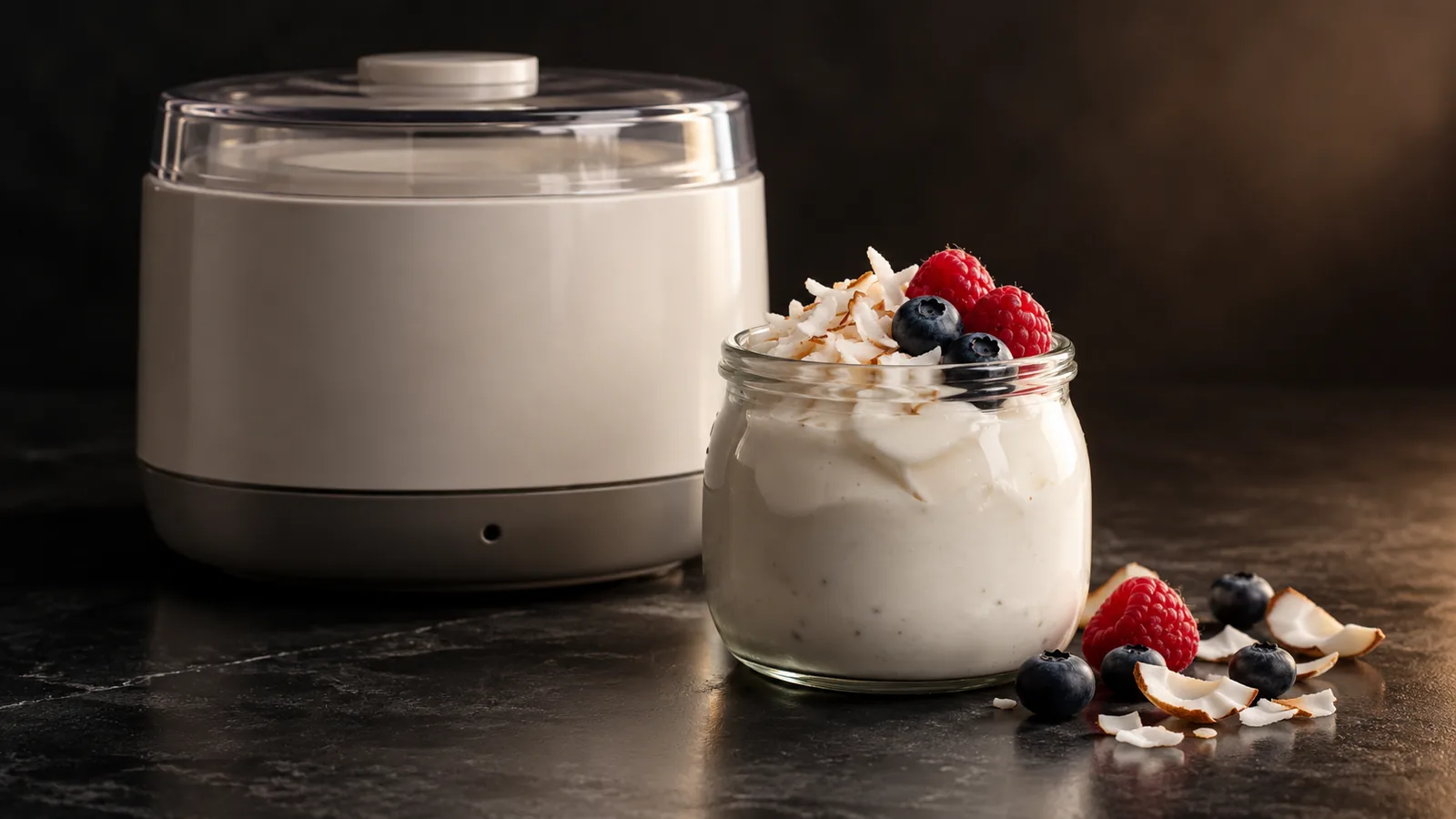
Full-fat coconut milk (canned)
The most reliable starting point for first attempts. The high fat content — canned full-fat coconut milk is 20 to 25% fat — provides body and creaminess that thin plant milks cannot match. Coconut milk often requires less thickener than other bases, and the fat concentration produces a rich, thick texture after a full incubation.
The trade-off: coconut flavor in the finished yogurt. For buyers who use yogurt in savory applications or want a neutral flavor, coconut milk is less ideal. For sweet or dessert applications, the mild coconut flavor is often an asset.
Technique note: use canned full-fat coconut milk, not refrigerator-carton coconut milk beverage. The beverage is heavily diluted and produces thin, difficult-to-set results.
Cashew milk
The second-best base for creaminess. Cashews have a naturally creamy, neutral flavor that produces a pleasant yogurt base. Homemade cashew milk — blended raw cashews and water, unstrained — works better than commercial cashew milk because the solids remain in suspension.
Commercial cashew milk is typically very thin and requires significant thickening. Homemade at a 1:4 ratio (cashews to water) produces a richer base.
Oat milk
A more challenging base. Oat milk is naturally thin, and oat starches can behave unpredictably during fermentation — producing a slightly slimy texture in some batches. The sliminess comes from beta-glucan, a soluble fiber in oats that becomes gel-like when warm and agitated.
Oat milk yogurt is achievable but requires more careful handling: blend minimally, avoid over-agitating the base before incubation, and use a thickener. The flavor is mild and slightly sweet, which works well for breakfast applications.
Almond milk
The most difficult base for yogurt making. Almond milk is naturally low in protein and fat, which means it has very little inherent body and requires significant thickening to produce anything resembling yogurt texture. Store-bought almond milk — typically 2% almond content — is too thin for reliable results. Homemade almond milk, made without straining, is slightly better but still requires thickening.
Buyers who prefer almond flavor are better served by adding almond butter or almond extract to a cashew or coconut base rather than using almond milk as the primary ingredient.
Soy milk
A solid performer for plant-based yogurt. Soy milk has the highest protein content of any common plant milk, which means it sets more reliably than oat or almond bases. Full-fat soy milk produces a tangy, slightly firmer yogurt with less thickener required.
The flavor is distinctly soy — neutral but recognizable, which some buyers prefer and others find off-putting. For buyers who use their plant-based milk maker for soy milk, the yogurt maker is a natural extension of the same equipment.
Thickeners: what works and how to use them
Plant-based yogurt almost always requires a thickening agent added to the base before incubation. The thickener does the structural work that casein does in dairy yogurt.
Agar agar is the most commonly recommended thickener for plant-based yogurt. It is a seaweed-derived setting agent that gels reliably when heated and cooled. To use: dissolve 1 to 2 teaspoons of agar agar powder in the warmed plant milk before cooling to incubation temperature. The agar sets as the yogurt cools after incubation, providing structure independently of the fermentation.
Tapioca starch produces a stretchier, more elastic texture than agar. It is particularly useful for buyers who want a creamy, spoonable yogurt rather than a firm set. Mix 2 to 3 tablespoons of tapioca starch per quart of plant milk, heat until dissolved and slightly thickened, then cool before adding starter.
Pectin (liquid or powder) is occasionally used and produces a jam-like gel. It is less common in yogurt recipes because the texture it produces is noticeably different from dairy yogurt — more gel-like and less creamy.
Gelatin is an animal-derived thickener and is not appropriate for vegan applications. Agar agar is the plant-based equivalent.
Start with agar agar at 1.5 teaspoons per quart of plant milk. Adjust upward in the next batch if the result is too thin; adjust downward if it is too firm or has a detectable rubbery quality.
Starter cultures for plant-based yogurt
The same thermophilic bacteria that ferment dairy yogurt — primarily Lactobacillus bulgaricus and Streptococcus thermophilus — will ferment plant milk. The bacteria do not require dairy; they require warm temperature and fermentable sugars, which plant milks contain.
The practical options:
A commercial vegan starter culture (Cultures for Health, Belle + Bella, and similar brands). These are certified free of dairy and processed on dedicated equipment. They are the cleanest option for buyers who need to avoid all dairy.
A store-bought dairy-free yogurt with live active cultures. Check the label for “live active cultures” and a short ingredient list that confirms no dairy. Use 1 to 2 tablespoons per quart as a starter. The live bacteria in the yogurt will inoculate the plant milk batch. This is the lowest-cost starter option and works reliably.
A probiotic capsule. Some recipes use probiotic supplements as a starter. This works when the probiotic contains appropriate thermophilic strains, but many probiotic blends contain mesophilic strains that work at room temperature rather than 110°F. Check that the strains listed include L. bulgaricus or S. thermophilus before using.
Avoid using a dairy yogurt as a starter for plant-based yogurt if dairy avoidance is the goal — trace dairy proteins will carry over into the batch.
Incubation time for plant-based yogurt
Plant-based yogurt typically requires longer incubation than dairy — 10 to 14 hours is common, compared to 6 to 8 hours for dairy. The reasons:
Plant milks have lower sugar concentrations than dairy milk in most cases, so the bacteria have less to consume and ferment more slowly. The protein matrix is also different — the acid produced during fermentation is not triggering the same gelation process, so extended incubation is often needed to develop sufficient sourness and flavor.
The practical approach: set the machine for 10 hours on the first batch. Taste before removing — the yogurt should be tangy and any agar or starch thickener should have set the texture firm enough to see the surface hold a slight indent when tilted. If neither condition is met, add 2 to 4 more hours.
The connection to plant-based milk makers
Buyers who own or are considering a plant-based milk maker have an advantage in yogurt making: homemade plant milk — fresher, higher in solids than commercial versions, and free of stabilizers that can interfere with fermentation — produces more reliable results in the yogurt maker.
Commercial plant milks often contain carrageenan, guar gum, or sunflower lecithin. These stabilizers can inhibit the yogurt cultures from fermenting the milk correctly. Homemade plant milk avoids these entirely.
If you own a plant-based milk maker, using its output as the base for yogurt making is a logical next step — and produces consistently better results than commercial carton alternatives.
How plant-based milk makers work · How to choose a yogurt maker · Best yogurt makers overall