People shopping for a milk maker often assume any machine makes any milk. It doesn’t — and the reason is that oat and soy pull the machine in opposite directions. Get this wrong and you either end up with slimy oat milk or raw-tasting soy milk, no matter how good the machine is. (For the general mechanism, see how plant-based milk makers work.)
Oat: heat is the enemy
Oats are high in starch. When starch is heated in water it gelatinizes — it swells and thickens. That is exactly what you want in porridge and exactly what you do not want in milk: a thin oat milk turns gluey, slippery, and slimy the moment it goes through a heated cycle. It is the single most common complaint in homemade oat milk, and the cause is almost always that the milk was cooked.
Oat milk wants the opposite treatment: cold water, a brief blend, and no heat. Over-blending makes it worse by shredding the oats and freeing more starch, so short and cold is the rule. A machine with a cold or raw program makes clean oat milk; a machine that only knows how to run a heated cycle does not.
Soy: heat is required
Soy is the mirror image. Raw, unheated soy milk tastes aggressively beany and grassy, and raw soybeans contain compounds — trypsin inhibitors among them — that sustained heating breaks down, which is why soy milk is traditionally boiled. Cold-blending soybeans the way you would oats or almonds produces something most people find undrinkable and harder to digest.
So soy specifically needs a machine with a genuine heated cooking cycle that holds a boil long enough to cook the blend. This is why “soy milk makers” are built around a heating element in the first place.
What the divergence means for what you buy
This one difference should drive the purchase more than capacity, wattage, or brand:
- Mostly oat and nut milks? Prioritize a strong cold / raw program and treat heating as optional-to-avoid. See the best oat milk makers.
- Soy is a regular? You need a real heated / cooking cycle — a cold-only machine won’t do. See the best soy milk makers.
- You switch between them? Buy a multi-program machine that offers both a cooked cycle and a cold/raw cycle. That dual capability is the flexible choice, and it is what the better all-rounders provide — see the best plant-based milk makers and how to choose a plant-based milk maker.
The mistake to avoid is buying a heat-only soy machine because it was on sale and then wondering why every batch of oat milk comes out slimy — or buying a cold-only machine and finding it can’t make the soy milk you actually wanted. Match the machine’s heating to the milk you drink most, and the results follow.
The one machine that does both — ChefWave Milkmade. Its controlled-heat oat program avoids the sliminess, while a separate heated cycle cooks soy properly — the flexible pick if you switch between milks:
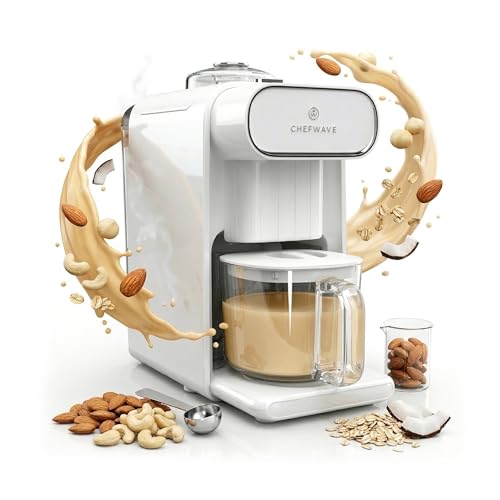
ChefWave Milkmade 6-in-1 Nut Milk Maker
The most versatile machine and the easiest to clean — the best pick for most buyers. Six programs cover cold nut milks plus heated soy, oat, and rice, so it replaces what would otherwise take two machines, and cleaning is the quality its owners reward it for most. The honest trade-off is durability, the quality it is penalized for most; inspect on delivery, as a subset report units arriving used.
Prime Day Amazon Prime Big Deal Days is on — a good time to check the live price.
Check current price on AmazonWhat buyers praise
- Six programs including heated soy and oat — one machine for every milk
- Cleaning is its standout strength — rewarded above the category norm
- Glass pitcher — taste-neutral and dishwasher-safe
- Controlled-heat oat program avoids cold-blended sliminess
What buyers flag
- Durability is the quality owners penalize most
- A subset report units arriving open-box or used — inspect on delivery
- A few note an off-smell on the soy cycle specifically
- Higher price than budget machines