What you need
- A jar, pitcher, or cold brew maker — anything that holds the batch and can be covered. A dedicated maker just adds a built-in mesh filter.
- A burr grinder set coarse — the single most important thing for clean, non-bitter cold brew (why burr beats blade).
- A way to strain — a cold brew maker’s basket, or a fine sieve lined with a paper filter or cheesecloth.
- No kettle, no scale required (though a scale helps the first few times).
The cold brew maker we recommend
A jar works. If you would rather have the filter and pitcher in one piece, this is the maker owner reviews favor most.

County Line Kitchen Cold Brew Coffee Maker, 64 oz
The cold brew maker with the most favorable owner feedback of the four we analyzed: praise nearly three to one over complaints, on a small sample. Owners praise how easy it is to use and the lid that does not leak. At 64 ounces it makes a large batch, enough for several days. The complaints are few: a couple of owners found it fragile or the handle flimsy, and two note there are no printed instructions. Our cold brew guide covers the method.
Prime Day Amazon Prime Big Deal Days is on — a good time to check the live price.
Check current price on AmazonWhat buyers praise
- Most favorable owner feedback of the four
- 64 ounces: a large batch
- Owners praise ease of use and the leak-proof lid
What buyers flag
- Small owner sample in our analysis
- A couple of reports that it is fragile
- No printed instructions, per two owners
- Takes fridge space
At a glance
- Dimensions
- 6.25"D x 4.25"W x 10.25"H
- Power
- 800 watts
- Weight
- 1.13 kg
- Material
- Glass
- In the box
- Filter
See all our cold brew maker picks, including a smaller carafe and a no-glass pitcher.
Concentrate or ready-to-drink?
This is the one decision to make up front, because it sets your ratio:
- Concentrate — about 1:8. Strong and space-saving. You dilute each glass 1:1 with water, milk, or over ice. Best if you drink cold brew daily or want it to keep.
- Ready-to-drink — about 1:15. Closer to hot-coffee strength, poured straight from the jar. Simpler, but takes more fridge space per serving.
Most people make concentrate. Calculate either.
The method
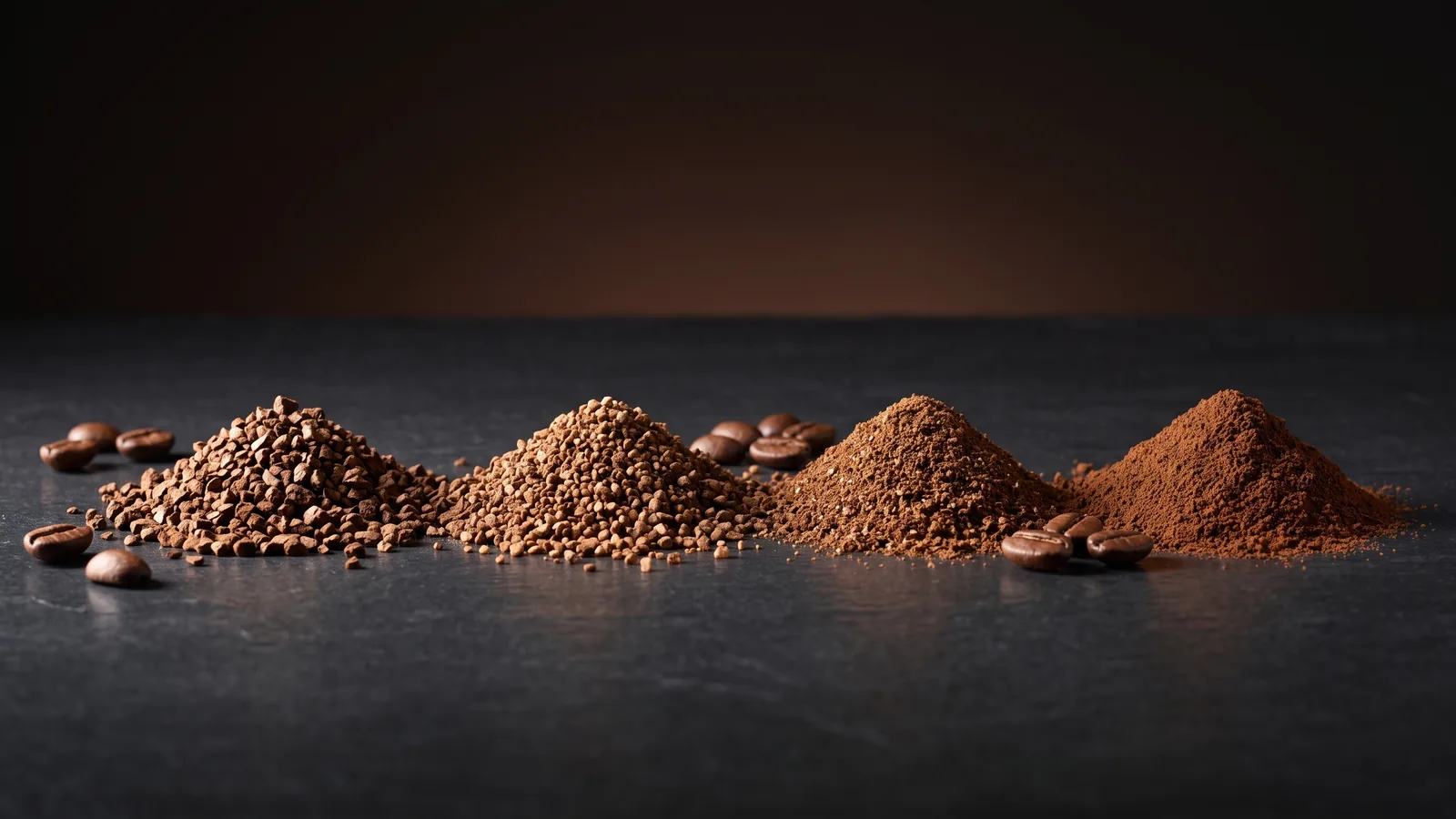
- Coarsely grind your coffee — like sea salt (grind size guide). This is non-negotiable for a long steep.
- Combine grounds and cold or room-temperature water in the jar, and stir until every ground is wet.
- Cover and steep 12–24 hours — counter or fridge, your choice.
- Strain through the maker’s basket, or a sieve lined with a paper filter or cheesecloth, into a clean jar. Press gently to get the last of it.
- Store strained in the fridge; dilute each glass to taste.
Fixing a bad batch
| Problem | Cause | Fix |
|---|---|---|
| Weak, watery | Too little coffee, or steep too short | More grounds (lower ratio); steep 18–24 hrs |
| Bitter, harsh | Over-steeped, or grind too fine | Strain by 24 hrs; grind coarser |
| Muddy, silty | Grind too fine, or blade-ground dust | Coarse, uniform burr grind; strain through paper |
| Sour, sharp | Under-extracted (steep too short) | Steep longer, or use warmer water |
Why cold brew
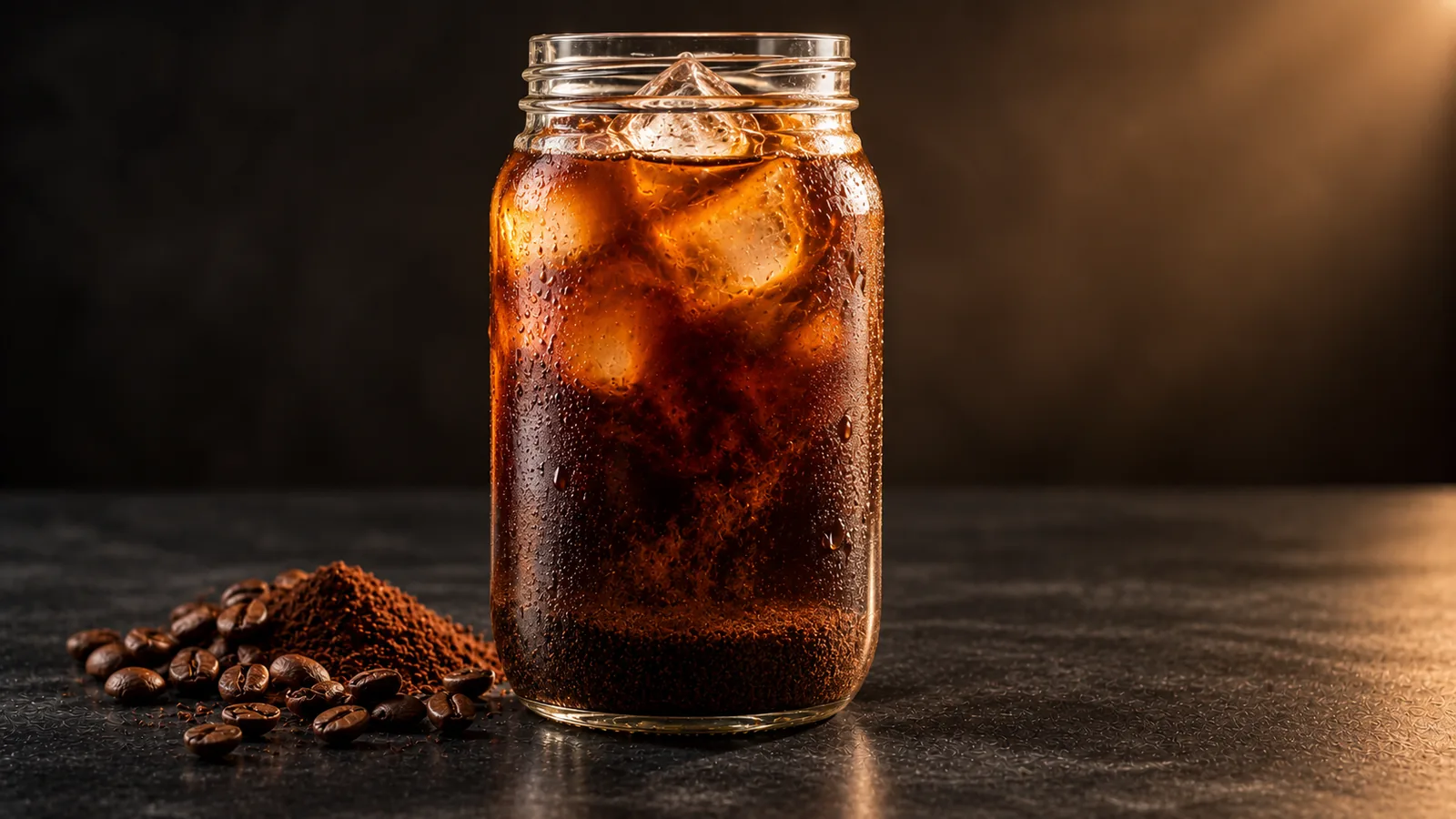
It’s the lowest-effort brew there is and the most forgiving: no heat, no pour technique, no four-minute timer — you mix it and walk away. The cold, slow extraction pulls fewer of the acidic and bitter compounds that hot water does, so cold brew tastes smoother and less acidic than iced hot coffee, and a single batch of concentrate keeps for about a week. The trade-offs are the wait and the strain step. Get a coarse-capable burr grinder and it’s the easiest coffee habit to keep. For a hot brew with a similar coarse grind, see how to use a French press.