How to Clean a Blender (the 30-Second Self-Clean Trick)
Noolaguide Editorial·Last updated
Disclosure: As an Amazon Associate, Noolaguide earns from qualifying purchases — we may earn a commission when you buy through links on this page, at no extra cost to you. Our recommendations are editorially independent. How we make money.
The fastest way to clean a blender is to let it clean itself: fill it a third with warm water and a drop of dish soap, run it for 30 seconds, and rinse. For stuck-on residue, disassemble the blade and gasket and wash by hand. Never submerge the motor base. The two things that keep a blender fresh are cleaning it right after use (before residue dries) and drying it fully so it doesn't smell.
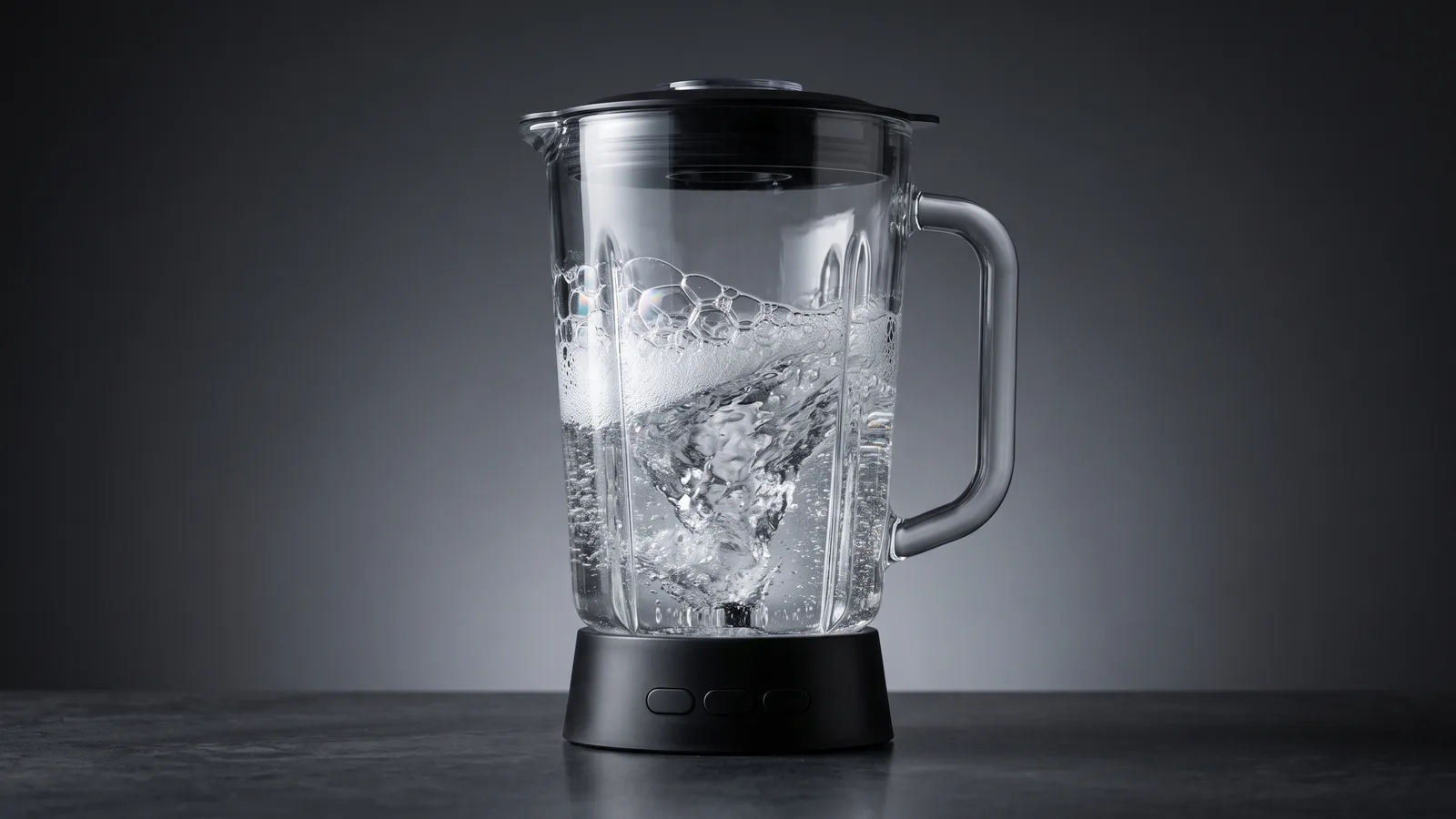
Fill the jar about one-third with warm water and add a drop of dish soap.
Put the lid on and run it for 20–30 seconds (use a couple of pulses too).
Rinse and air-dry.
Do this right after use, before smoothie or sauce residue dries on — it’s faster and cleaner than any scrubbing later.
Deep clean: blades and gasket
For stuck-on residue or after thick blends (nut butter, dips):
On a removable-blade blender: unscrew the blade assembly from the jar, remove the gasket (the rubber sealing ring), and wash the jar, blade, and gasket separately with warm soapy water and a brush. Dry and reassemble.
On a sealed-base blender: the self-clean run reaches under the blades; for stubborn buildup, soak with warm soapy water first.
Cleaning the gasket regularly is what prevents trapped food and smells — it’s the most-missed spot.
The base
Never submerge the motor base or put it in water or the dishwasher. Just wipe it with a damp cloth, and dry any drips around the coupling.
Fixing a cloudy jar or a smell
Cloudy plastic jar: soak with warm water + white vinegar (or a little baking soda) and a soft brush — vinegar dissolves the mineral/oil film. Avoid abrasives, which scratch. Permanent fine scratching won’t fully clear but is cosmetic.
Smell: almost always a damp gasket or jar stored wet. Clean the gasket, run a vinegar-water self-clean, and dry everything fully before storing.
The supplies that make it easier
A simple routine
When
Do this
Right after each use
30-second self-clean (warm water + soap)
After thick blends
Disassemble blade + gasket, hand-wash
Weekly
Check and clean the gasket; dry fully
Cloudy jar or smell
Vinegar-water soak; dry before storing
Clean it right after use and dry the gasket, and a blender stays fresh and blends as smoothly as it should for years.
Where to go next
Best blenders — our top picks, by how you use a blender
The full-size blender with the best owner feedback in our analysis: praise outweighs complaints about four to one, the widest margin of any countertop model here. Owners praise how well it blends, how strong it feels, how easy it is to clean, and what it costs for that. The preset programs handle timing for you. The honest caveat is the pitcher — it is plastic, some owners wish it were not, and a minority report it cracking or leaking after a year or two.
Prime DayAmazon Prime Big Deal Days is on — a good time to check the live price.
Ninja Professional Plus Blender with Auto-iQ (BN701)
What owners praise
Mixing/blending21% category avg
30%
Quality10% category avg
18%
Ease of cleaning11% category avg
14%
Value for money8% category avg
9%
Strength5% category avg
9%
What to watch
Mixing/blending1% category avg
15%
Material quality1% category avg
15%
Durability1% category avg
13%
Ease of cleaning1% category avg
10%
Themes from our analysis of verified owner reviews. Each bar is that theme's share of what owners raise, with the category average beside it for context. Noolaguide does not claim hands-on lab testing; the authority here is the accumulated experience of the people who own it.
The fastest way is the self-clean method: fill the jar about a third with warm water, add a drop of dish soap, put the lid on, and run the blender for 20-30 seconds, then rinse and air-dry. Do this right after use, before residue dries on. For stuck-on bits or thick blends, unscrew the blade assembly and gasket and wash them (and the jar) by hand with a brush. Never submerge the motor base — just wipe it with a damp cloth.
Residue collects around the blade base and the rubber gasket. On blenders with a removable blade, unscrew the blade assembly from the jar, take out the gasket (sealing ring), and wash all the parts separately with warm soapy water and a brush, then dry and reassemble. On sealed-base blenders, the self-clean run (warm water + soap, blended 30 seconds) reaches under the blades; for stubborn buildup, soak with warm soapy water first. Cleaning the gasket regularly is what prevents trapped smells.
A cloudy plastic jar is usually a build-up of hard-water minerals, oils, or fine scratches. Try soaking with a solution of warm water and white vinegar (or a little baking soda) and a soft brush; the vinegar dissolves mineral film. Avoid abrasive scrubbers, which scratch plastic and make cloudiness worse. If it's permanent fine scratching rather than film, it won't fully clear — but it's cosmetic and doesn't affect performance. Glass jars resist clouding better than plastic.
Often yes for the jar, but check your model — many jars and lids are dishwasher-safe (top rack), while some (and most blade assemblies and gaskets) are better hand-washed to protect the seal and blade edge. Never put the motor base in the dishwasher or water. When in doubt, hand-wash the blade, gasket, and lid, and dishwasher the jar only if the manufacturer confirms it's safe. Hand-washing generally extends the life of seals and blades.