Two different routines
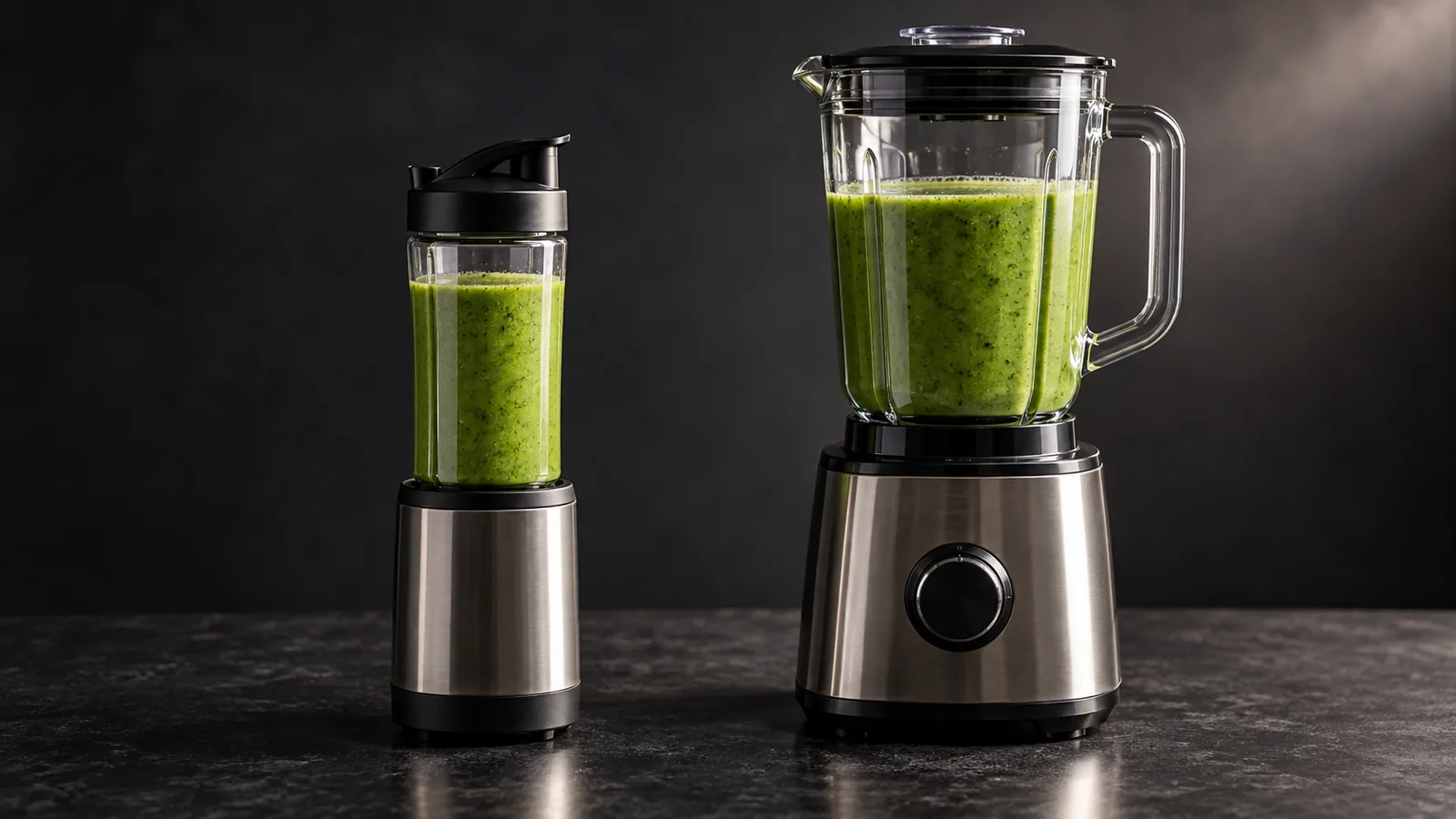
- Personal (bullet) blender: a small motor base and a cup you blend in and drink from. No separate jar, minimal cleanup, stores small. Built for one serving at a time.
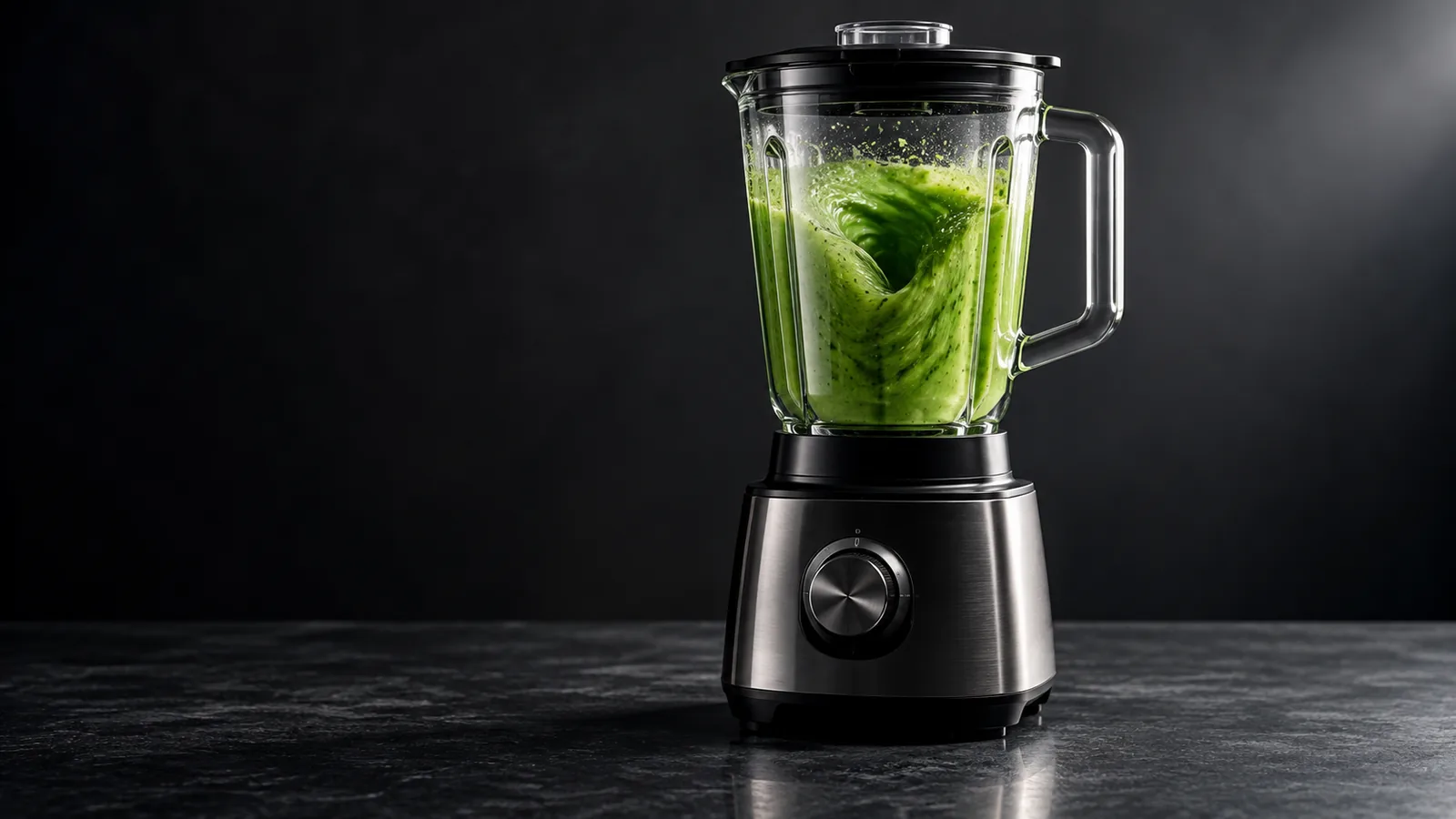
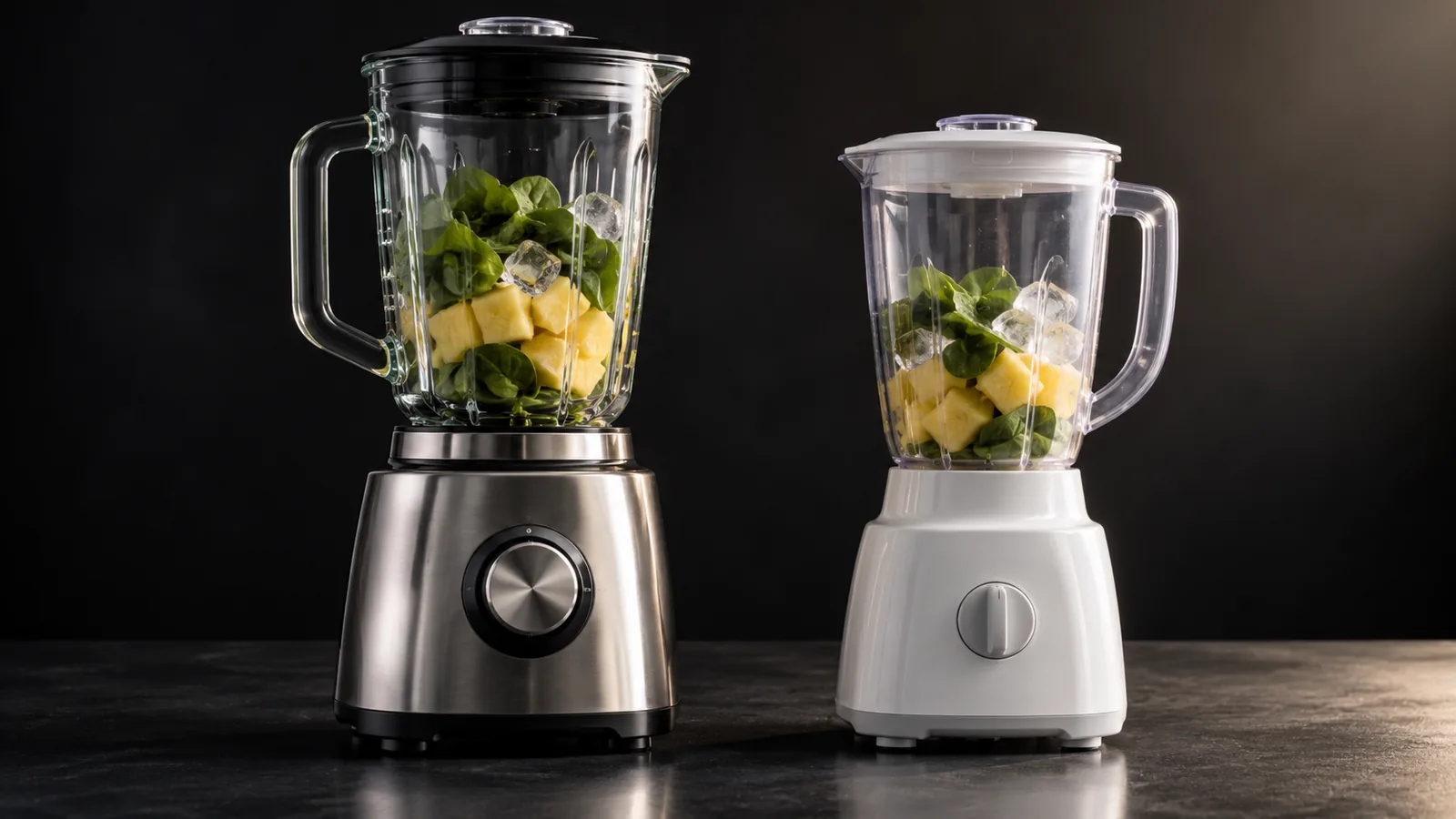
- Countertop blender: a larger base and a big jar (48–64 oz), usually a stronger motor. Built for batches and tougher jobs.
The choice isn’t about which is “better” — it’s which matches how you actually blend.
Where the personal blender wins
- Grab-and-go: blend, swap the blade for a lid, and drink from the same cup. Almost no cleanup.
- Price and size: cheaper and far more compact; stores in a cupboard.
- Single servings: perfect for one daily smoothie or protein shake.
- Simplicity: one button, nothing to fuss with.
Where the countertop blender wins
- Capacity: a family’s worth of smoothies, or a big batch, in one go.
- Smoothness: a bigger jar, better vortex, and stronger motor blend silkier — no grit.
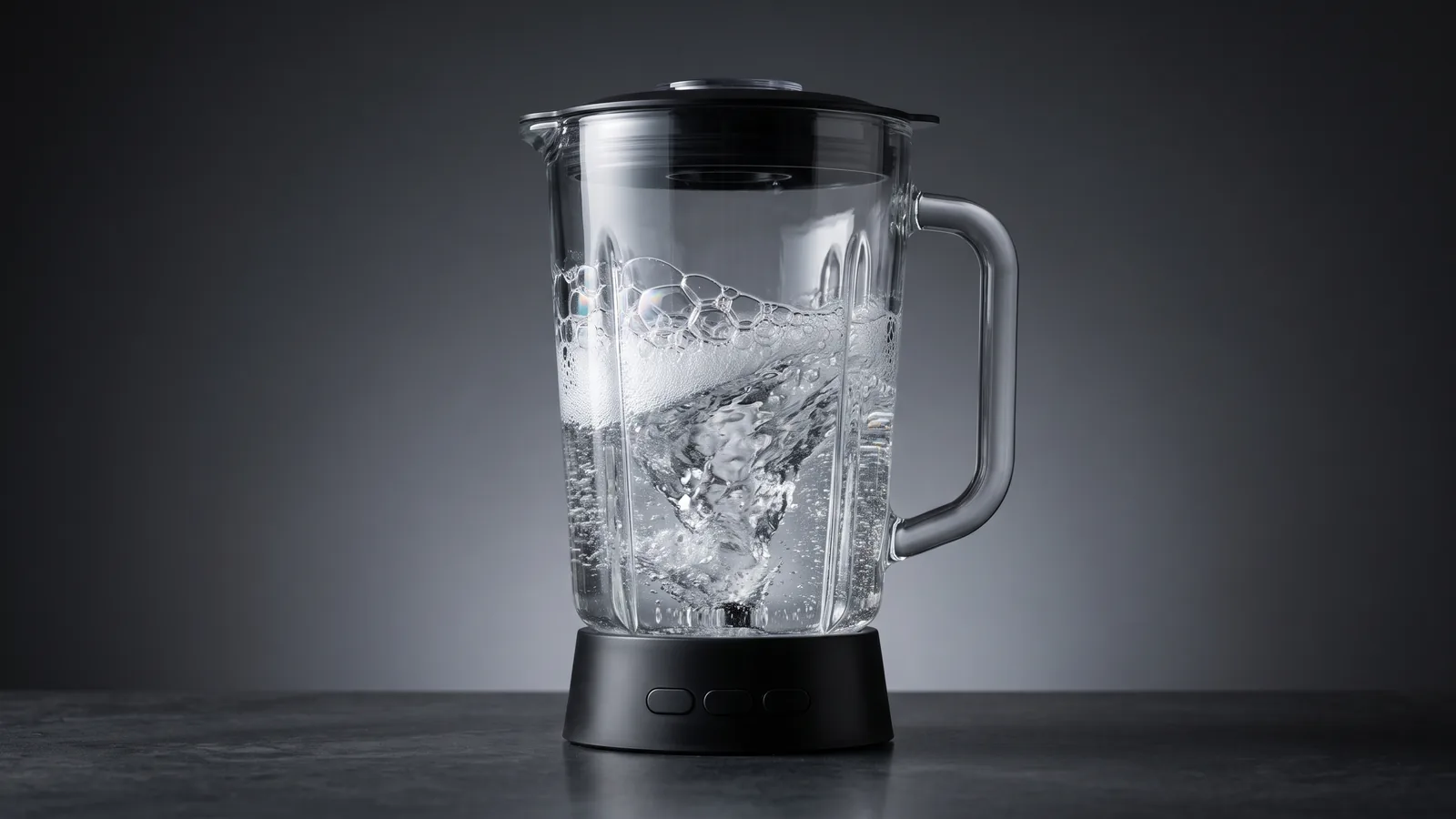
- Tough jobs: hot soup (by friction), nut butter, frozen desserts, lots of ice.
- Versatility: it’s a cooking tool, not just a smoothie maker.
Side by side
| Personal blender | Countertop blender | |
|---|---|---|
| Serving size | One (blend in the cup) | Batches (48–64 oz jar) |
| Cleanup | Rinse the cup | Wash the jar |
| Power | Smaller motor | Stronger motor |
| Tough jobs (soup, nut butter) | Limited | Handles them |
| Smoothness | Good | Best |
| Price / footprint | Low / tiny | Higher / counter space |
Which should you buy?
- Buy a personal blender if: you make a single smoothie or shake most days and value speed, low cleanup, and a small footprint.
- Buy a countertop blender if: you blend in volume, cook (hot soup, nut butter), or want the smoothest results — especially with tough, frozen ingredients. See what to look for and premium vs budget.
- Consider both if: you want a personal for daily shakes and a countertop for cooking and batches — a common, complementary pairing.
The bottom line
Match the size to your routine. One serving at a time, grab-and-go? The personal blender is simpler, cheaper, and more convenient. Batches, cooking, or tough blends? The countertop blender does what a personal can’t. Pick by how you actually blend, not by which is bigger.
Where to go next
- What to look for in a blender — the five things that matter
- Premium vs budget blender — is high-performance worth it?
- How to clean a blender — keep either one running