The one thing price buys: power that lasts
A blender’s whole job is to power through what you put in it, again and again, for years. That’s exactly where cheap and premium diverge. A budget motor handles soft ingredients but strains, bogs down, or overheats on ice, frozen fruit, and nut butter — and wears out faster. A high-performance motor sustains full speed through the hardest blends and keeps doing it for a decade. See what to look for for why power (not “peak horsepower”) is the number that matters.
What you actually pay more for
1. Motor power and durability
The core upgrade. A premium motor sustains high speed under load — crushing ice, blending frozen fruit, making nut butter — without straining, and it’s built to last many years. Budget motors do soft jobs but labor on tough ones and have shorter lives. This is most of the price difference, and most of what you feel.
2. Blade and jar design (smoothness)
Premium blenders pair the motor with a well-designed jar and blade that create a strong vortex, so blends come out silky-smooth with no grit — noticeable in a green smoothie or a puree. Budget blenders more often leave a little texture and chunks spinning at the top.
3. A tamper for thick blends
High-performance blenders include a tamper to push thick mixtures (nut butter, frozen desserts, very thick smoothies) into the blades while running. Budget blenders usually don’t, so thick blends stall in an air pocket. If you make anything thick, this is a real capability gap.
4. Warranty and longevity
Premium blenders carry multi-year warranties (often 5–10 years) because they’re built to last — a genuine part of the value, since owners keep them far longer, lowering the cost per year. Budget blenders have shorter warranties and lives.
Bonus: friction heating
Powerful blenders can heat soup by blade friction in a few minutes — a party trick that’s genuinely useful, and only power makes it possible.
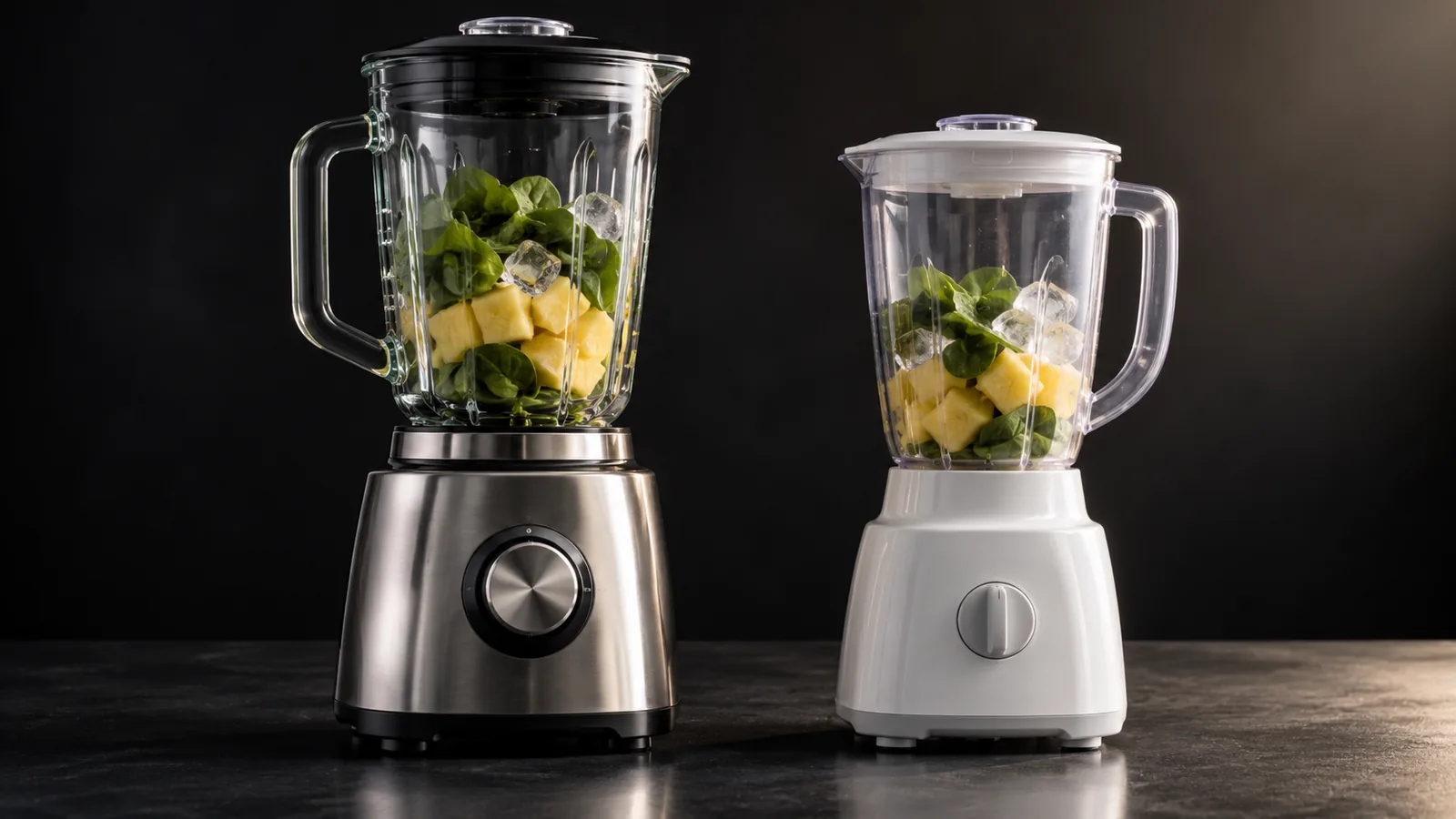
Premium vs budget, side by side
| Budget (~$40–$100) | Premium ($300–$600) | |
|---|---|---|
| Ice / frozen fruit | Strains | Powers through |
| Smoothness | Some grit | Silky |
| Nut butter, thick blends | Stalls (no tamper) | Handles it (tamper) |
| Hot soup by friction | No | Often yes |
| Lifespan / warranty | Shorter | Many years, long warranty |
| Best for | Soft, occasional blends | Tough, frequent blending |
When a budget blender is the smart buy
When you mostly make soft blends occasionally — protein shakes, smoothies without ice, purees, dressings. A budget blender does those well for a fraction of the price, and paying up buys little you’ll notice on soft ingredients.
When premium is worth it
- You blend tough things regularly — ice, frozen fruit, nut butter, hot soup → real motor power.
- You want silky-smooth results with no grit → better jar and blade.
- You want it to last a decade → the durability and warranty.
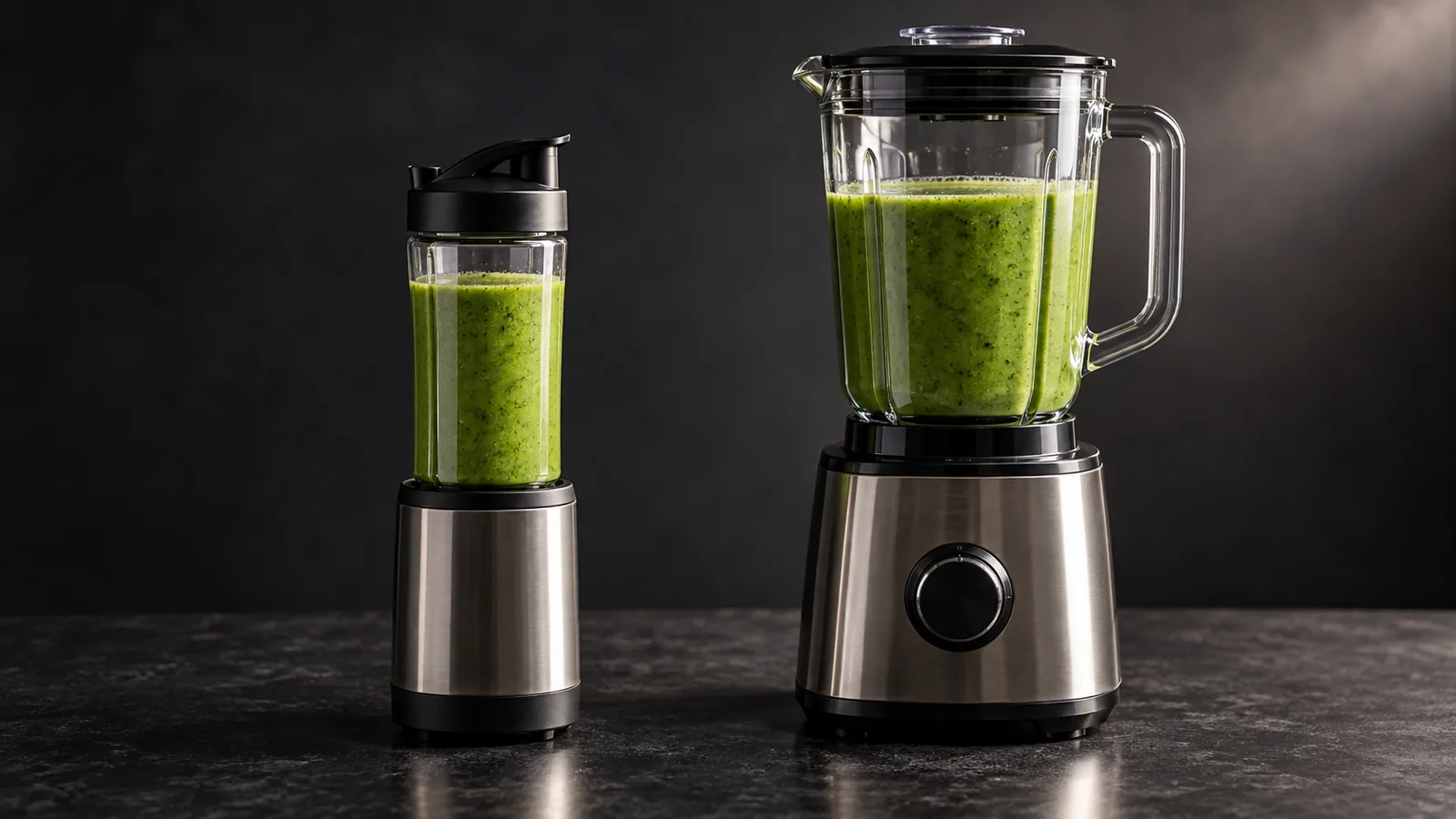
For personal, blend-to-go use, also weigh a personal vs countertop blender.
The verdict
Blenders reward power and durability, and that’s what the premium buys — smoother blends on the hard jobs, and years more life. If your blending is light and soft, a budget blender is genuinely enough. If you make tough blends daily and want it to last, a high-performance blender pays for itself in results and longevity.
Where to go next
- What to look for in a blender — the five things that matter
- Personal vs countertop blender — which size fits you
- How to clean a blender — keep it running