What Is an Immersion Blender? What It Does and When to Use One
Noolaguide Editorial·Last updated
Disclosure: As an Amazon Associate, Noolaguide earns from qualifying purchases — we may earn a commission when you buy through links on this page, at no extra cost to you. Our recommendations are editorially independent. How we make money.
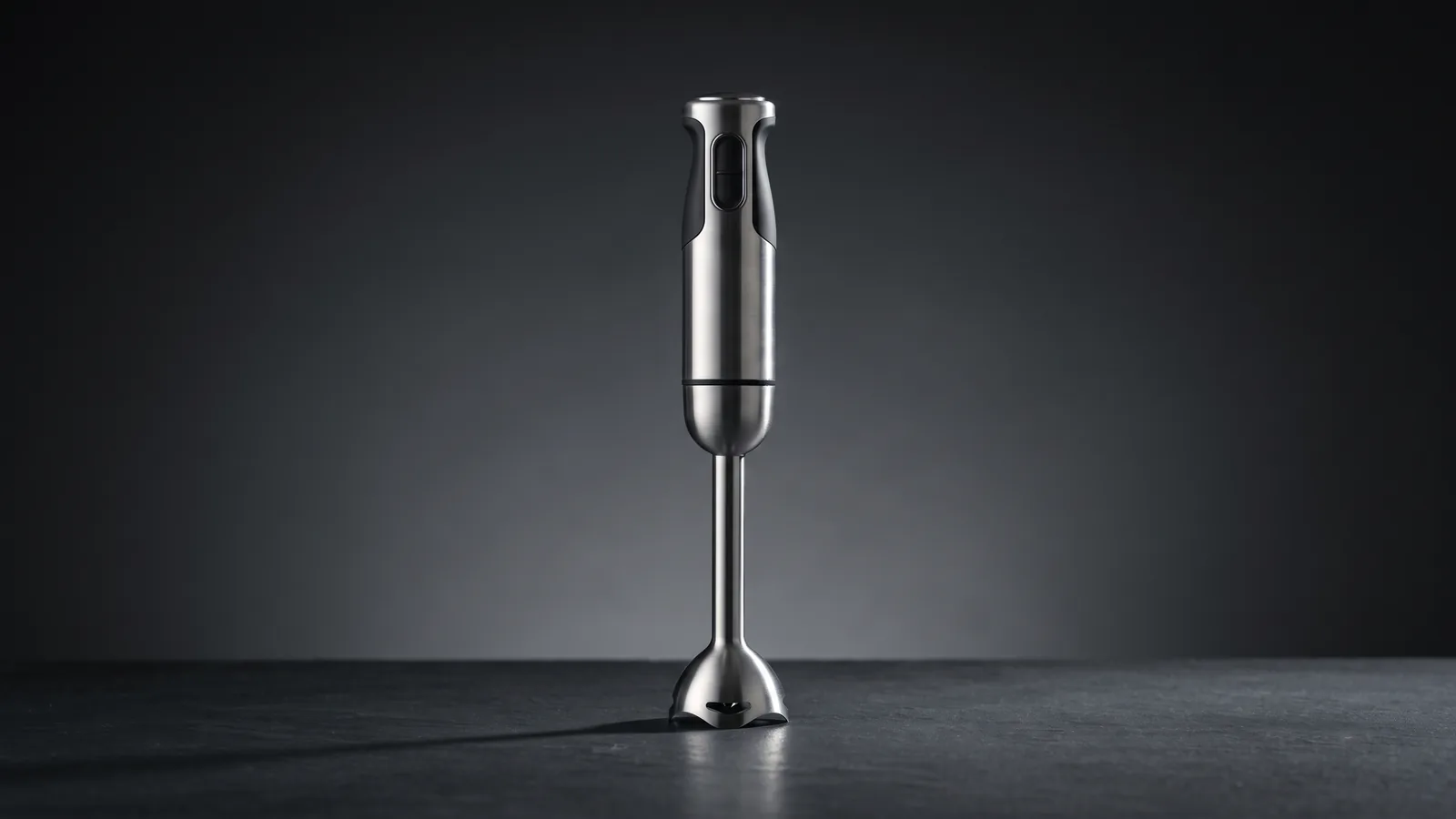
An immersion blender is a handheld wand with a spinning blade at the tip that you dip directly into a pot, jar, or bowl to blend — which is why it's also called a hand blender or stick blender. It excels at pureeing soup right in the pot, making sauces, mayonnaise, and small smoothies with almost no cleanup. It's less powerful than a countertop blender and not made for big batches or crushing ice, but for blending in the container you're already using, nothing is faster.
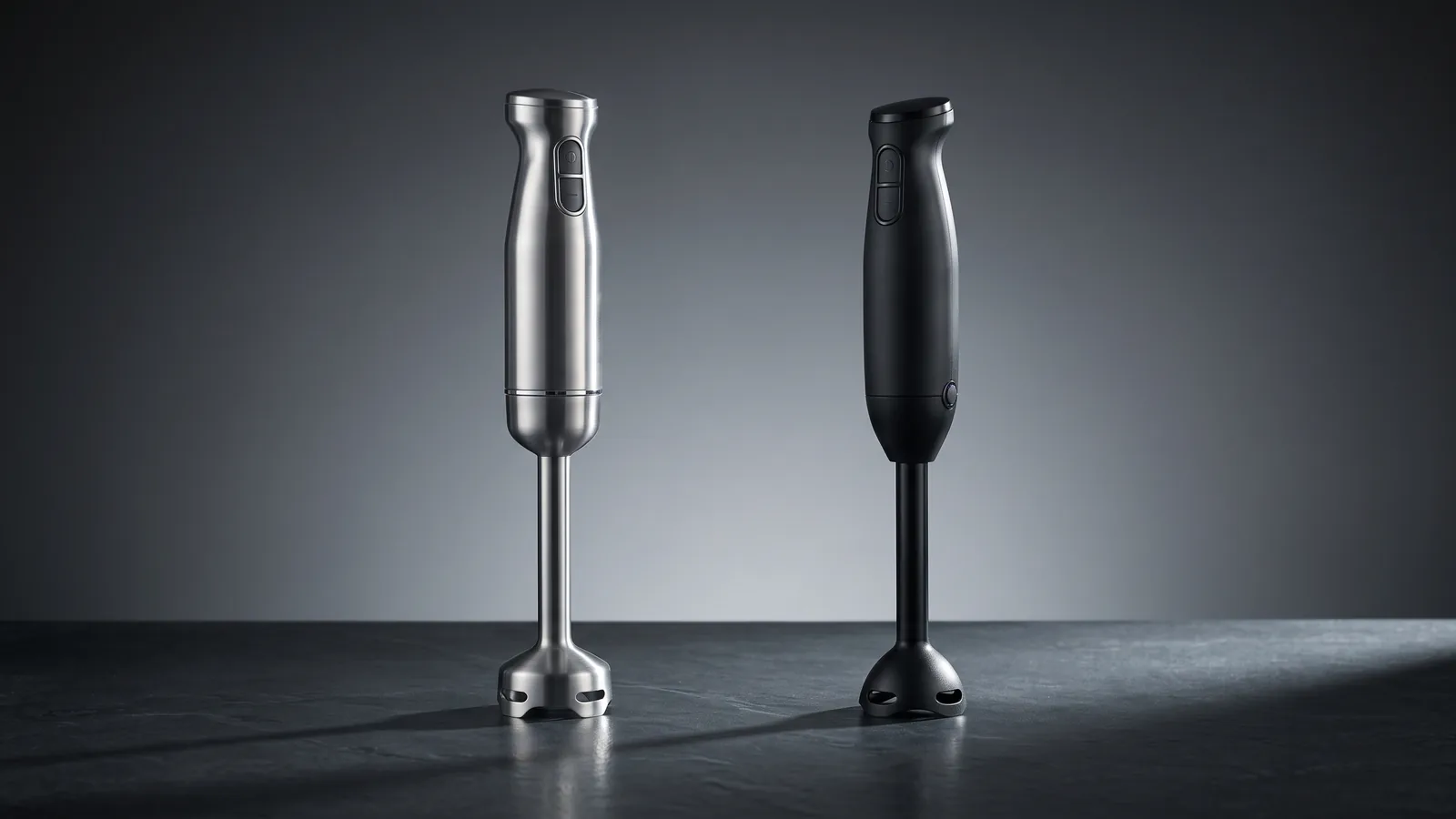
An immersion blender is the handheld member of the blender family. Instead of pouring food into a jug, you hold the wand and lower its blade into the food — a pot on the stove, a measuring cup, a mixing bowl. That single difference is the whole point: you blend where the food already is, so there’s no transferring hot liquid and no big jug to wash. The names “immersion,” “hand,” and “stick” blender all describe this same tool.
How it works
A motor in the handle spins a small blade tucked inside a guard at the base. Submerge the tip, press the trigger, and the blade pulls food in and purees it in place. You steer the consistency yourself — how long you blend and how you move the wand around the container. Most are simple press-and-hold tools, often with a low/high speed switch, and many come with whisk and chopper attachments that expand what they do.
What is an immersion blender used for?
The short answer: blending anything soft, in the container it is already in. The most common uses, roughly in order of how often owners reach for it:
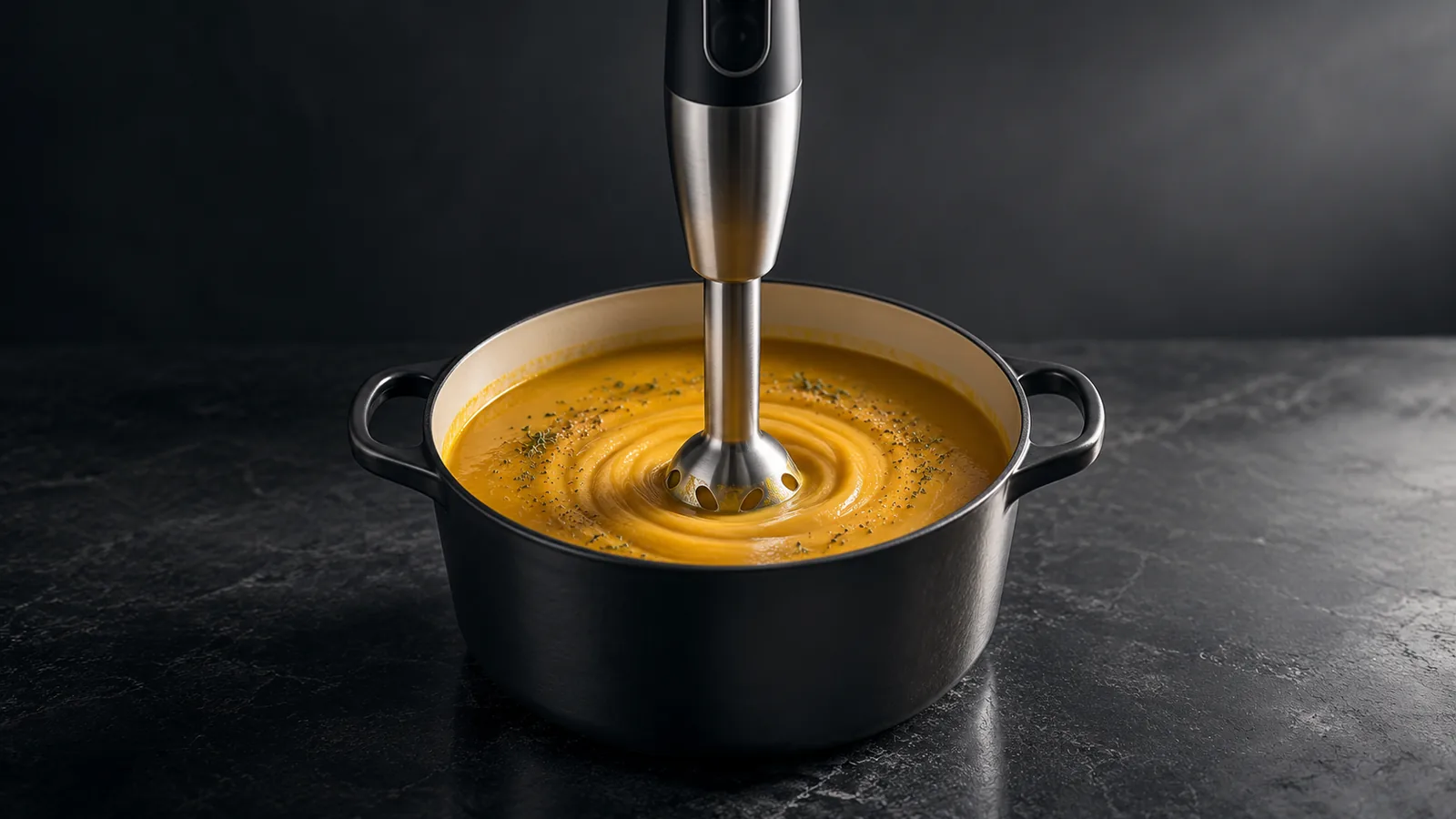
Pureeing soup in the pot — the signature use; no ladling hot soup into a blender in batches.
Sauces and dressings — smooth tomato sauce, vinaigrettes, pesto.
Mayonnaise and emulsions — its narrow container and steady blade make foolproof mayo.
Small smoothies and milkshakes — a single serving in a cup.
Whipped cream and eggs — with the whisk attachment.
Baby food — small purees without a big machine.
Chopping — onions, herbs, nuts, with the chopper bowl attachment.
They’re complementary, not interchangeable. If you make more soup, sauce, and mayo than frozen smoothies, the immersion blender is the more-used tool — and the one that saves the most cleanup.
Who it’s for
Anyone who makes soups, sauces, dressings, or baby food, or who wants blending power without a bulky machine to store and wash. It won’t replace a countertop blender for daily frozen smoothies or ice, but for everything you’d otherwise dirty a big blender to do in small amounts, it’s faster and easier.
The stick blender to buy if you want one that does the core job well and nothing extra to break. A variable-speed trigger, a removable blending arm, a pan guard to protect your pots, and a blending jar. It has one of the deepest owner records in the category, and owners praise its quality, how well it blends, and how fast it cleans. The complaints are the category's usual ones in smaller numbers: some units die early, and a few owners find it less powerful than they hoped.
Prime DayAmazon Prime Big Deal Days is on — a good time to check the live price.
One of the deepest owner records of any stick blender
Cleans in moments — the arm detaches
Pan guard protects nonstick and enameled pots
Nothing extra to store or break
What buyers flag
Some units stop working early
Not the most powerful; a few owners call it weak
No whisk or chopper included
At a glance
Capacity
1 liter
Dimensions
2.5"D x 3.56"W x 16.3"H
Power
180 watts
Weight
2.4 pounds
Material
Stainless Steel
Warranty
1-year
In the box
Blender Arm, Blending Jar With Lid, Juice Container, Pan Guard
Owner evidence report
KitchenAid Variable Speed Corded Hand Blender (KHBV53)
What owners praise
Quality10% category avg
18%
Mixing/blending14% category avg
16%
Ease of cleaning9% category avg
16%
Ease of use12% category avg
13%
Color1% category avg
11%
What to watch
Durability3% category avg
25%
Mixing/blending3% category avg
19%
Strength3% category avg
12%
Functionality3% category avg
6%
Themes from our analysis of verified owner reviews. Each bar is that theme's share of what owners raise, with the category average beside it for context. Noolaguide does not claim hands-on lab testing; the authority here is the accumulated experience of the people who own it.
An immersion blender is a handheld blender — a wand with a small spinning blade at the bottom that you immerse directly into whatever you're blending, whether that's a pot of soup, a jar, or a bowl. Because you 'immerse' it into the container instead of pouring food into a jug, it's also called a hand blender or a stick blender; the three names mean the same tool. It's built for blending in place, quickly, with minimal cleanup.
The core jobs are pureeing soups right in the pot (no ladling hot liquid into a blender), making sauces and salad dressings, whipping up mayonnaise and other emulsions, blending small smoothies or milkshakes, and pureeing baby food. With the whisk attachment many come with, it also whips cream and eggs; with the chopper attachment, it minces onions, herbs, and nuts. It's the tool of choice whenever blending in the container you're already using beats dirtying a full blender.
A motor in the handle spins a small blade housed in a guard at the tip. You submerge that tip into the food and the spinning blade pulls ingredients in and purees them, right in the pot or bowl. Because the blending happens in your own container rather than a fixed jug, you control the consistency by how long you blend and where you move the wand. Most run on a simple press-and-hold trigger, sometimes with a speed control.
An immersion blender is a handheld wand you dip into the food; a regular (countertop) blender is a jug with a blade in the base that you pour food into. The immersion blender wins for hot soups (blend in the pot), small jobs, sauces and emulsions, easy cleanup, and compact storage. The countertop blender wins for large batches, thick smoothies, and crushing ice, because it's more powerful and holds more. Many kitchens keep both; if you make more soup than smoothies, the immersion blender is the one you'll reach for.
Yes — 'hand blender,' 'immersion blender,' and 'stick blender' are three names for the same appliance: a handheld wand with a blade at the tip that you immerse into the food. 'Immersion' describes what you do with it, 'stick' and 'hand' describe its shape and how you hold it. Product listings use the terms interchangeably.
It is the wrong tool for a few jobs. Crushing ice and blending frozen fruit strain the smaller motor and dull the blade — a countertop blender is built for that. Large batches are slow and splashy, since you can only blend a wand's reach at a time. Very thick or dry mixtures (stiff dough, dense nut butter) are beyond it, and grinding hard spices or coffee is a job for a dedicated grinder. For anything hot, small, or already in a pot, though, it is the faster tool.
Generally no, and it is not recommended. Most immersion blenders lack the motor power and blade design to crush ice cleanly, and doing it repeatedly can burn out the motor or chip the blade. A few high-powered models tolerate small amounts, but for crushed ice or frozen drinks a countertop blender is the right tool. Use the immersion blender for soups, sauces, emulsions, and soft ingredients instead.