How to Use an Immersion Blender (Without Splattering Everywhere)
Noolaguide Editorial·Last updated
Disclosure: As an Amazon Associate, Noolaguide earns from qualifying purchases — we may earn a commission when you buy through links on this page, at no extra cost to you. Our recommendations are editorially independent. How we make money.
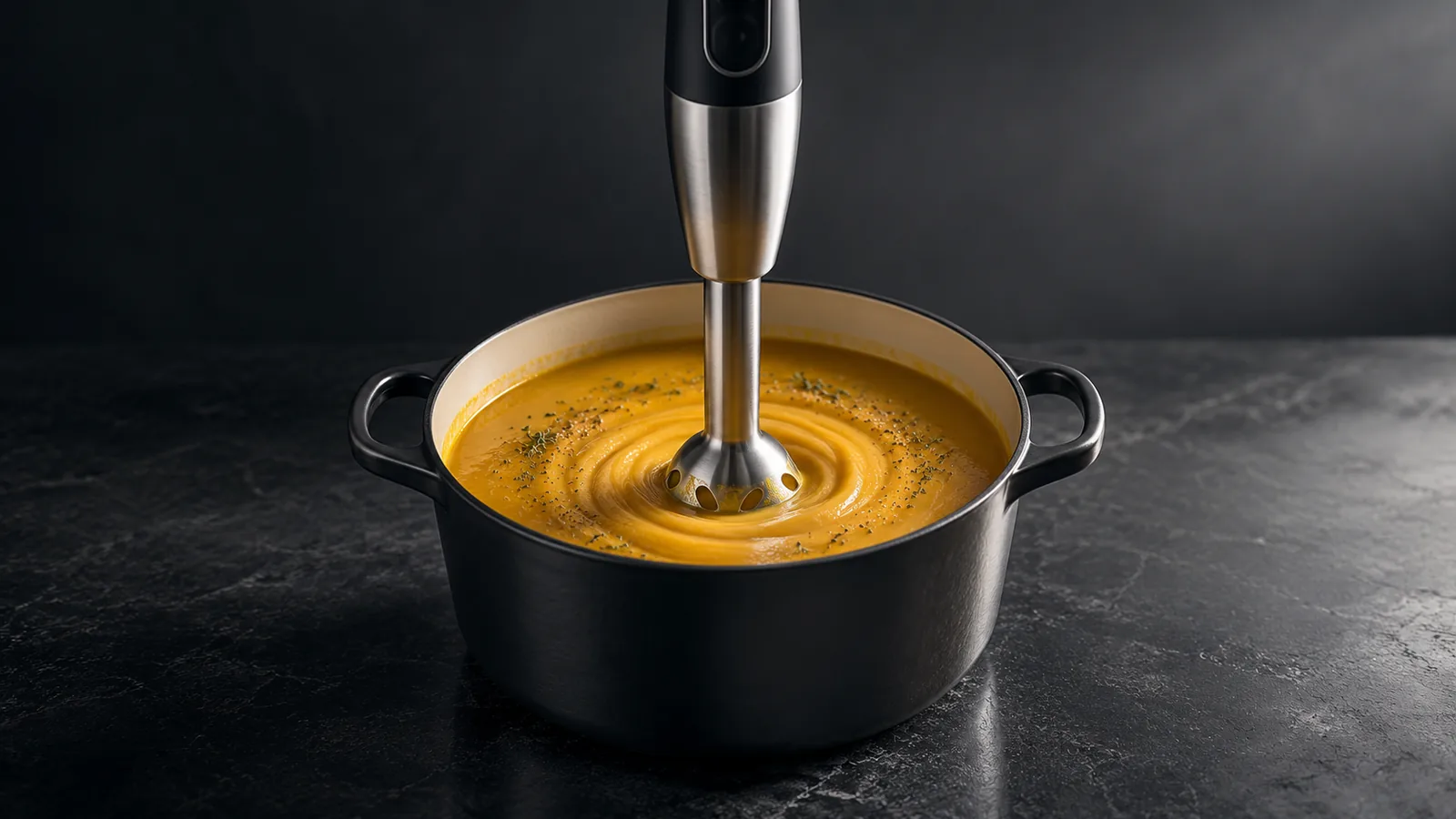
Using an immersion blender well comes down to one rule: fully submerge the blade before you turn it on, and turn it off before you lift it out — that alone prevents almost all the splatter people complain about. Blend in a tall, narrow container, keep the blade near the bottom and tilt to pull food in, and move slowly. From there it purees soup in the pot, whips mayo, and blends sauces in seconds.
Almost every complaint about immersion blenders is splatter, and it comes from running the blade at or above the surface. Fix it with a sequence: submerge fully → press the trigger → blend → release the trigger → lift out. Keep the blade guard under the surface the entire time it’s spinning and the food stays in the container.
Two more habits seal it:
Use a tall, narrow container — the cup that came with it, a large measuring cup, or a deep pot. Wide, shallow bowls throw food outward.
Keep the blade low and tilt the wand to create a gentle whirlpool that draws ingredients down into the blade, rather than lifting it up through them.
Step by step
Assemble and plug in — attach the blending wand; keep hands clear of the blade.
Add food to a tall container and don’t overfill (leave room for movement).
Lower the blade to the bottom and fully submerge it.
Press and hold the trigger; blend in short bursts.
Tilt and move slowly in small circles to pull everything into the blade.
Release the trigger, then lift out — never the other way around.
Unplug before removing the wand to rinse.
Task by task
Soup: take the pot off the heat so it isn’t spitting, submerge, and blend in slow circles until smooth — no batching into a jug.
Mayonnaise / emulsions: egg, mustard, acid, and oil in the tall cup; lower to the bottom, run it still until an emulsion forms, then slowly raise to pull in the rest of the oil. Nearly foolproof.
Sauces & dressings: blend tomato sauce, pesto, or vinaigrette right in the pot or cup.
Whipped cream & eggs: swap to the whisk attachment if your model has one — the blade won’t whip.
Chopping: use the chopper bowl attachment for onions, herbs, and nuts.
Smoothies: single servings of soft fruit only; it’s not built to crush ice.
Safety and care
The blade is sharp and the guard doesn’t fully enclose it — unplug before touching or rinsing the wand. Run it in short bursts (most motors aren’t made for minutes of continuous use). Cleanup is usually just running the wand in a cup of soapy water and rinsing.
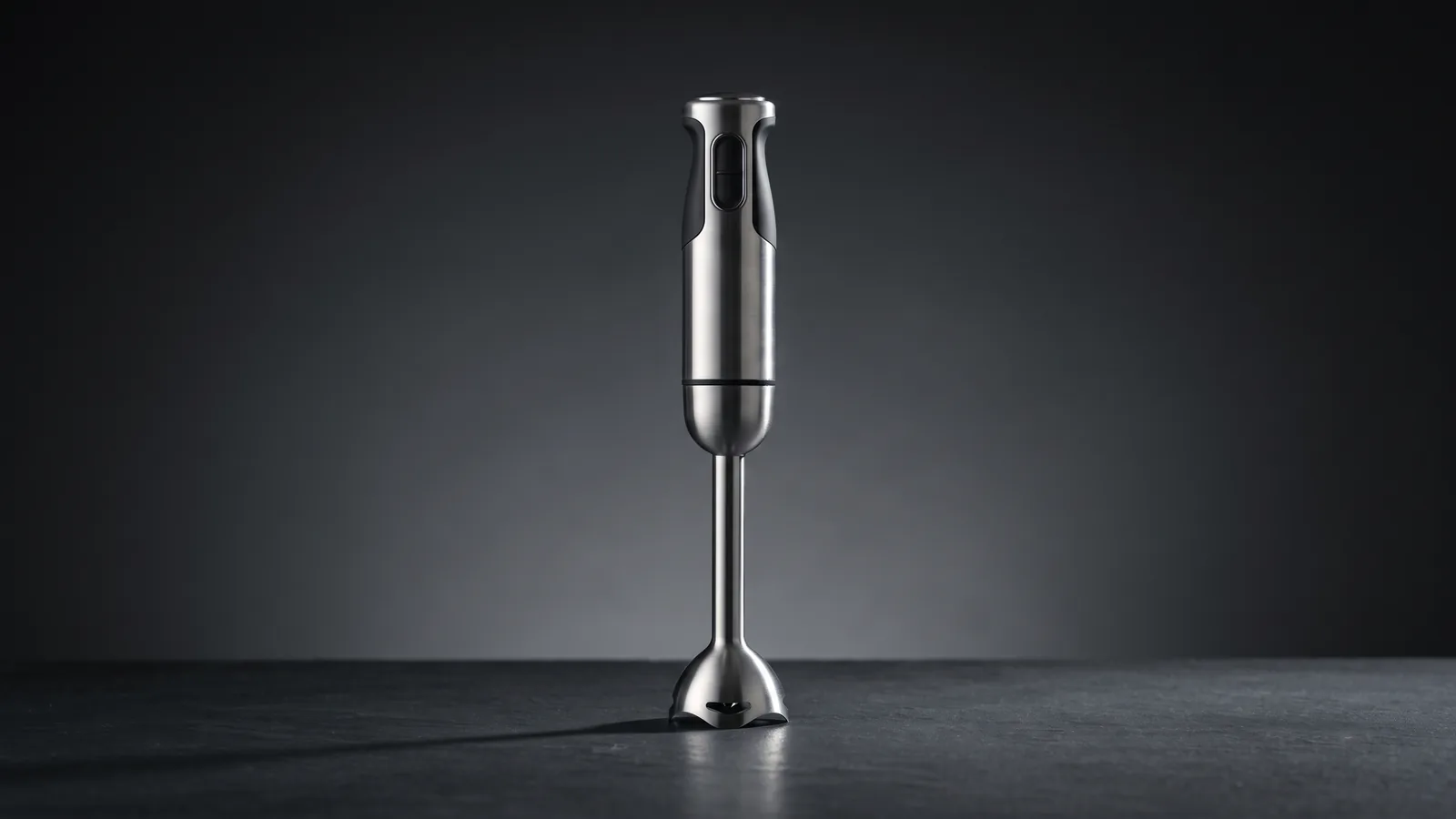
The stick blender to buy if you want one that does the core job well and nothing extra to break. A variable-speed trigger, a removable blending arm, a pan guard to protect your pots, and a blending jar. It has one of the deepest owner records in the category, and owners praise its quality, how well it blends, and how fast it cleans. The complaints are the category's usual ones in smaller numbers: some units die early, and a few owners find it less powerful than they hoped.
Prime DayAmazon Prime Big Deal Days is on — a good time to check the live price.
One of the deepest owner records of any stick blender
Cleans in moments — the arm detaches
Pan guard protects nonstick and enameled pots
Nothing extra to store or break
What buyers flag
Some units stop working early
Not the most powerful; a few owners call it weak
No whisk or chopper included
At a glance
Capacity
1 liter
Dimensions
2.5"D x 3.56"W x 16.3"H
Power
180 watts
Weight
2.4 pounds
Material
Stainless Steel
Warranty
1-year
In the box
Blender Arm, Blending Jar With Lid, Juice Container, Pan Guard
Owner evidence report
KitchenAid Variable Speed Corded Hand Blender (KHBV53)
What owners praise
Quality10% category avg
18%
Mixing/blending14% category avg
16%
Ease of cleaning9% category avg
16%
Ease of use12% category avg
13%
Color1% category avg
11%
What to watch
Durability3% category avg
25%
Mixing/blending3% category avg
19%
Strength3% category avg
12%
Functionality3% category avg
6%
Themes from our analysis of verified owner reviews. Each bar is that theme's share of what owners raise, with the category average beside it for context. Noolaguide does not claim hands-on lab testing; the authority here is the accumulated experience of the people who own it.
Submerge the blade fully into the food before pressing the trigger, keep it near the bottom of the container, and tilt or move it slowly to pull ingredients into the blade. Blend in short bursts until you reach the texture you want, then release the trigger before lifting the wand out. That submerge-before-on, off-before-out sequence is the whole technique — it's what keeps food in the pot instead of on your walls. A tall, narrow container helps enormously.
Three things stop nearly all the splatter. First, fully submerge the blade before you turn it on, and turn it off before you raise it — most mess comes from running the blade at the surface. Second, use a tall, narrow container (the cup that came with it, or a deep pot) rather than a wide, shallow bowl. Third, keep the blade near the bottom and tilt the wand to create a gentle whirlpool instead of lifting it up through the food. Don't overfill the container, either.
Take the pot off the heat (or at least stop it boiling) so hot liquid doesn't spit, then lower the blade fully into the soup, keep it near the bottom, and blend in slow circles, tilting to pull chunks in, until it's as smooth as you like. Because you blend right in the pot, there's no batching hot soup into a jug. Keep the blade submerged the whole time, and mind the depth — you want the guard under the surface so it doesn't splash.
Yes — it's one of the things an immersion blender does better than a big blender. Put the egg, mustard, lemon or vinegar, and oil in the tall cup, let the oil settle on top, then lower the blender to the bottom, turn it on, and hold it still for a few seconds until an emulsion forms at the base — then slowly raise it to pull the rest of the oil in. The narrow cup and bottom-up motion make the emulsion nearly foolproof. The same steady-stream technique works for aioli and creamy dressings.
Yes, for small, single servings — a cup of soft fruit, yogurt, and liquid blends fine. Where an immersion blender struggles is ice and frozen fruit: it's less powerful than a countertop blender and its small blade can't crush ice well, so use fresh or barely-softened fruit and enough liquid. For big batches of thick, icy smoothies, a countertop blender is the better tool.
Most immersion blenders are designed for short bursts, not long continuous running — typically up to about a minute at a time, then a brief rest, to avoid overheating the motor. Check your model's manual for its exact limit. In practice most tasks (soup, sauce, mayo) are done in well under a minute of actual blending, so this rarely gets in the way; just avoid holding the trigger down for several minutes straight.