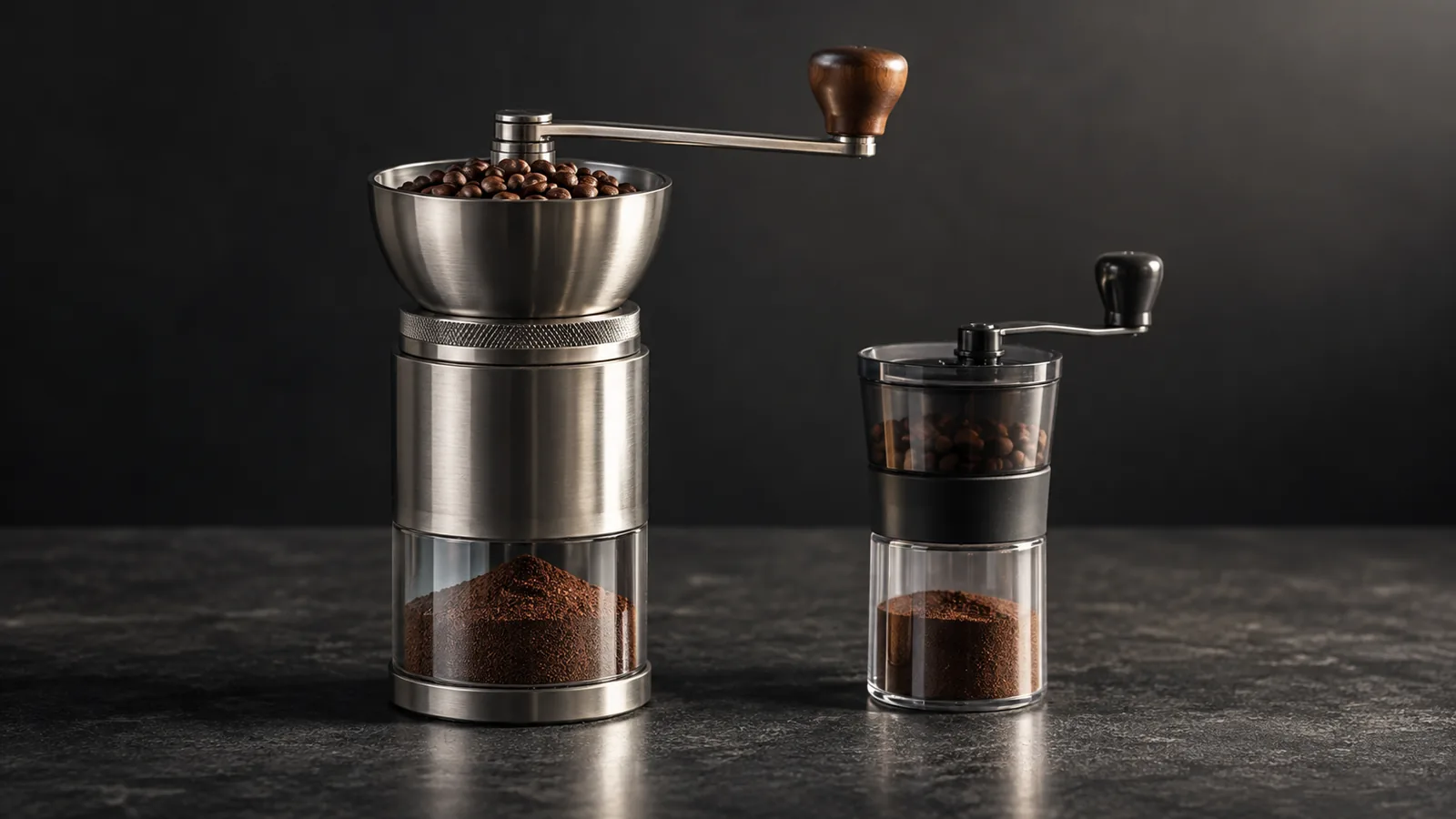
The one thing price buys: grind uniformity
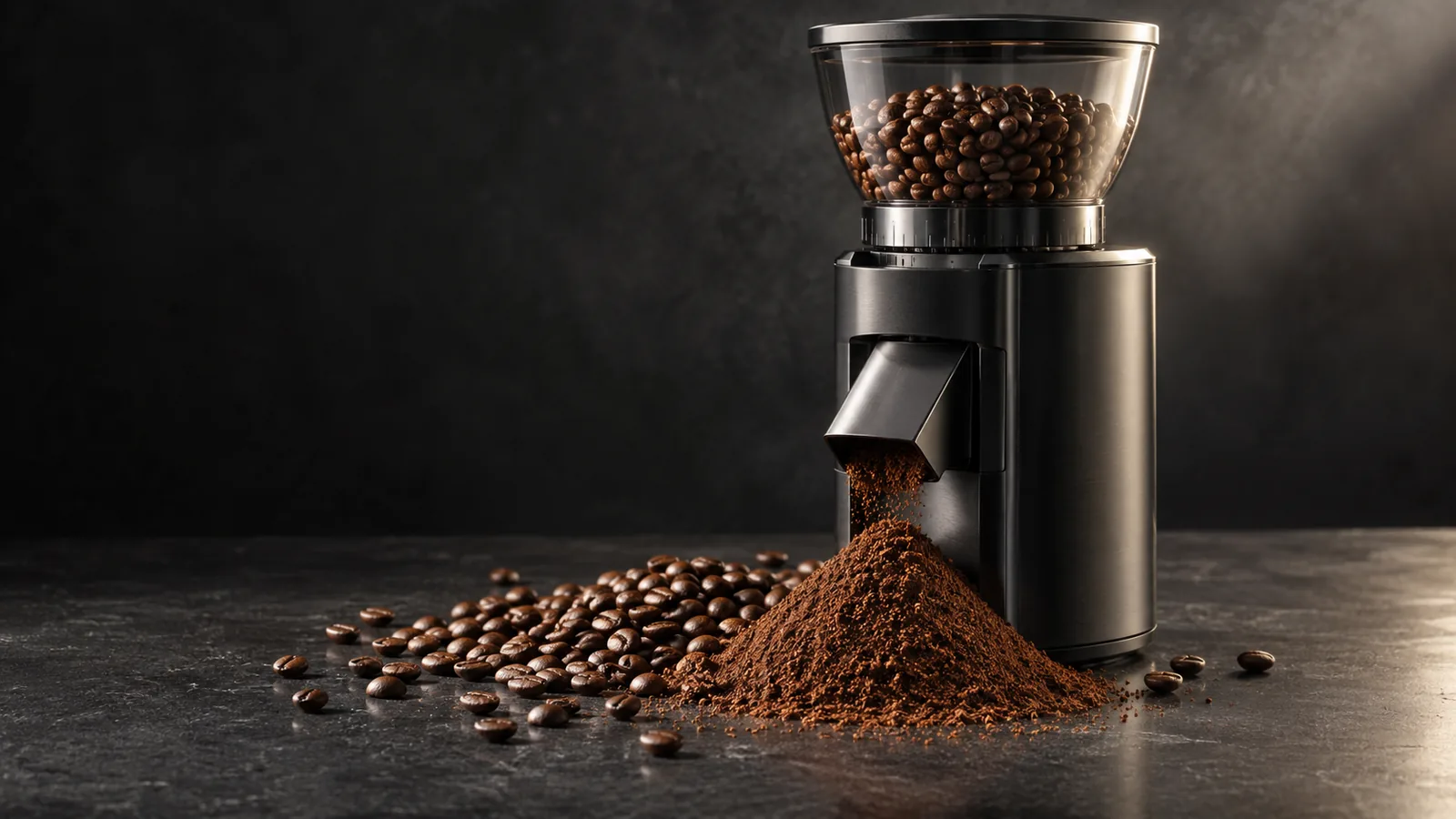
Coffee tastes best when every particle is the same size, so water extracts them evenly. That is the whole ballgame, and it is what separates grinders. A blade grinder can’t do it; a burr grinder can. So unlike most appliances, the grinder’s price maps almost directly onto cup quality — up to a point. See burr vs blade for the mechanism.
What you actually pay more for
1. Burrs instead of blades (the upgrade that matters most)
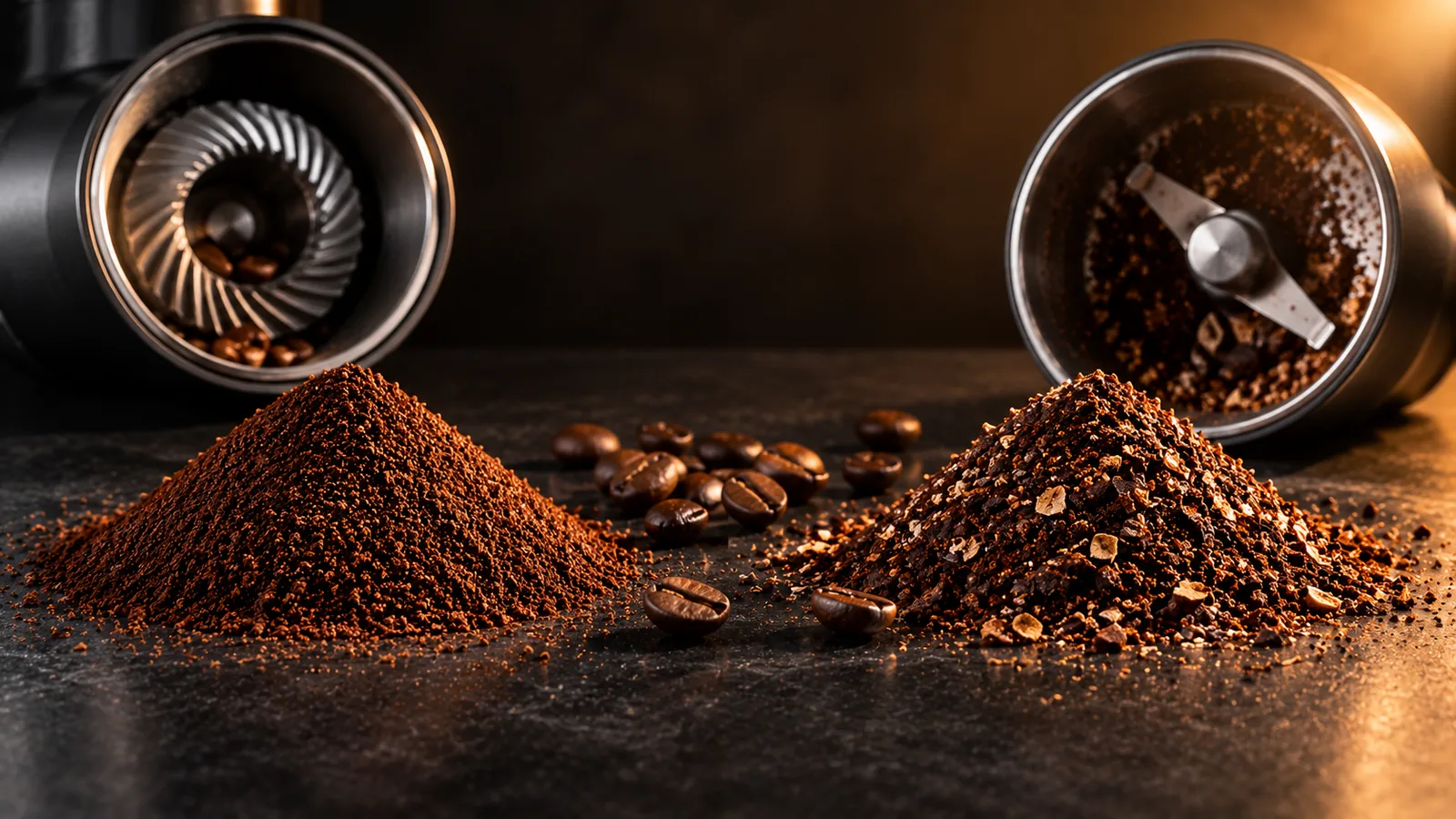
A blade grinder spins a propeller that chops beans into a random mix of powder and boulders — uneven extraction, muddy flavor. A burr grinder crushes beans between two abrasive surfaces to a consistent size. This first step, from blade to any burr, is the biggest jump in the whole coffee chain. Everything above it is refinement.
2. Grind consistency and adjustment range
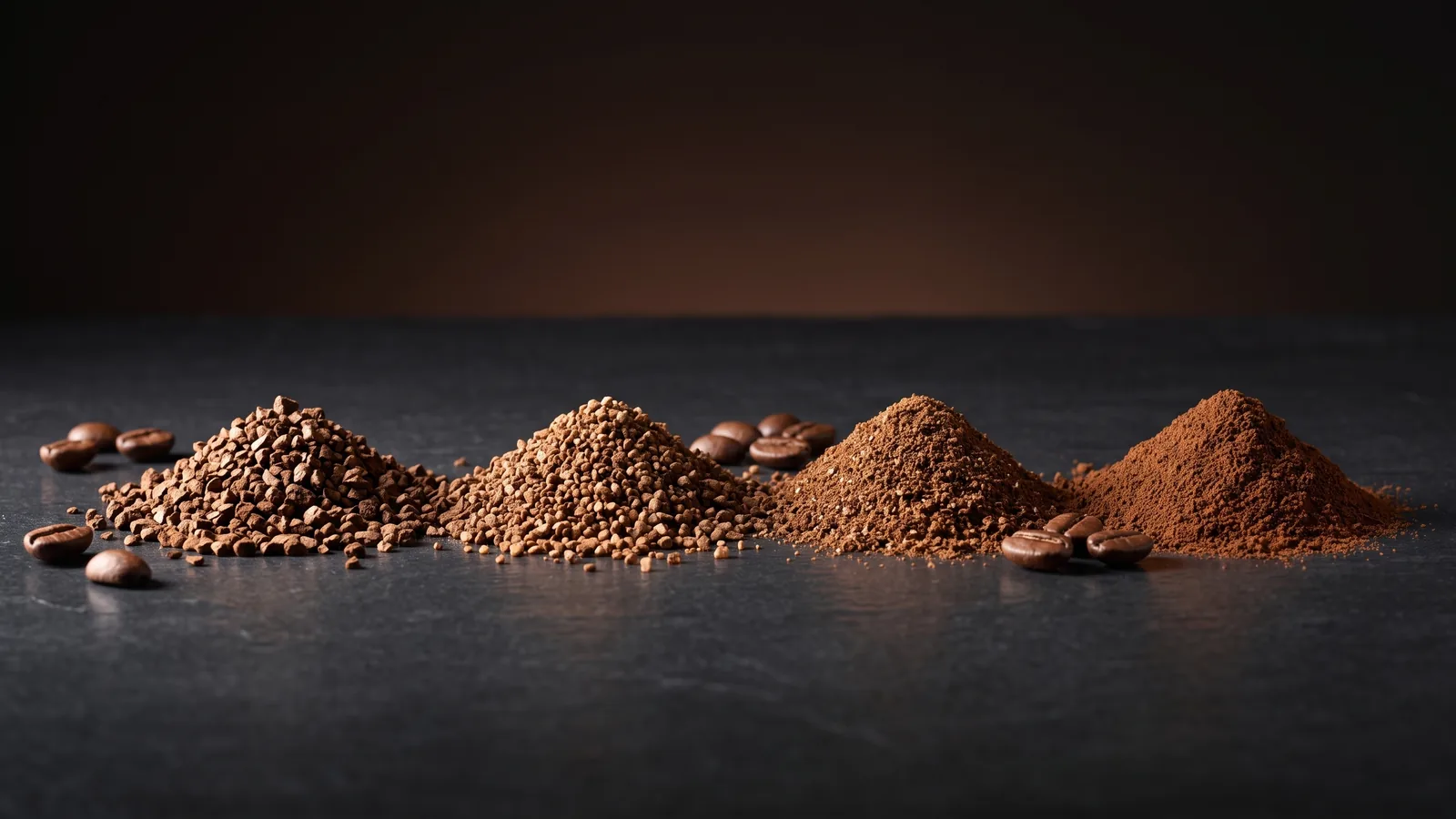
Among burr grinders, more money buys better-made burrs (flat or conical, sharper, more uniform) and more grind settings — finer, more repeatable steps. That matters most for dialing in the right grind size across methods, and it is essential for espresso, where a tiny adjustment changes the shot.
3. Retention and mess (heat and static)
Cheaper grinders trap old grounds inside (retention), so your fresh beans mix with stale ones, and they generate more heat and static — clumping, grounds stuck everywhere. Pricier grinders retain less and run cooler and cleaner. Less dramatic than the blade-to-burr jump, but it is real daily quality of life. (Either way, keep it clean.)
4. Build and quietness
Metal burrs and housings, better motors, and quieter operation come with price. A better grinder lasts longer and is more pleasant to use every morning — but it does not make better coffee than a mid-price burr grinder for non-espresso brewing.
Budget vs premium, side by side
| Budget blade (~$15–$25) | Entry burr (~$40–$90) | Premium burr ($150–$400+) | |
|---|---|---|---|
| Grind uniformity | Poor (dust + chunks) | Good | Excellent |
| Adjustment | None | Stepped settings | Fine / stepless |
| Espresso-capable | No | Rarely | Yes |
| Retention / heat / mess | — | Some | Low |
| Best for | (skip it) | Drip, pour-over, French press | Espresso, enthusiasts |
When a budget (entry burr) grinder is the smart buy
For drip, pour-over, French press, or cold brew, a solid entry-level burr grinder delivers the consistency that matters. Don’t buy a blade grinder to save $20 — it is a false economy that caps the quality of every brew. The right budget move is the cheapest burr grinder, not the cheapest grinder. See the best coffee grinders for picks by tier.
When it is worth paying up
- You pull espresso → a precise, espresso-capable burr grinder is often the best money in the setup.
- You want repeatable results across methods → finer adjustment and lower retention.
- You grind daily and want quiet, clean, low-static operation → better build.
The verdict
Buy the grind, not the badge. The blade-to-burr jump is the one upgrade everyone should make; a good mid-price burr grinder is where most home brewers should stop. Spend beyond that only if you pull espresso — the one method where grind precision keeps paying off.