It comes down to the inner pot
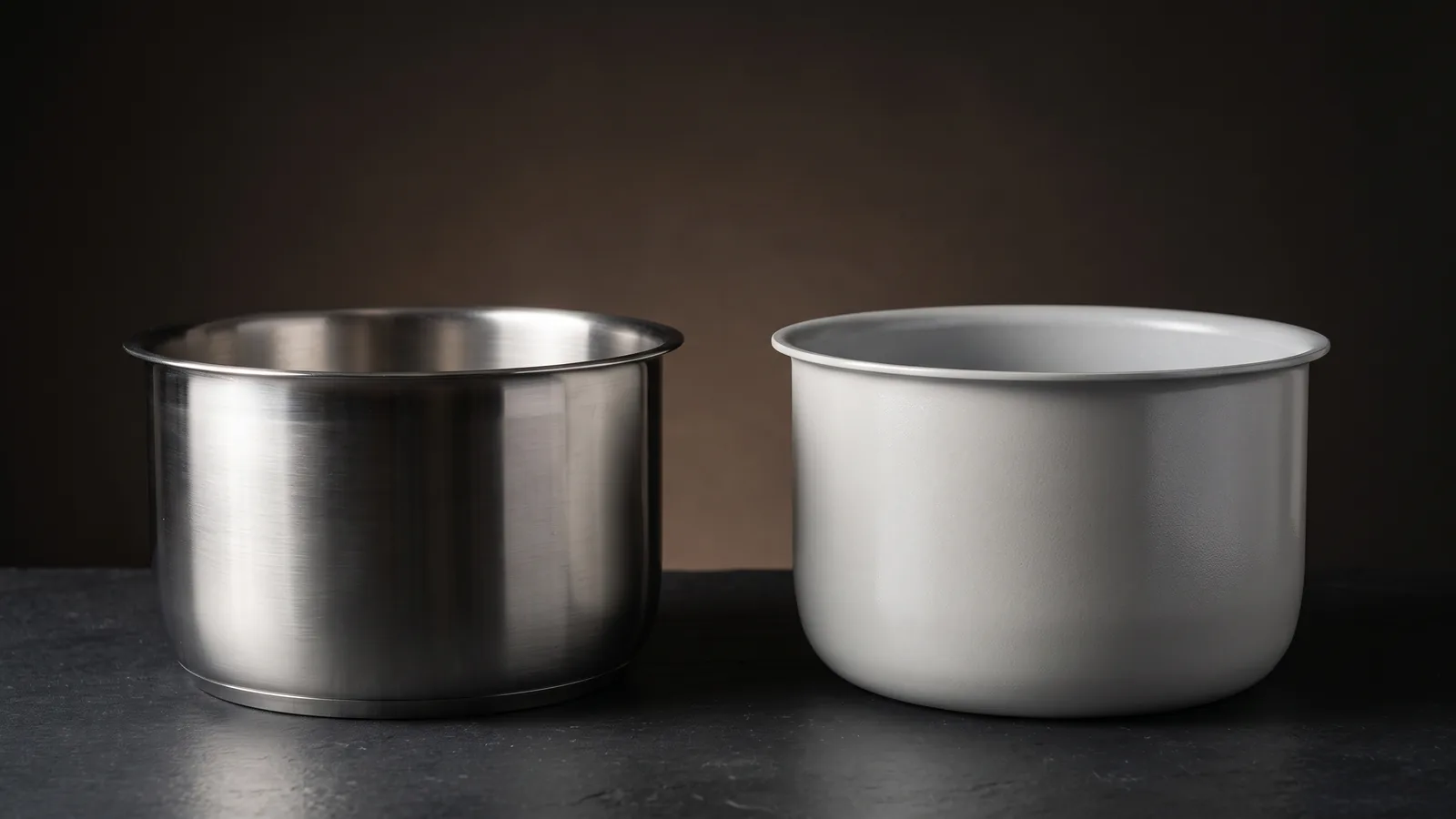
An electric pressure cooker’s housing, lid, and controls don’t touch your food — the inner pot does. So the whole non-toxic question is really about one part, and it has three common materials:
- Bare stainless steel (18/8): no coating at all. Inert, extremely durable, nothing to wear off — but food can stick and it wants a little more oil and scrubbing.
- Ceramic coating: a nonstick surface that isn’t traditional PTFE. Easy release and fast cleanup, with gentler care needed to keep the coating intact.
- Traditional nonstick (PTFE): the classic easy-release coating. Generally considered safe for normal use, but the one many non-toxic-minded buyers want to avoid.
The good news about the default
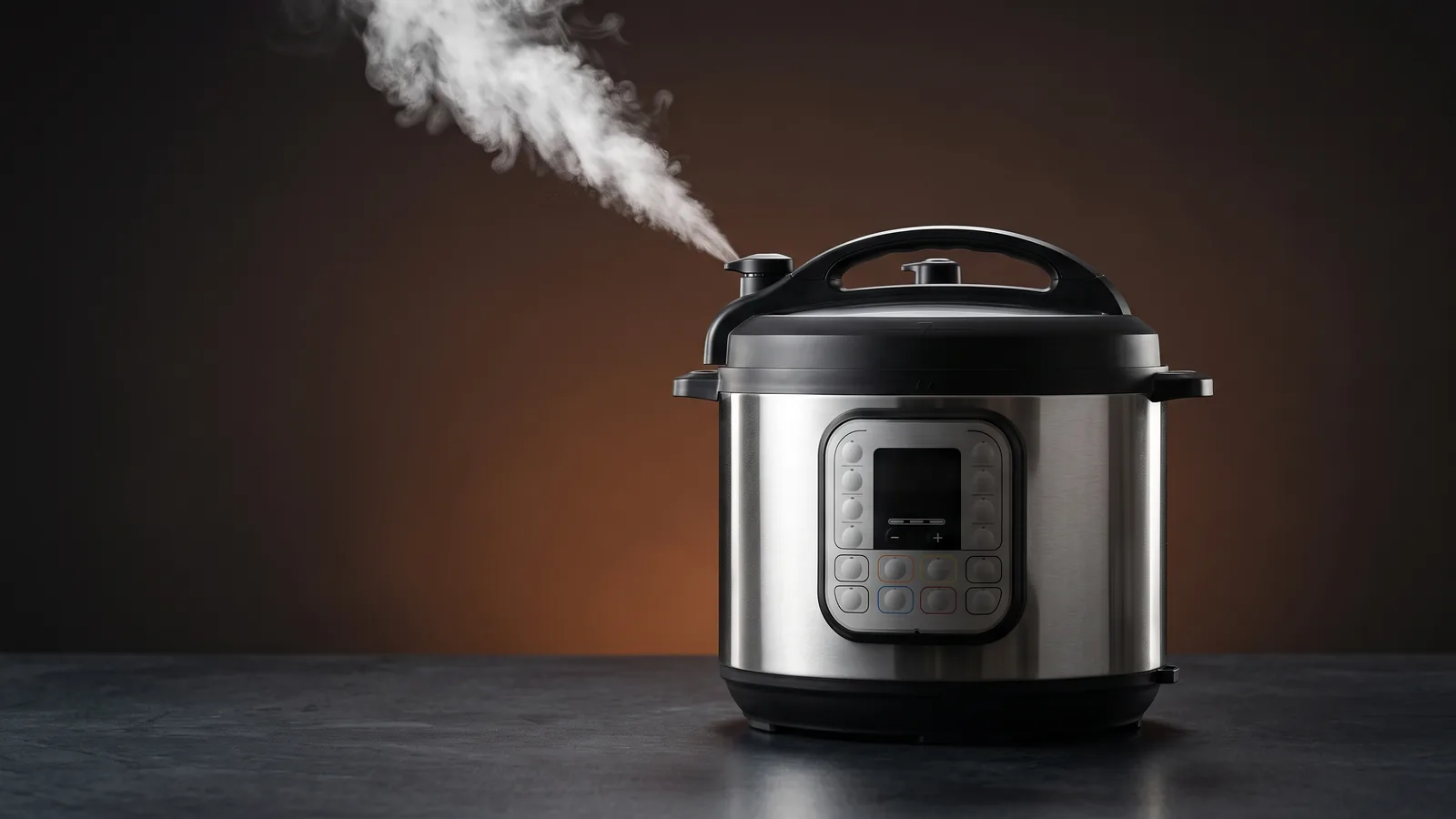
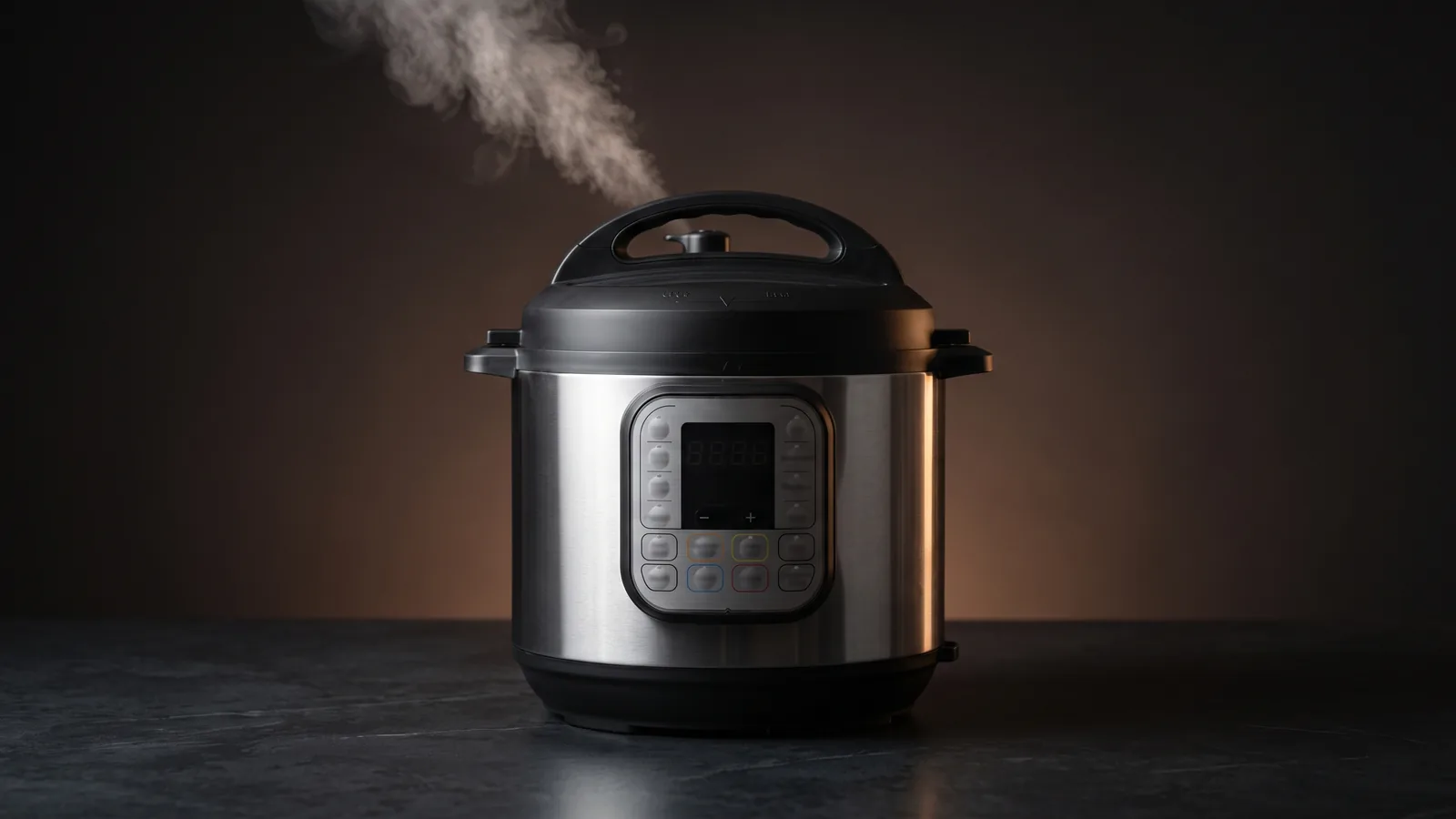
Here’s what surprises people: most Instant Pot models already come with a bare stainless-steel inner pot — no coating to worry about. If your priority is simply “no nonstick coating,” the standard stainless-pot Instant Pot is about as non-toxic as this category gets, and it’s the overall pick in our best electric pressure cookers guide. Just confirm the specific model has the plain stainless pot, since a few models ship with a nonstick one.
If you want nonstick without PTFE: ceramic
Bare stainless is inert but sticks. If you’d like easy release and to avoid a traditional PTFE coating, a ceramic-coated pot is the middle path — and this is the cooker built around it, the non-toxic pick in our roundup.
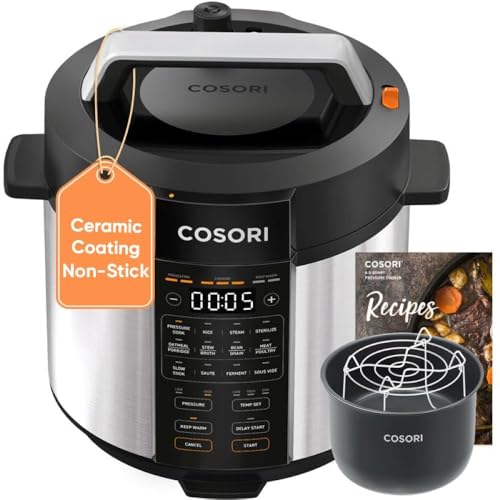
Cosori 6-Quart 9-in-1 Ceramic-Coated Pressure Cooker
For buyers who want a nonstick inner pot but would rather skip a traditional PTFE coating, this is the answer. Its ceramic-coated pot releases food easily and wipes clean, without the classic nonstick surface, and it carries one of the highest owner ratings in the category across nine cooking functions. It's a full multi-cooker at a mid-range price. If bare stainless feels like too much scrubbing but you still want to avoid PTFE, the ceramic Cosori is the non-toxic middle ground — easy release, no traditional nonstick.
Prime Day Amazon Prime Big Deal Days is on — a good time to check the live price.
Check current price on AmazonWhat buyers praise
- Ceramic-coated pot — nonstick release, no PTFE coating
- Very high owner rating; 9-in-1 functions
- Easy cleanup at a mid-range price
What buyers flag
- Ceramic coating needs gentle care to last
- Not bare stainless — it is a coating, just not PTFE
What about BPA and lead?
Two worries that attach to other appliances mostly don’t apply here:
- Lead is a glazed-ceramic question — it comes up with slow-cooker crocks, not with a stainless or coated metal pressure-cooker pot. (For that topic, see non-toxic slow cookers.)
- BPA is a plastic question — the food-contact inner pot is metal, not the kind of plastic where BPA is the concern, and reputable brands use food-grade parts elsewhere.
So for a pressure cooker, the meaningful material decision is simply stainless vs ceramic vs traditional nonstick for the inner pot — not BPA or lead.
The bottom line
Non-toxic here is a straightforward, low-drama choice: bare stainless for zero coating and maximum durability, ceramic for nonstick release without PTFE, and traditional nonstick if you don’t mind it. The reassuring part is that the category default — a stainless-pot Instant Pot — is already a coating-free option. Decide your inner-pot preference, then pick on size and features: how to choose an electric pressure cooker.