How to Clean a Stand Mixer (Bowl, Beaters, and the Head)
Noolaguide Editorial·Last updated
Disclosure: As an Amazon Associate, Noolaguide earns from qualifying purchases — we may earn a commission when you buy through links on this page, at no extra cost to you. Our recommendations are editorially independent. How we make money.
Cleaning a stand mixer is quick: wash the bowl and attachments after each use, wipe the body and the underside of the head where batter splatters, and never submerge the motor. Check whether your attachments are dishwasher-safe — some coated beaters should be hand-washed. A wipe-down after every use and an occasional look under the head keeps it clean and running for decades.
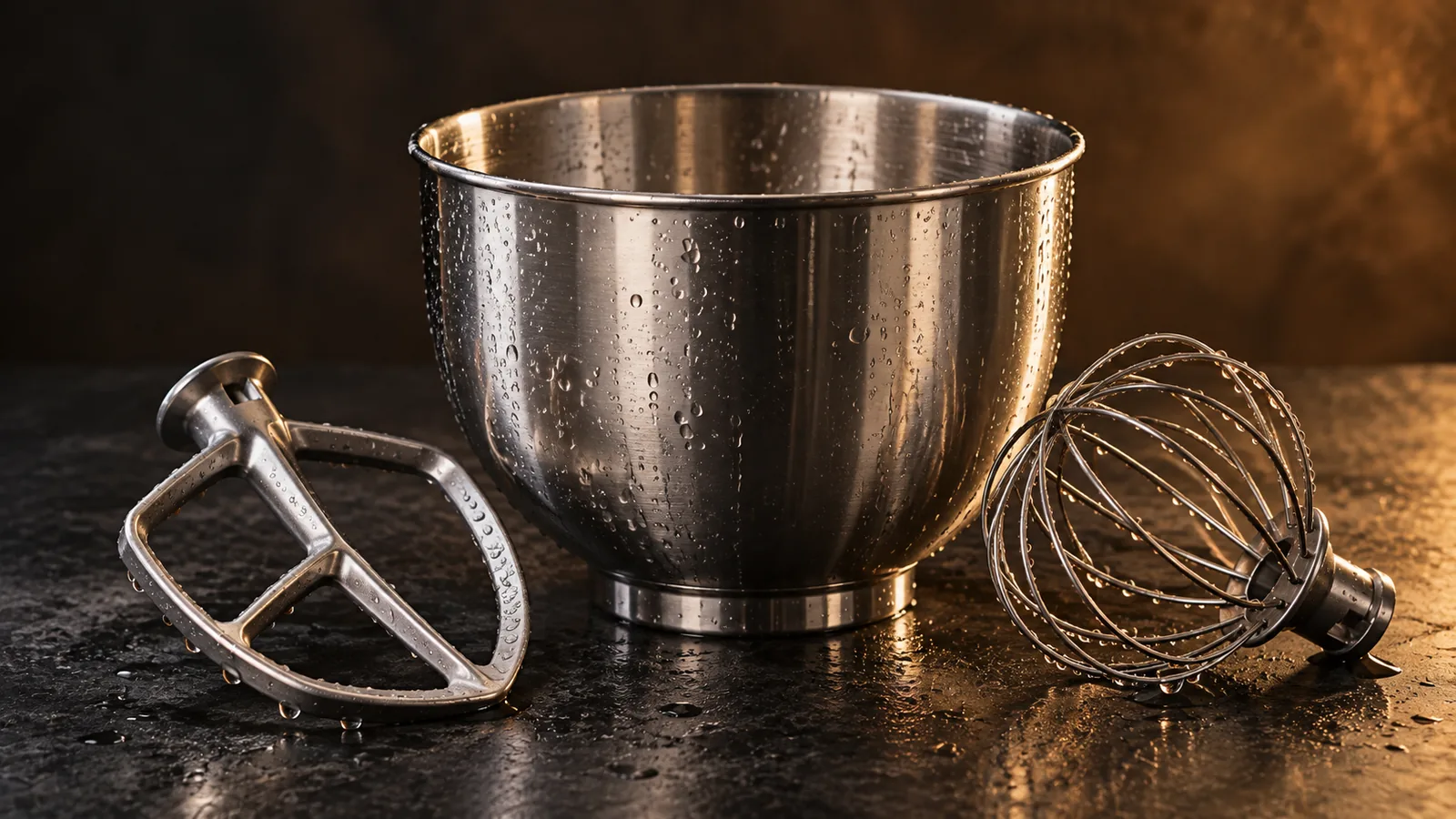
Bowl and attachments: remove and wash them. Stainless bowls and wire whips are usually dishwasher-safe; hand-wash coated flat beaters and dough hooks unless your manual says otherwise, to protect the finish.
The body: wipe the mixer with a damp cloth. Never submerge the motor housing or put the base in water.
Dry everything before storing.
Clean under the head — the missed spot
Batter and flour collect around the beater shaft and the underside of the head — the most-overlooked cleaning spot. With the mixer off and unplugged, tilt the head back (or lower the bowl on a bowl-lift) and wipe the attachment point and underside with a damp cloth; a small brush or cotton swab helps around the shaft. Left alone, buildup here can flake into your next batch.
Dried-on dough and batter
For hardened dough or dried batter, soften it with a damp cloth and a few minutes rather than scraping with anything metal. On coated attachments especially, avoid abrasives that damage the finish. Patience beats scrubbing.
A note on grease
A faint trace of grease weeping from the beater shaft can appear after a long, hot job or if the mixer was stored on its side — usually just excess lubricant that wipes away. If grease shows up in your food or leaks persistently, that’s a service issue (the internal grease may need attention), not a cleaning one — contact the manufacturer, especially under warranty.
Extras that make it easier
A simple routine
When
Do this
After each use
Wash bowl + attachments; wipe body and under the head
Coated beaters
Hand-wash to protect the finish
Regularly
Brush around the beater shaft and head underside
Grease in the bowl
Not cleaning — contact the manufacturer
Keep the bowl, beaters, and head clean and a good stand mixer lasts decades — they’re often handed down. Match the attachment to the task, wipe it down after, and it stays ready for the next bake.
The stand mixer most home bakers should buy: a 5-quart tilt-head with the widest range of attachments. The owner sample in our analysis is small, and praise outweighs complaints about two to one, led by the mixing, its design and color range, and the attachments. Price is the most common complaint; a few owners report the mixer wobbling with heavy dough or the speed lever slipping. Treat the verdict as resting on a small sample of a very widely owned mixer.
Prime DayAmazon Prime Big Deal Days is on — a good time to check the live price.
After each use: remove the bowl and attachments and wash them, wipe down the mixer body with a damp cloth, and clean the underside of the head and the beater shaft where batter splatters and collects. Never submerge the motor housing or put the base in water. Dry everything before storing. For dried-on dough or batter, a damp cloth and a little time to soften it works better than scraping. A quick wipe after every use keeps a stand mixer clean for years.
It depends on the attachment and model. Stainless steel bowls and wire whips are usually dishwasher-safe, but many coated flat beaters and dough hooks (especially those with a non-stick or painted finish) should be hand-washed to protect the coating — check your manual. When in doubt, hand-wash the beaters and dishwasher the stainless bowl. Hand-washing coated attachments extends their life and prevents the coating from wearing or discoloring.
Batter and flour collect around the beater shaft and the underside of the head. With the mixer off and unplugged, tilt the head back (or lower the bowl on a bowl-lift), and wipe the beater attachment point and the underside of the head with a damp cloth. A small brush or cotton swab helps around the shaft. Do this regularly — buildup there is the most-missed cleaning spot and can flake into your next batch if ignored.
A little grease weeping from the beater shaft can happen when a mixer runs a long, hot job or has been stored on its side, and usually it's just excess lubricant that wipes away. If grease appears in your food or leaks persistently, the internal grease may have separated or needs replacing — a service issue rather than a cleaning one. For an occasional trace, wipe the shaft and head; for repeated leaking into the bowl, contact the manufacturer, especially if it's under warranty.