The one idea: planetary action
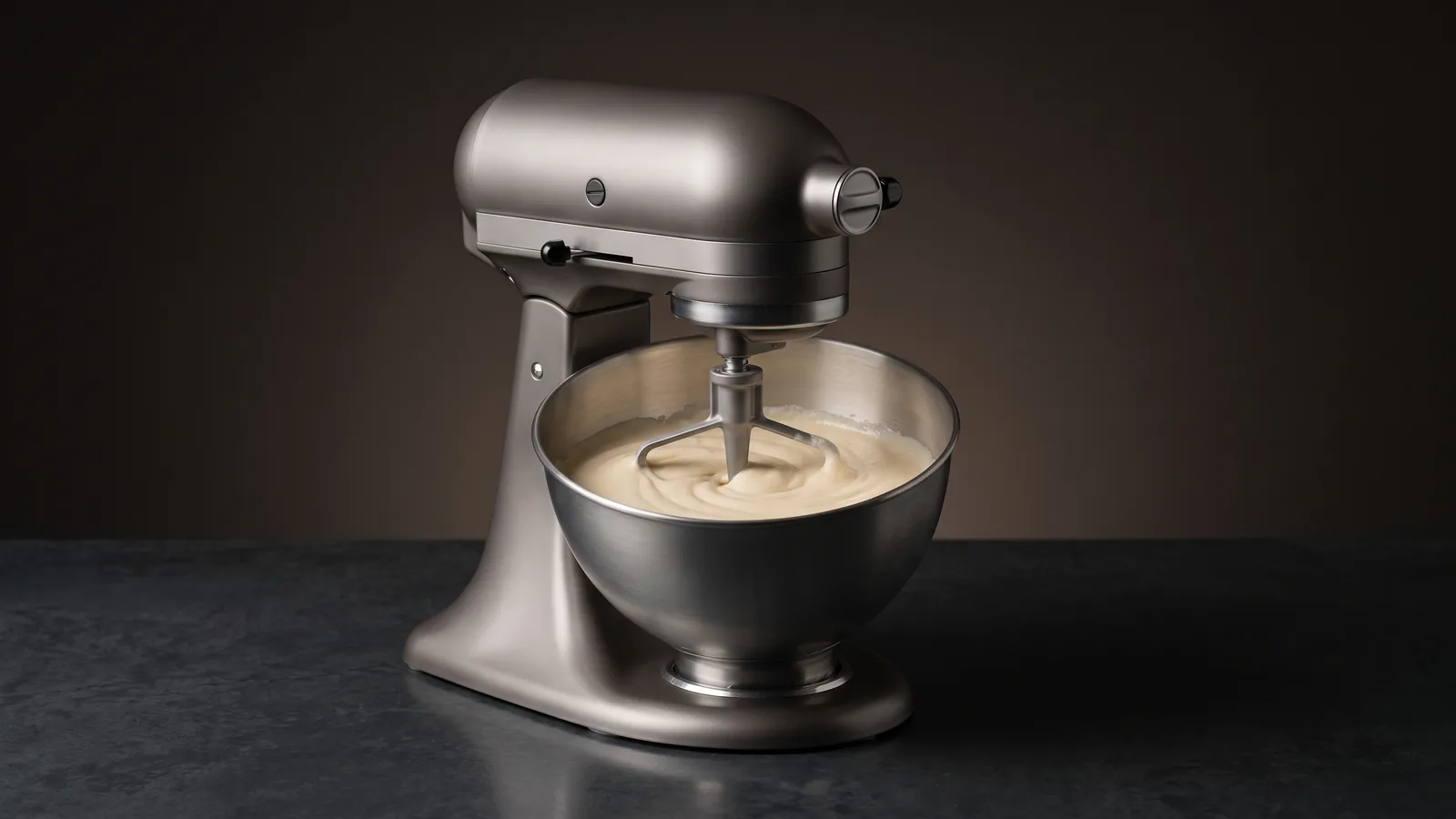
The defining trick of a stand mixer is how the beater moves. It doesn’t just spin in place, and you don’t move it around the bowl — it does both at once. The beater rotates on its own axis while simultaneously orbiting the center of a stationary bowl, tracing a path that sweeps the entire bowl, sides and middle. It’s called planetary because the motion is like a planet spinning as it circles the sun. That single mechanism is why a stand mixer mixes evenly, hands-free, with no scraping or repositioning.
What happens when you mix
- The motor drives the head, spinning the beater and moving it in its planetary orbit.
- The beater reaches the whole bowl — because its path covers every position, ingredients from the sides and center combine evenly.
- You do nothing — no holding, no guiding. That frees the mixer to run long, powerful jobs (kneading dough for ten minutes, whipping meringue) that would tire your arm with a hand mixer.
The motor: power for the hard jobs
A stand mixer’s motor is what separates it from a hand mixer. It provides the sustained torque to knead stiff bread dough and run long without overheating. More important than headline wattage is how steadily the mixer delivers power under load — a strong mixer keeps kneading heavy dough without bogging down or straining. This endurance is the reason serious bakers reach for a stand mixer.
Tilt-head vs. bowl-lift
Stand mixers come in two designs, differing in how you reach the bowl:
- Tilt-head: the top tilts back so you lift the bowl out and add ingredients. Compact, convenient, and right for most home baking.
- Bowl-lift: the head is fixed and a lever raises the bowl to the beater. Larger, sturdier, and better for frequent heavy dough or high volume.
Most home bakers are well served by a tilt-head; bowl-lift is the choice for serious bread baking or big batches. (Capacity differs too — see what size stand mixer do I need.)
The three core attachments
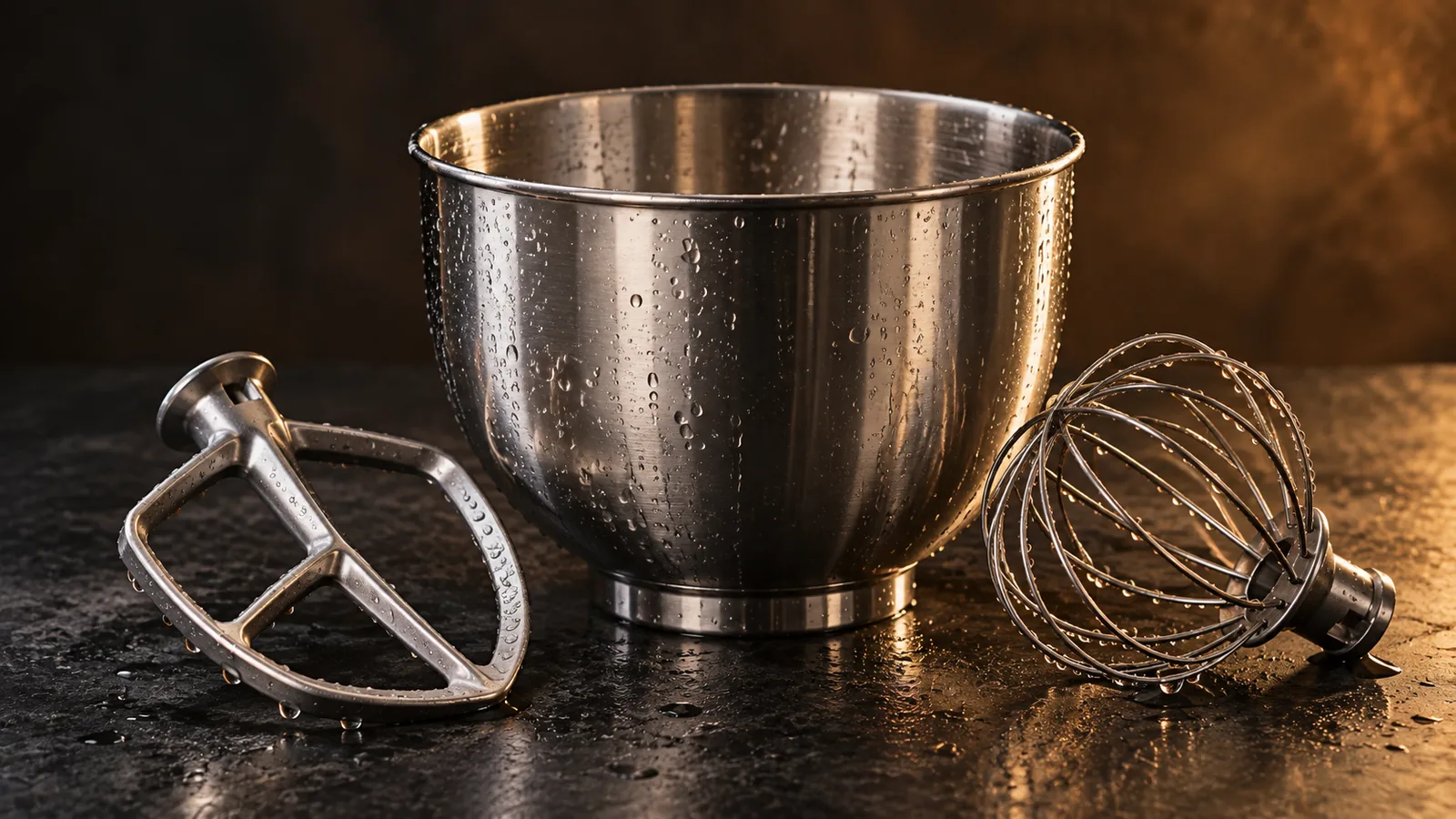
Every stand mixer includes three beaters, each for a different job:
- Flat beater — general mixing: cookie dough, cake batter, mashed potatoes.
- Dough hook — kneading bread and pizza dough hands-free.
- Wire whip — whipping cream and egg whites, or beating air into light batters.
Matching the attachment to the task is most of using a stand mixer well.
The attachment hub: a kitchen system
Many stand mixers have a front attachment hub — a power take-off point that the motor drives. It accepts optional accessories: pasta rollers, meat grinders, vegetable slicers, and more. This is a big part of the appeal: one motor becomes the base for a whole set of tools, which is why a stand mixer is often a long-term centerpiece rather than a single-purpose gadget.
Why not just a hand mixer?
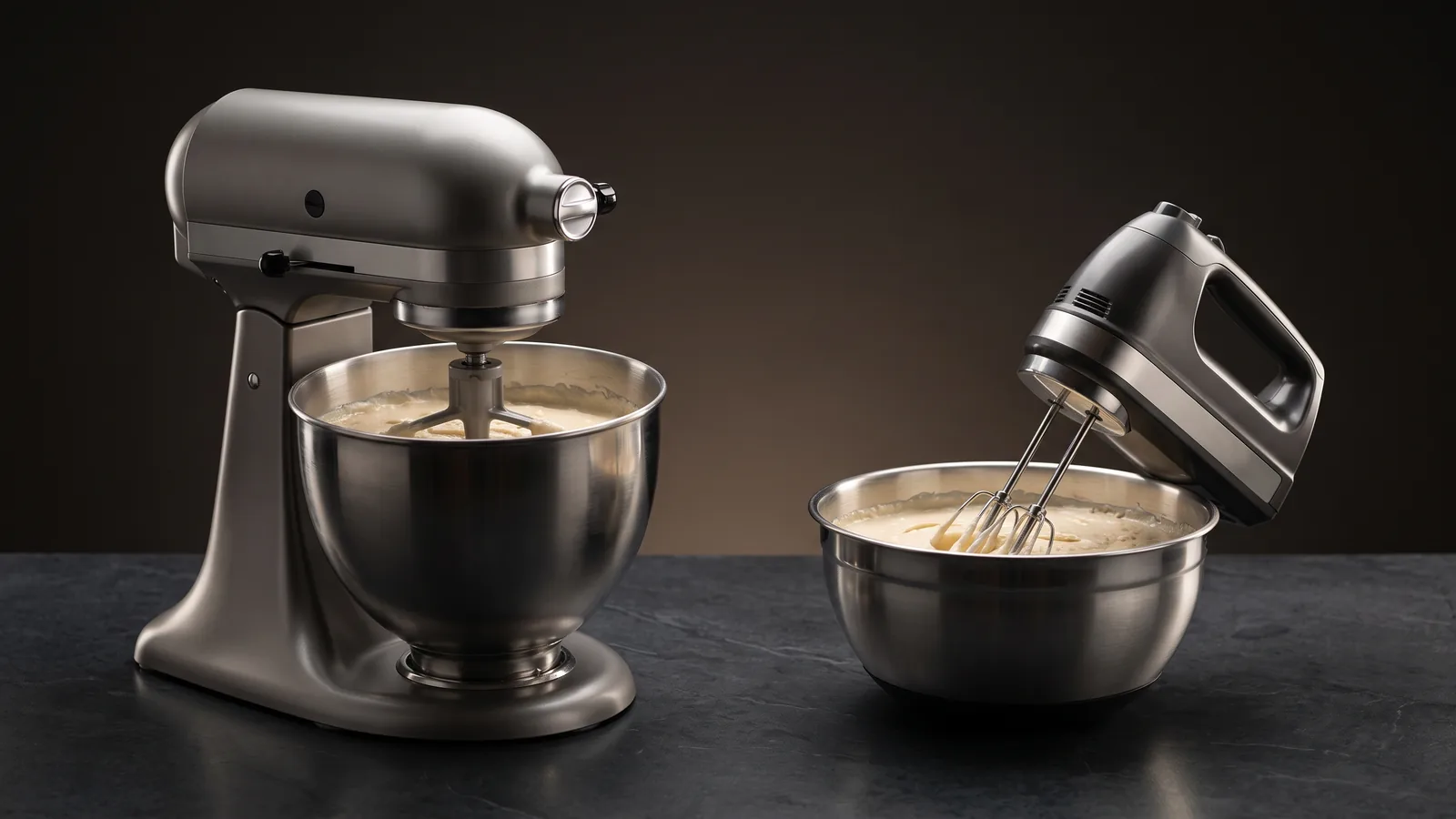
A hand mixer does light mixing and whipping cheaply and stores small. What a stand mixer adds is power and hands-free operation — kneading real bread dough, running long whipping jobs, and freeing you to add ingredients while it works. For heavy or frequent baking, that’s the difference. See the full comparison in stand mixer vs hand mixer.
Where to go next
- Stand mixer vs hand mixer — which you actually need
- What size stand mixer do I need — quarts by baking
- How to clean a stand mixer — keep it running
- The best stand mixers — our ranked picks.