Types of Milk Frothers: Handheld, Electric, and Steam Wand Compared
Noolaguide Editorial·Last updated
Disclosure: As an Amazon Associate, Noolaguide earns from qualifying purchases — we may earn a commission when you buy through links on this page, at no extra cost to you. Our recommendations are editorially independent. How we make money.
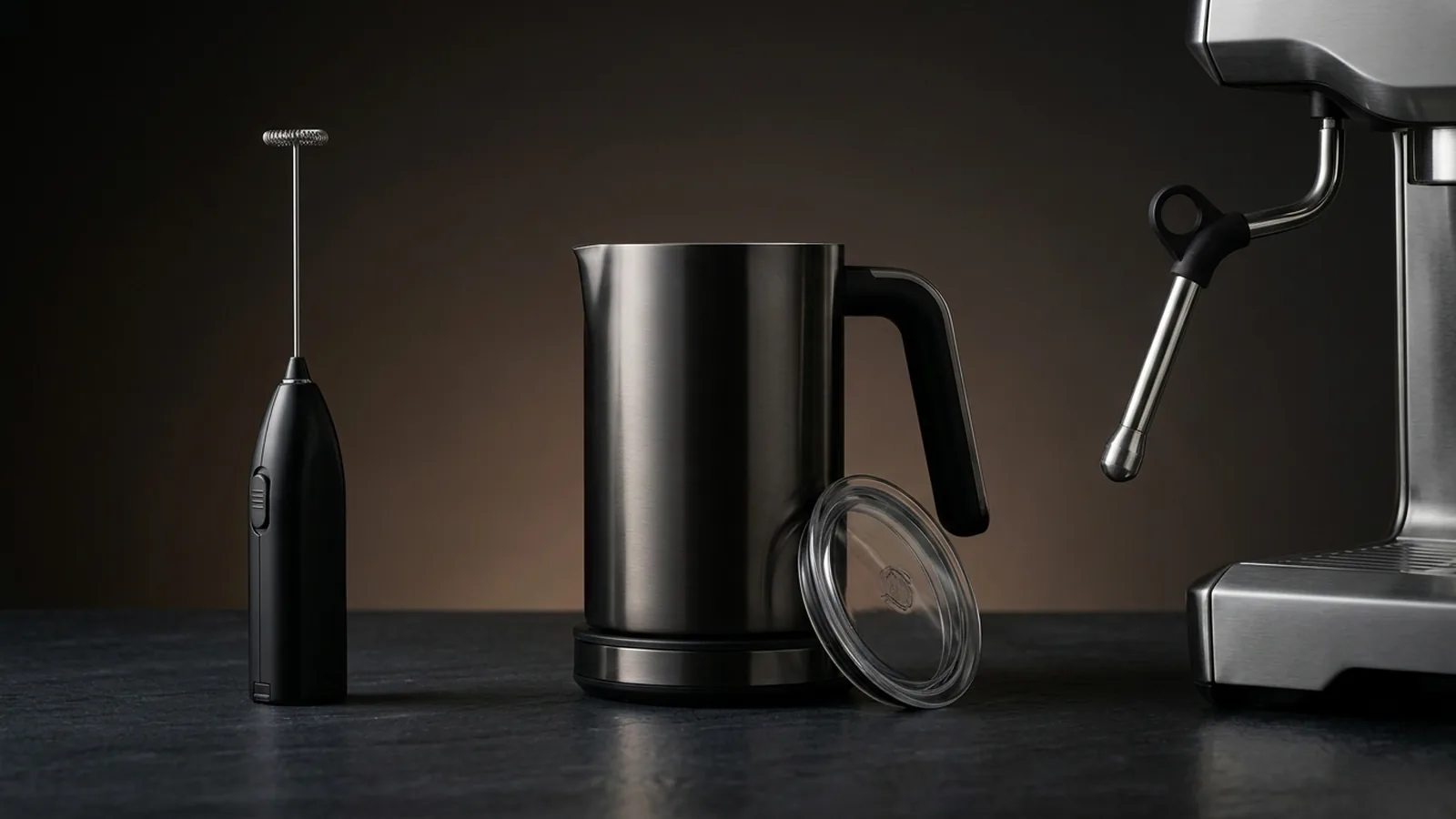
A milk frother is a small device that whips air into milk to make foam. There are three main types: cheap handheld wands that whisk milk you've heated separately, automatic electric frothers that heat and froth in one jug, and steam wands built into espresso machines that make the finest microfoam. Which is right depends on how much control you want and whether you also make espresso.
A milk frother is a small device whose only job is to aerate milk — to whip in enough air that the milk’s proteins trap the bubbles and hold a foam. That foam is what turns coffee into a latte or cappuccino, tops a hot chocolate, or becomes the cold foam on an iced coffee. The how to froth milk guide covers the technique; this page covers the tools.
The three types
Handheld (wand) frother
A battery-powered wand with a small whisk disk at the tip. You heat the milk yourself, then submerge the spinning whisk to foam it in 15–30 seconds.
Good: cheapest option, takes up almost no space, gives you direct control, easy to clean.
Trade-offs: you heat the milk in a separate step; foam is lighter and airier than a steam wand’s; battery-powered.
Best for: occasional drinks and small budgets.
Automatic electric frother
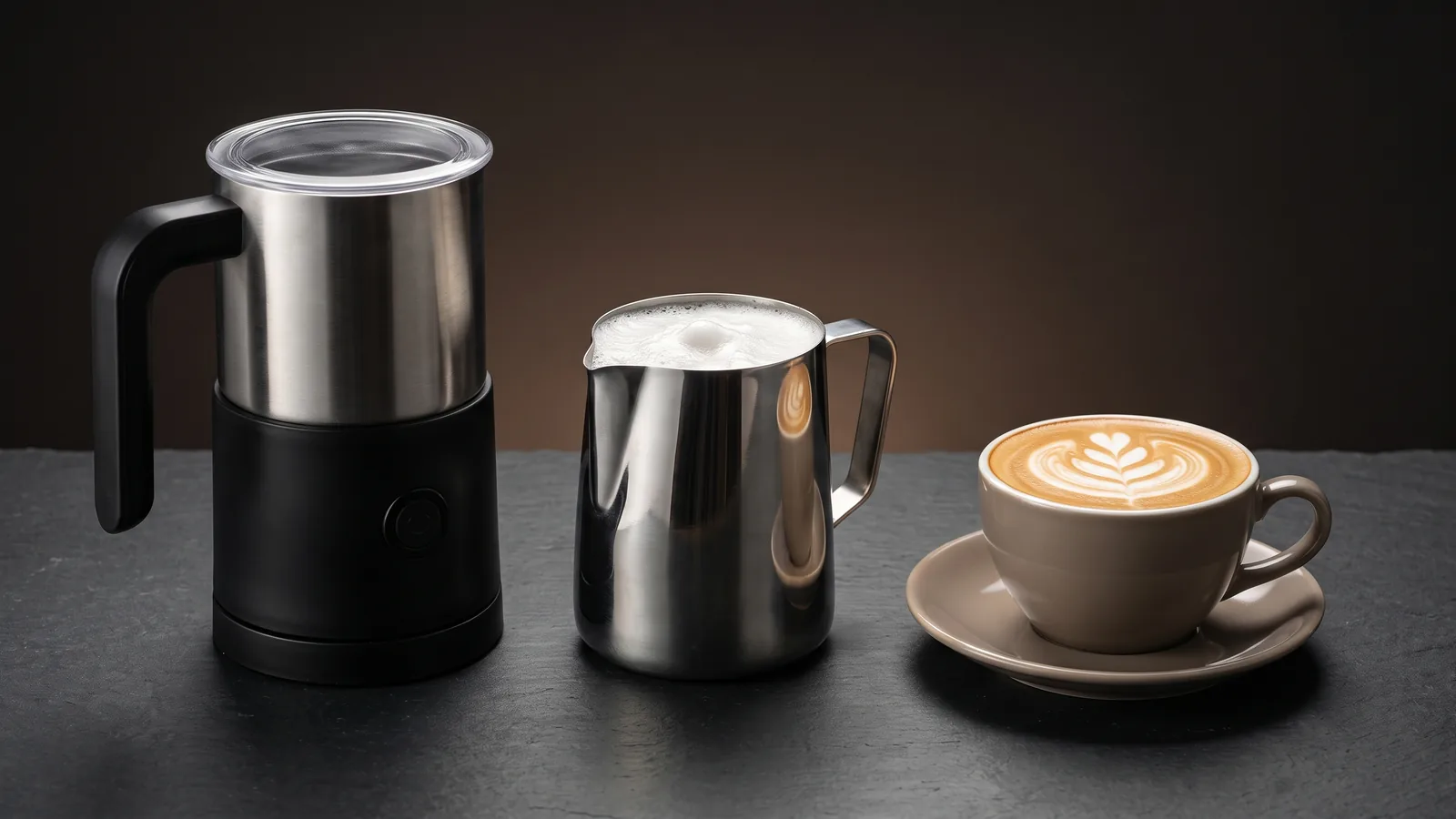
A small jug with a heating base and a magnetic whisk. Pour milk in, press a button, and it heats and froths together — most offer hot-foam, cold-foam, and warm-milk settings.
Good: completely hands-off, consistent results, no separate heating step.
Trade-offs: pricier, another countertop appliance, and the jug has a maximum fill line to respect.
Best for: people who make milk drinks most days and want zero effort.
Steam wand
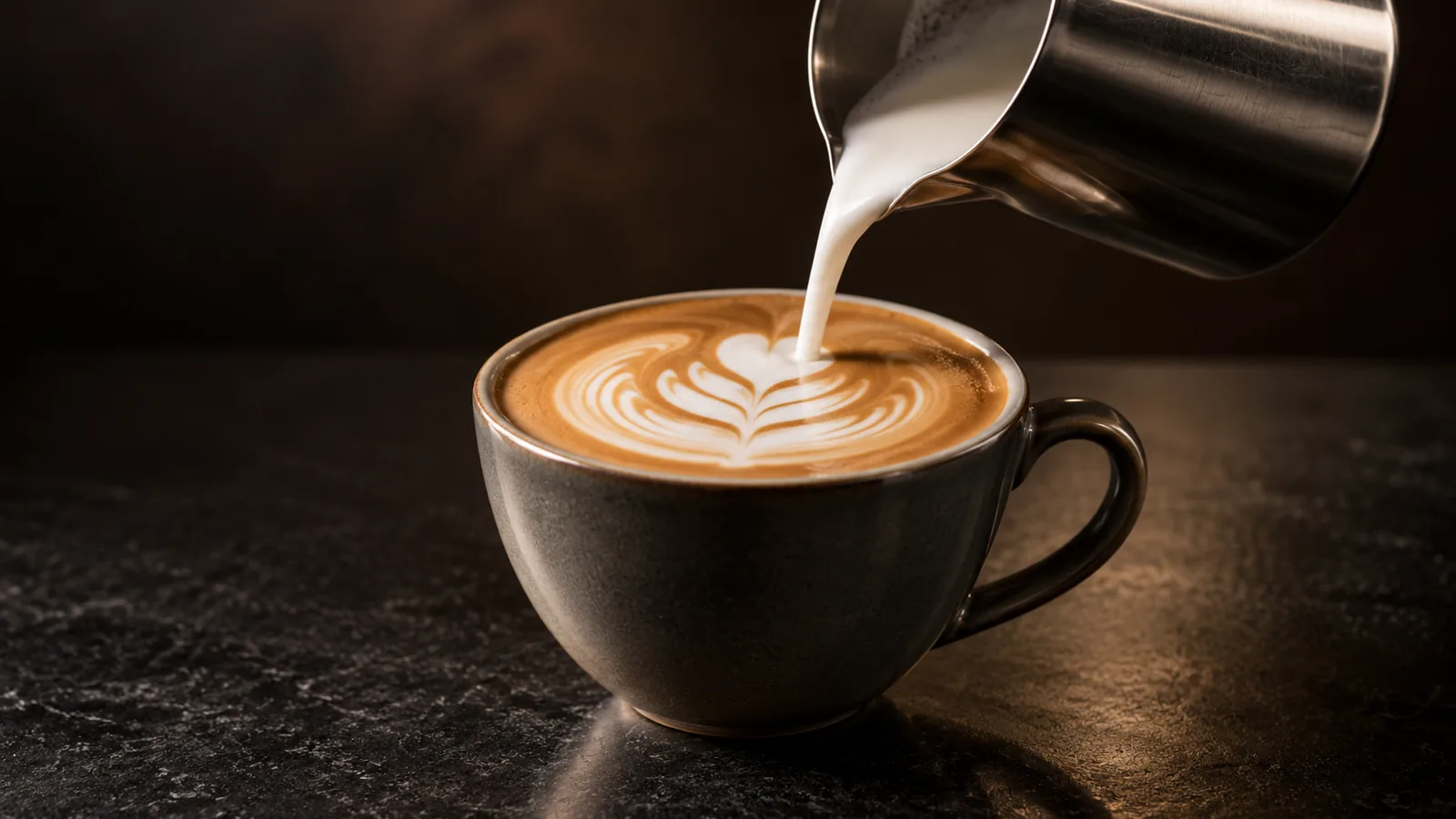
The pressurized steam arm on an espresso machine. It injects hot steam and air to produce dense microfoam — the fine, glossy texture used for latte art.
Good: the best foam quality and the only type that makes true microfoam; heats and textures at once.
Trade-offs: requires an espresso machine, has a real learning curve, and must be purged and wiped after every use.
Best for: espresso drinkers who want café-quality lattes.
How they compare
Type
Effort
Foam quality
Cost
Also need
Handheld wand
Heat milk yourself
Light, airy
Lowest
A way to heat milk
Automatic electric
Push a button
Good, consistent
Mid
Nothing
Steam wand
Skill required
Best (microfoam)
Built into machine
An espresso machine
Which one to buy
Want the easiest daily latte? An automatic electric frother.
Want the cheapest, least-clutter option? A handheld wand.
Already pull espresso and want latte art? Use the steam wand.
Only make milk drinks occasionally? You may not need a frother at all — a French press or a shaken jar will do, as covered in how to froth milk.
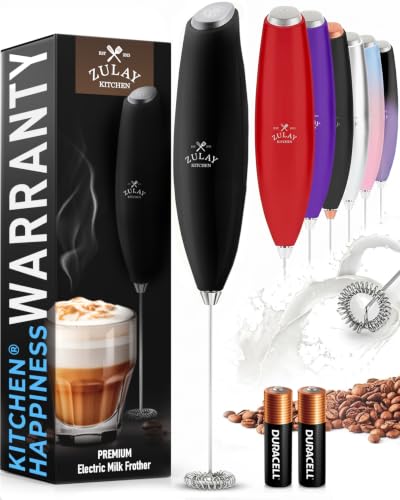
The most-owned milk frother we analyzed, by a wide margin, and the safe default. Praise outweighs complaints by roughly five to three. Owners praise the value first, then how easy it is to use, the overall quality and how quickly it froths. It is a handheld, so you heat the milk in a separate step. The complaints are the ones this whole category shares: durability is the most common, with some units that stop working, and short battery life is another.
Prime DayAmazon Prime Big Deal Days is on — a good time to check the live price.
By far the deepest owner record of any frother here
Value leads the praise
Easy to use and quick to froth, per owners
Praise ahead of complaints by roughly five to three
What buyers flag
Durability is the most common complaint
Batteries drain quickly, per some owners
Handheld: you heat the milk yourself first
At a glance
Power
13 KW
Weight
0.09 kg
In the box
User Manual
Owner evidence report
Zulay Original Milk Frother (Handheld)
What owners praise
Value for money7% category avg
19%
Ease of use13% category avg
16%
Quality9% category avg
16%
Efficiency4% category avg
11%
Advertised vs actual product3% category avg
10%
What to watch
Durability2% category avg
25%
Quality2% category avg
21%
Functionality2% category avg
18%
Battery life2% category avg
15%
Themes from our analysis of verified owner reviews. Each bar is that theme's share of what owners raise, with the category average beside it for context. Noolaguide does not claim hands-on lab testing; the authority here is the accumulated experience of the people who own it.
A milk frother is a small kitchen device that whips air into milk to create foam for lattes, cappuccinos, hot chocolate, and iced-coffee cold foam. Some only froth milk you've heated separately (handheld wands); others heat and froth in one step (automatic electric frothers); and steam wands on espresso machines froth with pressurized steam. All of them do the same core job — aerate milk until the proteins hold a foam — just with different amounts of automation and control.
It forces air into the milk fast enough that the milk's proteins wrap around the bubbles and hold them as foam. A handheld frother spins a small whisk disk; an automatic electric frother spins a magnetic whisk in a heated jug; a steam wand injects hot, pressurized steam that both heats and aerates. The finer and faster the agitation, the smaller the bubbles — which is why a steam wand produces the tight microfoam used for latte art, while a handheld wand makes a lighter, airier foam.
A handheld (wand) frother is a cheap battery-powered whisk — you heat the milk yourself, then dip the wand in to foam it. An automatic electric frother is a small jug that heats the milk and froths it at the push of a button, and usually offers hot-foam, cold-foam, and warm-milk settings. The handheld costs less, takes up no space, and gives you control; the electric is hands-off and more consistent but pricier and one more countertop appliance. Neither matches a steam wand for microfoam.
No — you can froth milk in a French press or a sealed jar with no dedicated tool (see how to froth milk). A frother is a convenience: if you make milk drinks most days, an automatic electric frother removes the effort, and a handheld wand is a cheap upgrade over shaking a jar. If you rarely make lattes, the no-gadget methods are enough.
It depends on your routine. For most people who want easy daily lattes, an automatic electric frother is the best balance of convenience and result. For the lowest cost and least clutter, a handheld wand is hard to beat. For café-quality microfoam and latte art — and if you already pull espresso shots — a steam wand on the espresso machine is the tool, at the cost of a learning curve. Match the type to how much control and automation you actually want.