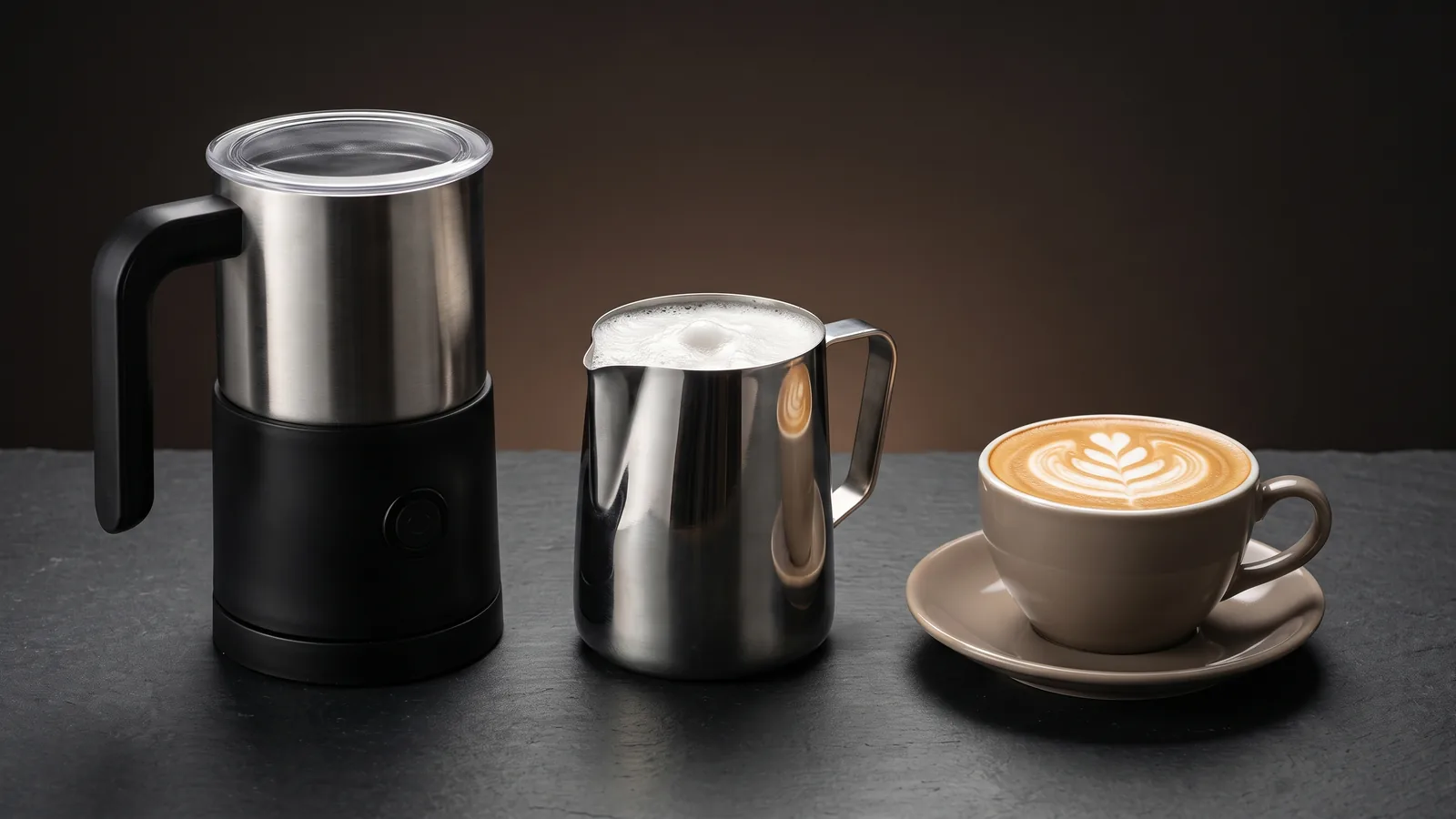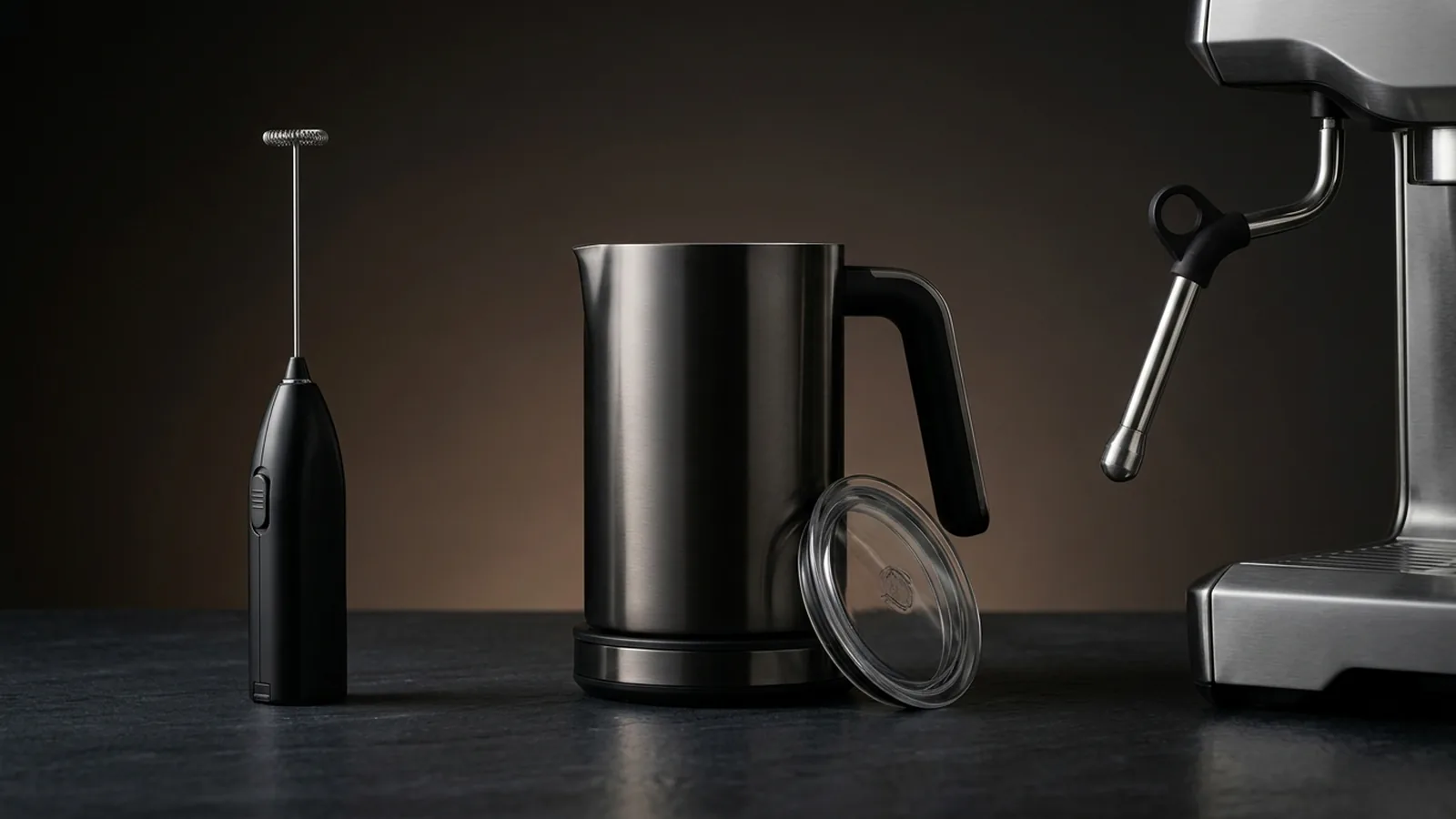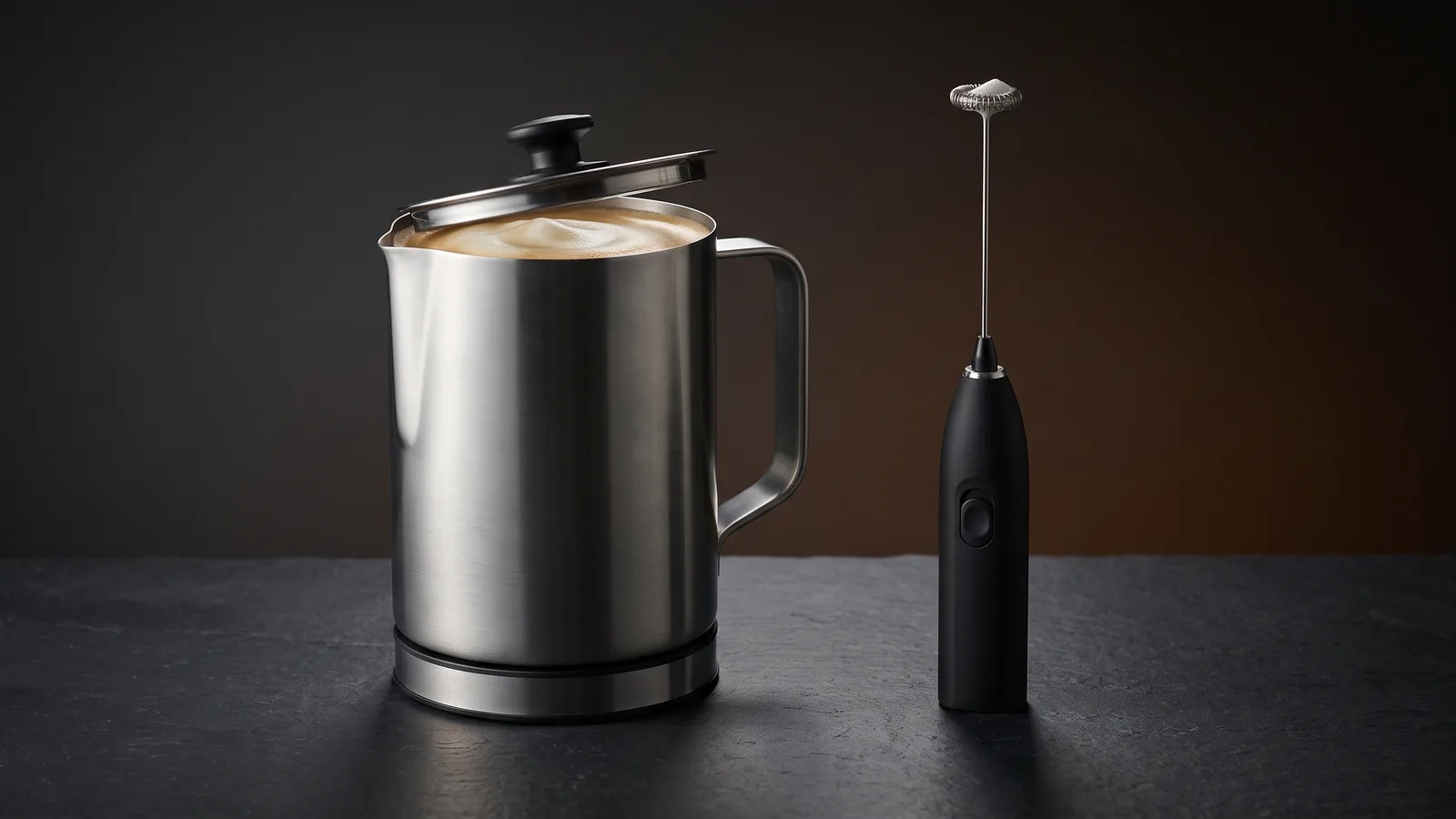
It is less about price, more about two different tools
Unlike most appliances, “budget vs premium” milk frothers are really two designs: the cheap handheld wand and the pricier electric frother. They are not the same tool at different quality levels — they work differently and suit different habits. Deciding between them matters more than chasing a price. See the types of milk frother for the full landscape.
What you actually pay more for
1. Built-in heating (one step vs. two)
The handheld wand only adds air — you heat the milk yourself first (stove or microwave). An electric frother heats and froths in one step, at the press of a button. That single difference is most of the price jump, and most of the convenience.
2. Foam density and consistency
A wand’s foam quality depends on your technique and tends toward looser, bigger bubbles. An electric frother’s spinning disc and enclosed jug produce denser, finer microfoam more repeatably — closer to cafe foam, the same every morning. For latte art or a proper cappuccino cap, the electric frother wins.
3. Hot and cold froth
Most wands make one kind of foam. Better electric frothers offer multiple settings — dense hot foam for cappuccino, thin hot foam for lattes, and cold foam for iced drinks — which a wand cannot heat or reliably reproduce. If you make iced coffee with cold foam, that setting alone can justify the step up. See how to froth milk for what each foam is good for.
4. Build and cleaning
More money buys a nonstick jug, dishwasher-safe parts, and sturdier motors. A wand is trivially cheap and stores in a drawer but is more manual; the electric frother takes counter space but is easier to use repeatedly.
Handheld wand vs electric frother, side by side
| Handheld wand (~$8–$20) | Electric frother (~$40–$100) | |
|---|---|---|
| Heats milk | No (you heat it) | Yes, one step |
| Foam | Looser, technique-dependent | Dense, consistent microfoam |
| Hot & cold froth | Hot only, really | Both, with settings |
| Size / storage | Tiny, drawer | Countertop jug |
| Best for | Occasional lattes, matcha | Daily milk drinks, cold foam |
When a budget (handheld) frother is the smart buy
When you make milk drinks occasionally, already have a way to heat milk, and want something cheap and tiny to store. A handheld wand is ideal for the odd latte, matcha, or hot chocolate — and it costs almost nothing.
When it is worth paying up
- You make milk drinks daily → one-step heat-and-froth convenience.
- You want dense, cafe-style foam every time → an electric frother’s consistency.
- You make iced drinks with cold foam → a dedicated cold-froth setting.
Start with the best milk frothers.
The verdict
This choice is about format, not just budget: a handheld wand and an electric frother are different tools. If frothing is occasional and you already heat your milk, the wand is all you need. If milk drinks are a daily ritual — especially cappuccinos or cold foam — the electric frother’s one-step heating and consistent microfoam are what the extra money buys, and they show up in every cup.