What the plastic in a juicer actually touches
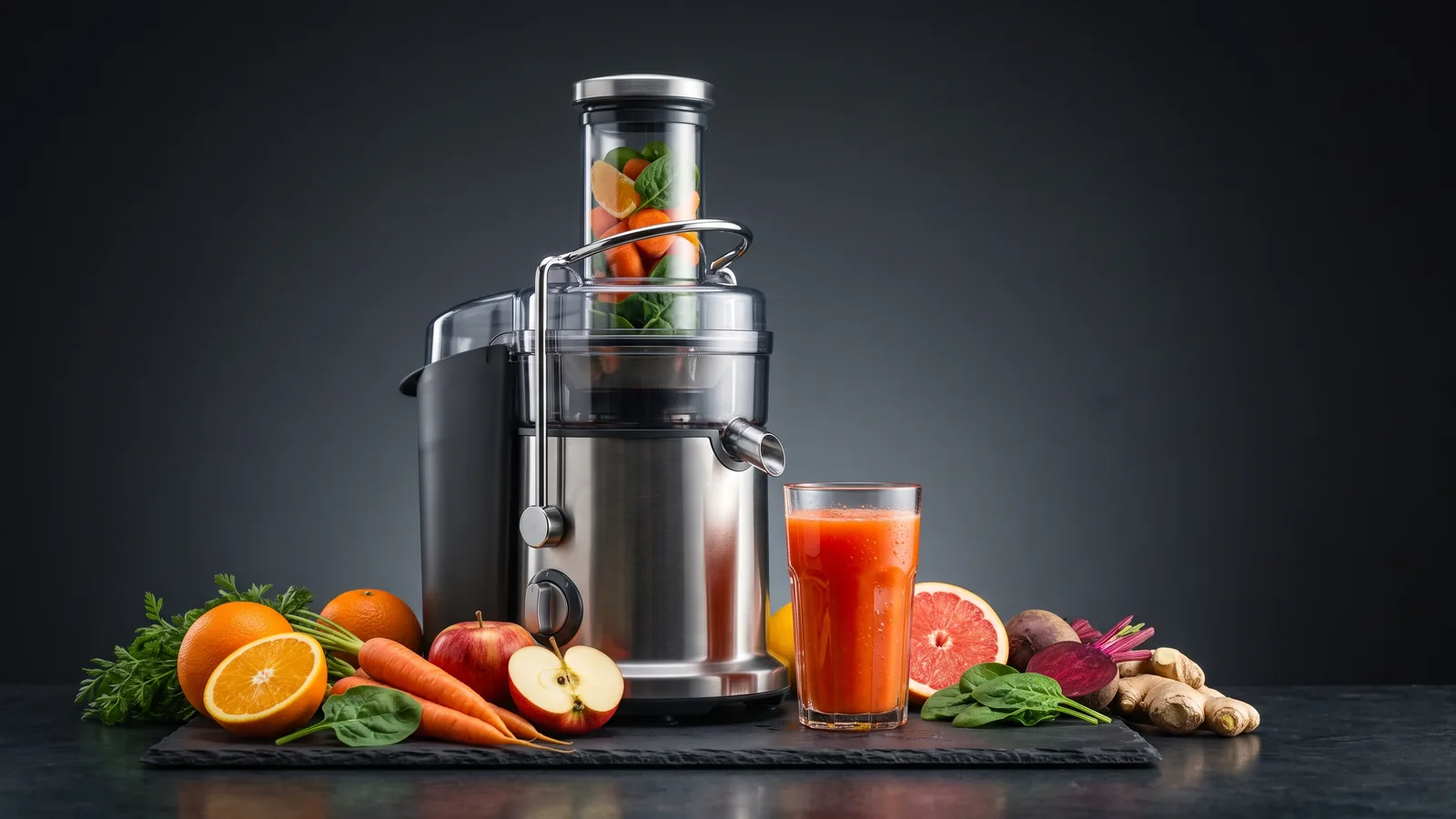
In most juicers, the parts that contact juice are the auger or blade, the juicing screen or mesh basket, the juice spout, and the collection jug or pulp bin. On the majority of machines several of these are molded plastic — it’s light, cheap, and easy to shape into the fine screens juicing needs.
The question behind “non-toxic juicer” is whether that plastic is safe. For a current machine from a reputable brand, the plastic is generally food-grade and BPA-free, which has become the standard for kitchen appliances. So the starting point isn’t alarm — it’s that a good modern juicer is designed to be safe to use as sold.
What “BPA-free” does and doesn’t mean
BPA-free means the plastic doesn’t contain bisphenol-A, a specific compound many buyers want to avoid. It’s a meaningful and now-common assurance. What it doesn’t mean is that a part contains no plastic — a BPA-free auger is still plastic. Some people are comfortable with food-grade BPA-free plastic; others prefer to minimize all plastic contact on principle. Both positions are reasonable, and they lead to different machines.
If you want to minimize plastic: the real options
You generally can’t get an electric juicer to zero plastic, but you can move a long way down the scale:
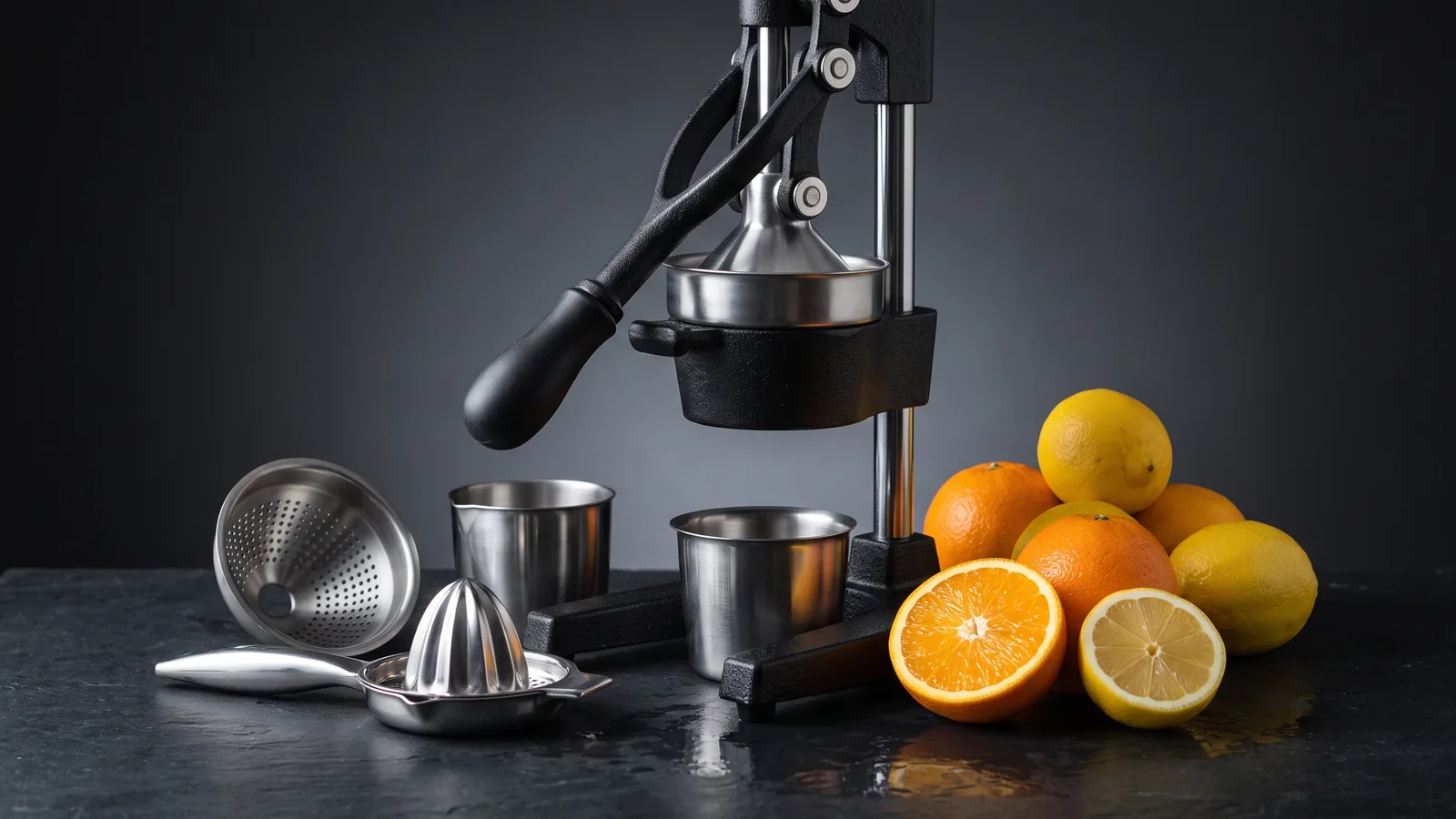
- Cast-iron or stainless-steel citrus press (fully plastic-free). For oranges, lemons, and limes, a manual lever press has no plastic in the juice path at all, nothing to wear out, and lasts effectively forever. It’s the clearest plastic-free answer — for citrus.
- Cold-press with a stainless auger and screen (reduced-plastic). A number of masticating juicers use a stainless-steel auger and juicing screen rather than plastic ones, so the parts doing the crushing and straining are steel. The housing and pulp bin may still be plastic, but the main juice-contact parts are stainless.
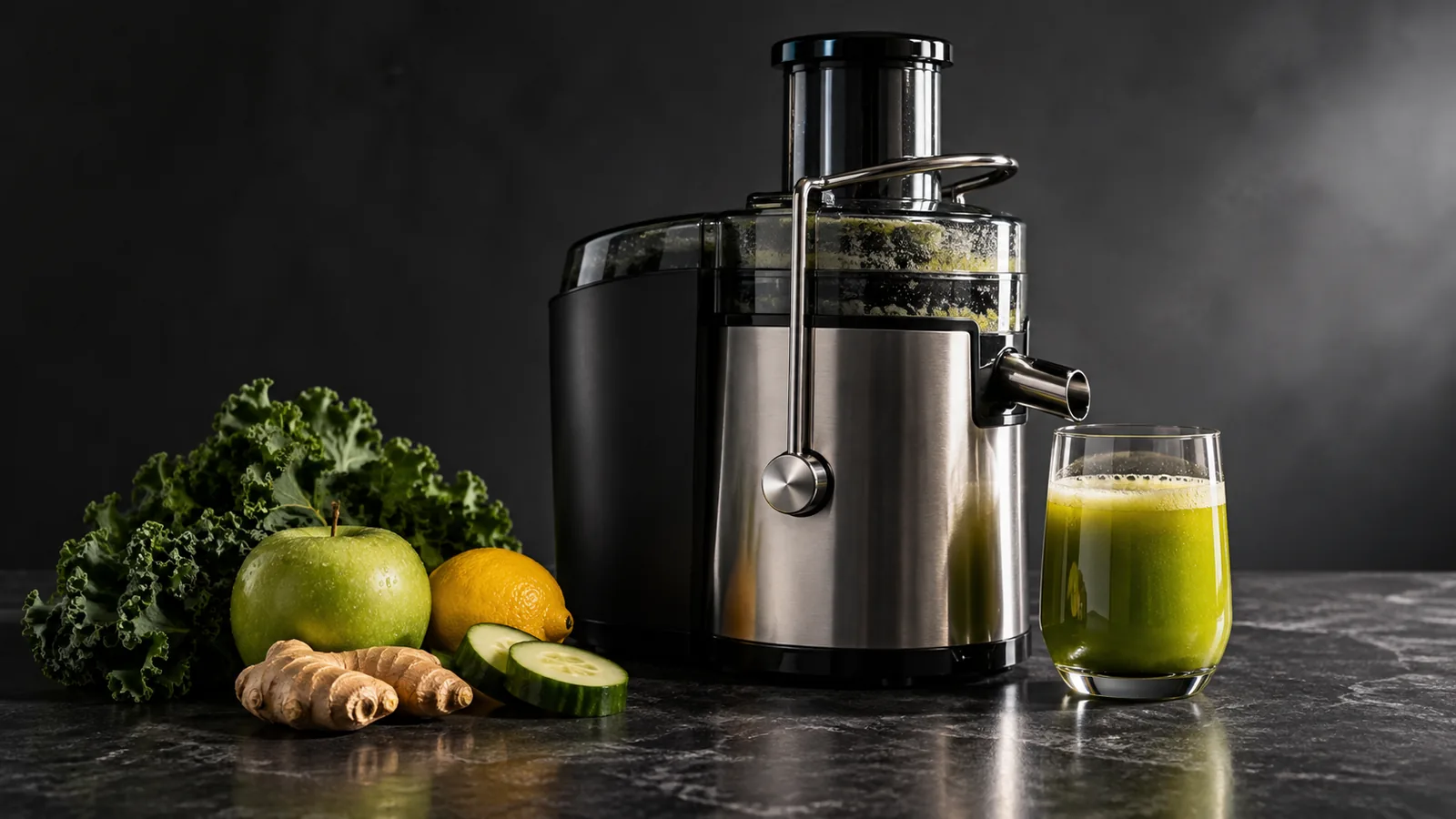
- Stainless mesh on a centrifugal machine. Many centrifugal juicers already use a stainless-steel mesh basket, which is the part flinging out the juice.
The plastic-free pick: a cast-iron citrus press
If citrus is what you juice and avoiding plastic is the point, this is the most direct answer — cast iron, no plastic in the juice path, and a well-rated tool that outlives most electric machines. It’s also the “best for citrus” pick in our best juicers guide.
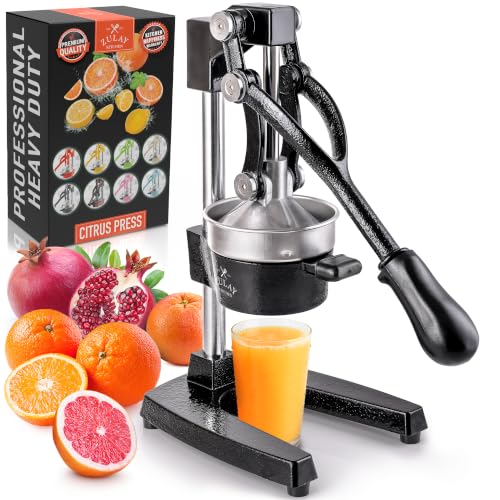
Zulay Kitchen Cast Iron Citrus Press
The simplest way to juice citrus with no plastic contact. Heavy cast-iron construction means the juice touches only metal, there's nothing to burn out or replace, and a large, well-rated owner base backs up how long these last. It only does citrus — oranges, lemons, limes — and takes some arm strength, but for plastic-free juice of the fruit most people juice most, it's hard to beat on materials, durability, or price.
Prime Day Amazon Prime Big Deal Days is on — a good time to check the live price.
Check current price on AmazonWhat buyers praise
- Cast iron — no plastic in the juice path
- Nothing to wear out; well-rated and long-lived
- Inexpensive next to electric machines
What buyers flag
- Citrus only — not for greens, apples, or carrots
- Manual: takes some arm strength
How to check a specific machine
Materials claims vary part by part, so the reliable move is to read the listed materials for the parts that touch juice — the auger or blade, and the screen. Look for the words stainless steel on those parts, and BPA-free on the plastic ones. A machine described as a “stainless steel juicer” often means the extraction parts are stainless while the housing stays plastic, which is usually exactly the trade-off you want if reducing plastic contact — not eliminating every gram of plastic — is the goal.
The honest bottom line
A reputable, BPA-free juicer is designed to be safe, so this isn’t about escaping a hazard. It’s about preference: if minimizing plastic contact matters to you, a cast-iron or stainless citrus press is the fully plastic-free route, and a cold-press machine with a stainless auger and screen is the best-reduced-plastic route for juicing a wider range of produce. Match the machine to the produce you actually juice, and check the materials on the parts your juice touches.