The one difference that matters: fiber
Everything comes down to what happens to the fiber:
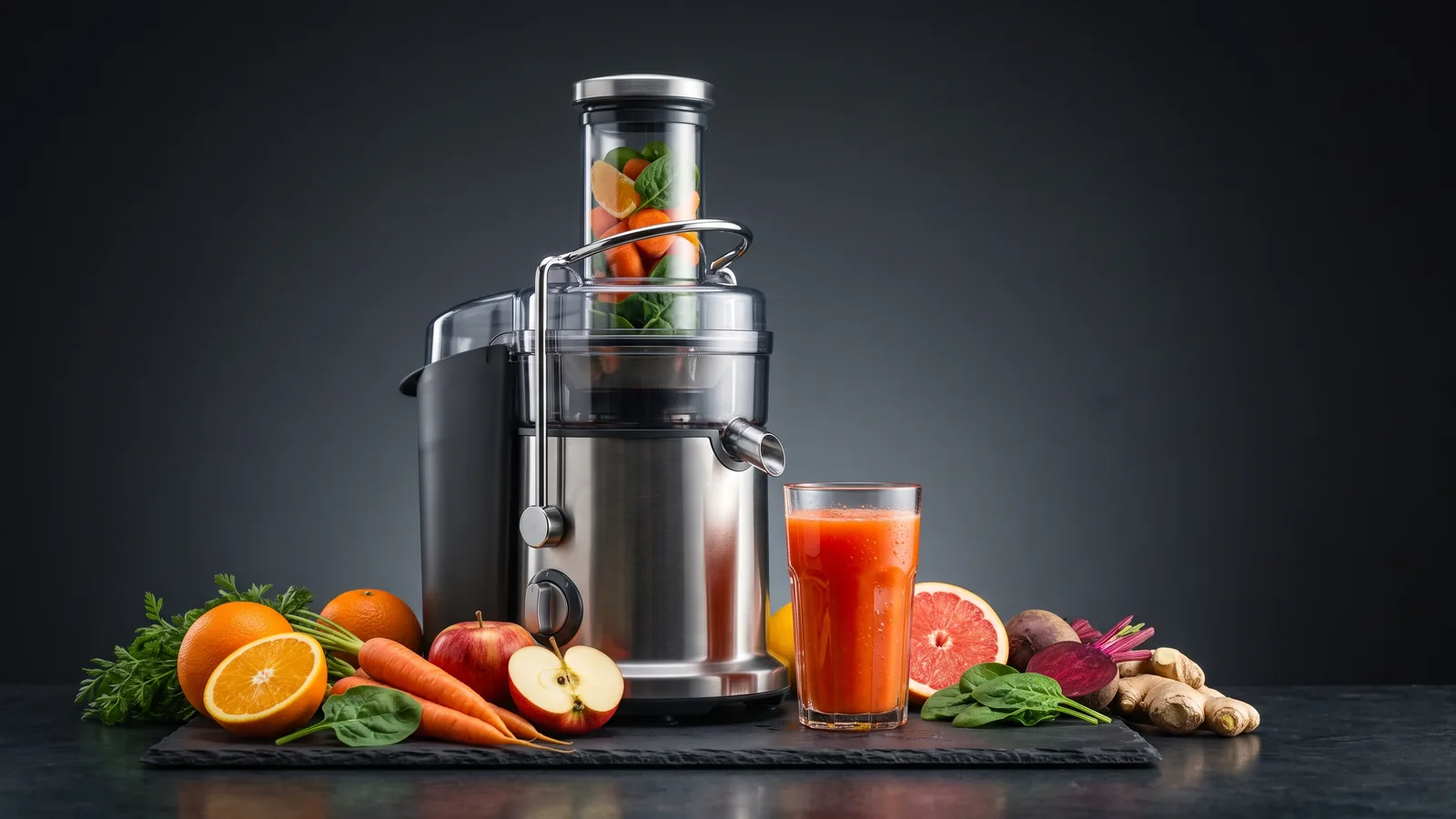
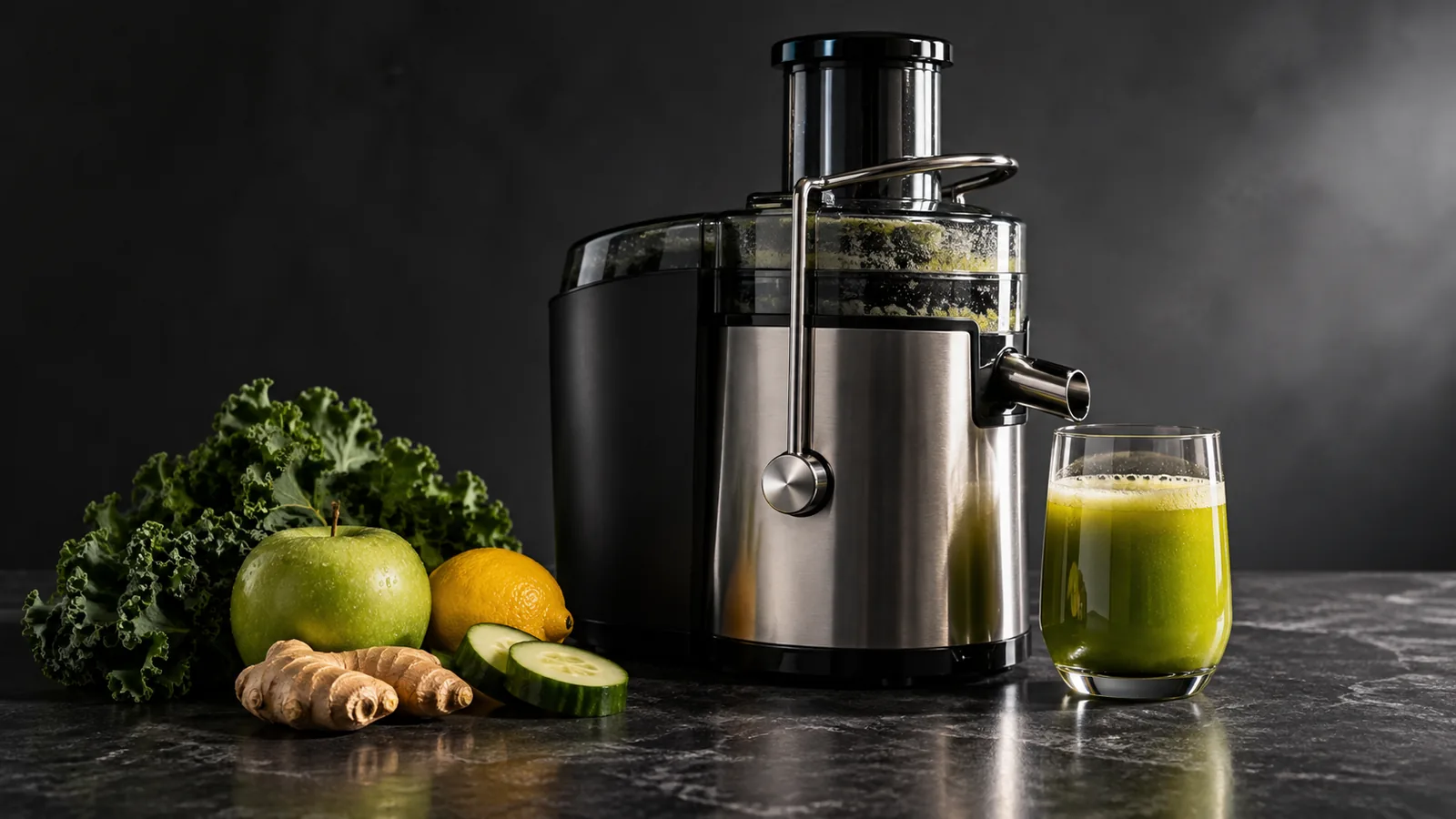
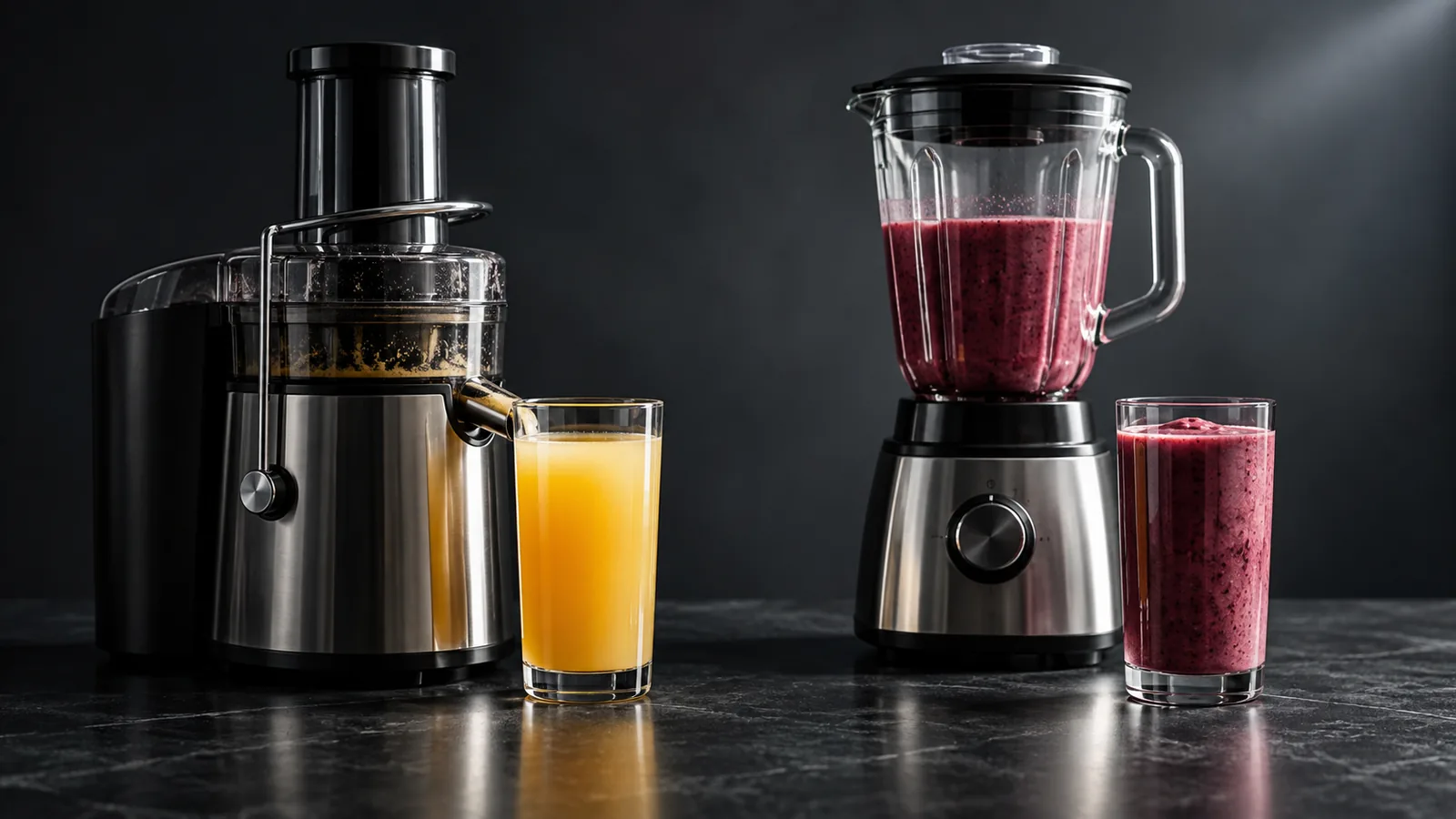
- A juicer presses or spins produce and throws the pulp away, leaving a thin, concentrated juice.
- A blender pulverizes the whole thing and keeps it all, making a thick smoothie.
That’s it. Whether the fiber stays or goes determines how each drink behaves — how filling it is, how fast the sugars hit, how much produce you can get down, and what else the machine can do.
What juicing is good for
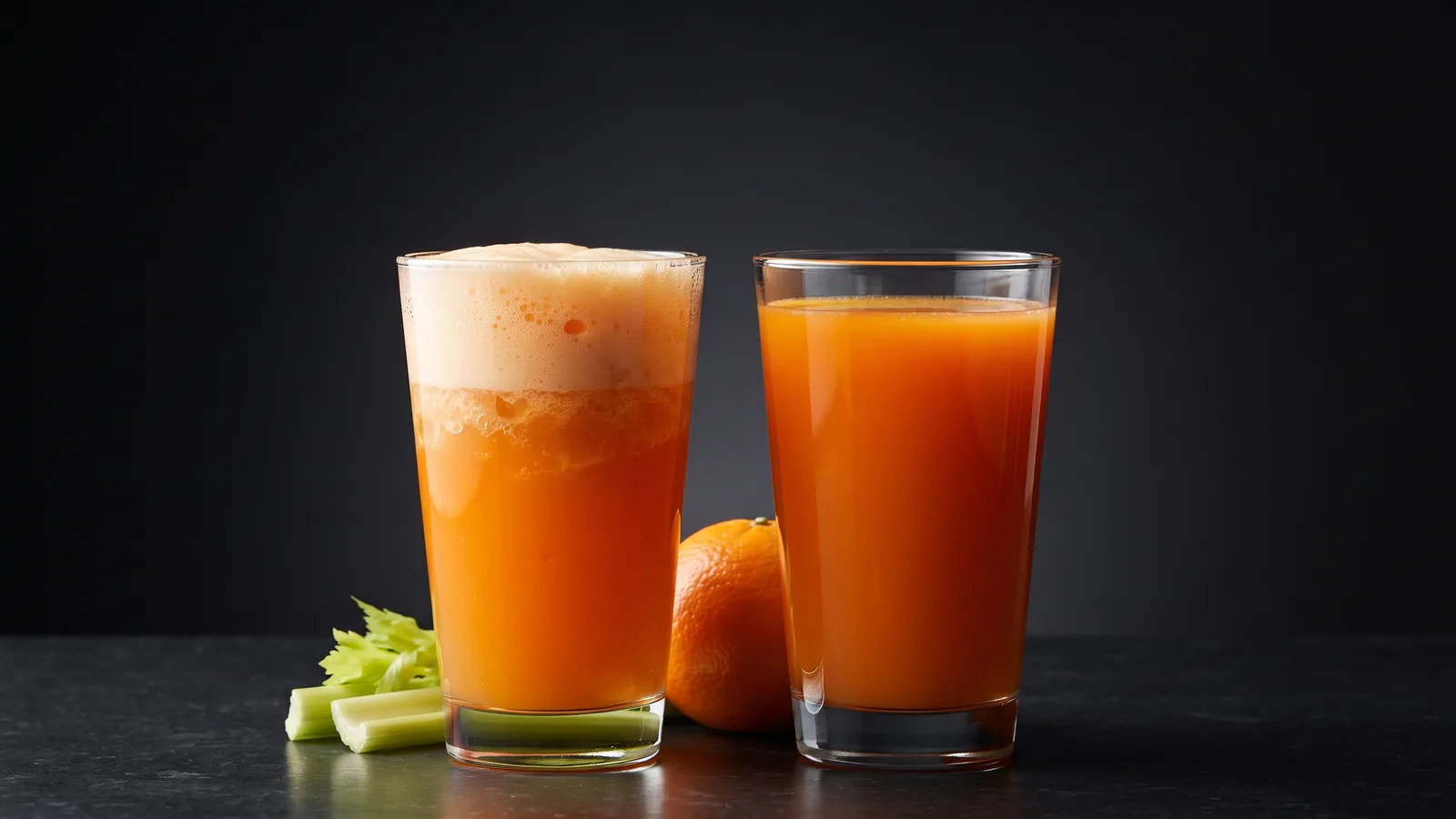
Juice is a concentrated, easy-to-drink hit of liquid nutrients. Because the fiber is gone, it’s thin, quick to digest, and easy to drink in volume — appealing if you want to get a lot of produce down quickly or find smoothies too heavy. The trade-offs: you discard the fiber, you use more produce per glass, and juice is best drunk fresh. Cold-press machines make smoother, less foamy juice than centrifugal ones — see centrifugal vs cold-press.
What blending is good for
A smoothie keeps the whole food, fiber included, so it’s thicker, more filling, and slower to absorb — which makes it work as a meal or snack, not just a drink. A blender is also far more versatile: soups, sauces, dips, nut milks, frozen drinks, and more. The trade-off is texture — it’s a thick smoothie, not a light juice — and heavy blending adds some foam and heat.
If you’ve decided you want juice
If the concentrated, high-yield juice is what you’re after — not a smoothie — a dedicated juicer does it far better than a blender-and-strain workaround. This is our overall pick, the cold-press machine built to be easy to clean (the factor that decides whether a juicer keeps getting used):

Ninja NeverClog Cold Press Juicer
If you've landed on juice rather than smoothies, this is the sensible default: a cold-press machine that gives you high yield and low-foam juice while being engineered against the clogging and slow cleanup that make people abandon slow juicers, on a large, well-rated owner base. It costs more than a basic centrifugal juicer and feeds more slowly, but for good juice you'll keep making, it's the one to start with. Want a smoothie instead? That's a blender's job, not this machine's.
Prime Day Amazon Prime Big Deal Days is on — a good time to check the live price.
Check current price on AmazonWhat buyers praise
- Cold-press yield and low foam without the usual clogging
- Easier cleanup than most slow juicers — keeps the habit alive
- Large, well-rated owner base at a mainstream price
What buyers flag
- Costs more than a basic centrifugal juicer
- Makes juice, not smoothies — no fiber retained
Can you juice with a blender?
Yes, with a workaround: blend the produce, then strain out the pulp through a nut-milk bag or fine sieve. It gives you a juice-like liquid without buying a second appliance. It’s cheaper, but it’s messier, lower-yield, and the high-speed blending whips in heat and foam. For occasional juicing, blend-and-strain is perfectly reasonable. For regular juicing or the cleanest, highest-yield result, a dedicated juicer is worth it.
Which should you buy first?
If you can only own one and you’re unsure, buy the blender — it’s the more versatile machine, it keeps the fiber, and it doubles as a meal-maker. Buy the juicer when you specifically want pure juice, a lot of it, and don’t mind discarding pulp. Plenty of people who are serious about produce end up with both, using each for the thing it does best.
The bottom line
Don’t ask which is “better” — ask which drink you want. Fiber, fullness, and versatility point to a blender; concentrated, easy-to-drink volume points to a juicer. Decide that, and the choice is simple. If it’s juice, read how to choose a juicer next.