The two-minute routine (do it right away)
Speed comes entirely from timing — clean it before pulp dries:
- Turn off and unplug, then take the parts off the motor base.
- Dump the pulp bin immediately — it empties cleanly while dry.
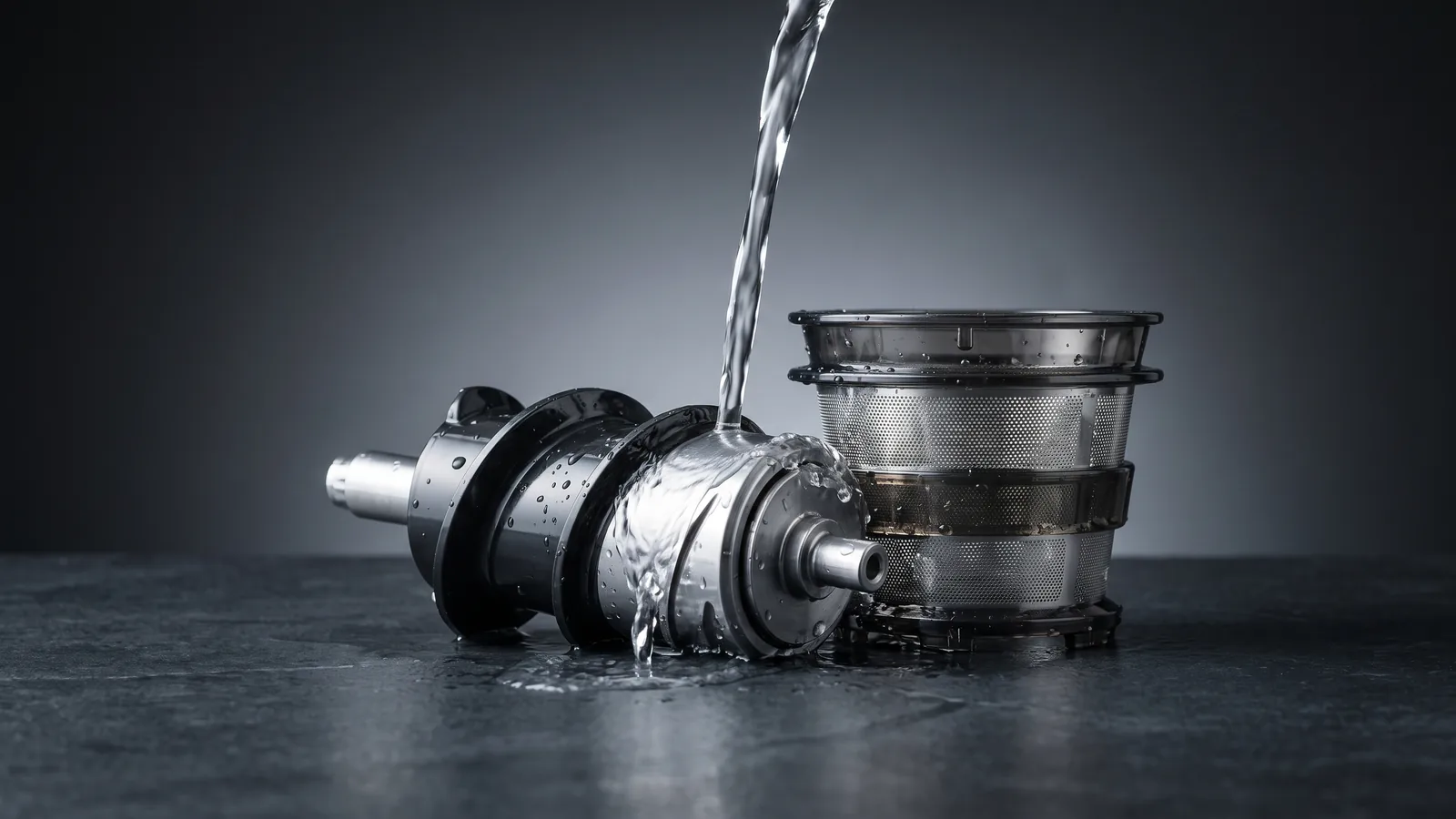
- Rinse every part under running water at once, before fibers dry on.
- Brush the mesh screen with the tool that came with the juicer — this is the one part that traps fibers.
- Wipe the motor base with a damp cloth (never submerge it).
Done straight away, that’s about two minutes. Done an hour later, once pulp has cemented into the screen, it’s a real chore — which is exactly how juicers end up abandoned.
The screen is the whole game
The mesh screen is what clogs, so it earns the brush. Work from the outside so you push fibers out of the holes rather than deeper in. For a screen that’s already dried or clogged, soak it 10–15 minutes in warm water (a little dish soap, or a water-and-vinegar mix for mineral buildup) to loosen the fibers, then brush again. Skip metal tools — they damage the fine mesh.
Why it keeps clogging
If clogging is constant, it’s usually one of three things — and each has a fix:
- Pulp drying between uses → clean the screen right after every session.
- Feeding too fast or too big → feed steadily, in smaller pieces.
- Very fibrous produce in the wrong machine → alternate soft and fibrous items; and know that some machines are simply built to resist clogging.
The easy-clean advantage
Because cleanup decides whether a juicer gets used, choosing an easy-clean, anti-clog machine up front matters more than almost any other spec. The cold-press machine engineered specifically against clogging and slow cleanup is the top pick in our best juicers guide.

Ninja NeverClog Cold Press Juicer
A cold-press juicer built around the exact problem this page is about: clogging and slow cleanup, the two things that make people quit slow juicers. You still get the higher yield and low foam of a masticating machine, but it's engineered to resist clogging and is easier to rinse down, and its large, well-rated owner base bears that out. It costs more than a basic centrifugal machine and feeds more slowly, but if easy cleanup is what keeps a juicer in use, this is the one to start with.
Prime Day Amazon Prime Big Deal Days is on — a good time to check the live price.
Check current price on AmazonWhat buyers praise
- Engineered against clogging — the usual cleanup pain point
- Cold-press yield and low foam without the mess
- Large, well-rated owner base at a mainstream price
What buyers flag
- Costs more than a basic centrifugal machine
- Slower to feed than a wide-chute centrifugal juicer
The bottom line
A juicer is only as good as your willingness to clean it — so make that easy: rinse and brush immediately, give the screen the attention, and, when buying, weight your choice toward an easy-clean, anti-clog model. Still choosing a machine? See how to choose a juicer. Deciding on a type? See centrifugal vs cold-press juicers.