What owners reward and penalize
Reading the Almond Cow through which qualities move owner satisfaction rather than its headline average produces an unusually clean picture: a cluster of strengths around value and usability, and a single, specific weakness.
What lifts it most: value and quality. Owners reward the Almond Cow for value-for-money and overall quality well above the category norm. That is the signal that matters most at its price — it means buyers who spent premium money came away feeling it was justified, with “worth the investment” a recurring note. Clear instructions and easy cleaning reinforce it: the machine lowers the two frustrations (confusing setup, dreaded cleanup) that turn milk makers into cupboard clutter.
What lowers it most: filtration. One weakness stands out and it is structural. Filtration is the quality owners penalize the Almond Cow for most, and more than a typical machine in its class — one owner simply put it, “the filter is terrible.” This follows from the design: the Almond Cow strains through a basket rather than a fine filter, so the milk is heartier and carries more fine pulp. It is a known, characteristic trade-off rather than a defect.

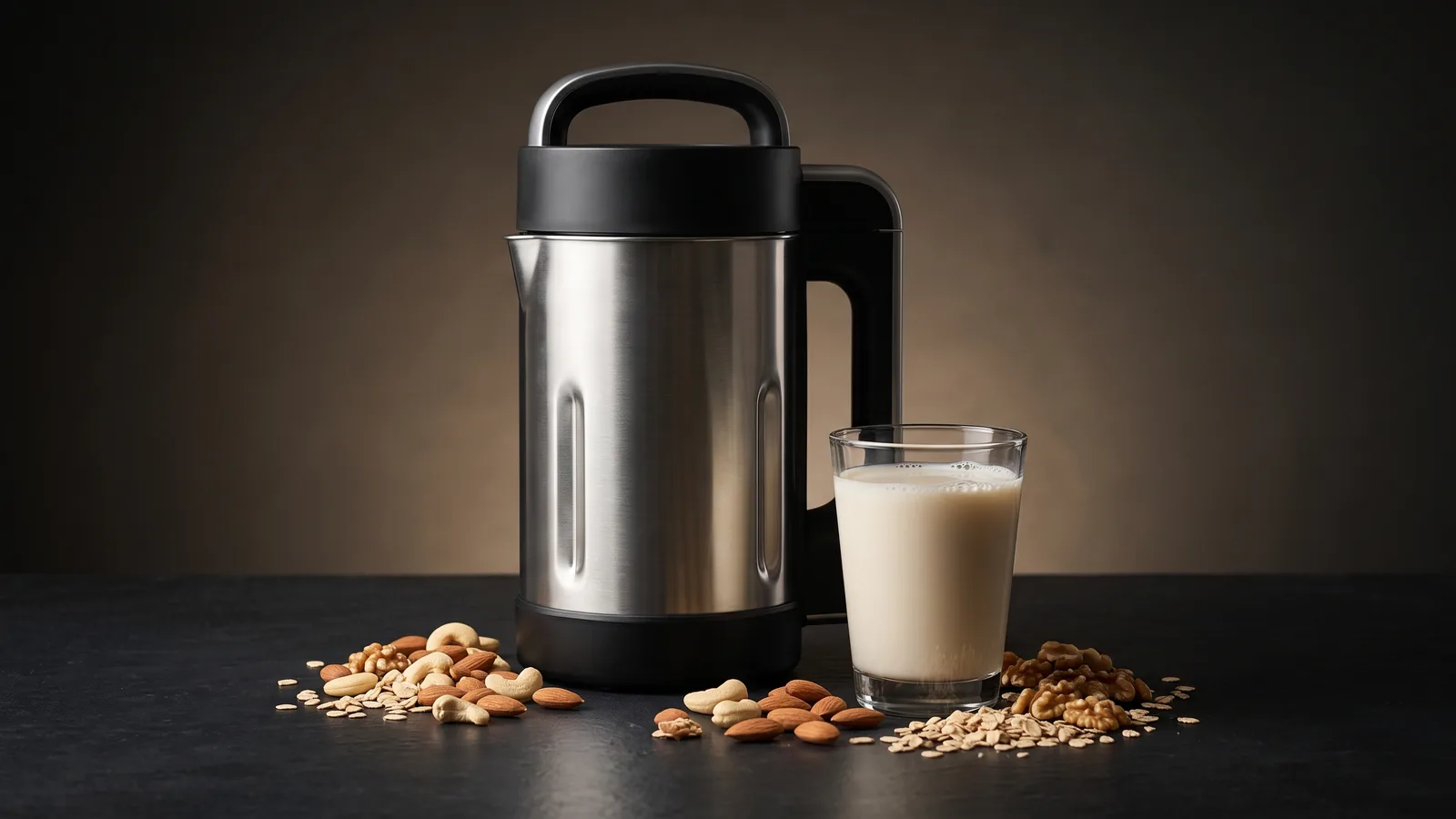
Almond Cow Plant-Based Milk Maker
The machine to buy for strong-value, low-friction almond and cashew milk. Owners reward it for value, overall quality, clear setup, and easy cleaning above the category norm. The honest trade-offs are two: it is cold-extraction only (no soy or heated milks), and filtration is the quality owners penalize it for most — a coarser strain that a quick second pass through a nut-milk bag resolves.
Prime Day Amazon Prime Big Deal Days is on — a good time to check the live price.
Check current price on AmazonWhat buyers praise
- Value-for-money is its standout — owners consistently feel it is worth the price
- Rewarded for overall quality, clear instructions, and easy cleaning above the norm
- Larger-than-average batch — suited to households and daily coffee use
- Excellent clean, fresh almond and cashew milk from cold extraction
What buyers flag
- Filtration is the quality owners penalize most — a coarser, higher-pulp strain by design
- Cold-extraction only — no soy milk and no heated cycles
- Oat milk is temperamental cold and not its best use
- Larger batch may be more than single-person households need
Is it worth the money?
Value is the Almond Cow’s strongest suit — and that is a meaningful thing to be able to say about a premium-priced machine. Owners reward it for value-for-money more than a typical machine in this class, and the recurring “worth the investment” sentiment tells you the price largely lands as justified rather than resented. If you are weighing whether a dedicated milk maker earns its place on the counter, the Almond Cow is the model in this cluster whose buyers most consistently say yes.
The filtration trade-off, explained
The one weakness worth understanding before you buy: the Almond Cow strains cold through a basket, not a fine mesh filter, so the milk it makes is heartier and carries more fine pulp than a fine-filter machine would produce. Owners penalize it for this more than they do the category. Whether it matters depends on you — many prefer the fuller texture, and a single pass through a nut-milk bag produces silky milk for those who want it. If flawless, effortless straining is non-negotiable, factor this in.
What it makes — and what it can’t
The Almond Cow’s lane is cold nut milks, and within it the results are excellent: clean, fresh almond and cashew milk, with hazelnut, macadamia, and pecan also strong. What it cannot do is heat — so no soy milk (which must be cooked) and no warm cycles. If soy or heated oat is on your list, a heated-cycle machine like the ChefWave Milkmade is the right category. This is a capability boundary, not a flaw: the Almond Cow does one thing and does it with a strong value and satisfaction record.
Who it is for
Right for: buyers focused on almond and cashew milk who want a larger batch, a well-supported setup, and a machine owners consistently feel is worth the money. Look elsewhere if: you need soy or heated milks, or a coarser strain would bother you every time (a fine-filter machine, or the second-pass habit, is the fix).
ChefWave Milkmade review · Nama M1 review · How to choose a plant-based milk maker · Best plant-based milk makers