Why the inner pot is the only material that matters
A rice cooker’s body can be stainless steel or plastic, but that is not the surface your food touches. The inner pot — the removable bowl the rice cooks in — is what contacts the rice and the heat, so it is the only material that matters for safety, taste, and how the cooker is to live with.
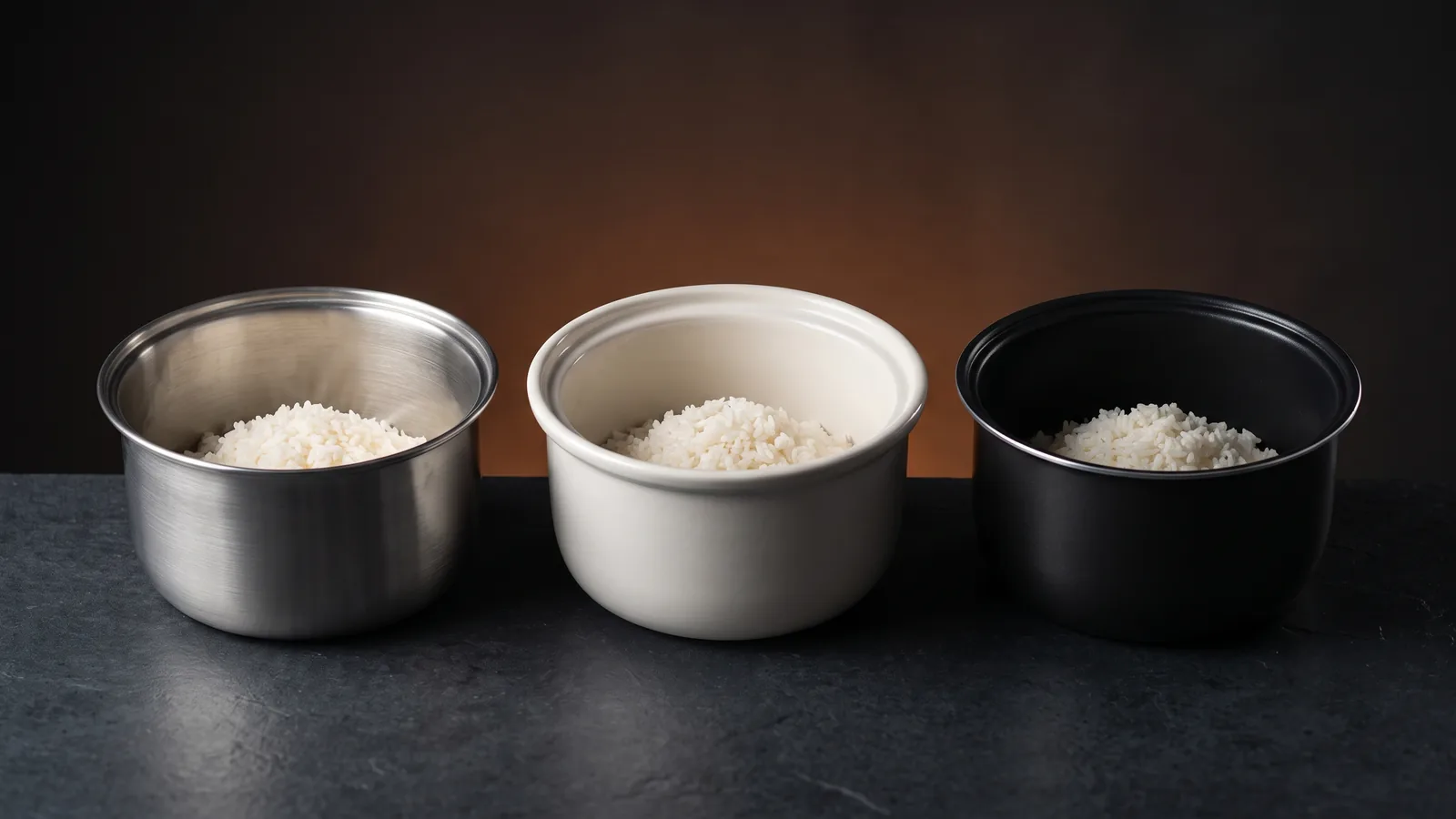
The three inner-pot materials you’ll encounter are nonstick, ceramic-coated, and stainless steel. They sort out cleanly once you know what each trades off.
Nonstick, ceramic, and stainless: the quick comparison
If you compare only one thing, compare the inner pot. Here is how the three stack up:
| Nonstick (PTFE) | Ceramic-coated | Stainless steel | |
|---|---|---|---|
| Sticking / release | Best (least sticking) | Good | Worst (rice sticks) |
| Coating to wear off | Yes — can scratch | Yes — can chip over time | None |
| Materials concern | The coating some avoid | Non-toxic alternative | Most inert |
| Cleanup | Easiest | Easy | Hardest |
| Typical cost | Lowest | Mid | Mid–high, and niche |
| Best for | Most buyers, easy cleanup | Avoiding nonstick without the hassle | Avoiding all coatings |
Nonstick is the default for a reason: it releases rice cleanly and cleans up in seconds. Its downsides are that the coating can scratch and wear over years, and that some buyers simply prefer not to have a PTFE coating — even though modern nonstick is considered safe in normal use and is now made without PFOA.
The honest middle ground is ceramic. A ceramic-coated pot gives you good release without the PTFE coating, which is exactly what most materials-conscious buyers actually want — the benefit of avoiding nonstick without the sticking and scrubbing of bare stainless.
Stainless steel is the most inert, with no coating to wear off at all — but rice sticks to it far more, so it stays a niche for buyers who prioritize materials over easy release.
Our pick if you want to skip nonstick
If your takeaway is “I’d rather not have a nonstick coating,” the practical answer is a ceramic-coated pot — and this is the mainstream pick that does exactly that without the sticking of bare stainless. It’s the non-toxic choice in our best rice cookers roundup. The material deep-dives below explain why each behaves the way it does.
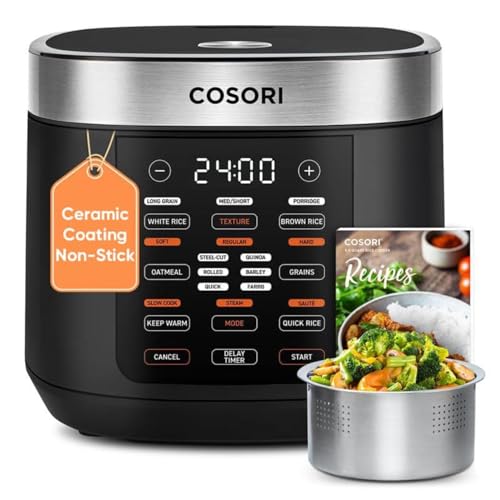
Cosori Rice Cooker 10-Cup, Fuzzy Logic, Ceramic-Coated Pot
The pick that answers this article directly: a ceramic-coated inner pot that skips the PTFE nonstick coating while still releasing rice well — so you avoid the coating without the sticking and scrubbing of bare stainless. It adds fuzzy-logic cooking and a larger 10-cup capacity, from a brand well-rated across small appliances. Ceramic coatings still wear eventually with heavy use, so it isn't permanent — but it's the easiest non-toxic path for most buyers.
Prime Day Amazon Prime Big Deal Days is on — a good time to check the live price.
Check current price on AmazonWhat buyers praise
- Ceramic-coated pot — non-toxic release without a PTFE coating
- Fuzzy-logic cooking adjusts to the rice
- Larger 10-cup capacity; well-rated brand
What buyers flag
- Ceramic coatings can wear or chip with heavy use
- Costs more than a basic nonstick cooker
Nonstick (PTFE)
What it is
The slick coating on most inner pots is PTFE (polytetrafluoroethylene). It is what makes rice lift out cleanly and wipe away in seconds. Older health concerns centered on PFOA, a separate processing chemical — but PFOA was phased out of cookware, so current nonstick pots are made without it and labeled PFOA-free.
Advantages
Best release and easiest cleanup. Nonstick is the reason a rice cooker is low-effort — rice doesn’t cling, and the pot wipes clean. Lowest cost. The budget and mid-range cookers that dominate the category are nonstick.
Disadvantages
The coating wears. Scratches from metal utensils or scrubbing, and gradual wear over years, are the real-world downside — a worn pot releases less well and eventually wants replacing. The coating itself is what some buyers avoid. For those who would simply rather not cook on PTFE, that is a valid preference, and it’s the reason ceramic and stainless exist.
Ceramic-coated
What it is
A ceramic-coated pot uses a mineral-based coating instead of PTFE. It is the mainstream answer for buyers who want to skip nonstick but still want their rice to release.
Advantages
Non-toxic release. You get good release without the PTFE coating — the benefit most materials-conscious buyers are actually after. Easier to live with than stainless. Rice doesn’t cling the way it does to bare steel.
Disadvantages
Not permanent. Ceramic coatings can chip or wear over time with heavy use, so a ceramic pot is a wear item like nonstick, not a lifetime surface. Costs more than a basic nonstick cooker.
Stainless steel
What it is
A true stainless-steel inner pot has no coating at all — the rice cooks directly on the metal.
Advantages
Most inert, nothing to wear off. With no coating, there is nothing to scratch, chip, or degrade — which is exactly why materials-first buyers seek it out.
Disadvantages
Rice sticks — a lot. Without a release surface, rice clings to bare stainless, especially the bottom layer, so you get more sticking and more scrubbing. Rinsing the rice and getting the water ratio right help, but won’t eliminate it. It’s a niche, so choice is limited and prices skew higher.
Which material for which buyer
| Priority | Best inner-pot choice |
|---|---|
| Easiest cleanup, lowest cost | Nonstick (PTFE) |
| Avoiding nonstick without the hassle | Ceramic-coated |
| Avoiding all coatings, accept sticking | Stainless steel |
| A cooker that lasts without a wear surface | Stainless steel |
| Most people, most of the time | Nonstick or ceramic |
The honest summary: nonstick is fine for most people and cooks rice just as well; ceramic is the easy non-toxic upgrade; stainless is for buyers who put materials first and accept the sticking. Decide which of those you are, and the cooker follows.