Which store? The materials below apply everywhere. Further down there’s a plastic-free pick for both stores — a US model on Amazon.com and a 230V version on Amazon UK that delivers to Ireland. For the full ranked lists, see the best electric kettles (US) or the best electric kettles in Ireland.
Why material matters — and which material it is
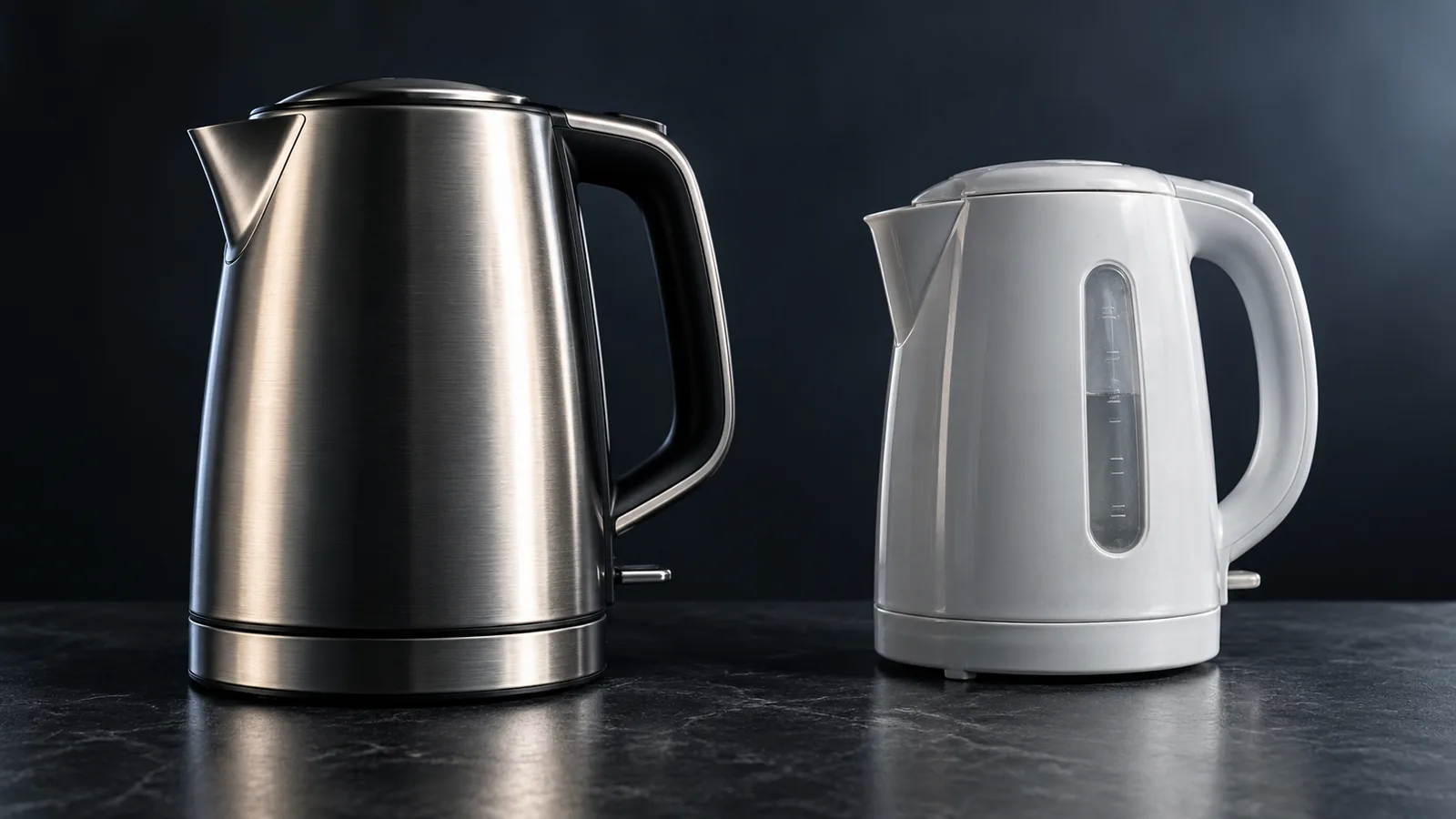
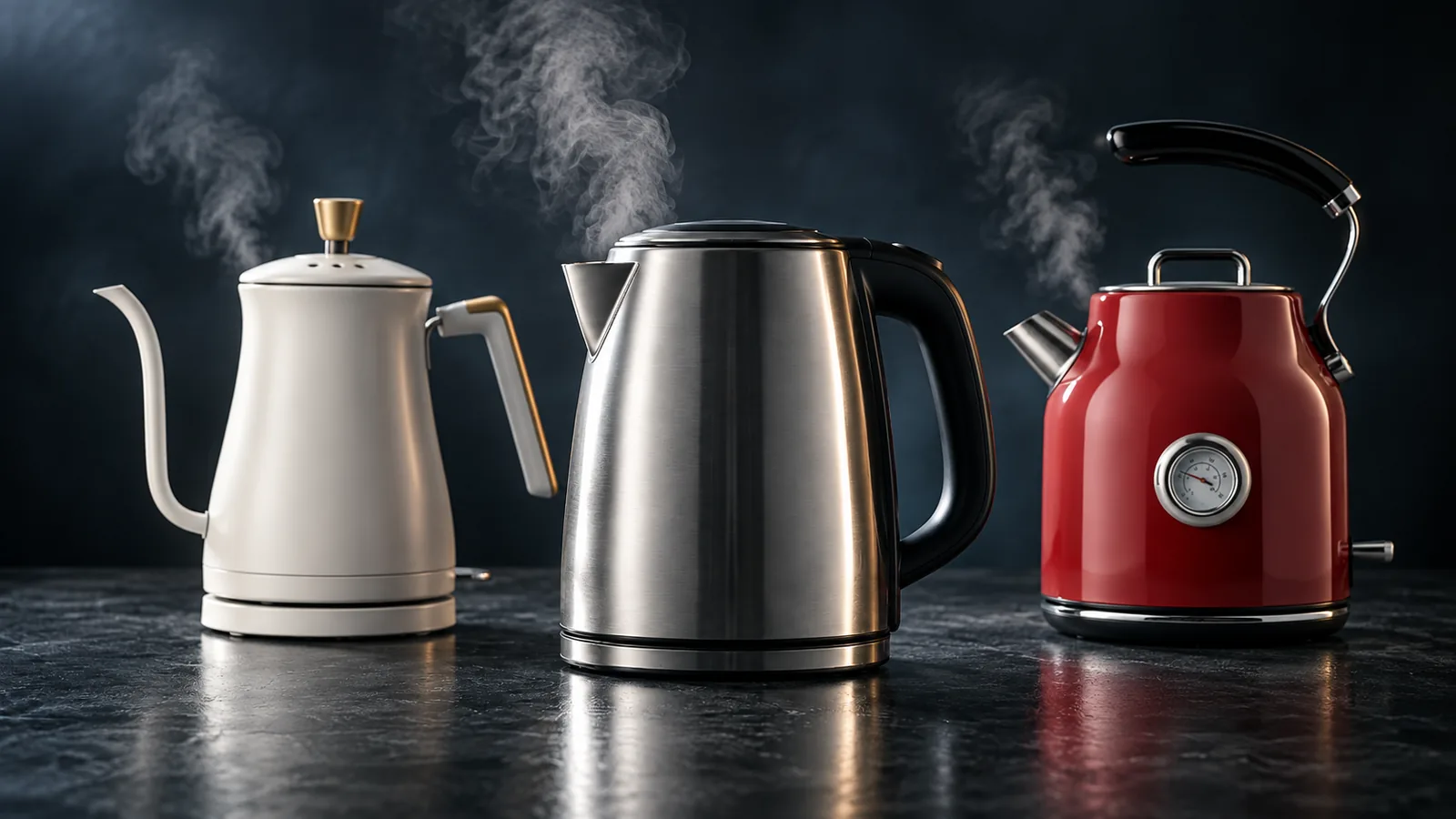
Electric kettle bodies come in three materials: stainless steel, glass, and plastic. The critical distinction is not the exterior material — what the kettle looks like on the outside — but the interior material: what the boiling water actually contacts.
Many kettles combine materials: a plastic exterior with a stainless steel interior, or a glass body with a plastic handle. In these cases, the taste and safety question is determined by the interior, not the overall appearance.
Glass vs. stainless steel vs. plastic: the quick comparison
If you compare only one thing, compare the interior — the surface the boiling water actually touches. Here is how the three materials stack up head-to-head:
| Stainless steel | Glass | Plastic | |
|---|---|---|---|
| Taste | Neutral | Neutral | Off-taste risk, especially when new |
| Durability | Highest (dents, won’t shatter) | Lowest (can crack or shatter) | High (won’t shatter) |
| Weight | Light–medium | Heaviest | Lightest |
| See the boil / scale | No | Yes | Sometimes |
| Typical cost | Mid | Mid–high | Lowest |
| Best for | Most people | Watching the water, scale-watchers | Tight budgets |
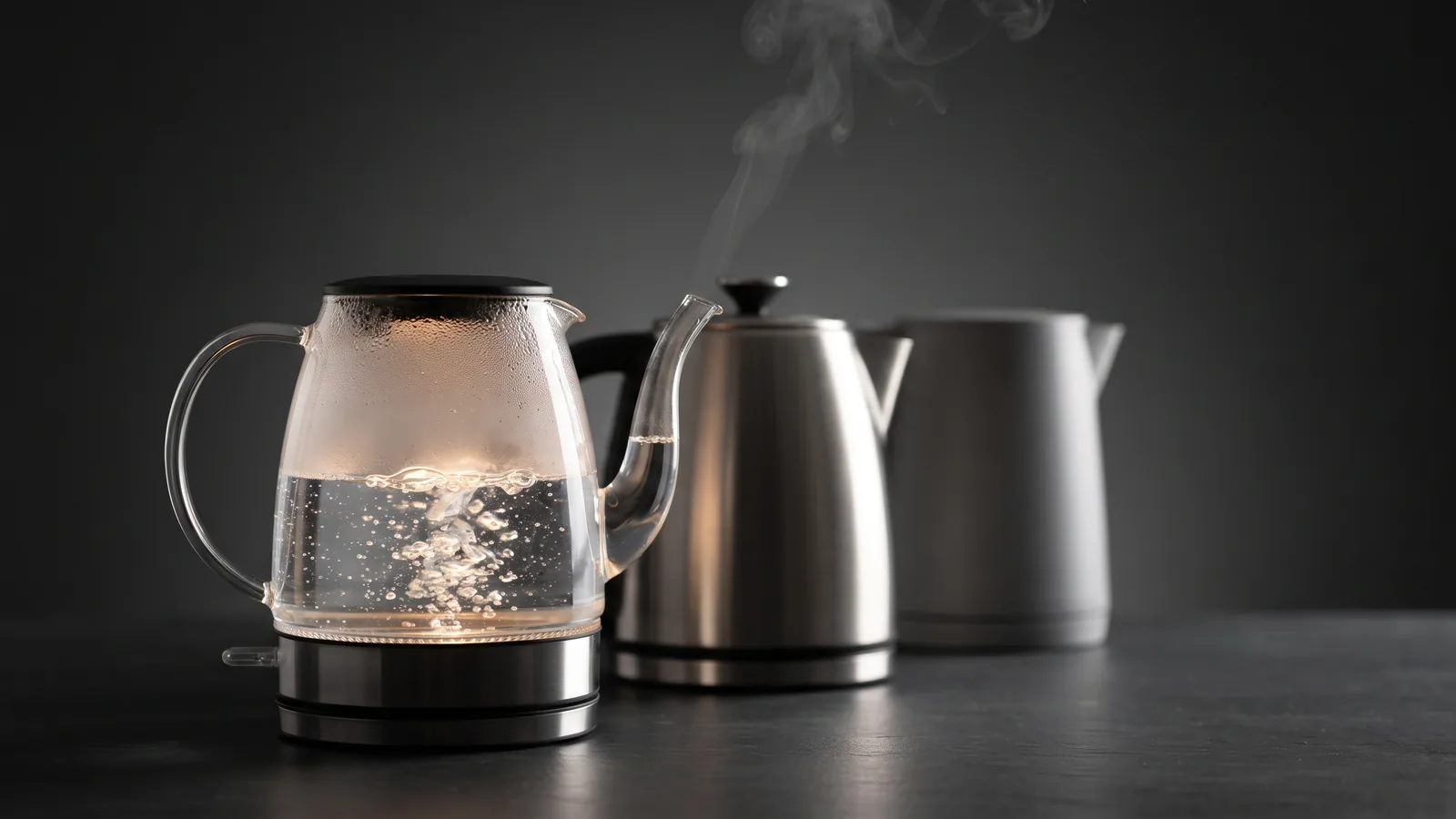
Glass vs. stainless steel is the comparison most buyers actually weigh, and the honest answer is that both are taste-neutral — so it comes down to two trade-offs. Glass lets you see the water level, the boil, and any scale building up; stainless is lighter, far more durable, and safer in a household where the kettle gets knocked around. If seeing inside matters to you, choose glass and accept the fragility. If you want the most durable, worry-free kettle, choose a stainless interior.
Stainless steel vs. plastic is really a taste-and-longevity question. A stainless interior avoids the new-kettle plastic taste entirely and lasts longer; an all-plastic interior is cheaper and lighter but is the single most common source of off-taste complaints in the category. The clean compromise — common, and worth seeking out — is a plastic exterior with a stainless steel interior, which gives you plastic’s low weight and cost with stainless water contact.
Our pick for keeping plastic away from the water
If your takeaway is already “keep plastic away from the water,” here is the verified pick that does exactly that — Cosori’s plastic-free kettle, whose water path is all stainless steel. It leads our best electric kettles roundup (and the Ireland roundup). The material deep-dives below explain why each one behaves the way it does.
Shopping in the US (Amazon.com):
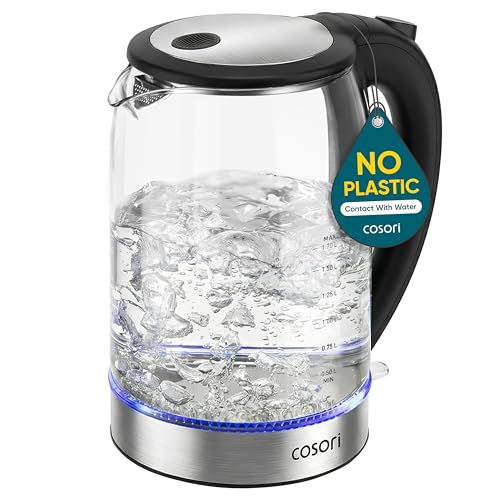
Cosori Electric Kettle (No Plastic Contact With Water)
The pick that answers this article directly: Cosori's plastic-free kettle routes the water only over stainless steel — interior, spout and gauge — so no hot water ever sits against plastic, sidestepping the off-taste problem entirely. It's backed by one of the largest owner bases in the category, with a brushed-stainless design at a mid-range price. The budget tier's durability caveat applies, so buy with an easy return window.
Prime Day Amazon Prime Big Deal Days is on — a good time to check the live price.
Check current price on AmazonWhat buyers praise
- Water contacts only stainless steel — solves the off-taste problem
- Very large, well-rated owner base — a trustworthy signal
- Brushed-stainless design; fast 1500W boil
What buyers flag
- Costs more than a basic plastic kettle
- Stainless body shows fingerprints
Shopping in Ireland or the UK (230V, delivers to Ireland):

Cosori Plastic-Free Water Contact Kettle
The same answer for Irish and UK kitchens: Cosori's plastic-free kettle routes the water only over stainless steel, so no hot water sits against plastic. It's a 230V model on Amazon UK, which delivers to Ireland, backed by one of the largest owner bases in the category. The budget tier's durability caveat applies, so buy with an easy return window.
Prime Day Amazon Prime Big Deal Days is on — a good time to check the live price.
Check current price on Amazon.co.ukWhat buyers praise
- Water contacts only stainless steel — solves the off-taste problem
- Very large, well-rated owner base — a trustworthy signal
- 230V for Irish and UK mains; delivers to Ireland
What buyers flag
- Costs more than a basic plastic kettle
- Stainless body shows fingerprints
Stainless steel
What it is
304 stainless steel (also labeled 18/8 stainless) is the food-grade alloy used in most premium and mid-range kettles. It is corrosion-resistant, does not react with water at kettle temperatures, and does not transfer taste or odor to the water.
Advantages
Taste-neutral. Water boiled in a stainless steel kettle tastes like water. There is no off-taste from the material, even after months of use. This is the primary reason stainless is the dominant material in quality kettles.
Durable. Stainless steel dents rather than shatters and is significantly more impact-resistant than glass. A dropped stainless kettle typically survives; a dropped glass kettle typically does not.
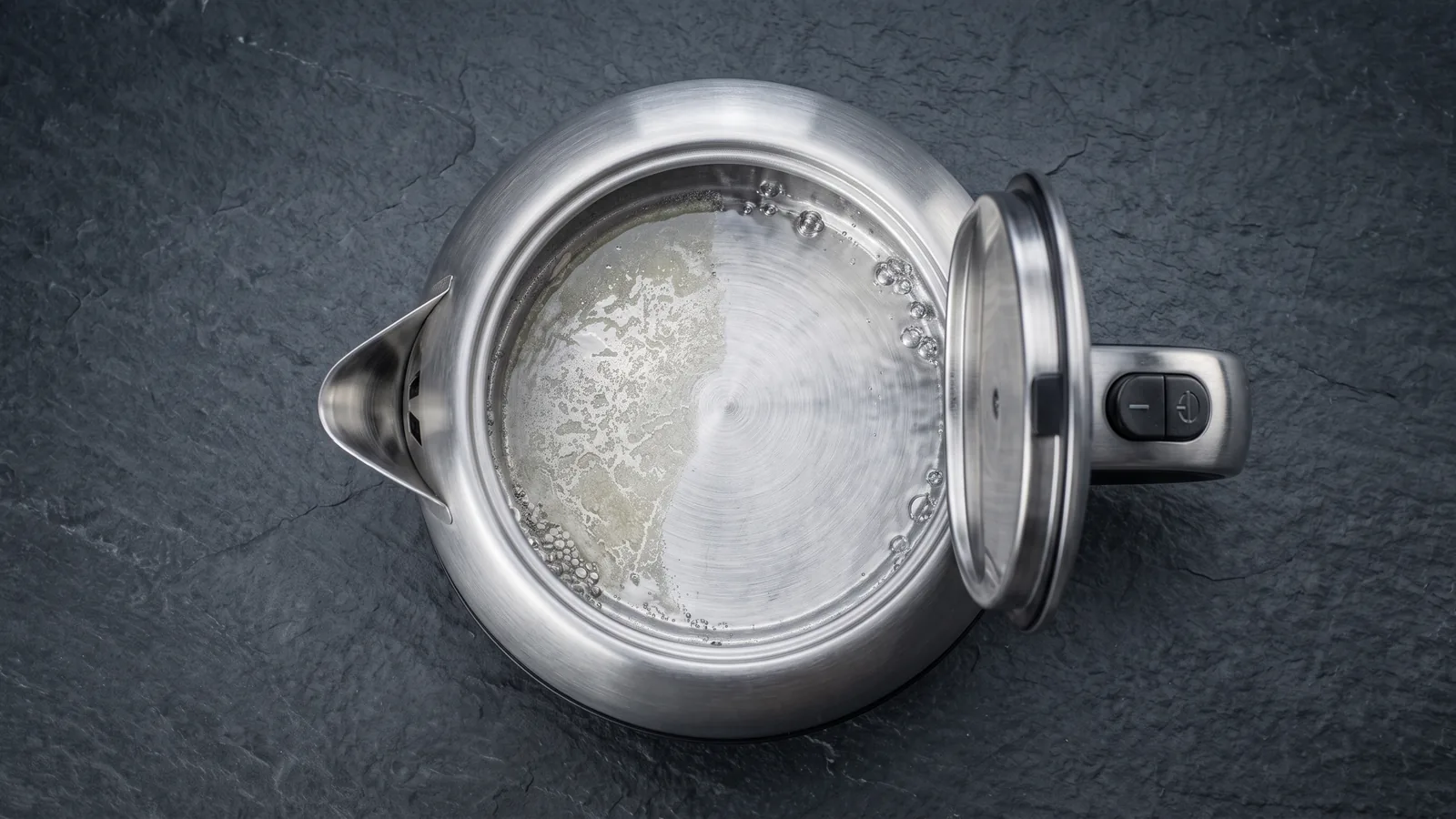
Opaque — hides scale buildup. Mineral scale accumulates on the interior walls of any kettle used with hard water. A stainless interior hides this buildup visually, which some buyers prefer and others find frustrating (you cannot tell when descaling is needed without checking periodically).
Disadvantages
Cannot see water level or interior condition. Without a water-level window (which most stainless kettles include on the exterior body), the user cannot see whether scale is forming. Interior condition must be checked by looking inside.
Can develop a metallic taste if not rinsed regularly. Very rare in 304 stainless, but kettles left with stagnant water for extended periods can develop a faint metallic note. Emptying the kettle after each use and rinsing before the next prevents this.
Glass
What it is
Most glass kettles use borosilicate glass — the same material used in laboratory glassware and quality cookware. Borosilicate glass is chemically inert at kettle temperatures and resistant to thermal shock compared to standard glass.
Advantages
Completely taste-neutral. Glass does not leach any compounds into water. For buyers concerned about material transfer, glass provides the clearest assurance.
Visible interior. The transparent body lets the user see the water level without a separate window, monitor scale buildup, and visually confirm the boil. Buyers who want to see the water boiling — the rising bubbles before a full boil — find this appealing.
Easy to assess cleanliness. Scale buildup, mineral deposits, and discoloration are immediately visible. It is easier to know when to descale.
Disadvantages
Breakable. Borosilicate is more thermal-shock resistant than standard glass, but it is still glass. A dropped glass kettle is likely to shatter or crack. For households with children or buyers who have a history of dropping things, this is a real consideration.
Heavier. Glass bodies are heavier than equivalent stainless or plastic models. A full 1.7L glass kettle is meaningfully heavier than a 1.7L stainless model — relevant for buyers who fill the kettle at a distance from the outlet or have wrist or grip concerns.
Shows everything. The visible interior also shows scale, staining, and any discoloration the moment it appears. Buyers who find visible scale unappealing will need to descale more frequently to maintain the appearance.
Plastic
What it is
Most electric kettles — particularly in the budget tier — have a plastic exterior and, in many cases, a plastic interior. Common plastics used include polypropylene (PP) and food-grade ABS. Budget models may use lower-grade formulations that are more prone to taste transfer.
Advantages
Lightest weight. Plastic kettles are the lightest option, which matters for buyers who have difficulty with a heavy kettle.
Lowest cost. The entry-level kettle segment is almost entirely plastic. The $15–$30 price range is dominated by plastic models.
Impact-resistant. Plastic does not shatter when dropped.
Disadvantages
Off-taste in new models. The most consistent and most-reported complaint in the electric kettle category is a plastic taste in freshly boiled water, concentrated in new budget kettles. New plastic releases trace volatile compounds when exposed to boiling water — this is the source of the taste. The issue typically fades after 10–20 boil cycles. Buyers who are sensitive to it, or who are brewing tea or coffee where the water taste is noticeable, find it problematic.
BPA-free does not eliminate the issue. BPA-free plastic can still transfer taste. The issue is plastic contact with boiling water generally, not BPA specifically.
Interior plastic in premium-tier models. Some kettles with attractive exterior designs and mid-range prices have plastic interiors. The appearance of the product does not reliably indicate the interior material — always check the specifications.
The interior-vs-exterior distinction in practice
Many buyers make purchasing decisions based on the exterior appearance of a kettle without checking whether the interior is the same material. Common combinations:
| Exterior | Interior | Taste outcome |
|---|---|---|
| Stainless steel | Stainless steel | Taste-neutral — best for taste |
| Plastic | Stainless steel | Taste-neutral — plastic weight/cost with stainless water contact |
| Glass | Glass (borosilicate) | Taste-neutral — visible but heavy and breakable |
| Plastic | Plastic | Off-taste risk, especially when new |
| Stainless steel | Plastic | Off-taste risk — verify interior material before purchasing |
The last row is the trap: a kettle that appears to be stainless but has a plastic-lined interior. This combination appears primarily in ultra-budget models and produces the same off-taste as an all-plastic kettle.
How to verify: look for “stainless steel interior,” “304 stainless inner body,” or “BPA-free stainless steel interior” in the product specification. If the listing does not specify the interior material, contact the manufacturer or check buyer Q&A on the product listing.
Which material for which buyer
| Priority | Best material choice |
|---|---|
| Taste neutrality, durability | Stainless steel interior (exterior material secondary) |
| Visible interior, taste neutrality | Borosilicate glass |
| Lowest cost | Plastic — run 10–20 cycles before using for tea/coffee |
| Lightest weight | Plastic exterior with stainless interior |
| Monitoring scale buildup | Glass |
| Households with children or drop risk | Stainless steel (over glass) |
Now see the picks that match your priority
You know which material you want — here is the short, vetted shortlist that fits each priority, so you are not left comparing a wall of near-identical kettles. Every pick is drawn from what verified owners consistently praise. (Shopping from Ireland or the UK? Each points to its 230V equivalent.)
- Keep plastic out of the hot-water path — start with the plastic-free Cosori above, then see the best plastic-free electric kettles for the full field (including what to check beyond the interior). From Ireland or the UK, see the best glass & plastic-free kettles.
- Maximum durability (stainless interior) — the best stainless steel electric kettles, ranked by which ones have a genuine stainless water path, not just a stainless body.
- See the water level and scale at a glance (glass) — the best glass electric kettles ranks the glass field on owner evidence. From Ireland or the UK, see the best glass & plastic-free kettles.
- Precise pour for pour-over coffee (gooseneck) — the best gooseneck electric kettles narrows it to the handful actually worth buying.
- The right temperature for tea or delicate coffee — a variable-temperature kettle lets you dial the heat in; if tea is the point, see the best kettle for tea. From Ireland or the UK, see temperature-control kettles.
Ready to buy? See the best electric kettles for the full US range — or the best electric kettles in Ireland, 230V picks that deliver to Ireland, if you’re shopping from Ireland or the UK.
Premium vs budget: what you actually pay more for · Next: How to descale an electric kettle · How to choose an electric kettle