What each type actually does
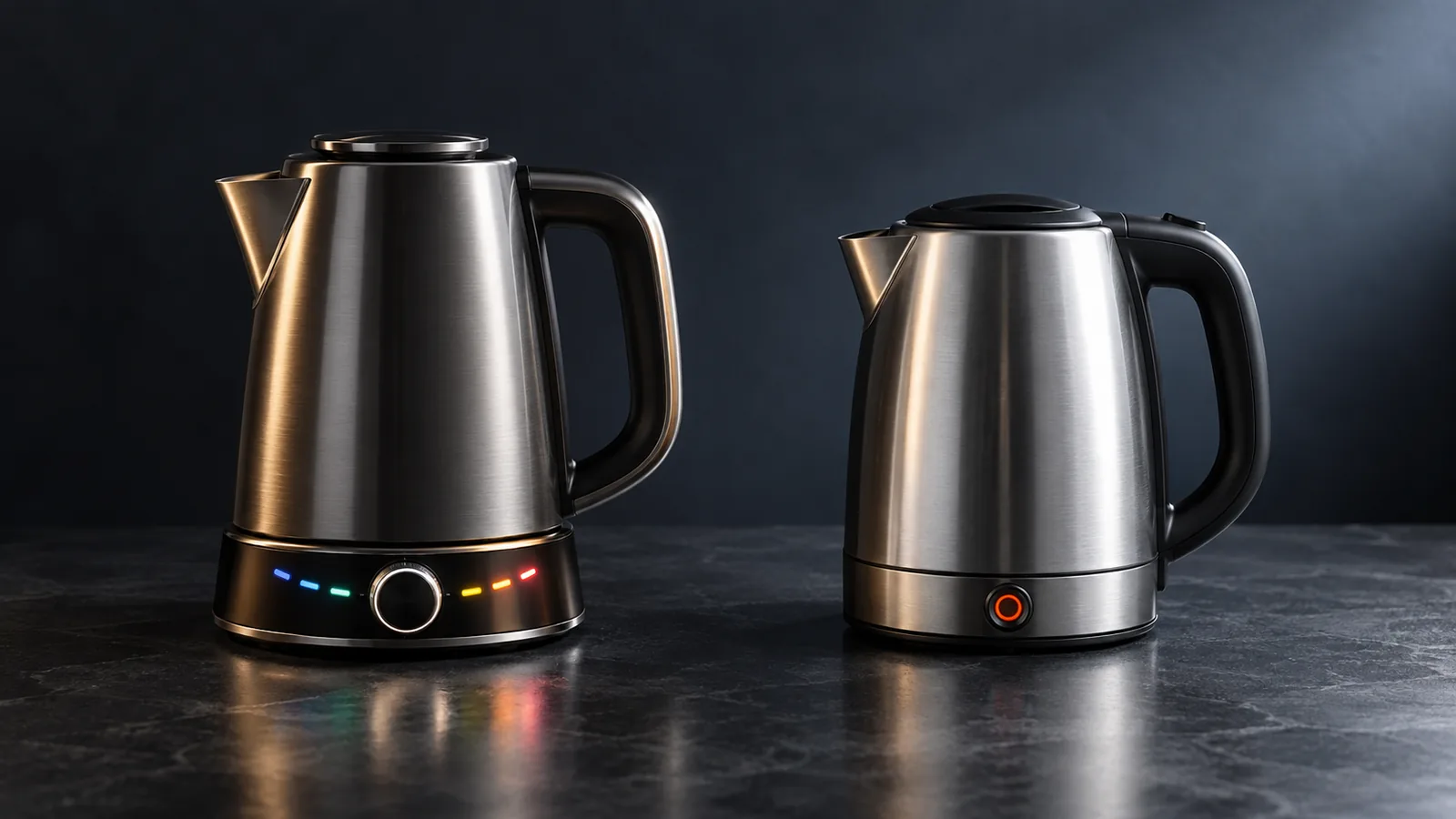
A single-boil kettle heats water to 100°C (212°F) — boiling point at sea level — and shuts off. It performs one task reliably and requires no configuration. Most kettles sold globally are single-boil.
A variable-temperature kettle allows the user to select a target temperature before boiling, typically between 140°F and 212°F in 5°F increments. The kettle heats to the selected temperature rather than boiling. Most variable-temperature models also include a keep-warm function that holds water at or near the target temperature for 30 minutes to 2 hours after heating.
The additional mechanism is a thermostat and control interface — either a dial, a preset selector, or a digital display. This adds to the cost and, in budget implementations, adds a failure point.
When temperature precision changes the outcome
Green tea — the clearest case
Green tea is the single strongest use case for variable temperature. The flavor compounds in green tea — particularly catechins and L-theanine — extract at different rates depending on water temperature.
At 212°F (boiling): catechins and tannins extract rapidly, producing a bitter, astringent cup. This is the dominant experience for buyers who have always found green tea unpleasant.
At 165–180°F: the same leaves produce a sweet, vegetal, umami-forward cup with minimal bitterness. L-theanine — the compound responsible for green tea’s characteristic calm alertness — remains in balance with the bitter compounds.
The temperature difference between a good and a bad cup of green tea is real, large, and consistent. Buyers who brew green tea daily and do not own a variable-temperature kettle are producing a worse cup than their tea is capable of.
White tea
White tea is the most delicate category — minimally processed, with the highest proportion of compounds sensitive to heat. Optimal range is 160–185°F depending on variety. Boiling water produces an overly tannic, flat result. At the correct temperature, white tea produces a subtle, complex, slightly floral cup.
Oolong tea
Oolongs range from lightly oxidized (closer to green tea) to heavily oxidized (closer to black). The optimal temperature varies accordingly: 185°F for a light oolong, 195–205°F for a dark oolong. A variable-temperature kettle with reliable accuracy lets the user calibrate to the specific tea.
Pour-over coffee
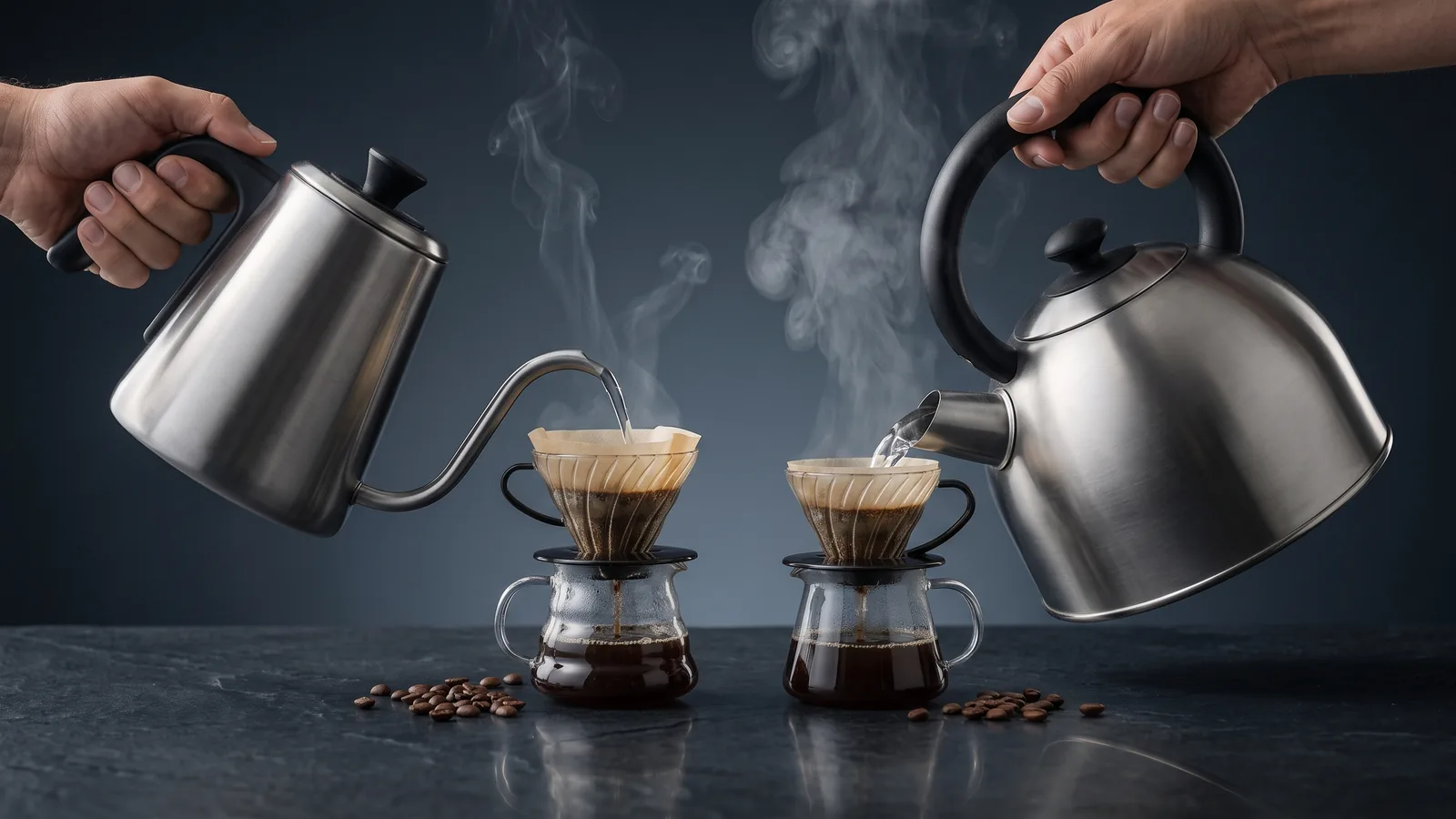
Specialty coffee guidance consistently targets 195–205°F for optimal extraction. Boiling water (212°F) can over-extract and produce a slightly harsh, bitter cup. The difference is subtler than for green tea but detectable to buyers who brew quality beans with attention to technique. Variable temperature also pairs naturally with the gooseneck spout that pour-over brewing typically requires.
Baby formula
Infant formula preparation requires water above 70°C (158°F) to neutralize potential bacterial contamination in the powder, then cooling to feeding temperature before use. A variable-temperature kettle that holds at a specific temperature, combined with a keep-warm function, simplifies the preparation at night feeds and reduces the waiting time for cooling. Safety-critical note: the water must reach sufficient temperature before adding formula — keep-warm at 70°C is not a substitute for initially heating to at least 70°C.
If any of the above is you — green tea, pour-over, or formula — variable temperature earns its place, and this is the value pick. The section below covers when single-boil is the smarter, cheaper choice instead.
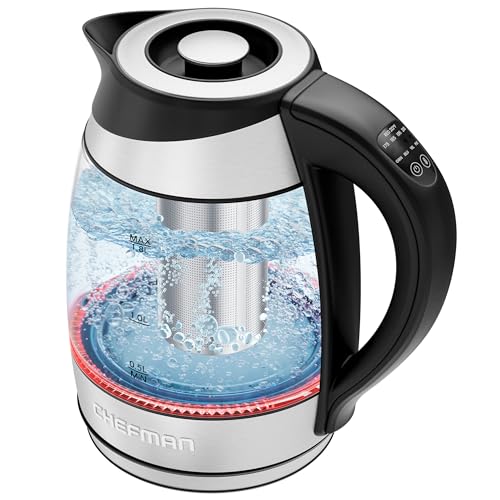
Chefman Electric Kettle with Temperature Control
The best-value variable-temperature kettle, and the sensible default if precision actually matters for how you brew. Owners reward it for ease of use, value, and temperature control on the largest ownership base in the segment — a trustworthy signal it does the core job well for the price, including presets and a keep-warm hold. The honest caveat is durability: a real minority report it failing within months to a year, so buy from a seller with an easy return window. If you only ever want full boil, though, a single-boil kettle is cheaper and simpler — see below.
Prime Day Amazon Prime Big Deal Days is on — a good time to check the live price.
Check current price on AmazonWhat buyers praise
- Rewarded for ease of use, value, and temperature control above the norm
- Largest ownership base in the segment; presets plus keep-warm
- Low price for full temperature control
What buyers flag
- Durability caveat — a minority report early failure; buy with returns
- No premium-brand build feel
When temperature precision does not change the outcome
Black tea
Black tea is fully oxidized, which makes it significantly more forgiving of water temperature than green or white tea. Brewing at 200°F vs 212°F produces a result most buyers cannot reliably distinguish. A single-boil kettle is appropriate.
Herbal infusions and tisanes
Most herbal teas — chamomile, peppermint, rooibos, ginger — brew optimally at or near boiling. The heat extracts the oils and compounds that constitute the flavor. A single-boil kettle handles all of these correctly.
French press and Moka pot coffee
French press and Moka pot are more forgiving of water temperature than pour-over methods. A single-boil kettle allowed to sit for 30 seconds (cooling from 212°F to roughly 205°F) handles French press preparation adequately.
Cooking, instant products, oatmeal
Boiling water is boiling water. No temperature precision required.
The accuracy problem in budget variable-temperature kettles
Variable temperature is only valuable if the kettle actually delivers the selected temperature. This is where budget models frequently fail.
A kettle that displays “175°F” but delivers 185–190°F is worse than useless for green tea — it produces a bitter result while telling the user the temperature was correct. Buyers who purchase budget variable-temperature kettles specifically for green tea and find it still tastes bitter often conclude the temperature doesn’t matter; the more likely explanation is that the kettle is not hitting the set point.
Before purchasing a variable-temperature kettle with temperature accuracy as the primary goal, verify that buyer reviews report actual measured temperatures close to set points. Models from Fellow, Breville, and OXO have the strongest accuracy reputations in the category. Budget models from less-established brands frequently have a 10–20 degree spread between set point and actual temperature.
Single boil — what you give up and what you keep
| What you give up | What you keep |
|---|---|
| Precise temperature for green/white/oolong tea | Fast, reliable boiling for all other uses |
| Pour-over coffee temperature optimization | Lower price point |
| Keep-warm function | Simpler mechanism, fewer failure points |
| Baby formula temperature management | Full-speed boil every time |
For the majority of households — primarily black tea drinkers, instant coffee users, and those who use the kettle for general cooking — single boil is not a compromise. It is the correct and sufficient tool.
The decision
Buy variable temperature if: green tea, white tea, or oolong is a daily habit. Pour-over coffee with attention to extraction quality is part of the routine. Baby formula preparation happens regularly at night.
Buy single boil if: the primary use is black tea, herbal infusions, French press, cooking, or general boiling. The budget is constrained. Simplicity and reliability are priorities.
Temperature guide: the right heat for every tea and coffee style · How to choose an electric kettle · The best electric kettles