Shopping from Ireland or the UK? The advice below applies everywhere, but the kettle we recommend links to the US Amazon listing — and a US kettle won’t run on Irish and UK 230V mains. For 230V picks on Amazon UK (which delivers to Ireland), see the best electric kettles in Ireland, or — if pour-over and tea precision are why you’re here — the best temperature-control kettles.
What the spout shape actually does
The shape of a kettle spout controls one thing: how the water flows out.
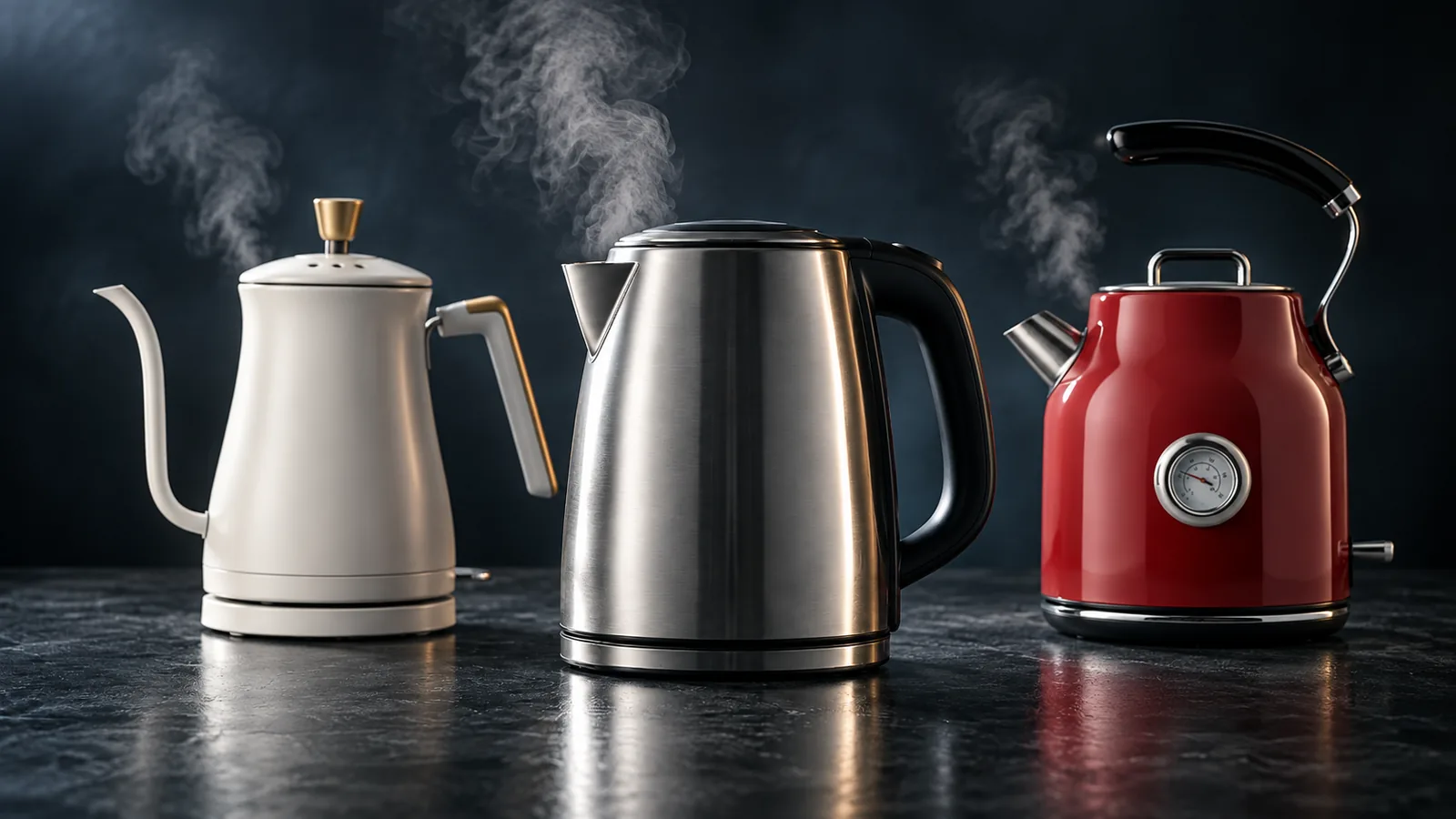
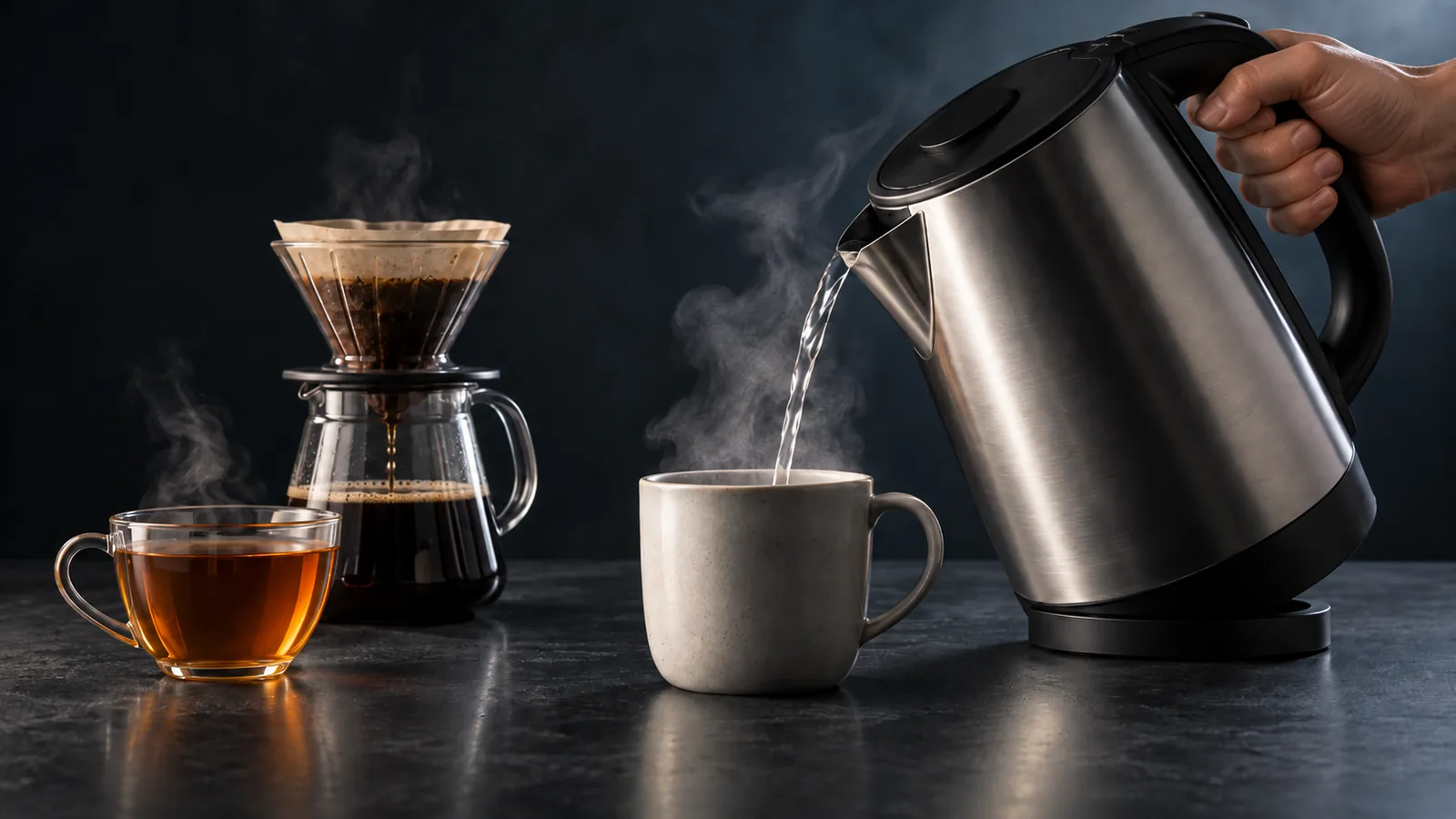
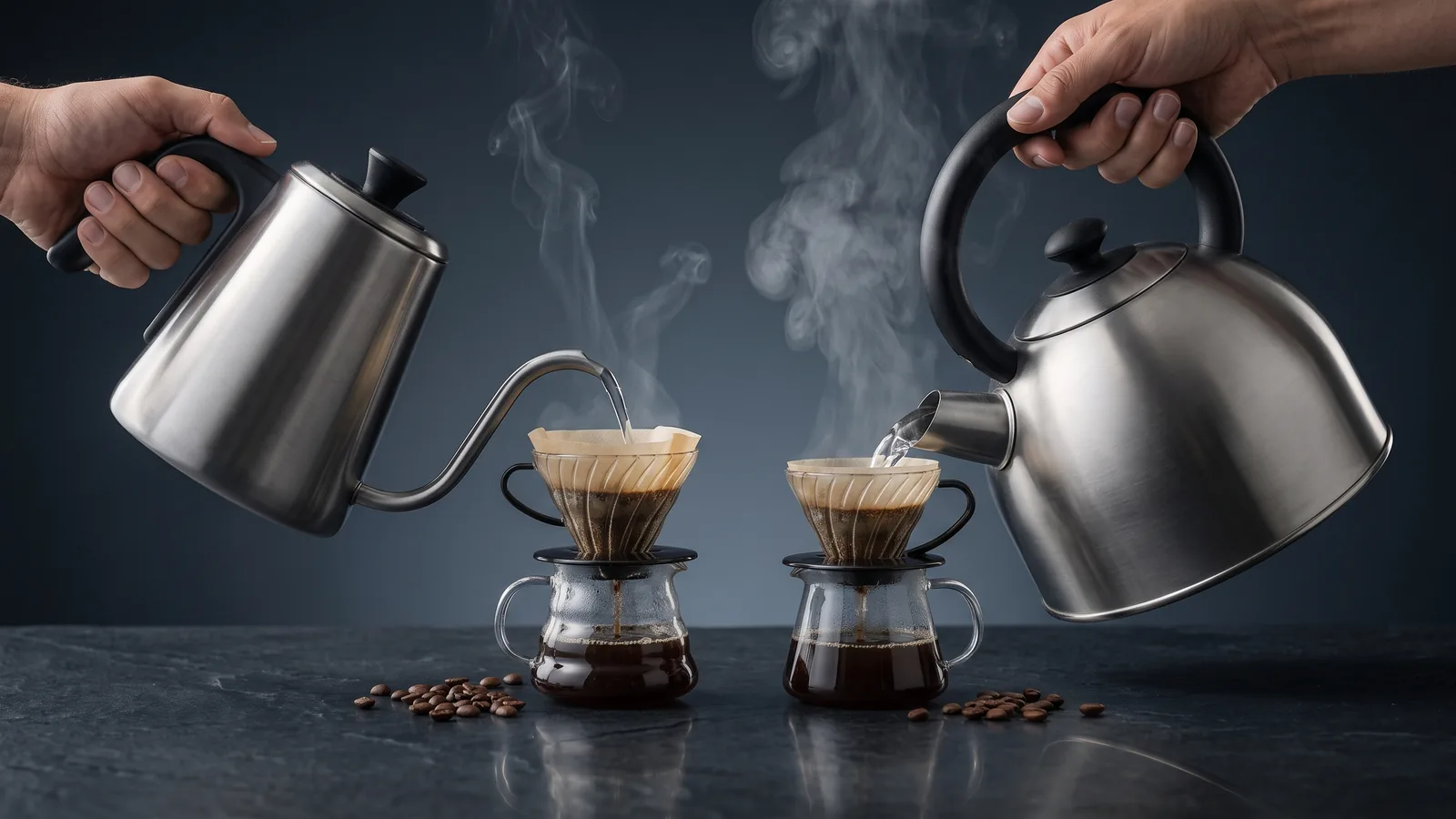
A standard spout is wide, short, and angled. Water exits in a fast, broad stream. The user has limited control over the pour rate — tilt more, pour faster; tilt less, pour slower — but the range is narrow and the flow tends to surge at the start. For filling a mug, a teapot, or a pot of water, this is not a problem. Speed is the virtue here.
A gooseneck spout is narrow, long, and curved downward. Water exits in a thin, controlled stream. The user can vary the pour rate significantly by adjusting the tilt angle — from a slow drip to a steady thin stream — and direct the water precisely because the spout tip is close to the target. The flow is consistent rather than surging. Speed is the sacrifice; control is the benefit.
These are physical properties of the spout geometry. Neither is better in absolute terms. Each is better for a specific set of uses.
When the gooseneck is the right choice
Pour-over coffee
Pour-over brewing (V60, Chemex, Kalita Wave, and similar methods) depends on even saturation of the coffee grounds. The extraction process requires:
- An initial bloom pour — wetting the grounds slowly and evenly with a small amount of water to degas them before extraction begins
- Subsequent pours in a slow, spiral pattern that keeps the slurry level consistent and extracts evenly from the entire bed
A standard spout makes this difficult. A fast surge of water at the start of the bloom disturbs the grounds and creates channels; uneven spiral pours produce uneven extraction and a noticeably less balanced cup. A gooseneck makes the bloom pour controlled and the spiral pours consistent — skills that would otherwise require significant practice.
For buyers who brew pour-over daily, the gooseneck is not optional. It is the correct tool for the task.
Precise loose-leaf tea
Some loose-leaf teas — particularly delicate greens, white teas, and oolongs — benefit from controlled pouring that avoids disturbing the leaves. A gooseneck allows filling a gaiwan, teapot, or glass vessel without agitating the leaf bed. This matters more at the quality end of tea preparation; for everyday loose-leaf brewing, the difference is subtle.
Any use where pour direction matters
Some kettles are used to fill small-mouthed containers — reusable bottles, travel mugs, thermos flasks with narrow openings — where a standard spout’s wide stream is difficult to aim accurately without spilling. A gooseneck provides enough precision to fill narrow vessels cleanly.
If pour-over or precise tea is why you’re here, the gooseneck is the right tool — and this is the one we’d point most people to. The rest of this guide explains when a standard spout is the smarter choice instead.

Bodum Bistro Gooseneck Electric Water Kettle
If you've decided a gooseneck is what you need, this is the best all-round electric one for an Irish kitchen: it boils on its own and pours the controlled thin stream pour-over needs, from a well-established brand with one of the largest gooseneck owner bases on Amazon UK. Worth knowing before you buy: the written reviews (mostly the US version) flag a recurring reliability theme — leaking when pouring and mixed durability — so most owners rate it highly, but reliability is the thing to watch. It's a brewing kettle first (smaller than a family kettle), priced for the spout, and a 230V model that delivers to Ireland.
Prime Day Amazon Prime Big Deal Days is on — a good time to check the live price.
Check current price on Amazon.co.ukWhat buyers praise
- Electric convenience on 230V Irish mains; delivers to Ireland
- Controlled thin-stream pour for coffee and tea
- Strong overall rating from a well-established brand
What buyers flag
- Written reviews flag leaking when pouring and mixed durability
- Smaller capacity than a family kettle
- Costs more than a plain electric kettle for the design
When the standard spout is the right choice
Everyday tea — bags or loose in a mug
For black tea, herbal infusions, or any preparation where the water goes into a wide mug or teapot and the brew steeps without requiring precise pour control, a standard spout handles the task faster and more conveniently. The gooseneck adds nothing.
Speed is the priority
A standard spout fills a mug or pot faster. For households where the kettle is used frequently for cooking, instant products, oatmeal, or multiple mugs in quick succession, the standard spout’s speed is a genuine advantage. The gooseneck’s narrow flow becomes an annoyance when the goal is simply filling a vessel quickly.
Budget matters
Gooseneck kettles are disproportionately represented at the premium end of the market — not because the spout costs more to produce, but because premium kettle buyers tend to want both gooseneck and variable temperature. Budget gooseneck options exist (Cosori, Bodum in the $30–50 range), but the best-value single-boil and mid-range variable-temperature kettles tend to have standard spouts.
The misconception: gooseneck as a style upgrade
A meaningful portion of gooseneck kettle buyers purchase them for appearance rather than function. The long curved spout and the ritualistic pour of pour-over brewing have an aesthetic appeal that has driven market growth in gooseneck kettles beyond their functional base.
This is not a problem if the buyer understands the trade-off — the gooseneck is slower for non-pour-over uses, and the additional cost (at the premium end) buys a tool that is excellent for one specific task. It is a problem if the buyer expects the gooseneck to improve everyday black tea brewing, which it does not.
The spout does not affect the water. It affects the pour. The pour only matters when technique affects the outcome.
The pour-over test
A simple way to determine which spout is right: consider whether the outcome of the next cup of coffee or tea will change based on how precisely the water is poured.
For black tea steeped in a mug: the outcome does not change. Buy a standard spout.
For a V60 pour-over where the extraction quality has been inconsistent: the outcome changes significantly. Buy a gooseneck.
For green tea that has been tasting bitter: the problem may be water temperature, not pour control — check the temperature first before attributing it to spout type.
Summary
| Use case | Right spout |
|---|---|
| Pour-over coffee (V60, Chemex, Kalita) | Gooseneck |
| Delicate loose-leaf tea (green, white, oolong) | Gooseneck |
| Filling narrow-mouthed containers | Gooseneck |
| Black tea, herbal tea, French press | Standard |
| Cooking, instant products, general boiling | Standard |
| Speed is the primary priority | Standard |
| Budget is the primary constraint | Standard (more options at lower prices) |
Decided on a gooseneck? See the full lineup — the best gooseneck electric kettles (US), or the Ireland & UK picks, 230V and delivering to Ireland.
Decided a standard spout is enough? See the best electric kettles overall. And if your green tea has been turning bitter, that is a temperature problem, not a pour one — see the best variable-temperature kettles instead.
Back: How to choose an electric kettle · Next: Variable temperature vs single boil