Want temperature control without overpaying? The Chefman is our best-value variable-temp pick — see the best electric kettles.
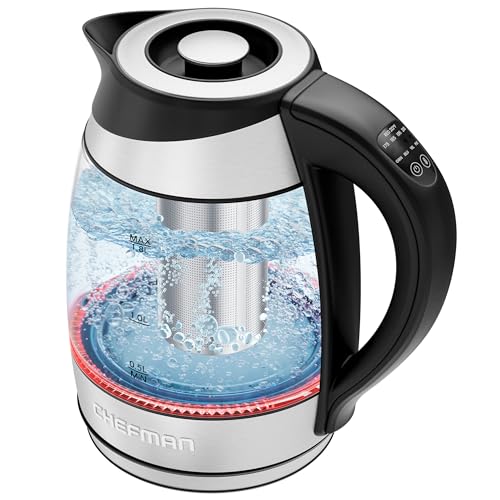
Chefman Electric Kettle with Temperature Control
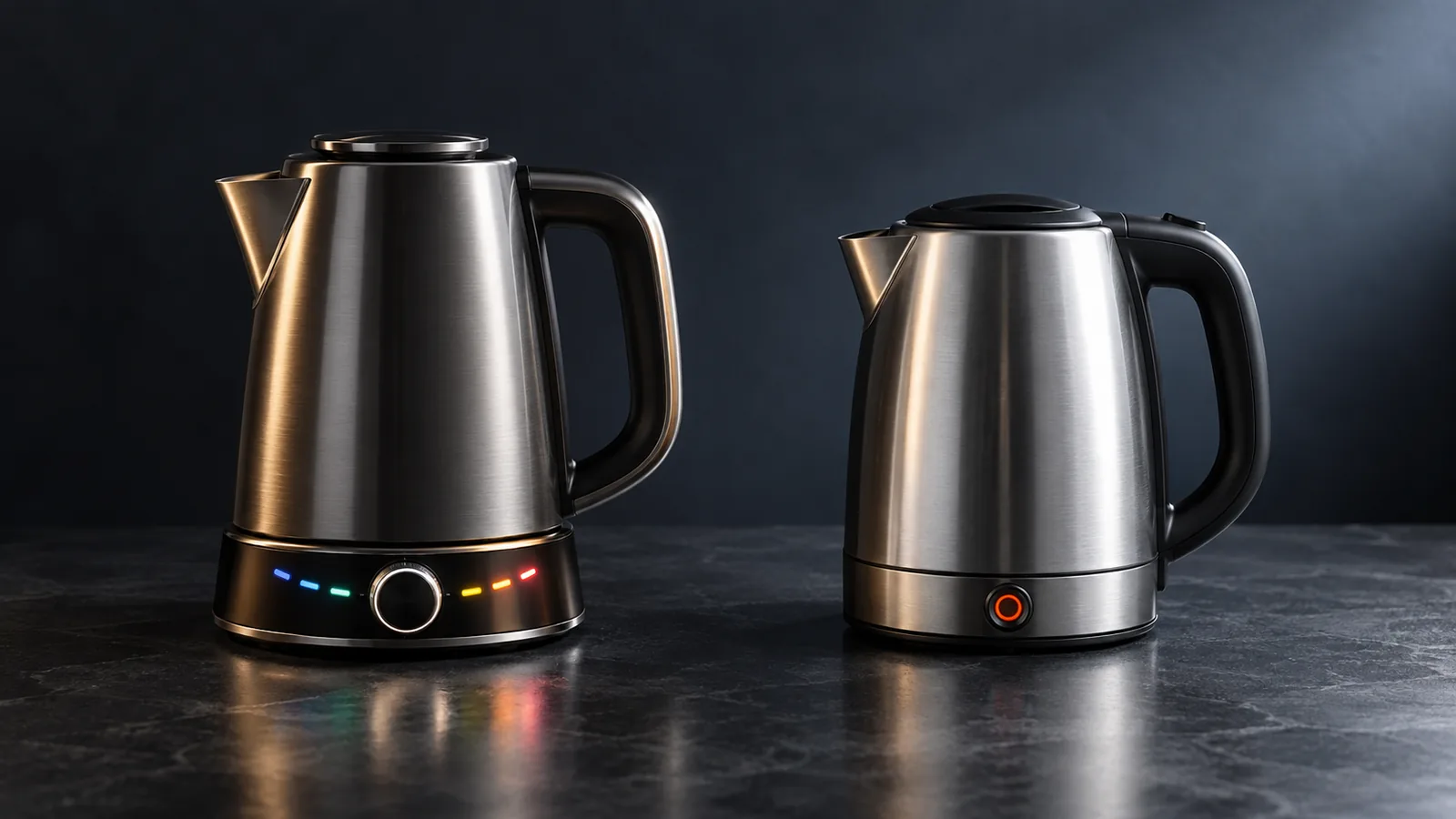
The value champion for temperature control. Owners reward it for ease of use, value, and temperature control on the largest ownership base in the variable-temp segment — a trustworthy signal it does the core job well cheaply, and cleans up easily. The honest caveat is durability: a real minority report early failure, so buy with an easy return window.
Prime Day Amazon Prime Big Deal Days is on — a good time to check the live price.
Check current price on AmazonWhat buyers praise
- Rewarded for ease of use, value, and temperature control above the norm
- Largest ownership base in the variable-temp segment — trustworthy signal
- Easy to clean and efficient
- Full temperature control at a low price
What buyers flag
- Durability caveat — a minority report failure within months to a year
- Buy from a seller with an easy return window
- No premium build feel — the Cuisinart is more solid
Why water temperature matters
Water temperature affects which compounds extract from tea leaves and coffee grounds, and at what rate. The effect is not subtle for some drinks and genuinely negligible for others.
The most important cases:
Green tea — the bitterness of green tea brewed with boiling water versus water at 175°F is immediately detectable. This is not preference; it is chemistry. Catechins and tannins — the bitter compounds in green tea — extract rapidly at high temperatures and remain largely in the leaf at lower temperatures. The same tea, the same steep time, different temperatures: two completely different cups.
White tea — even more delicate than green tea. Boiling water produces a flat, tannic cup. At 160–175°F, white tea produces a subtle, complex, slightly sweet result that is the reason people pay premium prices for the leaves.
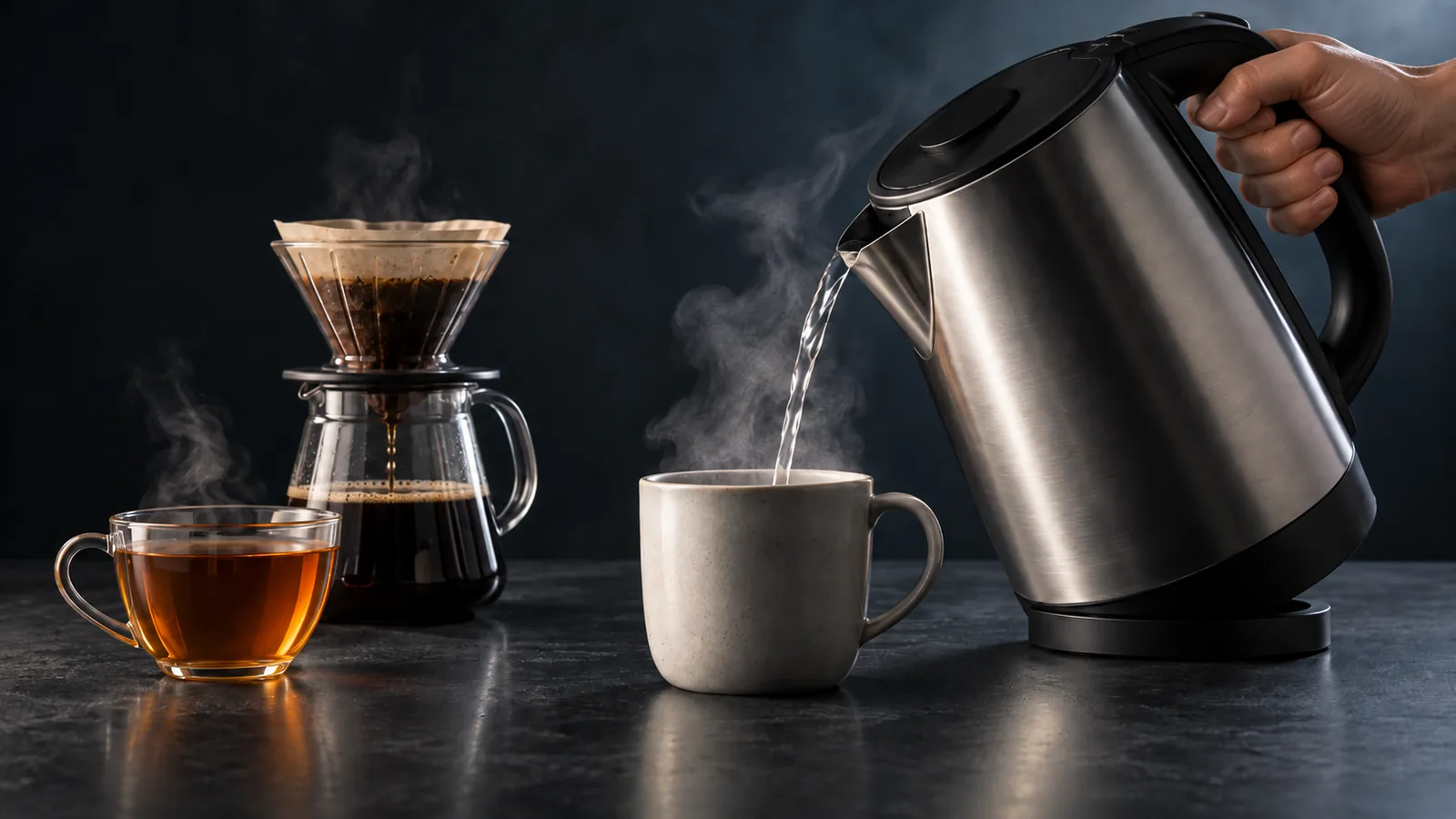
Pour-over coffee — the extraction window for coffee is narrower than most buyers realize. Under-extraction (too-cold water, too-short contact) produces a sour, underdeveloped cup. Over-extraction (too-hot water, too-long contact) produces a harsh, bitter cup. 195–205°F targets the center of the extraction window for most single-origin beans.
Black tea, herbal infusions — largely temperature-insensitive within the range a kettle produces. Boiling or near-boiling water is appropriate and produces consistent results.
Temperature reference by drink
Tea
| Tea type | Temperature | Notes |
|---|---|---|
| White tea | 160–185°F (71–85°C) | Most delicate; lower temp for highest-quality leaves |
| Green tea — Japanese (sencha, gyokuro) | 165–175°F (74–79°C) | Gyokuro particularly sensitive; go lower for sweeter result |
| Green tea — Chinese (Dragon Well, Biluochun) | 175–185°F (79–85°C) | Slightly more tolerant than Japanese greens |
| Yellow tea | 175–185°F (79–85°C) | Treat similarly to Chinese green |
| Oolong — light oxidation (Tie Guan Yin) | 185–195°F (85–90°C) | Closer to green tea behavior |
| Oolong — medium oxidation (Dong Ding) | 195–203°F (90–95°C) | Richer extraction at higher temp |
| Oolong — dark/roasted (Da Hong Pao) | 203–212°F (95–100°C) | Full boil or near-boil appropriate |
| Black tea | 200–212°F (93–100°C) | Boiling traditional; 205°F marginally smoother for premium leaves |
| Pu-erh | 212°F (100°C) | Boiling water standard for all pu-erh types |
| Herbal / tisanes | 200–212°F (93–100°C) | Boiling or near-boiling extracts herbal oils effectively |
| Rooibos | 212°F (100°C) | Full boil recommended |
Coffee
| Method | Temperature | Notes |
|---|---|---|
| Pour-over (V60, Chemex, Kalita) | 195–205°F (90–96°C) | 200°F (93°C) is a reliable default |
| Drip coffee maker | Machine-controlled | Target 195–205°F; check if your machine hits this range |
| French press | 195–205°F (90–96°C) | Let boiling water sit 30–45 seconds to reach target |
| AeroPress | 175–205°F (79–96°C) | Lower temp reduces bitterness; experiment by roast level |
| Cold brew | Room temperature or cold | No heating required; long steep time (12–24 hrs) extracts without heat |
| Moka pot | Cold or room-temp water in the base | The Moka pot heats the water; do not add hot water |
Other uses
| Use | Temperature | Notes |
|---|---|---|
| Baby formula (safety-critical) | Water must first boil; use at ≥158°F (70°C) | See safety note below |
| Instant oatmeal | Boiling | Heat extracts starches; boiling appropriate |
| Instant noodles / cup soups | Boiling | Packaging specifies boiling water |
| Cooking (pasta water, blanching) | Boiling | Kettle can pre-heat water faster than stovetop |
The baby formula temperature: a safety note
Powdered infant formula is not sterile. Cronobacter sakazakii is a bacterium that can be present in powdered formula and causes serious illness in newborns. The WHO and NHS recommend using water that has been freshly boiled (to ensure any contaminants are killed) and allowed to cool to no lower than 70°C (158°F) before being added to the formula.
This means:
- Boil fresh water fully
- Allow to cool to 70°C (158°F) — approximately 10–15 minutes in a room-temperature environment
- Add to formula powder immediately
- Cool to feeding temperature before giving to the infant
A variable-temperature kettle set to 158°F and used without first bringing the water to a full boil does not meet this requirement. The water must reach 100°C (212°F) — a full boil — to kill potential pathogens, then be used while still above 70°C. The keep-warm function on a variable-temperature kettle (set to 158°F+) is useful for maintaining the temperature between preparation and use, not a substitute for the initial boil.
The practical implication for kettle buying
The temperature guide above translates directly into kettle type:
Single-boil kettle is sufficient for:
- Black tea, herbal infusions, rooibos, pu-erh
- French press and Moka pot coffee (allow to sit 30–45 seconds)
- Cooking, instant products
Variable-temperature kettle is meaningfully beneficial for:
- Green tea of any variety
- White tea
- Light and medium oolongs
- Pour-over coffee with attention to extraction quality
- Baby formula preparation (for keep-warm utility after the initial boil)
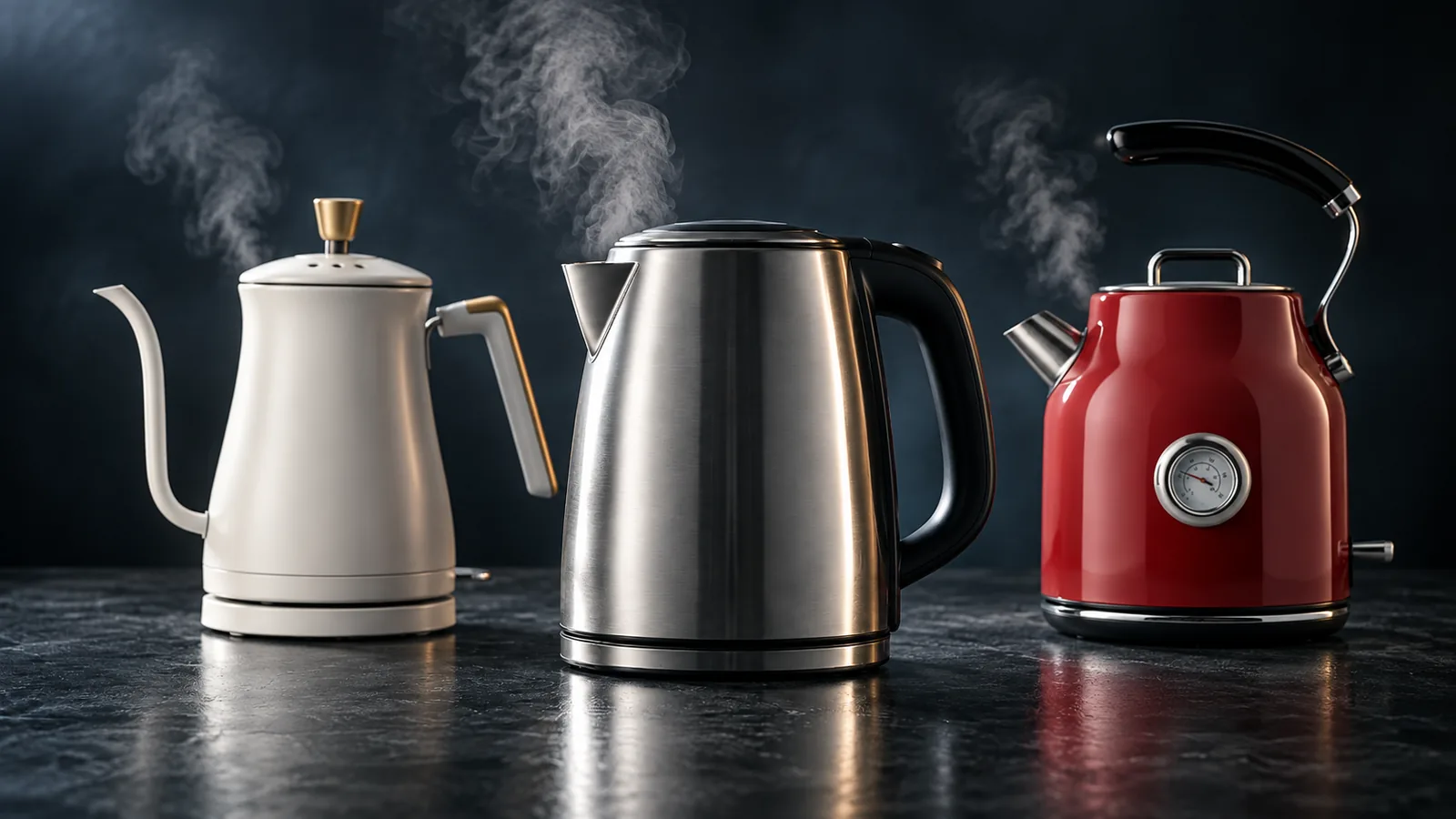
Gooseneck spout adds benefit for:
- Pour-over coffee (all temperature ranges)
- Gaiwan and teapot brewing where pour direction matters
The temperature guide and the kettle-type decision are the same question viewed from two directions. Determine which drinks require temperature precision, then buy the kettle that delivers it.
Variable temperature vs single boil — full comparison · How to choose an electric kettle · The best electric kettles