The five-minute routine
After the cooker has cooled:
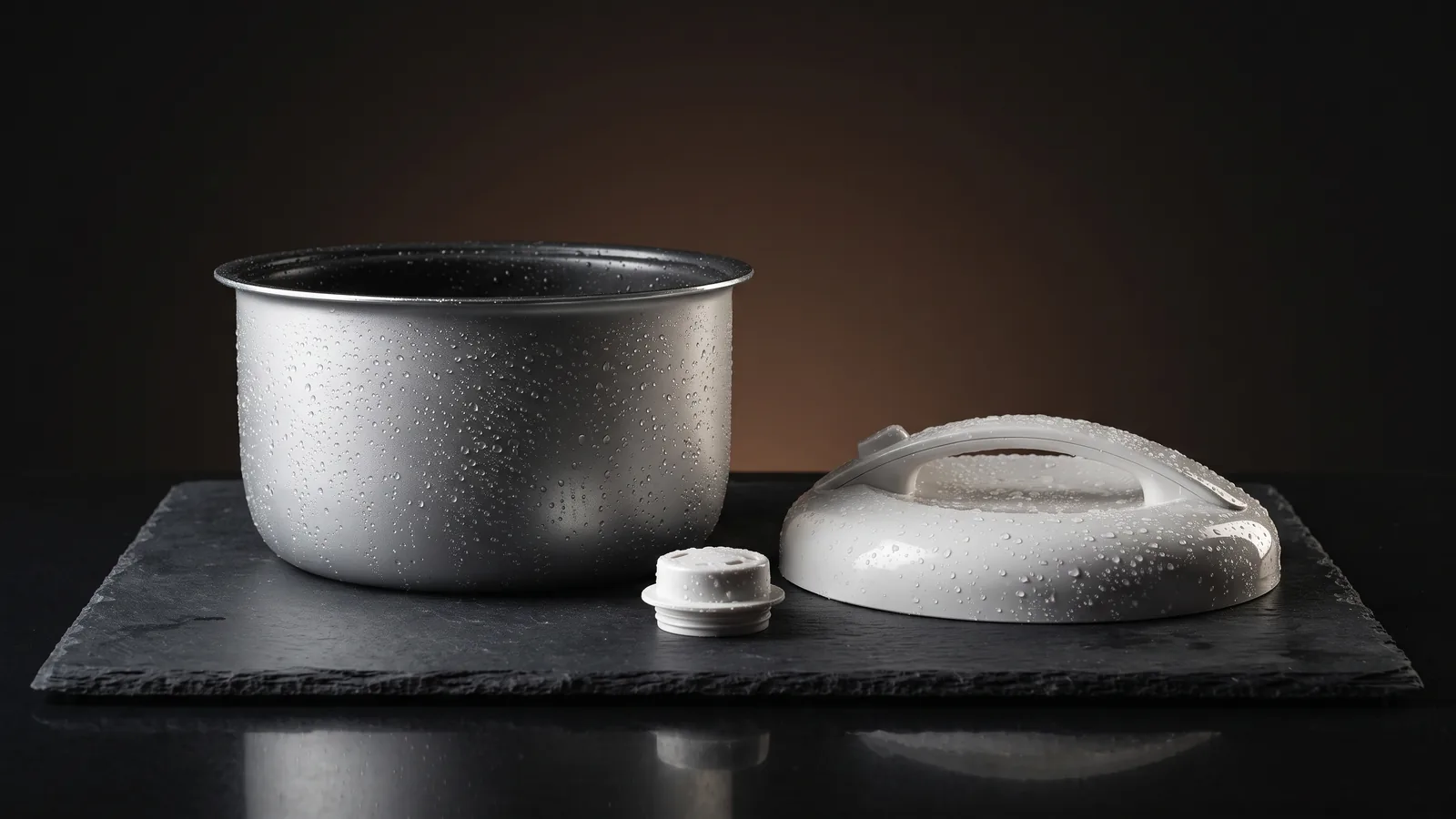
- Inner pot — wash in warm soapy water with a soft sponge; soak first if rice stuck (below).
- Inner lid — detach and wash it, or wipe a fixed lid with a damp cloth. This is where most residue hides.
- Steam vent / valve — pull it out if it detaches and rinse; trapped starch clogs it.
- Condensation cup — empty and rinse the little cup on the back or side.
- Heating plate + exterior — wipe with a damp cloth. Never submerge the base.
Burnt-on rice: soak, don’t scrape
The rule that saves your coating: soak instead of scraping. Fill the pot with warm water and a drop of dish soap, leave it 15–30 minutes, and the burnt layer softens and lifts with a soft sponge. For stubborn spots, a baking-soda-and-water paste is gentle and effective. Keep metal utensils, steel wool, and scouring powders away from nonstick and ceramic pots — scratches only make future sticking worse.
Killing the smell
Lingering odor almost always comes from starch trapped in the lid, vent, or condensation cup — clean those first. To freshen the pot, wipe it (or run a short cycle) with equal parts water and white vinegar, rinse, and air-dry with the lid open. Store the cooker fully dry, lid slightly ajar — sealing a faintly damp cooker is what breeds smells.
The easy-clean advantage
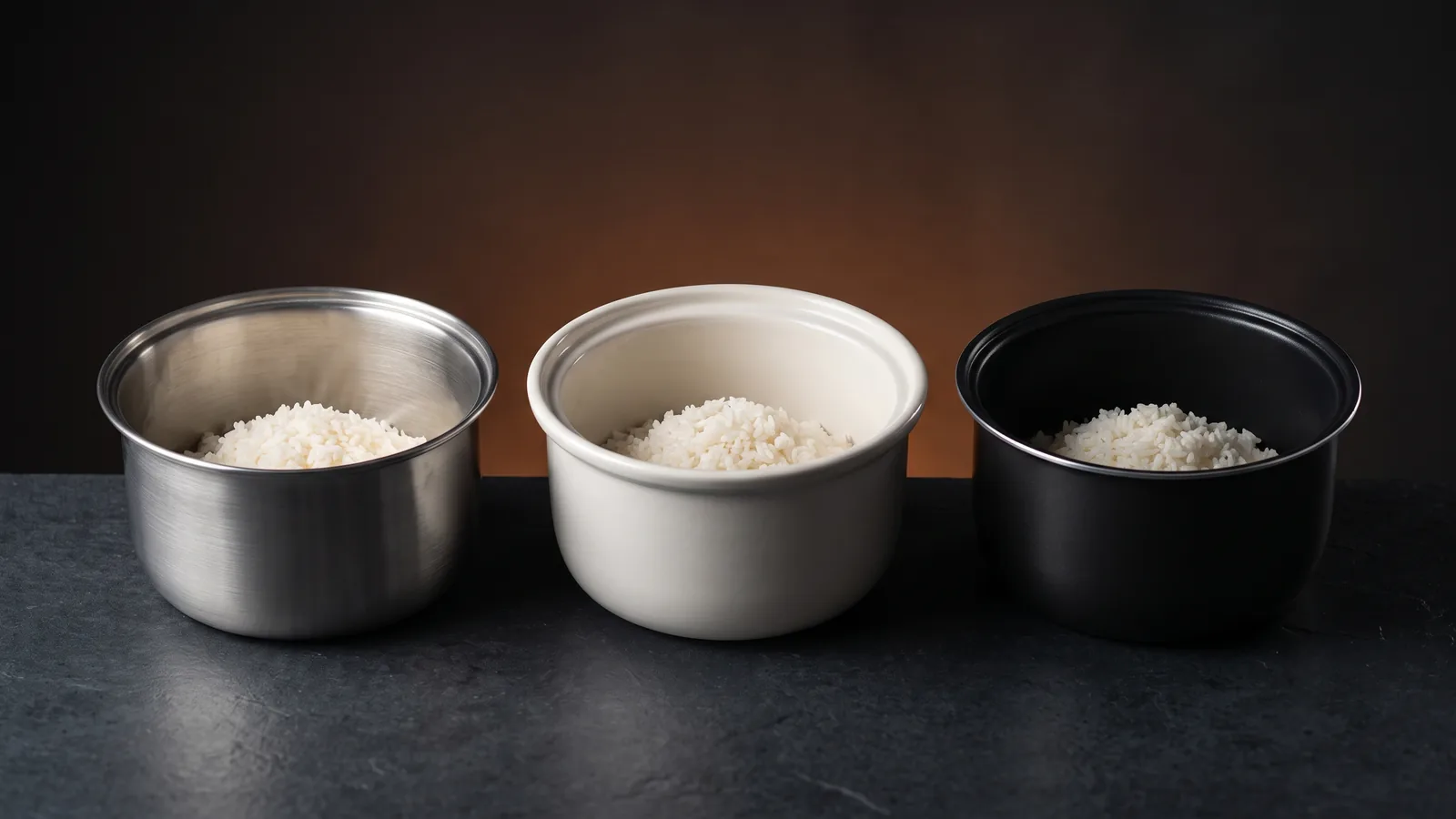
How easy a rice cooker is to clean depends a lot on the inner pot: a smooth nonstick or ceramic pot wipes clean where bare stainless can stick. A removable ceramic pot that avoids traditional nonstick coatings is both easy to clean and the non-toxic pick — one of the picks in our best rice cookers guide.
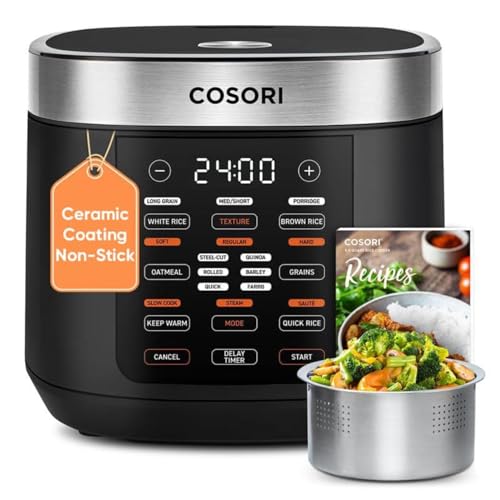
Cosori Ceramic-Coated Rice Cooker
Cleanup is easiest with a smooth, removable pot, and this one pairs that with a ceramic coating that skips traditional nonstick — so rice releases and wipes clean without a PTFE surface. It cooks a range of grains with clear presets and carries a well-rated owner base. You still hand-wash the ceramic pot gently to protect the coating, but for a rice cooker that's both easy to clean and a non-toxic choice, it's a natural pick. See our materials guide for the full coating comparison.
Prime Day Amazon Prime Big Deal Days is on — a good time to check the live price.
Check current price on AmazonWhat buyers praise
- Ceramic-coated pot — easy release, no PTFE coating
- Removable pot and clear presets; well-rated
- Non-toxic choice that's also low-effort to clean
What buyers flag
- Ceramic coating needs gentle, hand-wash care
- Pricier than a basic nonstick cooker
The bottom line
A five-minute habit keeps a rice cooker clean and odor-free: wash the pot, don’t skip the lid, vent, and condensation cup, soak (never scrape) burnt-on rice, and dry it fully before storing. A smooth ceramic or nonstick pot makes the whole job faster. Choosing a cooker? See how to choose a rice cooker and the materials guide.