Can You Leave a Slow Cooker On All Day? What's Safe
Noolaguide Editorial·Last updated
Disclosure: As an Amazon Associate, Noolaguide earns from qualifying purchases — we may earn a commission when you buy through links on this page, at no extra cost to you. Our recommendations are editorially independent. How we make money.
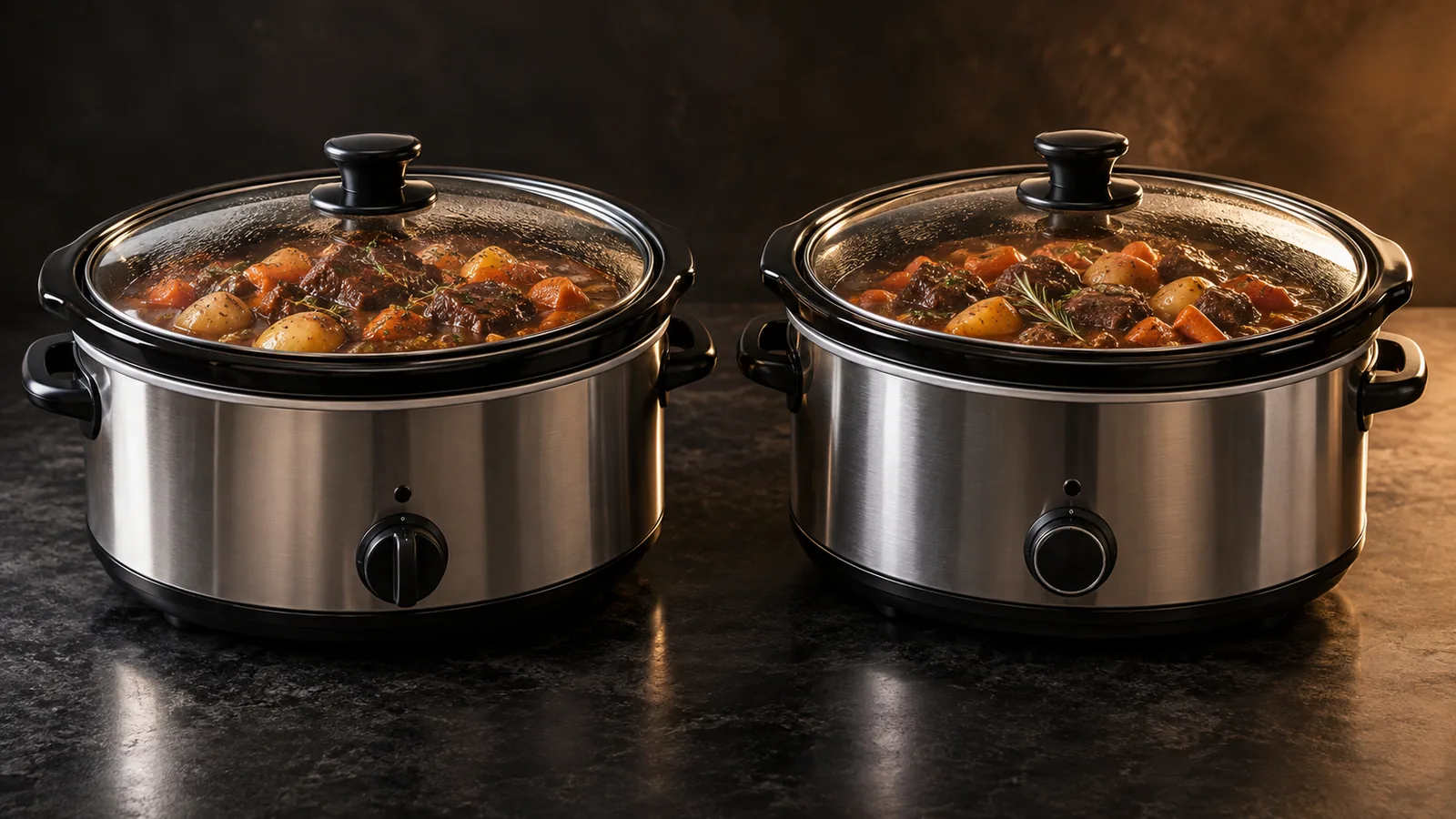
Yes — slow cookers are designed to run for hours unattended, which is the whole point: start dinner in the morning, come home to it done. The keys to doing it safely are using the appliance as intended (lid on, filled half to two-thirds, on a clear counter), not stretching a cook far past its recipe time, and — the best upgrade — a programmable model that switches itself to keep-warm so an 8-hour workday doesn't overcook your food. Here's what's safe and how to do it right.
Slow cookers were invented precisely so you could leave them: low, steady heat over many hours with no supervision. Running one through an 8-hour workday is a normal, everyday use, not a risk you’re getting away with. The concerns people have are really about using it correctly, not about whether it’s allowed.
The safety basics
Five commonsense steps cover it:
Clear, heat-safe surface. A counter away from walls, curtains, and the counter’s edge — never on the stovetop.
Lid on. It holds temperature and cooks evenly; lifting it repeatedly lets heat escape.
Half to two-thirds full. Slow cookers cook best in this range; too empty can scorch, too full can overflow.
Sound appliance and cord. Undamaged unit, plugged straight into an outlet, not a flimsy extension cord.
Match the recipe to your hours. Use a cook time and setting sized to how long you’ll be away.
The real question: overcooking, not danger
The genuine problem with a long day isn’t safety so much as timing — if a recipe needs 6 hours and you’re gone 10, it overcooks. High finishes in ~4 hours; low runs ~8–10. The clean fix isn’t guessing a setting — it’s a programmable cooker that cooks for a set time and then drops to keep-warm on its own, so the food is done when the timer ends and simply held warm until you walk in.
Is there a set-and-forget pick?
Not one we can recommend on the evidence. A programmable cooker with automatic keep-warm is the right idea, but the programmable 6- and 8-quart models we analyzed had owner praise and complaints close to even, with durability and heating failures the complaints. Until one has a clearly better record, the dependable route is a manual cooker and a recipe matched to your hours: choose dishes that suit 8 to 10 hours on low. Our best slow cookers guide has the picks.
The bottom line
Leaving a slow cooker on all day is safe and completely normal — follow the basic placement and fill rules, match the recipe to your hours, and let a programmable auto-warm model handle the timing so nothing overcooks. Choosing a cooker? See how to choose a slow cooker. Wondering whether a multi-cooker suits you better? See Instant Pot vs Crock-Pot.
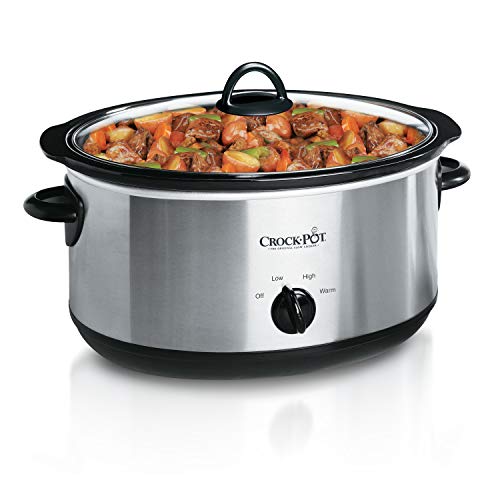
The size most families need, in one of the most-owned slow cookers anywhere. It fits a 6-pound roast, has a removable stoneware pot, and works with a simple dial: low, high, warm. Praise outweighs complaints about two and a half to one, led by quality, easy cleaning and value. The complaint to take seriously is heat: a number of owners warn that the outside gets very hot. A few find it bigger than they expected, and some report it not lasting.
Prime DayAmazon Prime Big Deal Days is on — a good time to check the live price.
One of the deepest owner records of any slow cooker
Quality, easy cleaning and value lead the praise
Simple dial; removable stoneware
What buyers flag
The outside gets very hot, per owners
No timer or automatic switch to warm
Bigger than some buyers expect
At a glance
Capacity
7 quarts
Dimensions
16.9"D x 11.8"W x 10.4"H
Power
210 watts
Weight
12.6 pounds
Material
Stoneware
Warranty
1-year
Owner evidence report
Crock-Pot 7-Quart Manual Slow Cooker
What owners praise
Quality9% category avg
19%
Ease of cleaning11% category avg
15%
Cooking experience13% category avg
12%
Value for money6% category avg
12%
Size12% category avg
11%
What to watch
Heating3% category avg
22%
Size3% category avg
16%
Quality3% category avg
14%
Durability3% category avg
10%
Themes from our analysis of verified owner reviews. Each bar is that theme's share of what owners raise, with the category average beside it for context. Noolaguide does not claim hands-on lab testing; the authority here is the accumulated experience of the people who own it.
Yes. Slow cookers are specifically designed to cook safely for many hours unattended — that's their whole purpose, letting you start a meal in the morning and come home to it finished. To do it safely, use the cooker as intended: keep the lid on, fill it between half and two-thirds full, set it on a clear, heat-safe counter away from walls and clutter, and don't run a recipe far beyond its intended time. Millions of people run slow cookers through a full workday routinely. The one upgrade that makes it foolproof is a programmable model that switches itself to keep-warm when the cook time ends.
Yes, for most people it's a normal, safe routine — slow cookers are built to run for the length of a workday. Follow the basics: start with the lid on and don't keep lifting it, fill it half to two-thirds full, place it on a clear counter (not against a wall or under cabinets, and not on the stovetop), and use a recipe timed for the hours you'll be gone. If you'll be out longer than the recipe needs, a programmable cooker that drops to keep-warm automatically prevents overcooking. As with any appliance, use an undamaged cord and unit.
Most slow-cooker recipes run 4 hours on high or 8–10 hours on low, and cookers are designed to hold those times safely. Going well beyond the recipe's time is what causes trouble — food dries out, overcooks, or sits too long. Many models also have a keep-warm setting meant to hold finished food for a couple of hours, not to cook indefinitely. The practical rule: match the recipe and setting to how long you'll be away, and if that's longer than the cook needs, use a programmable model that switches to keep-warm on its own rather than continuing to cook.
For a full day out, low is usually the right choice — most recipes run 8–10 hours on low, which lines up with a workday, while high finishes in about 4 hours and would overcook if left much longer. If your day is longer than even the low setting needs, the best answer isn't a hotter or cooler setting but a programmable cooker that cooks for a set time and then switches to keep-warm automatically, so the food is done when the timer ends and simply held warm until you're home.
Keep it simple: put it on a clear, heat-safe surface away from walls, curtains, and the edge of the counter (never on the stovetop); keep the lid on so it holds temperature; fill it half to two-thirds full; use an undamaged appliance and cord plugged directly into an outlet, not a flimsy extension cord; and match the recipe and setting to the hours you'll be gone. A programmable model that auto-switches to keep-warm removes the overcooking risk. These are the same commonsense steps behind running any countertop appliance while you're out.