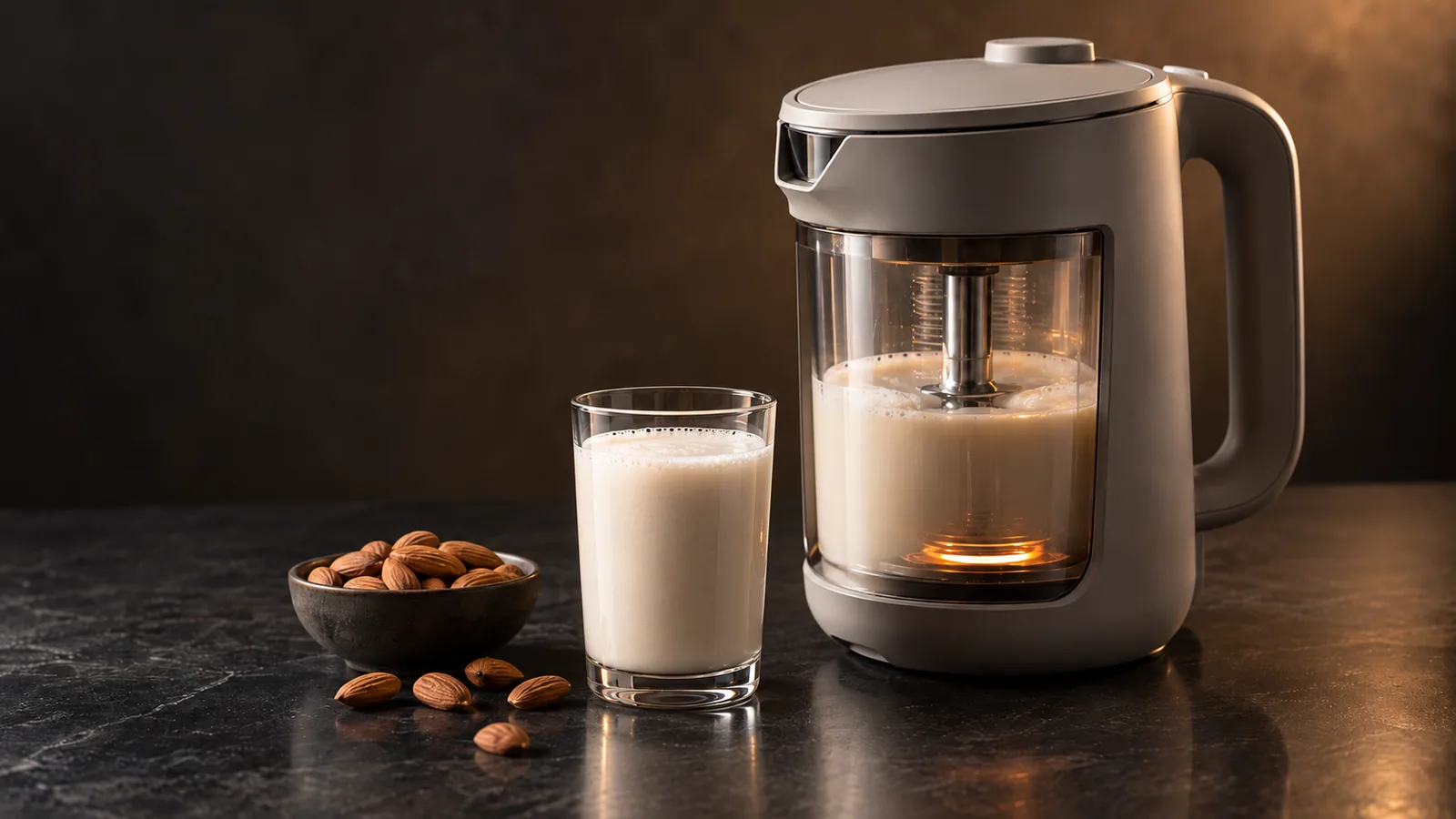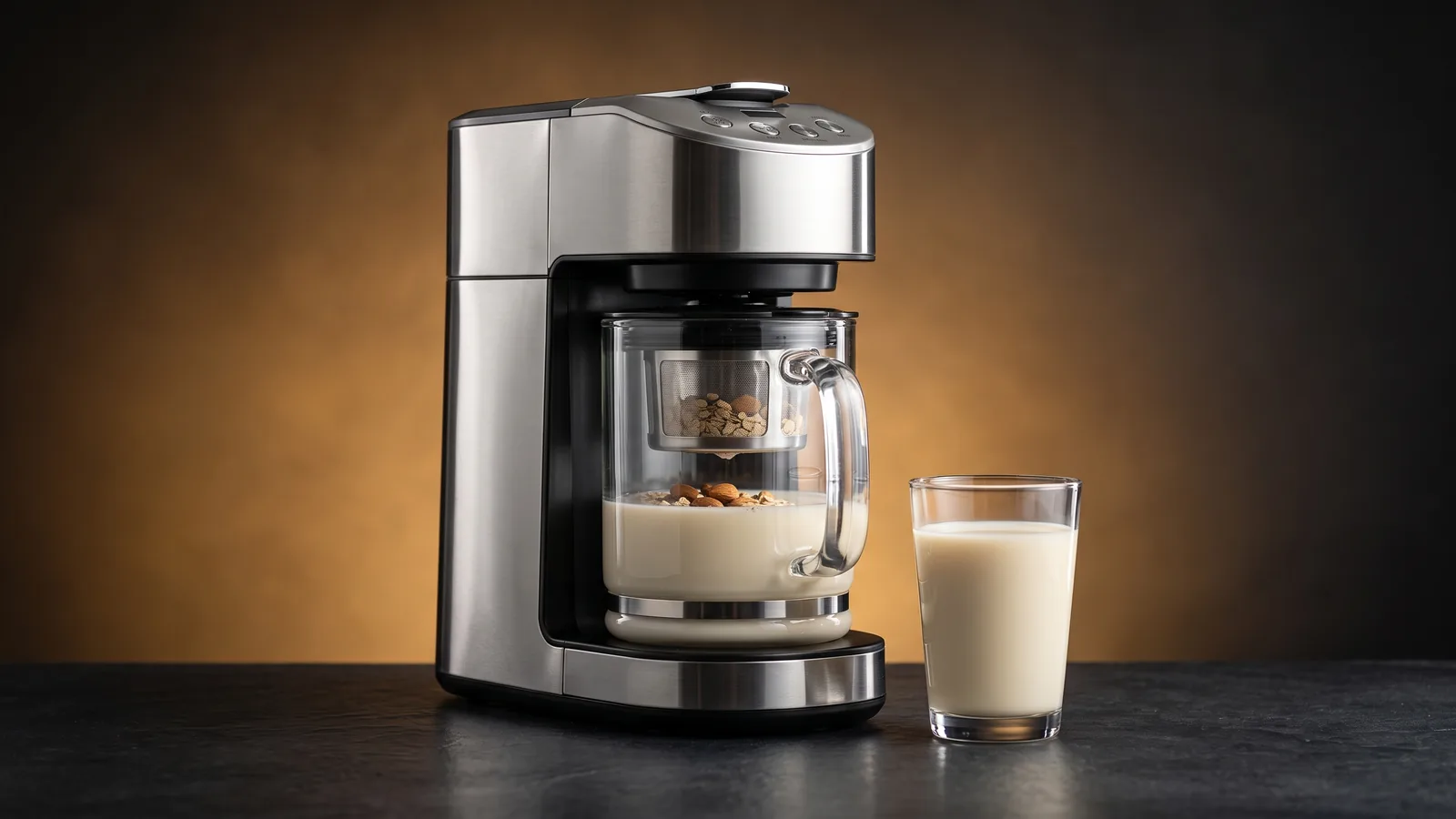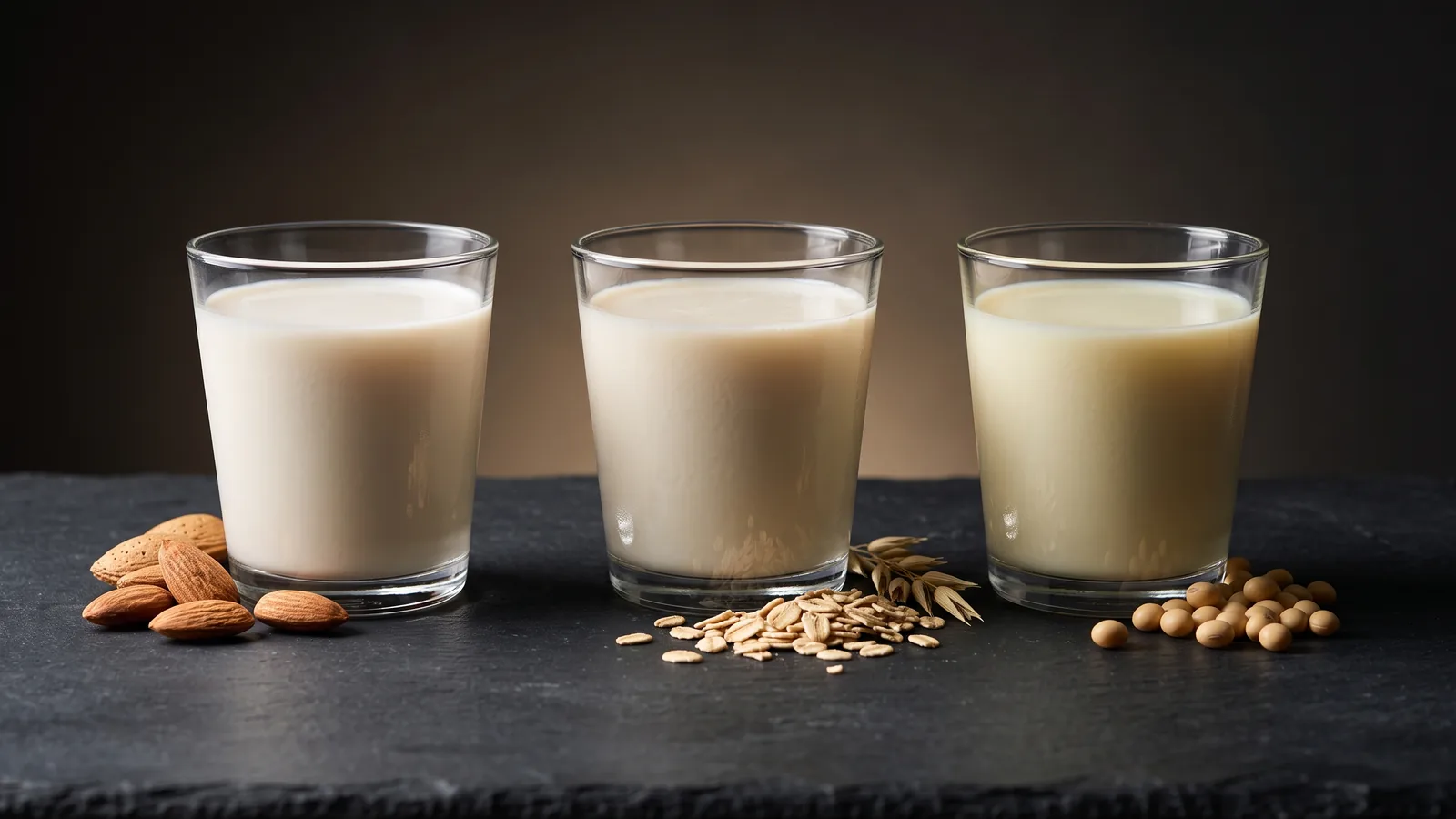
Making these at home? The machine most owners reach for is the versatile, easy-clean ChefWave Milkmade — our best overall from the best plant-based milk makers.
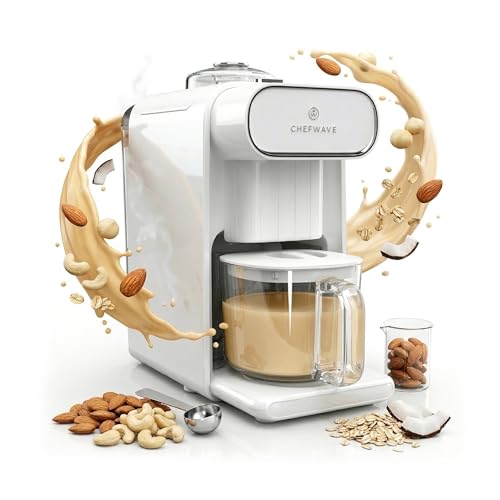
ChefWave Milkmade 6-in-1 Nut Milk Maker
The most versatile machine and the easiest to clean — the best pick for most buyers. Six programs cover cold nut milks plus heated soy, oat, and rice, so it replaces what would otherwise take two machines, and cleaning is the quality its owners reward it for most. The honest trade-off is durability, the quality it is penalized for most; inspect on delivery, as a subset report units arriving used.
Prime Day Amazon Prime Big Deal Days is on — a good time to check the live price.
Check current price on AmazonWhat buyers praise
- Six programs including heated soy and oat — one machine for every milk
- Cleaning is its standout strength — rewarded above the category norm
- Glass pitcher — taste-neutral and dishwasher-safe
- Controlled-heat oat program avoids cold-blended sliminess
What buyers flag
- Durability is the quality owners penalize most
- A subset report units arriving open-box or used — inspect on delivery
- A few note an off-smell on the soy cycle specifically
- Higher price than budget machines
Before you start: the one rule that changes everything
Most nut milk makers have two cycles: a heated cycle (80–100°C) and a cold extraction cycle (room temperature or below). Which cycle you use is not a preference — for oat and soy, it determines whether the milk is actually drinkable.
- Oat milk: cold cycle only. Heat breaks down oat starch into a slimy, gluey texture. There is no fixing overheated oat milk.
- Soy milk: heat required. Raw soybeans contain trypsin inhibitors — compounds that interfere with protein digestion. Heating deactivates them. Cold soy milk made from raw beans is not safe to drink regularly.
- Everything else: personal preference. Heating increases yield slightly from harder nuts (almonds, hazelnuts) and produces warmer milk for immediate use. Cold extraction is faster and preserves more volatile flavor compounds.
If your machine only has a heated cycle and no cold setting, you can make almond, cashew, hemp, and soy milk — but not oat milk.
Almond milk
The most popular milk made in nut milk makers. Almonds produce a mild, slightly sweet milk that works in coffee, baking, cereal, and smoothies without dominating the flavor.
Ratio: 1 cup raw almonds : 4 cups water (yields approximately 28–32 oz) Soak time: 8–12 hours (overnight works well; longer is fine, up to 24 hours) Cycle: cold or heated — both work. Heated produces slightly higher yield.
How to soak: cover almonds with cold water by at least an inch. Drain and rinse before using. Soaked almonds are noticeably plumper — a cup of dry almonds expands to roughly 1.25 cups after soaking.
What soaking does: softens the almond cell walls, making blending more efficient and increasing total yield. It also reduces phytic acid, which some people find improves digestibility. Unsoaked almonds work but yield less and produce a slightly grainier texture.
Flavor adjustments: add one Medjool date (pitted), half a teaspoon of vanilla extract, or a pinch of salt after the cycle completes. Shake or stir briefly before drinking. Adding sweeteners during the cycle is not recommended — it can cause excess foam in strain-free machines.
Yield expectations: 1 cup almonds to 4 cups water produces approximately 28–32 oz of finished milk, after pulp is removed. Richer ratio (3 cups water) produces creamier milk but less volume.
Cashew milk
The easiest nut milk to make — cashews blend so thoroughly that strain-free machines produce creamy, smooth milk with no grit. Cashew milk has a mild, buttery flavor and a naturally thick consistency.
Ratio: 1 cup raw cashews : 4 cups water Soak time: 4–6 hours (cashews soften faster than almonds) Cycle: cold preferred; heated also works
What makes cashew different: unlike almonds, cashews blend nearly completely — there is very little pulp. In a strain-free machine, cashew milk comes out comparably smooth to store-bought. In a bag-strain machine, the nut milk bag may have almost no dry pulp after straining.
Rich cashew cream: 1 cup cashews to 2 cups water produces a thick cream suitable for pasta sauces, coffee creamer, and desserts. At this ratio it is closer to cashew cream than milk.
Oat milk
The most temperamental milk to make at home. Commercial oat milk uses enzymes and specialized processing to achieve the thin, smooth texture of brands like Oatly. Home oat milk takes a different approach — and the temperature rule is absolute.
Ratio: 1 cup rolled oats : 4 cups cold water Soak time: none. Do not soak oats before using. Cycle: cold only
The slimy oat milk problem: oat starch gelatinizes readily — both heat and physical agitation can trigger it. Two things cause slimy home oat milk:
- Using the heated cycle
- Over-blending in the cold cycle (running the cycle too long)
Most nut milk makers run a fixed cycle length. If your machine’s cold cycle produces slimy oat milk, the cycle is too long for oats. Some machines allow for manual override or shorter cycle settings — check your manual.
Straining oat milk: even on a strain-free machine, a second pass through a fine-mesh strainer improves texture significantly. Oat particles are finer than nut particles and some pass through built-in mesh filters. Strain immediately after the cycle — if oat milk sits, the starch settles and the texture becomes uneven.
Flavor: home oat milk is less sweet than commercial versions (which use enzymatic treatment to convert starch to sugar). Add a tablespoon of maple syrup if you want a sweeter result. A pinch of salt improves the overall flavor significantly.
Soy milk
The highest-protein milk you can make in a nut milk maker, and the one that requires the most preparation. Soybeans must be soaked and must be processed with heat — there are no shortcuts.
Ratio: 1 cup dry soybeans : 5 cups water Soak time: 8–12 hours. Soybeans roughly double in size after soaking. Cycle: heat required
Using dry soybeans vs pre-cooked: always use raw, dry soybeans — not canned cooked soybeans. The heat cycle in the machine processes them from raw. Using pre-cooked soybeans produces inferior texture and significantly more foam.
What heated soy milk smells like: fresh soy milk has a distinct cooked-bean aroma that fades as the milk cools. If the smell is strong after cooling, try soaking the soybeans for a full 12 hours and rinsing thoroughly before processing. Most people find the aroma mild enough to ignore once the milk is cold.
Yield: 1 cup soybeans produces approximately 32–36 oz of finished soy milk after straining pulp (okara). The okara itself is usable — it works in baking (replace up to 25% of flour), patties, and as a meat extender.
Protein content: home soy milk made at 1:5 ratio has roughly 3–4g protein per 8 oz — comparable to commercial unsweetened soy milk.
Hemp milk
The fastest milk to make — hemp hearts need no soaking, no straining in most machines, and the cycle completes in under four minutes. Hemp milk has an earthy, slightly nutty flavor that pairs better with smoothies and oatmeal than with coffee.
Ratio: half cup hemp hearts : 4 cups water Soak time: none Cycle: cold or heated
Why less hemp: hemp hearts blend into the water almost completely. Using a full cup produces a very rich, fatty milk. Half a cup is the standard starting ratio — adjust up for a creamier result.
Nutritional note: hemp milk is one of the few plant milks with a reasonable omega-3 to omega-6 ratio. It does not need fortification to provide useful amounts of both fatty acids.
Macadamia milk
The richest, most neutral-flavored nut milk. Macadamia milk has a creamy texture similar to light cream and a flavor profile close to dairy, which makes it the best nut milk for coffee. It is also the most expensive per batch.
Ratio: half cup macadamia nuts : 4 cups water (or 1 cup : 4 cups for very rich milk) Soak time: 2–4 hours (optional but improves creaminess) Cycle: cold preferred
Coffee use: macadamia milk steams and froths better than most plant milks at home because of its fat content. It does not separate as noticeably in hot coffee as oat or almond milk can.
Walnut milk
The most nutritious nut milk by omega-3 content, and one of the most delicate to make. Walnuts have a tannic, slightly bitter flavor that intensifies with heat or over-blending.
Ratio: 1 cup walnuts : 4 cups water Soak time: 4–6 hours (reduces bitterness) Cycle: cold only; short cycle if adjustable
Managing bitterness: the tannins in walnut skins are the primary source of bitterness. After soaking, rub the walnuts between your palms to remove loose skin before adding to the machine. This step is optional but reduces bitterness noticeably in the finished milk.
Flavor profile: walnut milk has an earthy, rich taste that works in oatmeal, chocolate smoothies, and savory applications. It is not a neutral milk — pair it with ingredients whose flavors complement it.
Hazelnut milk
Closest in flavor to commercial hazelnut coffee creamers, without the added sugar and carrageenan. Works exceptionally well in coffee.
Ratio: 1 cup hazelnuts : 4 cups water Soak time: 8 hours Cycle: cold or heated
Skin removal: hazelnuts have a papery skin that contributes a slightly bitter flavor. If your hazelnuts are raw with skins, blanch them briefly in boiling water, drain, and rub with a towel to remove most skins before soaking. Blanched (skin-removed) hazelnuts are available at specialty grocery stores and skip this step entirely.
Peanut milk
The most affordable nut milk to make at home. Peanut milk has a strong, distinctive flavor — it tastes like peanuts, which some people find useful (savory sauces, smoothies with banana) and others find too assertive for coffee or cereal.
Ratio: 1 cup raw peanuts : 4 cups water Soak time: 4–6 hours Cycle: cold or heated
Raw vs roasted: raw peanuts produce a milder, more neutral milk. Roasted peanuts produce a more intense flavor. Either works in the machine.
Flaxseed milk
High in omega-3s and the thinnest milk on this list. Flaxseed milk has a light, slightly earthy flavor and a watery consistency. Works best as a base in smoothies rather than as a standalone milk.
Ratio: 3 tablespoons whole flaxseeds : 4 cups water Soak time: none Cycle: cold
Important: flaxseeds are very small and some can pass through mesh filters. A second pass through a fine-mesh strainer or cheesecloth removes any remaining seed particles.
What to do with nut milk pulp
Every batch of nut or seed milk produces pulp — the fiber, protein, and remaining starch left after straining. Discarding it is common but wasteful.
Almond pulp (almond flour): spread on a baking sheet and dry in the oven at 200°F for 1–2 hours, then process in a food processor. Works as a gluten-free flour substitute in cookies, pancakes, and crusts.
Oat pulp: stir into oatmeal, muffin batter, or bread dough. Ratio: replace 10–15% of flour with oat pulp.
Soy pulp (okara): the highest-protein pulp. Works in veggie burgers, meatballs, soups, and as a flour replacement in baking.
Cashew and macadamia pulp: nearly nonexistent in strain-free machines; minimal in bag-strain. Any pulp produced works in smoothies or as a spread.
Why different machines suit different milks
Not every nut milk maker handles every milk type equally well. The two variables that determine which milks a machine can make:
Heating function: required for soy milk, and preferred for almond milk. Machines without a heating element are limited to cold-extraction milks only.
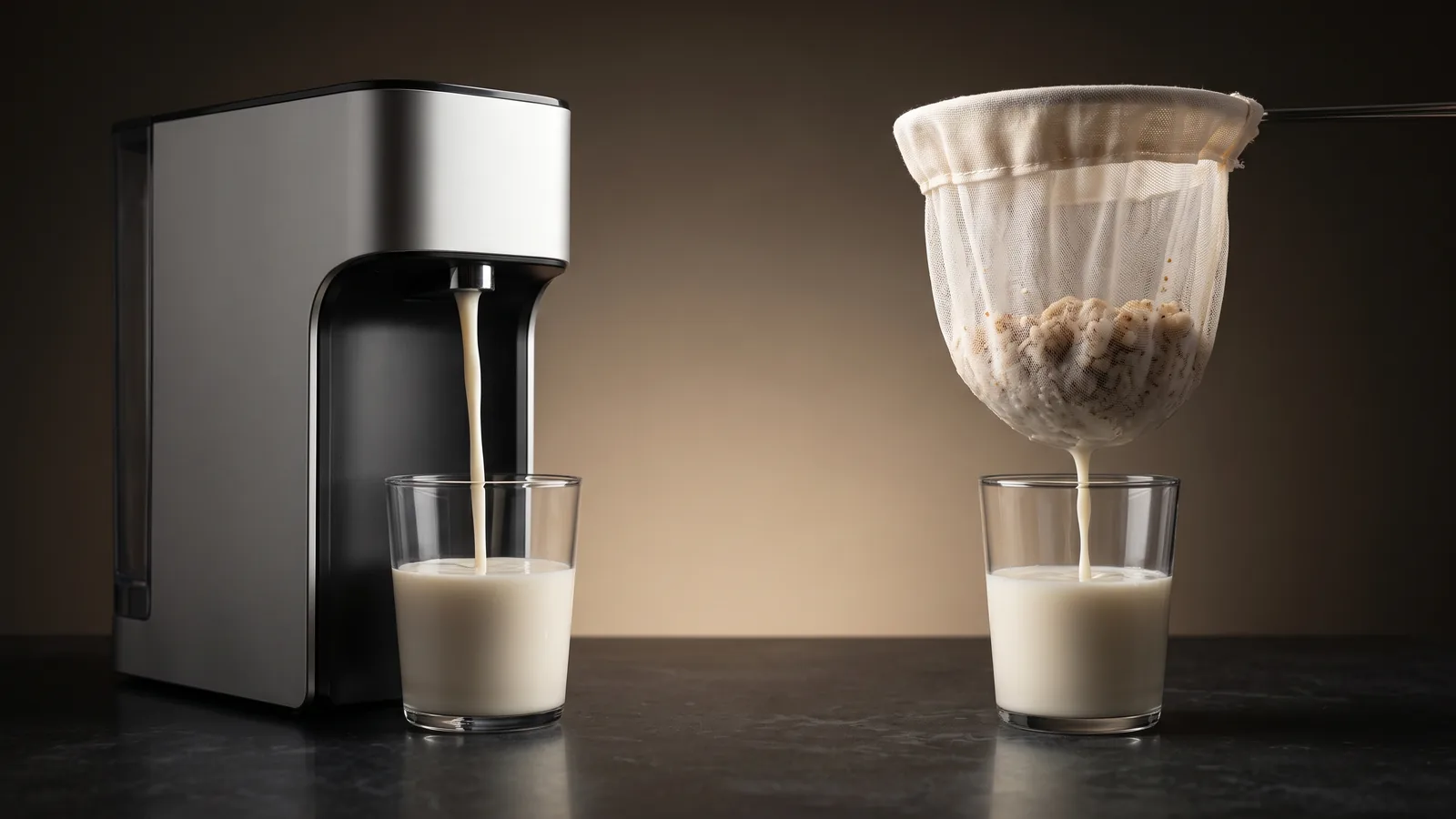
Filter type: strain-free machines struggle more with oat milk than bag-strain machines because the built-in mesh filter is fixed — you cannot control drainage speed. Bag-strain gives you more control over how long the milk contacts the bag, which matters for preventing oat starch from setting.
If you want to make all eight milk types listed here, you need a machine with both a heating function and the option to use either a built-in filter or a nut milk bag.
Ready to buy the machine? See the best plant-based milk makers — our ranked picks.
How heated vs cold extraction actually works inside the machine — and which machine design to choose based on what you want to make.